What Is Atrophic Rhinitis? Symptoms, Causes, and Treatment

Updated: 2 days ago
Medically reviewed by Dr. Baraa Alnahhal, MD · Last reviewed: October 2026
Quick Answer
Atrophic rhinitis is nasal dryness caused by thinning and hardening of the tissue inside the nose, letting in too much dry air and causing foul-smelling crusts. [4] It has a rare primary form, often linked to Klebsiella ozaenae, and a secondary form usually following sinus surgery. [3] [5] [6] Treatment moisturizes the nose, kills bacteria and sometimes surgically narrows the nasal cavity. [4] [6]
What the research says
Platelet-rich plasma (PRP) shows early promise, but the evidence is still limited. A systematic review of studies using PRP injections for atrophic rhinitis reported that sino-nasal outcome test scores fell from 22.4 to 12.7 and, in one study, saccharin transit time (a measure of nasal clearance) dropped from 420 s to 220 s, with no severe adverse effects; the authors caution that the evidence is limited by diagnostic uncertainty and methodological inconsistencies (Asiry et al., Am J Rhinol Allergy, 2025) [2].
Empty nose syndrome is closely linked with depression and anxiety. In a meta-analysis of 11 studies (401 patients), the prevalence of depression was 76.6% (95% CI 61.0–89.1%) and of anxiety 77.0% (95% CI 49.9–95.5%); depression was about 2.8 times more common than in chronic rhinosinusitis (RR 2.8; 95% CI 1.5–5.2) (Shah et al., Eur Arch Otorhinolaryngol, 2025) [7].
Key Takeaways
# | Key point |
1 | Atrophic rhinitis occurs when nasal tissue thins, hardens, and shrinks, widening the nasal cavity and causing severe dryness. |
2 | A foul-smelling crust inside the nose is the hallmark sign; your nose may bleed if you try to dislodge it. |
3 | There are two types: primary (rare in North America, cause largely unknown) and secondary (most often a complication of sinus surgery). |
4 | There is no cure, but symptoms are manageable with nasal irrigation, humidifiers, drops, medications, and sometimes surgery. |
5 | Most people find relief without surgery; an ENT specialist should guide diagnosis and long-term care. |
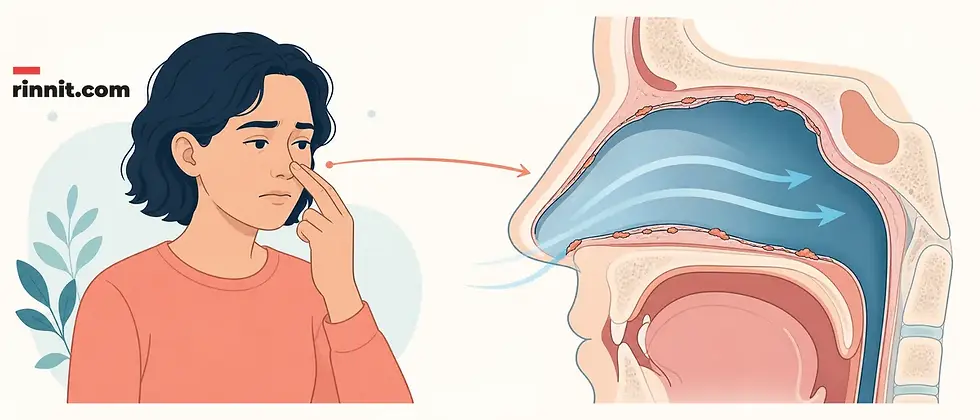
What is atrophic rhinitis?
Atrophic rhinitis is a form of chronic nasal dryness that develops when the tissue inside your nose thins or breaks down. [4] Medical professionals call this thinning process atrophy — the shrinking, thinning, or loss of tissue.
As the damaged tissue hardens, the nasal cavities that air flows through become wider. The wider passages come into contact with more air and dry out. Over time, a foul-smelling crust forms inside the nose. [4]
The condition is rare. [5] [8] There is no cure, but an otolaryngologist — an ear, nose, and throat (ENT) specialist — can help you find treatments that manage the symptoms and protect your quality of life. [8]
What are the types of atrophic rhinitis?
There are two main types, and they differ mainly in their cause.
Type | Where it occurs | Main cause |
Primary | Rare in North America; more common in dry, warm climates (India, Africa, Saudi Arabia) | Cause unknown; linked to bacterial infections and other possible factors |
Secondary | Worldwide | Most often a rare complication of sinus surgery; sometimes from overuse of nasal decongestant sprays |
Primary atrophic rhinitis is rare in North America. [8] Experts do not know exactly what causes it, but it is linked to bacterial infections and several other possible factors covered below. [3]
Secondary atrophic rhinitis is most often a rare complication of sinus surgery. [4] [5] [6] It can also develop in people who overuse nasal decongestant sprays — a pattern known as rhinitis medicamentosa. [8]
What are the other names for atrophic rhinitis?
You may see this condition referred to by several other medical names:
Name | Notes |
Acute necrotizing rhinitis | Refers to the tissue breakdown |
Coryza foetida | Refers to the foul-smelling discharge |
Rhinitis atrophicans | Direct Latin-derived term for the condition |
Ozaena | Specifically refers to the primary form of atrophic rhinitis |
What are the symptoms of atrophic rhinitis?
This condition can cause a foul-smelling crust to form inside your nostrils. If you try to dislodge it, your nose may bleed. [4] You may also notice bad breath — and in most cases, the people around you notice the odor before you do. [8]

Common symptoms include:
Symptom | What it looks like |
Nasal dryness and crusting | Dry, hard crust forming inside the nose |
Foul odor | Others notice the smell before you do |
Frequent nosebleeds | Bleeding when crusts loosen or are removed |
Feeling of a blocked nose | A sensation of obstruction even though the airway is wide |
Pus-containing drainage | Discharge that may include pus |
Bad breath | Secondary to the crusting and odor |
What causes atrophic rhinitis?
The causes depend on whether your condition is primary or secondary.
What causes primary atrophic rhinitis?
Medical experts do not know what causes primary atrophic rhinitis. [3] It is more common in places that are dry and warm for long periods, such as India, Africa, and Saudi Arabia. Females are affected most. [5] [3] Most people who have it carry bacterial infections inside their noses — the most common kind linked to the condition is Klebsiella ozaenae (K. ozaenae). [3]
Other potential causes include:
Possible factor | Detail |
Atypical nasal passages present at birth | Structural differences from birth |
Estrogen hormone imbalance | May affect blood flow and mucus production |
Biological family history | A family history of the condition raises risk |
Lack of iron or vitamins A or D | Nutrient deficiencies may contribute |
What causes secondary atrophic rhinitis?
Surgery on your nose is the most common cause. Usually, it is surgery that makes the tiny bones and related tissue inside your nose smaller — a procedure called turbinate reduction surgery. [5] [6] Symptoms can start anywhere from months to years after the operation. [8]
Other causes include:
Possible cause | Detail |
Immune-weakening conditions or vasculitis | Including granulomatosis with polyangiitis, leprosy, sarcoidosis, syphilis, and tuberculosis |
Overuse of nasal decongestant sprays | Known as rhinitis medicamentosa |
Radiation therapy | Radiation to the head and neck area |
Trauma or injury | Damage to the nose from an accident |
What are the complications of atrophic rhinitis?
In rare instances, atrophic rhinitis can cause you to lose your sense of smell. [4] You may also develop empty nose syndrome (ENS). [6]
Empty nose syndrome is a paradoxical condition: it makes you feel like something is blocking your nasal passages when, in fact, nothing is. Even though your lungs are taking in enough oxygen, you may feel short of breath. [8] The widened nasal cavity has lost its ability to sense airflow normally, so your brain reads the missing sensation as blockage.
How is atrophic rhinitis diagnosed?
Your healthcare provider will start with a physical exam and can often diagnose the condition based on your symptoms. [6]
To confirm the diagnosis and rule out other causes of rhinitis, you may need:
Test | What it checks |
Physical exam | Pressing on the nose and checking for tenderness and crusting |
Allergy tests | Rules out rhinitis caused by allergies |
CT scan | Provides detailed images of the nasal cavities |
Culture test | Checks for bacteria such as K. ozaenae |
Nasal endoscopy | A flexible camera tube views the inside of your nose |
Nasal inspiratory flow test | Measures airflow when you breathe |
How do you treat atrophic rhinitis?
There is no cure, but a range of treatments can reduce symptoms. [8] The goal is to moisturize the nasal passages, fight bacteria, and restore normal sensation inside the nose.
Treatment | How it works | How it is given |
Antibiotics | Kill bacteria linked to the condition | Pill, IV, or ointment rubbed inside the nose |
Estrogen | Widens damaged blood vessels, aids blood flow, and helps the nose secrete moisturizing mucus | Pill or nasal spray |
Humidifier | Adds moisture to the air you breathe to relieve nasal dryness | Used at home |
Nasal drops | Glucose and glycerin drops fight bacteria and add moisture to the tissue | Applied inside the nose |
Nasal injections | Safe filler material reduces empty nose syndrome symptoms; platelet-rich plasma may help repair damaged tissue (more research needed) | In-office injection |
Nasal irrigation | Saline flush clears crusts and combats dryness | Rinse several times a day |
Nutrition supplements | Correct iron or vitamin deficiencies that may contribute | Iron pills or vitamin supplements |

When is surgery needed for atrophic rhinitis?
If medicines, drops, or injections are not helping enough, surgery may be an option. The goal of surgery is to make your nasal cavities smaller. [4] [6]
Adding bulk inside the nasal cavity increases resistance to the air flowing through your nose. [8] This makes the sensations in your nose feel more normal and may promote tissue healing.
Your surgeon may insert an implant into your nose — either a tissue graft taken from elsewhere on your body or a safe synthetic material. Another technique closes off one nostril and nasal cavity, either fully or partially. [8]
What is the outlook for atrophic rhinitis?
Atrophic rhinitis is a chronic (long-term) condition. [8] However, there are steps you can take to manage the symptoms, and your healthcare provider will work with you to find treatments that help.
Importantly, most people experience relief without needing surgery. [8] Consistent use of moisturizing treatments — nasal irrigation, humidifiers, and prescribed medications — is often enough to keep symptoms under control. [5] [8]
When should I see my healthcare provider?
Call your healthcare provider if you experience symptoms of atrophic rhinitis — persistent nasal dryness, crusting, foul odor, or frequent nosebleeds. The sooner you reach out, the sooner you can find the right treatments to manage the condition.
Consider asking your provider:
Question | Why it matters |
Could my symptoms be caused by atrophic rhinitis or something else? | Rules out allergies, infection, or other rhinitis types |
What tests do I need to confirm the diagnosis? | Endoscopy, CT, and cultures give a clear picture |
Which moisturizing treatments should I start with? | Builds your daily self-care routine |
Do I need antibiotics, estrogen, or supplements? | Targets the underlying bacterial or nutritional causes |
When would surgery become necessary? | Sets expectations and milestones |
What is the difference between rhinitis and atrophic rhinitis?
Atrophic rhinitis is a specific type of rhinitis.
Rhinitis is swelling and inflammation of your nasal passages. [4] With atrophic rhinitis, swelling happens because the tissue inside your nose breaks down. Atrophy is the medical term for the shrinking, thinning, or loss of tissue.
Conclusion
Atrophic rhinitis is a rare but manageable condition. [5] When the tissue inside your nose thins and hardens, the nasal passages widen, dry out, and develop a foul-smelling crust. [4] While there is no cure, the symptoms respond well to consistent moisture-focused care — saline irrigation, humidifiers, nasal drops, and targeted medications like antibiotics or estrogen. [4] [6] [8] Surgery remains an option for stubborn cases, but most people find relief without it. [4] [5]
If you are dealing with persistent nasal dryness, crusting, or odor, do not wait. See an ear, nose, and throat (ENT) specialist for an accurate diagnosis and a personalized treatment plan.
Want to learn more in visual form? Rinnit's infographic templates make it easy to turn complex health topics like this one into clear, shareable visuals for patients and caregivers.
FAQ
Can atrophic rhinitis be cured?
No. Atrophic rhinitis is a chronic condition with no cure. However, treatments can significantly reduce symptoms, and most people find relief without surgery. [8]
Is atrophic rhinitis contagious?
No. The condition itself is not contagious, even when bacteria such as K. ozaenae are involved. It develops from tissue atrophy inside the nasal passages, not from person-to-person spread.
Why does atrophic rhinitis smell bad?
When nasal tissue thins and hardens, a crust forms inside the nose. This crust — often harboring bacteria — produces a foul odor. [3] [4] Others typically notice the smell before the person does.
Can sinus surgery cause atrophic rhinitis?
Yes, in rare cases. Turbinate reduction surgery is the most common surgical cause of secondary atrophic rhinitis. [6] Symptoms can appear months to years after the procedure. [8]
What is empty nose syndrome?
Empty nose syndrome is a complication in which you feel like your nose is blocked even though it is not. The widened nasal cavity loses its normal airflow sensation, so you may feel short of breath despite your lungs getting enough oxygen. [8]
What is the best treatment for atrophic rhinitis?
There is no single best treatment — it depends on the type and severity. Nasal irrigation with saline and humidifier use are foundational, while antibiotics, estrogen, nasal drops, and supplements target specific causes. [8] Surgery is reserved for cases that do not respond. [4] [6]
Can nasal decongestant sprays cause atrophic rhinitis?
Overuse of nasal decongestant sprays can contribute to secondary atrophic rhinitis, particularly through rhinitis medicamentosa. [8] Use these sprays only as directed and for short periods.
Who is most at risk of atrophic rhinitis?
Primary atrophic rhinitis most often affects females living in dry, warm climates such as India, Africa, and Saudi Arabia. [3] [5] Secondary atrophic rhinitis most often affects people who have had nasal surgery or who overuse decongestant sprays. [8]
What bacteria is linked to atrophic rhinitis?
The most common bacterium linked to primary atrophic rhinitis is Klebsiella ozaenae (K. ozaenae). [3] Most people with the primary form carry bacterial infections inside their noses.
Does atrophic rhinitis cause loss of smell?
In rare instances, yes. Atrophic rhinitis can cause a loss of the sense of smell, alongside other complications such as empty nose syndrome. [4] [6]
Sources
Alyousef M, Alroqi A, AlAmari N. Atrophic rhinitis secondary to an infection of unusual bacteria: a case report and literature review. Ear Nose Throat J. 2025;104(1_suppl):162S-164S. PMID 36112909. https://doi.org/10.1177/01455613221115048
Asiry AJ, Mubarki MH, Dighriri RM, et al. Effect of platelet-rich plasma injection in patients with atrophic rhinitis: a systematic review. Am J Rhinol Allergy. 2025;39(6):465-473. PMID 40820344. https://doi.org/10.1177/19458924251369316
Bist SS, Bisht M, Purohit JP. Primary atrophic rhinitis: a clinical profile, microbiological and radiological study. ISRN Otolaryngol. 2012;2012:404075. https://pmc.ncbi.nlm.nih.gov/articles/PMC3671697/
Fried MP. Rhinitis. Merck Manual Consumer Version. Last updated Sept 2026. https://www.merckmanuals.com/home/ear,-nose,-and-throat-disorders/nose-and-sinus-disorders/rhinitis
Sumaily IA, Hakami NA, Almutairi AD, et al. An updated review on atrophic rhinitis and empty nose syndrome. Ear Nose Throat J. 2026;105(2):NP150-NP161. PMID 37449389. https://doi.org/10.1177/01455613231185022
Hildenbrand T, Weber RK, Brehmer D. Rhinitis sicca, dry nose and atrophic rhinitis: a review of the literature. Eur Arch Otorhinolaryngol. 2011;268(1):17-26. PMID 20878413. https://pubmed.ncbi.nlm.nih.gov/20878413/
Shah AH, Chau IJ, Nguyen SA, et al. Depression and anxiety in empty nose syndrome: a systematic review and meta-analysis. Eur Arch Otorhinolaryngol. 2025;282(12):6037-6048. PMID 40617870. https://doi.org/10.1007/s00405-025-09535-1
Cleveland Clinic. Atrophic Rhinitis: Definition, Causes & Treatment. Cleveland Clinic Health Library. Last updated March 3, 2026. https://my.clevelandclinic.org/health/diseases/22886-atrophic-rhinitis
Related Reading
Disclaimer: This article is for general informational purposes only and does not constitute medical advice. Always consult a qualified healthcare provider for diagnosis and treatment decisions related to your specific situation.



Comments