Breast Cysts: Symptoms, Causes, and Treatment

Updated: 3 days ago
Medically reviewed by Dr. Baraa Alnahhal, MD · Last reviewed: October 2026

Quick answer
A breast cyst is a fluid-filled sac inside the breast that is usually noncancerous (benign) and may occur singly or in clusters. It feels like a smooth, movable round or oval lump, sometimes tender before a period. Diagnosis uses a breast exam, mammography or ultrasound and fine-needle aspiration. Most simple cysts need no treatment, and surgery is rarely needed. [1] [2]
What the research says
According to PubMed:
Ultrasound sorts cysts by how worrying they look. A radiology review explains that simple cysts (anechoic, round or oval, circumscribed, with posterior enhancement) are classed as BI-RADS 2 (benign), complicated cysts that contain debris as BI-RADS 3 (probably benign), and complex cystic and solid masses as BI-RADS 4 (suspicious), which usually prompts a biopsy recommendation. (Lim et al., DOI).
Complex cysts need a closer look than simple ones. In a single-center retrospective study of 78 radiologically diagnosed complex breast cysts, 5 (6.4%) were found to be malignant, and older age was associated with malignancy. (Gerets et al., DOI).
Study details are from PubMed abstracts.
What are breast cysts?
Breast cysts are fluid-filled sacs inside the breast. They are usually noncancerous (benign) [1].
A breast cyst is an oval or round fluid-filled sac. It may move slightly when you press on it. The cyst often feels like a grape or a water-filled balloon, but sometimes it feels firm [1].
You may have a single breast cyst or more than one, and they can appear in one or both breasts. Cysts may sometimes cause the breasts to be tender [1].

Cysts come in different sizes, depending on how much fluid builds up inside them. Microcysts are too small to feel but may be seen during imaging tests, such as mammography or ultrasound. Macrocysts are large enough to feel and can grow to about 1 to 2 inches (2.5 to 5 centimeters) across [1].
The good news: having breast cysts doesn't increase your risk of breast cancer. But having cysts may make it harder to find new breast lumps or other changes, so knowing how your breasts feel throughout your menstrual cycle matters [1].
Key fact | What it means |
What it is | A round or oval fluid-filled sac inside the breast, usually noncancerous [1] |
Who gets them | Most often people in their 30s to 40s, typically before age 50 [1] |
Feel | Like a grape or water-filled balloon; may move slightly when pressed [1] |
Cancer risk | Having cysts doesn't increase breast cancer risk [1] |
Usual treatment | Often none; draining the fluid may be enough [2] |
What are the symptoms of breast cysts?
Signs and symptoms of a breast cyst center on a new lump and its link to your menstrual cycle [1].
The most common sign is a smooth, easily movable round or oval lump that may have smooth edges. Lumps like this typically are not cancer [1].
Warning sign | What you might notice |
Breast lump | A smooth, easily movable round or oval lump, often with smooth edges [1] |
Nipple discharge | Discharge that may be clear, yellow, straw colored, or dark brown [1] |
Breast pain | Pain or tenderness in the area of the lump [1] |
Before your period | The lump gets bigger and the breasts feel more tender [1] |
After your period | The lump gets smaller and other symptoms go away [1] |
Hormone changes just before a monthly menstrual period may cause cysts to be larger and more painful. The lump shrinks and symptoms fade after a period [1].
Because breast tissue often feels lumpy and breasts may feel lumpy and painful with your period, it is important to be familiar with how your breasts feel throughout your menstrual cycle. That way, you'll know if something changes that needs to be checked [1].
When should you see a doctor about breast cysts?
You don't need treatment for breast cysts unless a cyst is large and painful or uncomfortable. Still, certain changes deserve prompt attention [1].
See a healthcare professional right away if you feel a new breast lump that doesn't go away, gets bigger, feels different, or stays after one or two menstrual cycles [1].
Also see a healthcare professional if you have new skin changes on one or both breasts [1].
What causes breast cysts and who is at risk?
The exact cause of breast cysts is unknown. Most experts agree that cysts may happen because of hormone changes during menstrual cycles [1].
Cysts happen when fluid builds up inside breast glands. Each breast has lobes of glandular tissue made of cells that form glands, arranged like the petals of a daisy. Lobes are divided into smaller lobules that produce milk during pregnancy and breastfeeding. Cysts can happen when milk ducts or other glands are blocked or stretched [1].
Hormone changes just before your period may make cysts larger and more painful. Sometimes draining fluid from a breast cyst may be enough to ease symptoms [1].
Risk factor | How it raises risk |
Hormonal imbalance | An imbalance between estrogen and progesterone, especially too much estrogen, may play a role [1] |
Menstrual hormone changes | Monthly hormone shifts can make cysts bigger or more painful [1] |
Ages 35 to 50 | Cysts are more likely in your 30s and 40s; less common before 20 or after menopause [1] |
Menopause hormone therapy | Menopause hormone medicine may raise the chance, whether menopause is ongoing or finished [1] |
Polycystic ovary syndrome | People with PCOS have a higher risk of breast cysts [1] |
Not giving birth | Never giving birth, or having a first child later, may raise risk through more monthly hormone exposure [1] |
Pregnancy itself doesn't increase the chances of cysts, but the hormone changes of pregnancy may make smaller cysts larger and easier to feel [1].
How are breast cysts diagnosed?
To diagnose a breast cyst, a healthcare professional usually reviews your symptoms and does a breast exam. Imaging tests, such as a breast ultrasound or mammogram, also may be done. A fine-needle aspiration or a biopsy may follow if needed [2].
During the breast exam, the clinician feels the lump and checks for other problems. Other tests might be needed to make sure it's a cyst [2].
Imaging tests can help tell what the lump is. With ultrasound, a clinician is better able to tell if a breast lump is fluid-filled or solid. A fluid-filled area usually means a cyst. A lump that appears solid is likely a noncancerous lump such as a fibroadenoma, but solid lumps could also be breast cancer [2].
Mammography can usually show large cysts and clusters of small cysts, but microcysts may not show, and mammograms may not show whether a lump is fluid-filled [2].
Imaging tests may be skipped if a lump is easy to feel. In that case, a fine-needle aspiration may be done to drain the fluid and collapse the cyst [2].
Diagnostic step | What it does |
Breast exam | The clinician feels the lump and checks for other problems [2] |
Mammogram | Shows large cysts and clusters of small cysts; may miss microcysts and fluid content [2] |
Ultrasound | Tells whether a lump is fluid-filled (likely a cyst) or solid [2] |
Fine-needle aspiration | A thin needle draws out the fluid, often guided by ultrasound; if fluid comes out and the lump goes away, the lump is diagnosed as a cyst [2] |
Core needle biopsy | If no fluid comes out, a wider needle collects more cells and tissue from a possibly solid lump [2] |
After the fluid is drawn out, the results guide what happens next. If the fluid is straw-colored and not bloody and the lump goes away, no further testing or treatment is needed. If the fluid is bloody or the lump doesn't go away, a fluid sample may be sent for lab testing, with possible referral to a breast surgeon or a radiologist. If no fluid can be drawn out, imaging such as a diagnostic mammogram or ultrasound may follow [2].
What are the treatment options for breast cysts?
No treatment is needed for simple breast cysts. Simple cysts are filled with fluid and don't cause any symptoms. Many simple cysts disappear on their own [2].
If, after a few months, you notice the cyst hasn't gone away, it feels firmer, or you see skin changes on your breast, make an appointment to follow up with a healthcare professional [2].
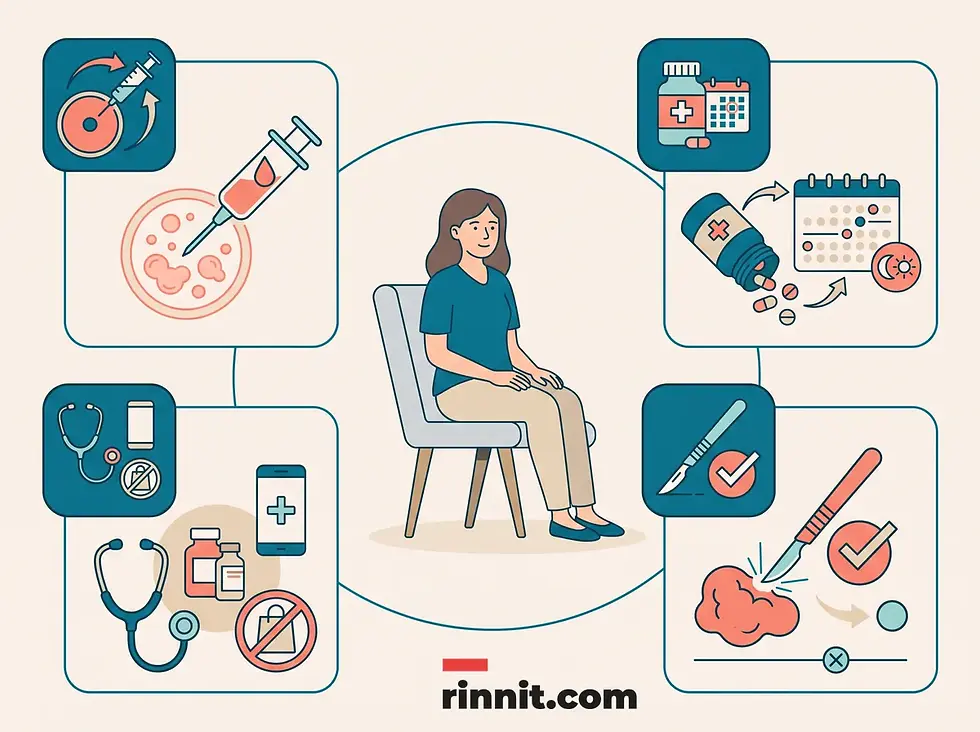
Fine-needle aspiration
Fine-needle aspiration may be used both to diagnose and treat a breast cyst. If all the fluid can be removed during the procedure and the lump disappears and symptoms go away, no other treatment is usually needed [2].
Sometimes the cyst fills with fluid again after draining. If that happens, the fluid may need to be drained more than once. It's common for cysts to go away and come back, or for new cysts to show up. But if a cyst stays after a few periods and gets bigger, get it checked [2].
Hormone therapy
For severe symptoms, birth control pills (oral contraceptives), also called hormone therapy, may be recommended. This medicine may regulate periods and reduce how often breast cysts happen. Side effects can include headaches, upset stomach, breast tenderness, and mood changes. Stopping hormone therapy after menopause also may help prevent breast cysts [2].
Surgery
You usually don't need surgery to remove a breast cyst. But if a cyst keeps coming back every month and causes pain, or if the fluid inside looks bloody or unusual, surgery might be needed [2].
Lifestyle and home remedies
Alongside medical care, some everyday steps may help with cyst discomfort. A bra that fits well and supports the breasts can help reduce pain. A warm or cold pack on the breast may help with pain too [2].
Some people feel better when they stop having caffeine, although studies don't prove it. That means skipping coffee, tea, soda, and chocolate for a while to see if it helps [2].
Over-the-counter pain relievers such as acetaminophen, ibuprofen, or naproxen sodium might help with breast pain. Talk with a healthcare professional about what might work for you [2].
Some people use evening primrose oil to help with cyst pain, but doctors aren't sure if it really works. Talk to a care team about what may help before trying any vitamins, herbs, or supplements [2].
How should you prepare for a breast cyst appointment?
You'll likely see a primary healthcare professional first to check a new breast lump or other change. Based on the exam or imaging findings, you may be referred to a breast health specialist [2].
Before the visit, note all your symptoms (even unrelated ones), key personal information such as major stresses, all medicines, vitamins, herbs, and supplements with doses, and the questions you want to ask. Useful questions include what might be causing the symptoms, whether cysts increase cancer risk, what tests are needed, and what treatments are available [2].
Expect questions about when you first noticed the lump, size changes, how long symptoms have lasted, whether one or both breasts are affected, pain severity, nipple discharge, how periods affect the lump, your last mammogram, and any family history of cysts, lumps, biopsies, or breast cancer [2].
Conclusion and next steps
Breast cysts are common, fluid-filled, and usually harmless. They feel like grapes or water-filled balloons, often swell before a period and shrink after, and do not raise breast cancer risk. Most need no treatment at all, and draining the fluid usually settles symptoms when they don't.
If you find a new lump that doesn't go away after one or two menstrual cycles, gets bigger, feels different, or is accompanied by skin changes, see a healthcare professional promptly.
Next steps: Get to know how your breasts feel throughout your menstrual cycle, and book an appointment if a lump stays after one or two cycles, grows, feels different, or comes with skin changes.
Frequently asked questions
What does a breast cyst feel like?
A breast cyst often feels like a grape or a water-filled balloon: a smooth, easily movable round or oval lump, sometimes with smooth edges. It may move slightly when you press it, and some cysts feel firm. Cysts may make the breasts tender, especially before a period [1].
Are breast cysts cancerous?
Breast cysts are fluid-filled sacs and are usually noncancerous (benign). Having breast cysts doesn't increase your risk of breast cancer, though a solid lump found during evaluation could be breast cancer and needs proper testing [1] [2].
What causes breast cysts?
The exact cause is unknown, but most experts agree cysts form because of hormone changes during menstrual cycles. Fluid builds up inside breast glands when milk ducts or other glands are blocked or stretched. An imbalance between estrogen and progesterone, especially too much estrogen, may play a role [1].
How are breast cysts treated?
No treatment is needed for simple, symptom-free cysts, and many disappear on their own. When a cyst is painful, draining the fluid with fine-needle aspiration usually relieves symptoms. Hormone therapy such as birth control pills may reduce recurrences, and surgery is rarely needed [2].
When should I get a breast lump checked?
See a healthcare professional right away if a new breast lump doesn't go away, gets bigger, feels different, or stays after one or two menstrual cycles. Also get checked if you notice new skin changes on one or both breasts [1].
This article is for general education and is not a substitute for professional medical advice, diagnosis, or treatment. Always consult a qualified healthcare professional about your individual situation.
Related Reading
Clinical Breast Exam (CBE): What to Expect, How Often and What Results Mean explains the hands-on breast check that can find lumps and other changes.
Learn more in our guide to Mammogram: Types, How to Prepare, What Happens and Your Results.
Learn more in our guide to Breast Ultrasound: Why It's Done, What to Expect and Results.
Fine-Needle Aspiration (FNA): What It Is, Why It's Done, What to Expect and Results explains how a thin needle samples cells or fluid from a lump, what to expect and what results can show.
References
Mayo Clinic Staff. Breast cysts - Symptoms and causes. Mayo Clinic. June 17, 2026. https://www.mayoclinic.org/diseases-conditions/breast-cysts/symptoms-causes/syc-20370284
Mayo Clinic Staff. Breast cysts - Diagnosis and treatment. Mayo Clinic. June 17, 2026. https://www.mayoclinic.org/diseases-conditions/breast-cysts/diagnosis-treatment/drc-20370290
American Cancer Society. Noncancerous Breast Conditions. American Cancer Society. Last Revised May 26, 2026. https://www.cancer.org/cancer/types/breast-cancer/non-cancerous-breast-conditions.html
National Breast Cancer Foundation. Breast Cyst. National Breast Cancer Foundation. Last updated April 6, 2026. https://www.nationalbreastcancer.org/breast-cyst
Lim HS, et al. Cystic Breast Lesions: Diagnostic Approach and US Assessment. Radiographics. 2025;45(5):e240179. PMID 40244873. https://doi.org/10.1148/rg.240179
Gerets JCWL, et al. Prevalence of underlying malignancies in complex cysts of the breast. Breast Dis. 2022;41(1):89-95. PMID 34542054. https://doi.org/10.3233/BD-201057



Comments