Blood: The Essential Fluid of Life and Health

Updated: 3 days ago
Medically reviewed by Dr. Baraa Alnahhal, MD · Last reviewed: October 2026
Quick Answer: What is blood?
Blood is a specialized fluid that circulates through the body, delivering oxygen and nutrients and removing waste. [1] It has four main parts: plasma, red blood cells, white blood cells and platelets. [1] Produced in the bone marrow, it makes up approximately 8% of body weight and supports immune defense, temperature regulation and injury repair. [1]
What the research says
Blood-forming cells make up most of the cells in the human body. A 2016 analysis estimated about 30 trillion human cells in a 70 kg reference man, with the blood-forming (hematopoietic) lineage accounting for roughly 90% of them (PubMed: Sender et al., PLoS Biol, 2016) [2].
Anemia remains very common worldwide. The Global Burden of Disease Study 2021 estimated that 1.92 billion people (24.3% of the world's population) had anemia in 2021, compared with 1.50 billion (28.2%) in 1990. Dietary iron deficiency was the leading cause of years lived with disability from anemia (PubMed: GBD 2021 Anaemia Collaborators, Lancet Haematol, 2023) [3].
What are the four components of whole blood?

Figure 1: The composition of whole blood: plasma, red blood cells, white blood cells and platelets.
Blood is more than just a liquid; it is a complex mixture of fluid, cells, and proteins that work together to sustain life.
Component | Percentage of Total Volume | Primary Function |
|---|---|---|
Plasma | Approximately 55% | A yellowish fluid (>90% water) that transports cells, proteins, salts, and waste products. |
Red Blood Cells | Approximately 44% | Also known as erythrocytes, they use hemoglobin to deliver oxygen and remove carbon dioxide. |
White Blood Cells | Less than 1% | Part of the immune system (leukocytes) that finds and destroys germs or cancerous cells. |
Platelets | Less than 1% | Also called thrombocytes, these cell fragments form clots to stop bleeding after an injury. |
What are the essential functions of blood in the circulatory system?

Figure 2: The main functions of the different blood cells.
Blood performs several vital roles that keep the body functioning correctly.
Transportation: It carries life-sustaining oxygen and nutrients to every cell while transporting waste products to the kidneys and liver for removal. [1]
Protection: White blood cells act as a defense mechanism against infections, while platelets prevent excessive blood loss through clotting. [1]
Regulation: Blood helps maintain a stable internal environment by regulating body temperature and blood pressure. [1]
How is blood produced, and how does it circulate?
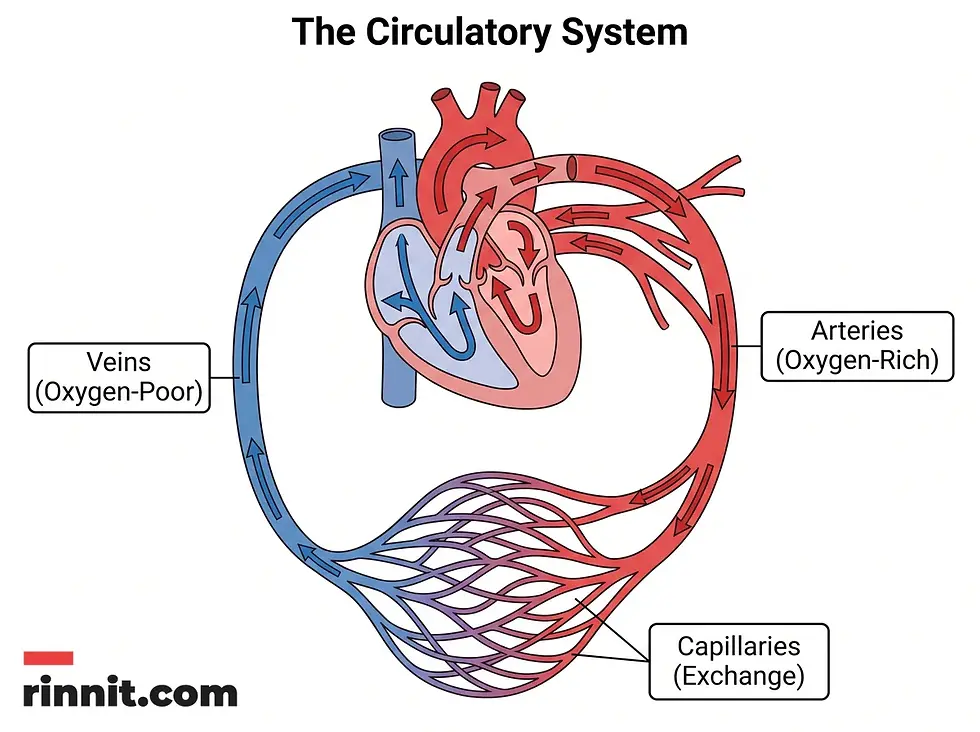
Figure 3: Blood flow through the heart, arteries, veins and capillaries.
Blood is continuously produced and circulated through a sophisticated anatomical network.
What are common blood conditions and their symptoms?
Both cancerous and noncancerous conditions can significantly impact how blood functions.
Blood Cancers: Conditions like leukemia, lymphoma, and myeloma arise from genetic mutations that cause abnormal blood cells to multiply rapidly. [1]
Noncancerous Disorders: Anemia, the most common blood disorder, occurs when there are insufficient healthy red blood cells. [1] [3] Other issues include clotting and bleeding disorders like hemophilia. [1]
Signs of Blood Health Issues
Individuals should monitor for persistent fatigue, frequent infections, or easy bruising and bleeding, as these are common indicators that the blood is not working correctly. [1] An enlarged spleen may also occur, as this organ is responsible for filtering blood cells. [1]
Conclusion
Blood is the "lifeblood" that powers every healthy life, serving as the body's primary delivery and defense system. From its origin in the bone marrow to its constant circulation through the heart and vessels, its health is paramount. Recognizing the symptoms of blood disorders and understanding the roles of its various components can help individuals take proactive steps in managing their well-being.
Noticing persistent fatigue or unusual bruising? Your blood health provides vital clues to your overall wellness. Consult with a healthcare professional to discuss regular blood screenings and ensure your body's essential systems are functioning at their best.
Frequently Asked Questions
1. What is blood?
Blood is a specialized body fluid that constantly flows throughout the body to carry oxygen and nutrients to tissues and remove waste products.
2. What are the four main parts of blood?
The four main components of blood are plasma, red blood cells, white blood cells, and platelets.
3. Where is blood made?
Blood cells are produced in the bone marrow, the spongy tissue found inside bones, starting from stem cells.
4. What does plasma do?
Plasma is the liquid part of blood that transports cells, essential proteins, salts, and waste products throughout the body.
5. Why is blood red?
Blood gets its red color from hemoglobin, a protein in red blood cells that carries oxygen.
6. What is the difference between arteries and veins?
Arteries carry oxygen-rich blood away from the heart to the body, while veins carry oxygen-poor blood back to the heart.
7. What is the most common blood disorder?
Anemia is the most common blood disorder, occurring when the body does not have enough healthy red blood cells.
8. How do platelets help after an injury?
Platelets are the first cells to respond to damaged blood vessels, forming clots to seal the wound and stop bleeding.
9. What are the symptoms of a blood problem?
Common symptoms include persistent fatigue, frequent infections, and bruising or bleeding easily.
10. How much blood does the average adult have?
The average adult male has about 5 liters of blood, while the average adult female has about 4 liters.
Related Reading
Red Blood Cell Function: Oxygen Transport and Cellular Health explains how red blood cells carry oxygen around the body.
Platelets: Function, Count, Disorders and Tests describes the blood cells that help stop bleeding.
Blood Types Explained: Chart, Compatibility, and Rarity covers the blood groups and why matching matters for transfusions.
Complete Blood Count (CBC): What It Measures, Normal Ranges and Abnormal Results explains the common test that checks your blood cell levels.
References
Cleveland Clinic. Blood: What It Is & Function. Cleveland Clinic. July 21, 2025. https://my.clevelandclinic.org/health/body/24836-blood
Sender R, Fuchs S, Milo R. Revised estimates for the number of human and bacteria cells in the body. PLoS Biol. 2016;14(8):e1002533. PMID 27541692. https://doi.org/10.1371/journal.pbio.1002533
GBD 2021 Anaemia Collaborators. Prevalence, years lived with disability, and trends in anaemia burden by severity and cause, 1990-2021: findings from the Global Burden of Disease Study 2021. Lancet Haematol. 2023;10(9):e713-e734. PMID 37536353. https://doi.org/10.1016/S2352-3026(23)00160-6
Medical Disclaimer
This article is for informational purposes only and does not constitute medical advice. Always seek the advice of your physician or other qualified health provider with any questions you may have regarding a medical condition. Never disregard professional medical advice or delay in seeking it because of something you have read here.



Comments