Red Blood Cell Function: Oxygen Transport and Cellular Health

Updated: 2 days ago
Medically reviewed by Dr. Baraa Alnahhal, MD · Last reviewed: October 2026
Red blood cells, or erythrocytes, are the body's primary delivery system for oxygen. Produced in the bone marrow, these specialized cells transport oxygen from the lungs to tissues and carry carbon dioxide back to the lungs for exhalation. [1] Maintaining a healthy red blood cell count through proper nutrition—including iron, B9, and B12—is essential for energy production and overall vitality. Disorders like anemia or polycythemia can significantly impact health, requiring medical evaluation and targeted care.
Quick Answer: What are red blood cells (erythrocytes)?
Red blood cells (erythrocytes) are disk-shaped cells that deliver oxygen to the body's tissues and remove carbon dioxide, using the protein hemoglobin to bind oxygen in the lungs. [1] They are made in the bone marrow, circulate for about 120 days and make up about 40% of the blood. [1] A healthy count is vital for energy production.
What the research says
Low red blood cell levels (anemia) affect about one in four people worldwide. In 2021, the global prevalence of anemia across all ages was 24.3% (95% uncertainty interval 23.9 to 24.7), or 1.92 billion people, with children younger than 5 years and women among the most affected [2] (GBD 2021 Anaemia Collaborators, The Lancet Haematology, 2023).
Dietary iron deficiency is the leading cause. In the same analysis, dietary iron deficiency was the most common cause of years lived with disability from anemia (422.4 per 100,000 population), followed by hemoglobinopathies and hemolytic anemias (89.0 per 100,000) [2] (GBD 2021 Anaemia Collaborators, The Lancet Haematology, 2023).
A lower hemoglobin threshold for transfusion is safe in most patients. A Cochrane review of 48 trials (21,433 participants) found that restrictive transfusion thresholds (most often 7.0 to 8.0 g/dL) cut the risk of receiving a transfusion by 41% (risk ratio 0.59, 95% CI 0.53 to 0.66) without changing 30-day mortality (risk ratio 0.99, 95% CI 0.86 to 1.15) (Carson et al., Cochrane Database of Systematic Reviews, 2021 [3]).
What is the anatomy of red blood cells?
Red blood cells are unique biological structures specifically designed for efficient gas exchange and mobility through the circulatory system.
Key Characteristics
Shape: They have a biconcave disk shape (round with an indentation in the center), which increases surface area for oxygen absorption.
Nucleus: Unlike most other cells, mature red blood cells lack a nucleus, allowing them to change shape easily to fit through narrow capillaries.
Hemoglobin: This iron-rich protein gives the cells their bright red color and is responsible for binding and carrying oxygen molecules.
Lifespan: Because they lack a nucleus and cannot repair themselves, red blood cells survive for an average of 120 days before being replaced.
Production and Maturation
Red blood cells develop in the soft tissue of your bones, known as bone marrow. [1] The maturation process typically takes about seven days before the cells are released into the bloodstream to begin their functional lifecycle. [1]

What are the main functions of red blood cells?
The survival of human tissues depends entirely on the continuous operation of red blood cells.
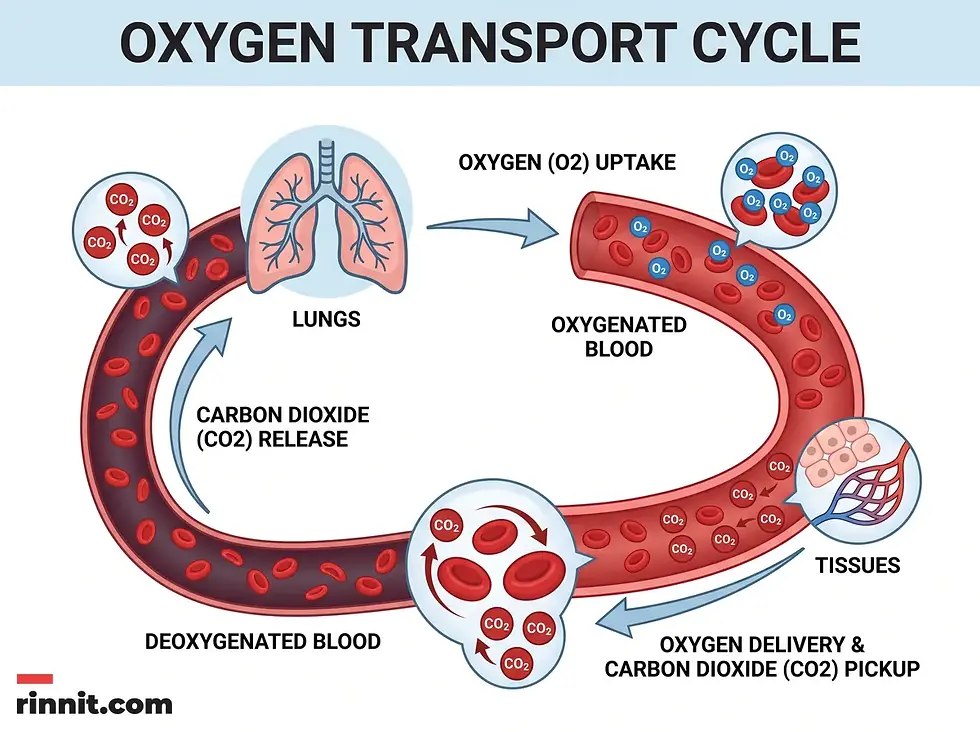
Oxygen Delivery: Hemoglobin within the cells picks up oxygen in the lungs and releases it into tissues throughout the body. [1]
Energy Production: Tissues use this oxygen to produce energy, which is essential for all bodily functions. [1]
Waste Removal: As tissues produce energy, they release carbon dioxide as a waste product; red blood cells collect this waste and transport it back to the lungs. [1]
Exhalation Support: Once at the lungs, the carbon dioxide is released from the blood so it can be exhaled. [1]
What do red blood cell counts reveal about health?
Medical professionals use red blood cell counts to evaluate overall health and identify potential disorders. A complete blood count (CBC) is the common test that measures how many red and white blood cells are in your blood. [1]
Normal Reference Ranges
Counts are measured in millions of cells per microliter of blood and vary by age and sex. [1] If your count is outside these general ranges, your healthcare provider will offer additional tests or treatments. [1]
Group | Normal Range (per microliter) |
Males | 4.7 to 6.1 million |
Females | 4.2 to 5.4 million |
Children | 4.0 to 5.5 million |
Common Disorders
Anemia (Low Count): Occurs when the blood carries less oxygen than normal, often due to iron or vitamin deficiency, blood loss, or bone marrow issues. Symptoms include fatigue, weakness, and cold extremities.
Polycythemia Vera (High Count): A condition where the blood thickens due to an excess of red blood cells, increasing the risk of heart attack or stroke. [1]
Hypoxia: A state where blood oxygen levels are too low, which can be linked to a high red blood cell count. [1]
Other Causes of a High Count: Smoking cigarettes, living at a high elevation, dehydration, taking anabolic steroids, and heart or lung disease. [1]
Treatment for red blood cell disorders depends on the diagnosis and severity. It ranges from taking vitamins and eating a well-balanced diet to treating existing medical conditions and, in some cases, getting a blood transfusion. [1]
How can you maintain healthy red blood cells?
Dietary choices and lifestyle habits play a major role in supporting the production and function of red blood cells.
Essential Nutrients
The body requires specific vitamins and minerals to create healthy erythrocytes:
Iron: Found in red meat, liver, lentils, and beans.
Vitamin B9 (Folic Acid): Present in leafy greens like kale and spinach.
Vitamin B12: Sourced from fish and red meat.

Conclusion and Next Steps
Red blood cells are the unsung heroes of the human body, working tirelessly to ensure every tissue receives the oxygen it needs to function. From their specialized anatomy to their complex transport cycle, these cells are fundamental to life and energy. By prioritizing a nutrient-rich diet, avoiding smoking, and getting regular health screenings, you can support your red blood cells and maintain your body's vital energy supply.
If you are experiencing persistent fatigue or weakness, consult a healthcare provider for a complete blood count (CBC) to evaluate your red blood cell health.
Frequently Asked Questions
What are red blood cells?
Red blood cells, also known as erythrocytes, are specialized cells that transport oxygen and carbon dioxide throughout the body. [1]
What is the main function of red blood cells?
The primary role of red blood cells is to deliver oxygen from the lungs to the body's tissues and carry carbon dioxide back to the lungs for exhalation. [1]
What is hemoglobin?
Hemoglobin is the protein within red blood cells that binds to oxygen and gives the cells their red color. [1]
How long do red blood cells live?
On average, a red blood cell lives for about 120 days before it is replaced by a new cell from the bone marrow. [1]
What causes a low red blood cell count?
Common causes include iron or vitamin deficiencies, malnutrition, blood loss, and certain medical treatments like chemotherapy. [1]
What are the symptoms of anemia?
Symptoms include fatigue, lack of energy, muscle weakness, headaches, and cold hands or feet.
What is polycythemia vera?
Polycythemia vera is a condition characterized by a high red blood cell count that causes the blood to thicken, increasing the risk of cardiovascular events. [1]
How can I increase my red blood cell count naturally?
Eating a diet rich in iron, B9 (folic acid), and B12 can support healthy red blood cell production. [1]
Where are red blood cells produced?
Red blood cells are produced in the bone marrow, the soft tissue inside your bones. [1]
Does smoking affect red blood cells?
Yes, smoking can increase the risk of a high red blood cell count and exposure to carbon monoxide. [1]
Related Reading
Complete Blood Count (CBC): What It Measures, Normal Ranges and Abnormal Results explains what a complete blood count measures and what results mean.
Iron Deficiency Anemia: Symptoms, Causes, Treatment & Complete Guide covers the most common type of anemia and how it is treated.
Hemoglobin Test: Normal Ranges, Results and What They Mean describes how a hemoglobin test checks your blood's oxygen-carrying capacity.
Sickle Cell Disease: Causes, Symptoms, and Modern Treatment Options explains how sickle-shaped red blood cells cause pain and complications.
References
Cleveland Clinic. Function of Red Blood Cells. Cleveland Clinic. August 11, 2021. https://my.clevelandclinic.org/health/body/21691-function-of-red-blood-cells
GBD 2021 Anaemia Collaborators. Prevalence, years lived with disability, and trends in anaemia burden by severity and cause, 1990-2021: findings from the Global Burden of Disease Study 2021. The Lancet Haematology. 2023;10(9):e713-e734. PMID 37536353. https://doi.org/10.1016/S2352-3026(23)00160-6
Carson JL, et al. Transfusion thresholds for guiding red blood cell transfusion. Cochrane Database of Systematic Reviews. 2021;(12):CD002042. PMID 34932836. https://doi.org/10.1002/14651858.CD002042.pub5
Medical disclaimer
The information provided in this article is for educational purposes only and should not be used as a substitute for professional medical advice, diagnosis, or treatment. Always seek the advice of your physician or other qualified health provider with any questions you may have regarding a medical condition.



Comments