Ascites: Fluid Buildup in the Belly — Causes, Symptoms, Grades, Diagnosis & Treatment (Complete Guide)

Updated: 3 days ago
Medically reviewed by Dr. Baraa Alnahhal, MD · Last reviewed: October 2026
Ascites is excess fluid that builds up in the space around the abdominal organs, making the belly look swollen or feel tight. [1] It is a sign of a deeper problem — most often advanced liver disease — so finding and treating the cause is the first job of your care team.
Quick Answer
Ascites is excess fluid that builds up in the peritoneal cavity, the space around the abdominal organs, making the belly swollen or tight. It most often occurs with serious liver disease such as cirrhosis, but can also be linked to heart failure, certain cancers and pancreatic disease. [1] Treatment depends on the cause, which must be managed to prevent recurrence. [2]
What the research says
Timely fluid testing saves lives. A meta-analysis of 8 studies (116,174 hospitalized patients with cirrhosis and ascites) found lower in-hospital mortality with early diagnostic paracentesis (within 12 hours or 1 day) than with delayed testing (RR 0.69), and lower mortality with paracentesis than with none (RR 0.74); testing within 12 hours also shortened hospital stay by 5.38 days (Badal et al., Digestive Diseases and Sciences, 2024) [3].
Albumin after large-volume drainage protects circulation, not survival. An overview of 18 meta-analyses found that albumin infusion in cirrhosis patients undergoing large-volume paracentesis reduced post-paracentesis circulatory dysfunction and hyponatremia but not mortality or renal impairment, and long-term albumin in patients with ascites reduced recurrence of ascites but not mortality; the evidence quality was very low to moderate (Zheng et al., Advances in Therapy, 2023) [4].
Refractory ascites carries a serious outlook, with better results for newer TIPS series. In a systematic review of 77 studies, 1-year mortality was 33% (95% CI 29–39%) after TIPS and 45% (95% CI 38–53%) at 12 months with repeated large-volume paracentesis; TIPS mortality was lower in newer studies (26% vs. 44%), probably thanks to better patient selection (Will et al., Digestive and Liver Disease, 2022) [5].
Ascites at a Glance
Aspect | Summary |
What is ascites | Excess fluid in the peritoneal cavity (the space around the abdominal organs) [1] |
Most common cause | Portal hypertension from cirrhosis (advanced liver scarring) [1] |
Other causes | Cancer, heart failure, abdominal infections, low blood protein, pancreatic disease [1] |
Severity grades | Grade 1 (mild), Grade 2 (moderate), Grade 3 (large/tense); refractory ascites resists treatment [1] |
Main symptoms | Belly swelling, rapid weight gain, shortness of breath, early fullness, leg swelling [1] |
First tests | Physical exam, abdominal ultrasound, blood tests [2] |
Definitive test | Diagnostic paracentesis — a needle sample of the fluid |
First-line treatment | Diuretics (water pills) + low-sodium diet (often under 2,000 mg/day) [2] |
Drainage option | Therapeutic paracentesis — a needle drains the fluid for symptom relief [2] |
Advanced options | TIPS shunt, liver transplant [2] |
What Is Ascites, Exactly?
Ascites occurs when excess fluid builds up in your belly area, called the abdomen. The fluid collects in the peritoneal cavity — the space around your abdominal organs, not inside them. [1]
This buildup can make your belly look swollen or feel tight. As more fluid accumulates, you might feel discomfort or pain. [1] Ascites is a symptom of a deeper problem rather than a disease on its own, which is why finding the cause is the first job of your care team.
Ascites most often happens when someone has serious liver disease, such as cirrhosis. It also can be linked to other conditions, including heart failure, certain cancers, and pancreatic disease. The best treatment for ascites depends on what causes the fluid to build up. [1]
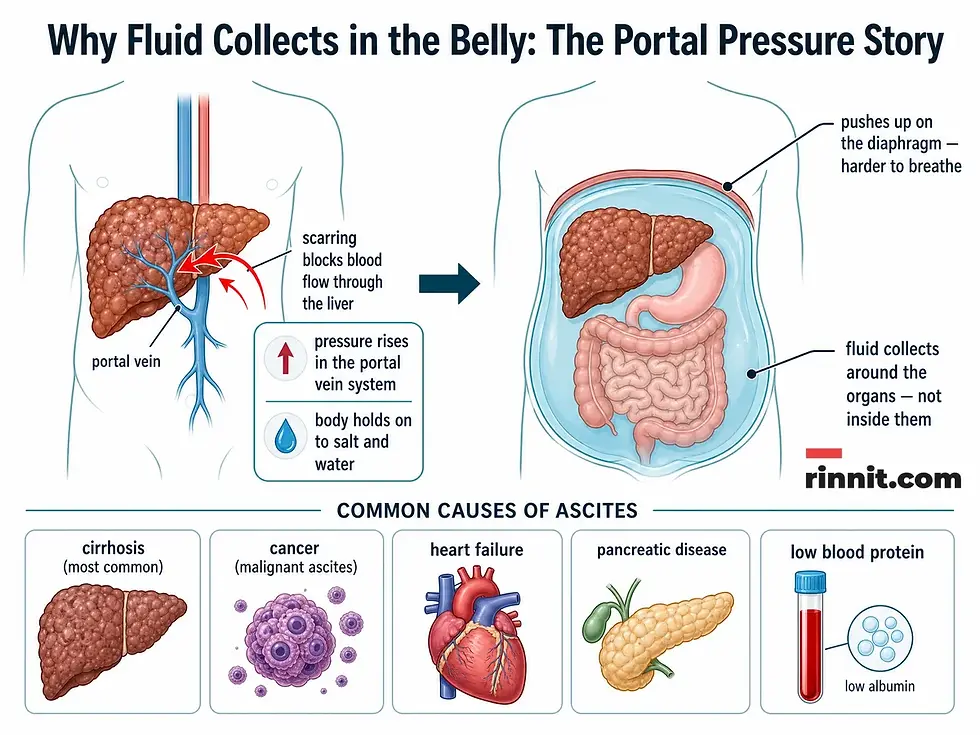
Ascites forms when portal vein pressure rises and the body holds on to salt and water — fluid collects around the organs, not inside them. [1]
What are the three grades of ascites, including refractory ascites?
Healthcare professionals often classify ascites based on the cause of the fluid buildup. It can also be described by how much fluid is present and how it behaves over time. [1]
Grades by Amount of Fluid
Grade | Name | What it means |
1 | Mild ascites | A small amount of fluid that may not be noticeable on a physical exam and is sometimes found only on imaging tests [1] |
2 | Moderate ascites | Fluid buildup that causes visible swelling of the abdomen [1] |
3 | Large or tense ascites | A large amount of fluid that makes the abdomen very swollen and causes discomfort [1] |
Refractory Ascites
Ascites can also be described by how it responds to treatment. In many people, fluid buildup can be managed with medicines and dietary changes. In others, ascites continues to worsen or returns despite treatment, and frequent removal by physically draining the fluid is needed. This is called refractory ascites and usually means the underlying disease is more serious. [1]
What are the symptoms of ascites, and how do they differ from bloating?
Mild ascites may not cause any symptoms and can be easy to miss. As more fluid builds up, your belly can look swollen or feel heavy or tight. You also might notice weight gain or a larger waistline, even without changes in eating habits. [1]
Here is a practical way to tell ascites from bloating: early ascites can feel like bloating, but the swelling usually lasts and may get worse over time. While bloating often comes and goes, ascites typically does not get better without treatment. [1]
If enough fluid collects, symptoms may include:
Symptoms of ascites can develop over days or even months, depending on the cause. Some people have a swollen belly without pain; others feel pressure, fullness, or discomfort. [1]
When fluid fills the belly, it pushes up on the diaphragm — the muscle that helps your lungs expand — which is why a lot of fluid makes breathing harder. This is different from a pleural effusion, which is when fluid collects around the lungs. [1]
What causes ascites fluid to build up in the belly?
Ascites can happen for different reasons, but it most often occurs because of portal hypertension caused by cirrhosis. Cirrhosis is a late stage of chronic liver disease, when scarring changes the liver's structure. [1]
Here is the chain of events:
Long-term alcohol use, viral hepatitis, or fatty liver disease (called metabolic dysfunction-associated steatotic liver disease, or MASLD) damages the liver over time. [1]
As scarring gets worse, blood cannot flow through the liver as easily. [1]
This increases pressure in the portal vein system, which carries blood to the liver. [1]
This higher pressure, along with changes that cause the body to keep more salt and water, makes fluid build up in the belly. [1]
In people with cirrhosis, developing ascites typically means the liver disease has reached an advanced stage. [1]
Other Causes of Ascites
Liver disease is not the only reason someone might get ascites. Some other possible causes include:
Cause | How it leads to ascites |
Cancer (malignant ascites) | Can include ovarian, breast, colon, and liver cancers; cancer may affect the lining of the abdomen or block typical fluid absorption [1] |
Heart failure | Impaired heart pumping promotes fluid retention throughout the body |
Infections of the lining of the abdomen | Such as tuberculosis [1] |
Low blood protein levels | From nephrotic syndrome, protein-losing enteropathy, or severe malnutrition; low protein makes it easier for fluid to collect [1] |
Pancreatic disease | Pancreatitis or injury to the pancreas can lead to fluid buildup in the abdomen [1] |
Sometimes, more than one condition can cause ascites. Because treatment depends on the cause, your care team will try to find out what is making the fluid build up. [1]
What are the risk factors for ascites?
Risk factors for ascites are generally those that increase your likelihood of developing the underlying conditions that cause it. [1]
Underlying condition | Risk factors |
Liver disease and cirrhosis | Long-term heavy alcohol use; chronic hepatitis B or C infection; obesity (linked to MASLD, which can progress to cirrhosis) [1] |
Cancer | Depending on the type: genetics, smoking, obesity, certain infections, environmental exposures [1] |
Heart failure | High blood pressure, coronary artery disease, diabetes, obesity [1] |
Having more than one risk factor or underlying condition can further increase the likelihood of developing ascites. Your healthcare team can talk with you about your personal risk based on your health history. [1]
What are the complications of ascites, and why is monitoring needed?
Ascites can cause complications, especially when a large amount of fluid builds up. Some complications need prompt medical care. [1]
Complication | What happens | Why it matters |
Spontaneous bacterial peritonitis (SBP) | The ascites fluid itself gets infected | A serious condition that can lead to fever, belly pain, kidney failure, or confusion — it needs urgent treatment with antibiotics [1] |
Breathing problems | A lot of fluid pushes up on the diaphragm | Pressure makes breathing harder [1] |
Hernias | Ongoing fluid weakens the belly muscles | Can cause umbilical or inguinal hernias, which can be painful [1] |
Malnutrition and weakness | Feeling full quickly lowers your appetite | Over time this leads to poor nutrition [1] |
Because complications can develop quickly, it's important to stay in close contact with your healthcare team and report any new or worsening symptoms. [1] Fever or confusion should prompt urgent care — they can be signs of infected fluid.

The complete ascites patient guide — grades, symptoms, causes, complications, treatment, and prevention in one view.
How do doctors diagnose ascites and find its cause?
To diagnose ascites, your healthcare professional will ask about your symptoms and perform a physical exam. The exam may include pressing your abdomen to check for signs of fluid — larger amounts are easier to detect during an exam. [2]
Abdominal Ultrasound
Imaging tests are often used to confirm ascites. An abdominal ultrasound is usually the first test. It can detect even small amounts of fluid and show where fluid has collected. During this test, ascites appears as fluid collecting around the abdominal organs rather than inside them. [2]
One useful nuance: a small amount of fluid in the pelvis can sometimes be a regular finding in women. In men, visible fluid is not expected. A healthcare professional looks at how much fluid is present and whether symptoms are occurring. [2]
CT Scan and Blood Tests
In some cases, a CT scan is used to get a closer look at the abdomen and nearby organs. Imaging reports may mention "free fluid," which means fluid is present in the abdominal cavity. [2]
Blood tests can help find possible causes of ascites. These tests may check kidney and liver function, look for signs of infection, and measure protein levels in the blood. [2]
Diagnostic Paracentesis
Most people with ascites also have a procedure called diagnostic paracentesis. In this procedure, a thin needle removes a small amount of fluid from the abdomen. The fluid is tested for protein content, infection, cancer, and other conditions. [2]
Healthcare professionals often use a combination of exam findings, imaging, blood tests, and fluid tests to confirm ascites and find its cause. This helps your team understand the cause and plan the best treatment. [2]
How is ascites treated by draining fluid and treating the cause?
How ascites is treated depends on why the fluid is building up and how much there is. The main goals are to ease symptoms, lower the amount of fluid, and address the underlying cause. [2]
Medicines
If ascites is related to liver disease, treatment usually begins with medicines and diet changes. Your healthcare professional may prescribe diuretics — medicines that help your body remove extra salt and water through urine. Eating less salt helps your body hold on to less fluid. [2]
Managing the underlying liver disease is also an important part of treatment. Managing liver disease may help lower fluid buildup over time and reduce the chance that ascites will return. [2]
Treatment for ascites caused by other conditions focuses on the underlying issue: cancer-related ascites may be treated with cancer therapies and medicines, and heart-related ascites may improve when heart failure is treated. [2]
Draining the Fluid: Therapeutic Paracentesis
If excess fluid is making you uncomfortable or making it hard to breathe, your care team may need to remove some of the fluid from your belly. This procedure is called therapeutic paracentesis. A thin needle is used to drain the extra fluid, which can help relieve symptoms. The procedure is done by a trained healthcare professional, often with ultrasound guidance to improve safety. [2]
Two important caveats: after fluid is drained, ascites may return — especially if the underlying cause is still present — and after draining of large volumes, albumin may be given to help prevent circulation problems, support fluid balance, and protect kidney function. [2]
TIPS and Liver Transplant
For people with advanced liver disease, a transjugular intrahepatic portosystemic shunt (TIPS) may be considered. This procedure creates a new pathway for blood to flow through the liver, which can lower pressure and help reduce fluid buildup. [2]
If you have serious liver disease, a liver transplant might be an option. Your care team will look at your overall health to decide if a transplant is an option for you. [2]
Which lifestyle habits and home remedies support ascites treatment?
Making changes to your daily habits can support medical treatment for ascites.
Limit salt. Eating too much salt makes your body hold on to extra fluid. Following a low-sodium diet can help lower fluid buildup. Many people with ascites are advised to limit sodium to less than about 2,000 milligrams a day. [2]
Check your weight regularly. If you take diuretics, your healthcare team may recommend weighing yourself daily while your dose is being adjusted. Let your team know if you gain weight quickly or notice more swelling. [2]
Avoid alcohol if you have liver disease. Alcohol can worsen liver damage and increase complications. [2]
How can ascites be prevented by protecting the liver?
Ascites cannot always be prevented — it most often develops as a complication of serious liver disease or other medical conditions. However, steps to protect your liver and manage underlying health issues may lower the risk of developing ascites or slow its progression. [1]
Manage liver disease early. Getting treatment for conditions such as viral hepatitis or fatty liver disease can lower your risk of liver-related issues, including ascites. [1]
Get vaccinated against hepatitis A and B. The hepatitis B vaccine helps prevent chronic liver disease that can lead to cirrhosis and ascites, while the hepatitis A vaccine helps protect overall liver health. There is currently no vaccine for hepatitis C. [1]
Avoid alcohol if you have liver disease. Alcohol can worsen liver damage and increase the risk of cirrhosis. [1]
Keep a healthy weight. Being overweight increases the chance of fatty liver disease, which can lead to cirrhosis and ascites over time. [1]
Manage other medical conditions. Treating conditions such as heart failure may help reduce fluid buildup in the body. [1]
Reduce salt intake. Eating less salt can help your body avoid holding on to extra fluid. If you are at risk of ascites, a low-salt diet may help slow down or reduce fluid buildup. [1]
If you already have liver disease or another condition linked to ascites, working closely with your healthcare team can help reduce the risk of complications. [1]
How can people cope with ascites and find support?
Living with ascites can be stressful, but learning about the condition, staying in touch with the healthcare team and seeking support from others can help. It's natural to feel worried or overwhelmed sometimes. Here are strategies that may help:
Learn about your condition. Understanding ascites and its management can help you feel more involved in your care. Ask your healthcare team questions and share concerns.
Stay connected with your healthcare team. Regular follow-up visits help keep track of symptoms and adjust treatment when needed.
Reach out for support when you need it. Family, friends, or caregivers can help with daily chores, getting to appointments, and offering emotional support.
Consider counseling or support groups. Talking with others, including those who have chronic illnesses, can help you feel less alone.
If ascites is linked to a long-term condition, your healthcare team can help connect you with more resources as needed.
How should you prepare for an ascites appointment?
Often, your first step is to see your primary healthcare professional. You may then be referred to a specialist, such as a liver specialist called a hepatologist, depending on what is causing the ascites.
6 Things to Do Before Your Visit
Write down your symptoms — include when they began, how often they happen, and if they are getting worse.
Keep track of any changes in your weight or swelling — this helps your team understand changes in fluid buildup.
Make a list of all medicines and supplements you take — including over-the-counter medicines, vitamins, and herbal products.
Bring key medical information — note any liver disease, heart disease, cancer, or past infections, including hepatitis.
Consider bringing a family member or friend — another person can help remember information and offer support.
Write down any questions you have — this helps make sure your concerns are discussed during your visit.
5 Questions Your Healthcare Professional May Ask
When did you first notice swelling in your belly or weight gain?
Have your symptoms changed over time?
Do you have a history of liver disease, heart disease, or cancer?
What medicines or supplements do you take?
Do you drink alcohol, or have you in the past?
Getting ready ahead of time can help you feel more confident and make your appointment go more smoothly.
Conclusion
Ascites is a warning sign, not a stand-alone disease — and the message it sends is clear: something deeper, usually involving the liver, needs attention. The key lessons from this guide:
Ascites means excess fluid around the abdominal organs, most often driven by portal hypertension from cirrhosis, but heart failure, cancer, pancreatic disease, and low blood protein are also possible causes.
A persistent swollen belly is not just bloating — swelling that lasts and grows, along with rapid weight gain, early fullness, or breathlessness, should be checked promptly.
Treatment works from both directions — draining and medicines ease the fluid, while vaccines, weight management, salt limits, and early liver-disease treatment tackle the cause.
Frequently Asked Questions
What is ascites?
Ascites is the buildup of excess fluid in the peritoneal cavity — the space around the abdominal organs. It makes the belly look swollen or feel tight and most often signals serious liver disease such as cirrhosis. It can also be linked to heart failure, certain cancers, and pancreatic disease.
What causes fluid to collect in the abdomen?
The most common cause is portal hypertension from cirrhosis: liver scarring blocks blood flow, pressure rises in the portal vein system, and the body holds on to extra salt and water. Cancer, heart failure, abdominal infections, low blood protein, and pancreatic disease are other possible causes.
How do I know if my swollen belly is ascites or just bloating?
Early ascites can feel like bloating, but the swelling usually lasts and worsens over time, while bloating comes and goes. Ascites typically does not improve without treatment, and it is often accompanied by rapid weight gain, shortness of breath, or leg swelling.
Is ascites a sign of liver failure?
Ascites usually means liver disease has reached an advanced stage. In people with cirrhosis, developing ascites typically indicates that the liver disease has progressed significantly — which is why finding and treating the cause is urgent.
Can ascites be cured?
Ascites itself is managed rather than cured: diuretics, a low-sodium diet, and draining the fluid relieve symptoms. Long-term control depends on treating the underlying condition, such as the liver disease causing the fluid to build up.
Is ascites dangerous if left untreated?
Yes — untreated ascites can lead to serious complications, including infected abdominal fluid (spontaneous bacterial peritonitis), breathing problems, hernias, and malnutrition. Fever or confusion can signal infection and needs urgent medical care.
How is ascites diagnosed?
A provider examines your belly, and an abdominal ultrasound usually confirms the fluid. Blood tests and a CT scan may be used, and most people also have a small fluid sample taken with a needle to find the cause.
What is paracentesis?
Paracentesis uses a thin needle to remove fluid from the belly, often with ultrasound guidance. A small amount can be tested to find the cause, or a larger amount can be drained to ease discomfort or breathing trouble.
How much salt should you eat if you have ascites?
Many people with ascites are advised to keep sodium under about 2,000 milligrams a day. Your care team will set the right goal for you and may ask you to weigh yourself often while medicines are adjusted.
What is refractory ascites?
Refractory ascites is fluid that keeps building up or comes back despite medicines and a low-salt diet. It usually means the underlying disease is more serious, and it may need repeated drainage, a TIPS procedure, or a liver transplant evaluation.
Related Reading
Child-Pugh Score: How Liver Disease Severity Is Calculated and What Classes A, B and C Mean explains how doctors score the severity of cirrhosis.
References
Mayo Clinic Staff. Ascites - Symptoms and causes. Mayo Clinic. March 21, 2026. https://www.mayoclinic.org/diseases-conditions/ascites/symptoms-causes/syc-20596724
Mayo Clinic Staff. Ascites - Diagnosis and treatment. Mayo Clinic. March 21, 2026. https://www.mayoclinic.org/diseases-conditions/ascites/diagnosis-treatment/drc-20596738
Badal J, Badal B, Nawras M, et al. Diagnostic paracentesis within 1 day is associated with reduced mortality and length of hospital stay in patients with cirrhosis and ascites. Dig Dis Sci. 2024;69(4):1454-1466. PMID: 38217676. https://doi.org/10.1007/s10620-023-08249-w
Zheng X, Bai Z, Wang T, et al. Human albumin infusion for the management of liver cirrhosis and its complications: an overview of major findings from meta-analyses. Adv Ther. 2023;40(4):1494-1529. PMID: 36697778. https://doi.org/10.1007/s12325-023-02430-3
Will V, Rodrigues SG, Berzigotti A. Current treatment options of refractory ascites in liver cirrhosis - a systematic review and meta-analysis. Dig Liver Dis. 2022;54(8):1007-1014. PMID: 35016859. https://doi.org/10.1016/j.dld.2021.12.007
Medical disclaimer
This article is for general informational purposes only and is not a substitute for professional medical advice, diagnosis, or treatment. Always seek the advice of a qualified healthcare provider with any questions about a medical condition.



Comments