Paracentesis: Procedure, Risks, and Recovery

Updated: 3 days ago
Medically reviewed by Dr. Baraa Alnahhal, MD · Last reviewed: October 2026
Paracentesis is a procedure that drains excess fluid, called ascites, from the abdomen. Providers use it to find out what is causing the fluid and to relieve symptoms such as abdominal pressure, pain, and shortness of breath [1].
Quick Answer: What is paracentesis?
Paracentesis is a procedure that uses a needle and thin catheter to drain fluid built up in the peritoneal cavity of the abdomen. A small sample can find the cause, or a larger amount can be drained to relieve symptoms. It takes about 20 to 45 minutes after numbing. Complications are rare, but report fever or redness at the site. [1]
What the research says
Ultrasound makes paracentesis safer. A review in Chest describes paracentesis as generally low risk and notes that ultrasound has been shown to reduce complications, especially in higher-risk patients (Millington and Koenig, Chest, 2018).
Large-volume taps are one of several options for refractory ascites. A systematic review and meta-analysis of 77 studies in cirrhosis found 12-month mortality of 45% (95% CI 38% to 53%) among people managed with large-volume paracentesis, and permanent indwelling catheters seemed a good option in a palliative setting (Will et al., Dig Liver Dis, 2022).
Treating the cause can reduce how often taps are needed. In an open-label trial of 104 people with cirrhosis and new-onset uncomplicated ascites, those given carvedilol on top of standard treatment needed fewer large-volume paracentesis sessions (26.9% vs 57.6%, P = 0.01) (Khajuria et al., Am J Gastroenterol, 2026).
Research summaries are based on article abstracts retrieved from PubMed.
What Is Paracentesis?
Ascites forms when fluid collects in the peritoneum, a membrane that covers abdominal organs such as the stomach, liver, kidneys, and parts of the intestines. The peritoneum has two layers, and ascites builds up in the space between them, called the peritoneal cavity [1]. Paracentesis drains that fluid. It is a treatment, because removing fluid relieves pressure, and also a diagnostic test, because lab results show what is causing the buildup [1].
Your provider may recommend paracentesis if more conservative treatments for ascites, such as water pills (diuretics) or a low-sodium diet, have not helped [1].
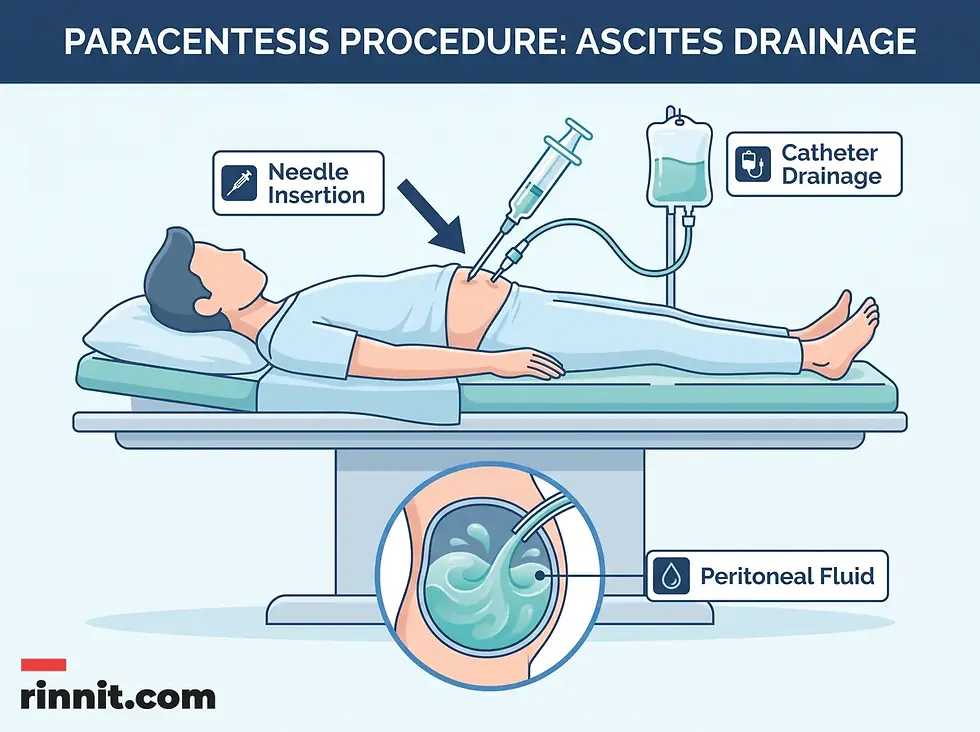
Illustration of a paracentesis procedure showing needle insertion into the abdomen and catheter drainage of peritoneal fluid.
Why Paracentesis Is Done
Diagnostic paracentesis
A fluid sample can help your provider identify common causes of ascites [1]:
Category | Examples |
|---|---|
Liver disease | Cirrhosis (the most common cause of ascites) and portal hypertension, which is high blood pressure in the main vein of the liver |
Organ failure | Liver failure and heart failure |
Infection | The fluid can become infected and cause inflammation of the peritoneum (peritonitis) |
Cancer | Most often ovarian, uterine, cervical, colon, stomach, pancreatic, and liver cancer |
Source: Cleveland Clinic [1].
Therapeutic paracentesis
Draining fluid can relieve the symptoms of ascites [1]:
Abdominal pain and pressure
A large or growing belly
Shortness of breath
Constipation, indigestion, and bloating
Paracentesis can sometimes be life-saving. Studies have shown that people with cirrhosis-related ascites who are admitted to the hospital live longer if they have paracentesis, and people with bacterial peritonitis receive life-saving antibiotics sooner [1].
How the Procedure Works
Preparation
Your provider will explain the procedure and check that it is right for you [1]. They will:
Review your history, including previous surgeries, allergies, how you responded to anesthesia, and whether you are pregnant.
Advise on medicines and supplements. You may need to stop blood thinners such as aspirin or warfarin, vitamins, and supplements, or adjust NSAIDs or certain diabetes medicines.
Advise on fasting. You may need to stop certain liquids or foods beforehand.
Ask you to empty your bladder, so it is empty during the procedure.
During the procedure
Paracentesis can be done in a provider's office or at a hospital. A healthcare provider will [1]:
Position you, usually on your back, with the bed flat or slightly raised at the head.
Clean and numb the area with a small injection. You may feel a quick prick as the needle goes in.
Insert the needle and catheter above the fluid, often guided by ultrasound, then place a small plastic catheter to help the fluid drain.
Drain the ascites with a syringe or, for several liters, a vacuum-powered container that makes the process faster.
Remove the needle and bandage the site, applying pressure to stop any bleeding.
The procedure takes 20 to 45 minutes, depending on how much fluid is removed. A diagnostic tap usually removes about 25 ml. For a therapeutic tap, removing 5 liters is often enough to relieve pressure, and more may be removed if ascites keeps coming back [1]. Ultrasound guidance is common because it helps the provider see exactly where the fluid is and has been shown to reduce complications [2]. Let your provider know if you feel uncomfortable or light-headed, which is more likely when large amounts of fluid are removed. They can give you pain medicine if needed [1].
What Happens After Paracentesis
Your care team will monitor your vital signs for about an hour afterward. A small amount of clear fluid may seep from the bandaged site for a short time, and this is normal [1].
Analyzing the Fluid
After a diagnostic paracentesis, the fluid goes to a lab for analysis. The tests may include [1]:
Complete blood count (CBC): checks the cells in the fluid. High white blood cell levels may signal inflammation or infection.
Bacteria culture: shows whether the fluid is infected and which bacteria are responsible, so the right antibiotic can be chosen.
Cytology: looks for cell abnormalities that may be signs of cancer.
Chemical markers: levels of albumin, alkaline phosphatase, amylase, glucose, LDH, and protein help show whether ascites likely comes from cancer, infection, organ injury, organ damage such as heart failure, or other common causes.
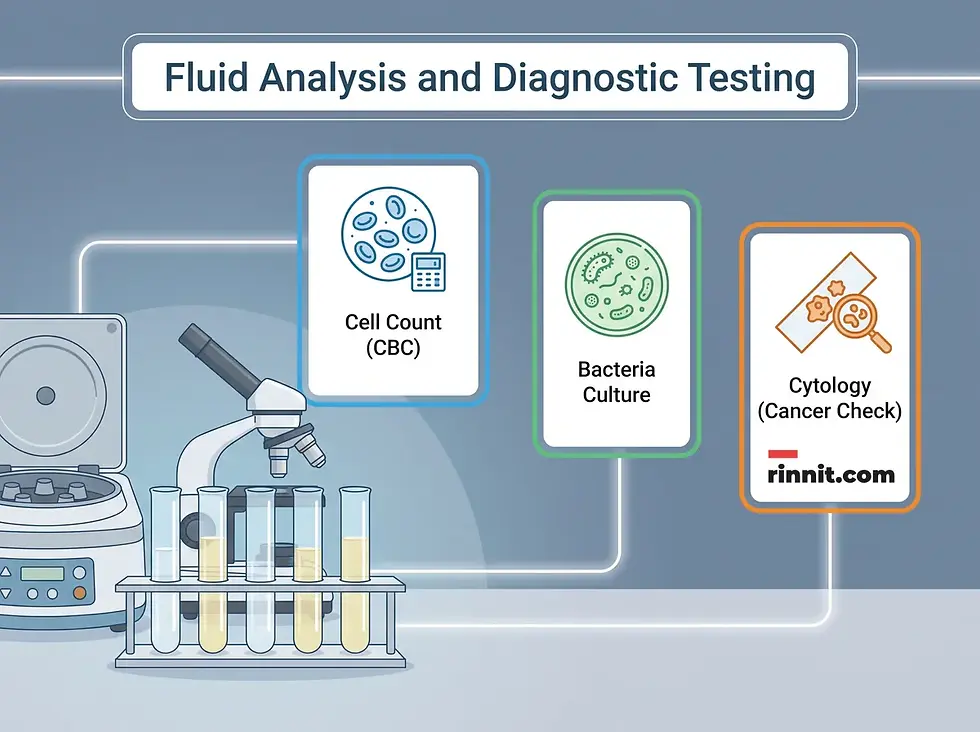
Fluid analysis and diagnostic testing after paracentesis, including cell count, bacteria culture, and cytology.
Risks and Benefits
Paracentesis can relieve symptoms and help your provider work out why fluid is building up [1]. Complications are rare, but they can include [1]:
An infection
Ongoing leakage at the wound site (a small amount of leakage is normal)
A needle piercing the bowel, bladder, or a blood vessel (extremely rare)
Internal bleeding or a hematoma, a blood clot beneath the skin
Low blood pressure
Recovery and Long-Term Management
Resting for the first 24 hours is a good idea. It may take a day or two for fluid to stop seeping from the site, but the body should recover quickly. Follow your provider's guidance on when to return to normal activities [1].
Wound care: wash your hands for at least 20 seconds before changing the dressing and watch for redness or swelling.
Food: you may need a low-sodium diet, because too much sodium makes you retain fluid.
Water pills: you may need diuretics to help flush out excess salt and water so ascites does not return.
Hygiene: you may need to avoid baths or showers until the wound heals and use sponge baths instead.
The fluid returns for some people. Some need paracentesis only once, while others return as often as every few weeks [1]. If ascites comes back frequently, your provider may place a tunneled peritoneal drainage catheter. Part of the tube sits inside the abdomen and part outside, attached to a bottle that collects fluid, which you drain at home [1]. In a meta-analysis of refractory ascites, permanent indwelling catheters seemed a good option in a palliative setting [3].

Recovery and post-procedure care after paracentesis: monitoring vital signs, bandage care, and warning signs such as fever and pain.
When to Call the Doctor
Contact your healthcare provider if you notice bleeding from the site or signs of infection [1]:
Fever and chills
Tenderness or redness at the site
Foul-smelling drainage or pus
Go to the emergency room if you have [1]:
Chest pain
Shortness of breath
Light-headedness
Severe pain or swelling in your abdomen
Bottom Line
Paracentesis is a low-risk procedure that drains abdominal fluid to relieve symptoms and to help find the cause of ascites. It may be a one-time procedure or something you need regularly, depending on the underlying condition. Ask your provider what to expect before the procedure, and call promptly if you notice signs of infection or bleeding [1].
Frequently Asked Questions
Is paracentesis painful?
You may feel a brief sting from the numbing injection, plus some pressure or discomfort while fluid drains, but it should not feel painful. Tell your provider if you feel uncomfortable or light-headed.
How much fluid can be removed?
A diagnostic tap removes about 25 milliliters. A therapeutic tap often removes about 5 liters, and sometimes more if ascites keeps returning.
How long does paracentesis take?
Paracentesis takes about 20 to 45 minutes, depending on how much fluid is removed.
Where is paracentesis done, and how long is recovery?
Paracentesis can be done in a provider's office or a hospital. Your care team watches your vital signs for about an hour afterward, and resting for the first 24 hours is a good idea.
Why do I need to empty my bladder first?
An empty bladder lowers the chance of the needle injuring it. Injury to the bladder is extremely rare.
Will the fluid come back?
For some people it does. Some need only one tap, while others return as often as every few weeks. A tunneled drainage catheter is an option if it keeps returning.
What are the risks of paracentesis?
Complications are rare. They include infection, ongoing leakage, bleeding or a hematoma, low blood pressure, and, extremely rarely, injury to the bowel, bladder, or a blood vessel.
Can I have paracentesis during pregnancy?
Yes. Your provider will take care to keep you and the fetus safe.
Is leakage from the bandage normal, and can I shower?
A small amount of clear fluid seeping from the site is normal. You may need to avoid baths or showers until the wound heals, so follow your provider's instructions.
Do I need to fast or stop medicines beforehand?
Possibly. You may need to stop certain liquids or foods, blood thinners, or certain medicines. Follow your provider's instructions.
When should I call my doctor after paracentesis?
Contact your healthcare provider if you notice bleeding from the site or signs of infection such as fever and chills, tenderness or redness at the site, or foul-smelling drainage or pus. Go to the emergency room for chest pain, shortness of breath, light-headedness, or severe pain or swelling in your abdomen [1].
Related Resources
External resource for deeper reading:
Cleveland Clinic. Paracentesis. Cleveland Clinic. Medically reviewed; last updated November 21, 2023. https://my.clevelandclinic.org/health/procedures/paracentesis
Related Reading
References
Cleveland Clinic. Paracentesis. Cleveland Clinic Health Library. Last updated November 21, 2023. https://my.clevelandclinic.org/health/procedures/paracentesis
Millington SJ, Koenig S. Better with ultrasound: paracentesis. Chest. 2018;154(1):177-184. PMID: 29630894. DOI: 10.1016/j.chest.2018.03.034
Will V, Rodrigues SG, Berzigotti A. Current treatment options of refractory ascites in liver cirrhosis - a systematic review and meta-analysis. Dig Liver Dis. 2022;54(8):1007-1014. PMID: 35016859. DOI: 10.1016/j.dld.2021.12.007
Khajuria R, Jindal A, Sharma MK, et al. Efficacy and safety of carvedilol in cirrhosis patients with new-onset uncomplicated ascites without high-risk esophageal varices (CARVE-AS trial). Am J Gastroenterol. 2026;121(6):1372-1381. PMID: 40689908. DOI: 10.14309/ajg.0000000000003650
Medical disclaimer
This article is for informational purposes only and is not a substitute for professional medical advice, diagnosis, or treatment. Always seek the advice of your physician or other qualified health provider with any questions you may have about a medical condition.



Comments