Alginates for GERD: A Natural Barrier Against Acid Reflux

Updated: 3 days ago
Medically reviewed by {i}Dr. Baraa Alnahhal, MD{/i} · Last reviewed: October 2026
Quick Answer
Alginates are seaweed-based compounds that treat GERD by forming a gel-like raft on top of stomach acid, keeping acid out of the esophagus and giving immediate heartburn relief [1]. They may work better than antacids, although pooled trial results are mixed, and generally safe for children and pregnant individuals, but people with kidney disease should consult a provider about sodium content [1].
What the research says
Alginates looked better than placebo or antacids in some trials, but pooled results were not statistically significant. A meta-analysis of 10 articles covering 11 randomized trials found better outcomes with alginates versus placebo or antacids in a qualitative analysis of four trials. The pooled analysis, however, showed no statistically significant difference for relief of heartburn, regurgitation, or dyspepsia, and the risk of adverse events and treatment withdrawal did not differ (PubMed: Zhao et al., Eur Rev Med Pharmacol Sci, 2020) [2].
Adding alginate to a PPI did not significantly improve on the PPI alone. In a meta-analysis of 4 randomized trials with 608 patients, the change in heartburn score favored PPI plus alginate but was not statistically significant (standardized mean difference -0.29; 95% CI -0.78 to 0.19). Adverse events were similar between groups (odds ratio 0.93; 95% CI 0.58 to 1.47) (PubMed: Xu and Zhuang, J Voice, 2024) [3].
PPIs remain the stronger option for reflux symptoms. A network meta-analysis of 23 randomized trials with 10,735 adults who had endoscopy-negative reflux disease found PPIs superior to most other drugs. For failure to achieve complete symptom relief at 4 weeks or more, 30 ml of alginate four times daily combined with omeprazole 20 mg, and 30 ml of alginate three times daily, ranked second and third behind dexlansoprazole 30 mg, and all drugs were safe and well tolerated (PubMed: Barberio et al., Neurogastroenterol Motil, 2022) [4].
What Are Alginates?
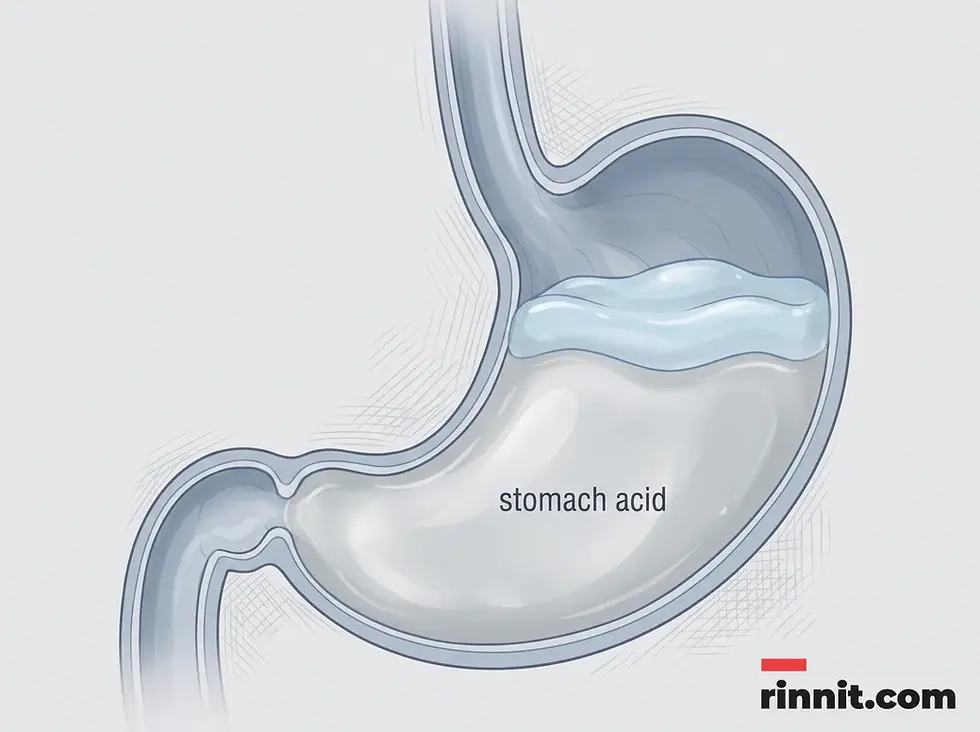
Alginates are natural, seaweed-derived compounds [1] that have become a cornerstone in the management of gastroesophageal reflux disease (GERD). When ingested, these compounds react with gastric acid to form a thick, buoyant gel [1]. This gel acts as a physical barrier, often referred to as a "raft," that sits at the junction between the stomach and the esophagus. This unique mechanism prevents stomach acid and food from refluxing upward, thereby protecting the sensitive lining of the esophagus from chemical irritation and potential damage.
Unlike many other GERD treatments, alginates are available over the counter and come in various user-friendly forms, including chewable tablets, powders, and liquid suspensions [1]. This accessibility makes them a popular choice for individuals seeking immediate relief from occasional heartburn or chronic reflux symptoms.
Alginates vs. Other GERD Treatments
While alginates are highly effective, they function differently than other common acid-reflux medications. Understanding these differences is essential for choosing the right treatment for specific symptoms.
What are the benefits and safety profile of alginates for GERD?
One of the primary advantages of alginates is their speed of action. Because they create a physical barrier almost immediately upon contact with stomach acid, they can be taken during or right after a meal [1] to prevent symptoms before they start. Furthermore, alginates are noted for their high safety profile across diverse patient populations.
Pregnancy and Lactation: Alginates are generally considered safe for use by pregnant and breastfeeding women [1], providing a non-systemic option for managing pregnancy-related heartburn.
Pediatric Use: Many formulations are safe for children [1], though parents should always consult a pediatrician for appropriate dosing.
Minimal Systemic Absorption: Since alginates work physically rather than chemically altering the body's systems, they typically result in fewer systemic side effects compared to PPIs or H2 blockers.
Precautions and Risks
Despite their safety, alginates are not suitable for every condition or individual. Certain health factors require professional medical consultation before starting treatment.
Kidney Disease: Some alginate brands contain significant amounts of sodium. Patients with kidney disease or those on sodium-restricted diets must consult their healthcare provider to avoid complications.
Esophageal Damage: Alginates are designed to manage symptoms and should not be used as a primary treatment for severe esophageal erosions, ulcers, or Barrett's esophagus [1].
Medication Interactions: The gel barrier formed by alginates can potentially interfere with the absorption and effectiveness of other oral medications. It is often recommended to space alginates apart from other drugs.

What are the potential side effects of alginates for GERD?
Side effects of alginates for GERD are minimal [1], but some users may experience digestive discomfort. The most commonly reported issues include bloating and constipation, often resulting from the gel's presence in the digestive tract. If these symptoms persist or become severe, users should discontinue use and seek medical advice. Additionally, if alginates fail to provide relief after consistent use, it may indicate a more serious underlying condition that requires advanced diagnostic evaluation or alternative prescription therapies.

Conclusion
Alginates offer a natural and effective solution for individuals struggling with the discomfort of GERD. By providing a physical barrier against acid reflux, they bridge the gap between simple antacids and stronger prescription medications. Their rapid action and favorable safety profile make them an excellent first-line option for many, provided they are used in accordance with professional medical guidance and personal health considerations.
Frequently Asked Questions
1. How do alginates work for GERD?
Alginates react with stomach acid to form a gel-like "raft" that floats on top of the acid, physically blocking it from refluxing into the esophagus.
2. Are alginates safe during pregnancy?
Yes, alginates are generally considered safe for pregnant and lactating women as they provide a physical barrier rather than a systemic chemical change.
3. What is the difference between alginates and antacids?
Antacids work by neutralizing stomach acid, while alginates create a physical barrier to keep the acid in the stomach.
4. Can I take alginates with other medications?
Alginates can interfere with the absorption of other drugs. It is best to consult a healthcare provider about the timing of your medications.
5. Do alginates have side effects?
Side effects are minimal but can include bloating or constipation in some individuals.
6. Are alginates more effective than PPIs?
Some trials suggest alginates work better than antacids, though pooled results are not conclusive, and PPIs remain the stronger option for ongoing reflux symptoms.
7. Can I buy alginates without a prescription?
Yes, alginates are widely available over the counter in pharmacies and grocery stores.
8. Should people with kidney disease take alginates?
Individuals with kidney disease should consult their doctor first, as some alginate formulations contain sodium.
9. Can children take alginates?
Yes, many alginate products are safe for children, but a pediatrician should be consulted for proper dosage.
10. When should I take alginates?
Alginates are most effective when taken during or immediately after a meal, or right before bedtime to prevent nighttime reflux.
Related Reading
Acid Reflux & GERD: Symptoms, Causes, Diagnosis, and Treatment explains GERD symptoms, diagnosis and treatment options.
Heartburn: What It Is, Why Stomach Acid Causes the Burn, and How to Get Relief covers what causes heartburn and how to relieve it.
Understanding Heartburn During Pregnancy: Causes, Symptoms, and Relief explains safe heartburn relief during pregnancy.
Understanding Laryngopharyngeal Reflux (LPR): Symptoms, Causes, and Care describes reflux that affects the throat and voice.
References
Cleveland Clinic. Alginates for GERD. Cleveland Clinic. Mar. 26, 2025. https://my.clevelandclinic.org/health/treatments/alginates
Zhao CX, Wang JW, Gong M. Efficacy and safety of alginate formulations in patients with gastroesophageal reflux disease: a systematic review and meta-analysis of randomized controlled trials. Eur Rev Med Pharmacol Sci. 2020;24(22):11845-11857. PMID 33275256. https://doi.org/10.26355/eurrev_202011_23841
Xu X, Zhuang P. A Meta-analysis of PPIs Plus Alginate Versus PPIs Alone for the Treatment of GERD. J Voice. 2024;40(4):1146-1153. PMID 38493017. https://doi.org/10.1016/j.jvoice.2024.02.011
Barberio B, Visaggi P, Savarino E, et al. Comparison of acid-lowering drugs for endoscopy negative reflux disease: Systematic review and network Meta-Analysis. Neurogastroenterol Motil. 2022;35(1):e14469. PMID 36153790. https://doi.org/10.1111/nmo.14469
Medical Disclaimer
This article is for informational purposes only and does not constitute medical advice. Always seek the advice of your physician or other qualified health provider with any questions you may have regarding a medical condition. Never disregard professional medical advice or delay in seeking it because of something you have read here.



Comments