Understanding Laryngopharyngeal Reflux (LPR): Symptoms, Causes, and Care

Updated: 2 days ago
Medically reviewed by Dr. Baraa Alnahhal, MD · Last reviewed: September 2026
TL;DR: Laryngopharyngeal Reflux (LPR), often called "silent reflux," occurs when stomach acid travels up to the throat and voice box. Unlike typical acid reflux, it may not cause heartburn but leads to hoarseness, chronic throat clearing, and a persistent cough. Management primarily involves lifestyle and dietary changes, such as eating smaller meals and avoiding triggers, with medication used to support the healing process.
Quick Answer: Laryngopharyngeal Reflux (LPR) is a condition where stomach juices, including acid, rise past the esophagus into the larynx (voice box) and pharynx (throat). It is often called "silent reflux" because it frequently lacks typical symptoms like heartburn. Common signs include chronic hoarseness, a "lump" sensation in the throat, and excessive mucus. Treatment focuses on dietary adjustments, lifestyle changes to reduce abdominal pressure, and medications like proton pump inhibitors to allow sensitive throat tissues to heal.

Laryngopharyngeal reflux, commonly abbreviated as LPR, represents a specific clinical manifestation of acid reflux where gastric contents bypass the traditional esophageal boundaries to reach the throat and voice box. This condition is frequently referred to as "silent reflux" because many individuals do not experience the burning chest pain or indigestion typically associated with gastroesophageal reflux disease (GERD). Instead, the primary irritation occurs in the larynx and pharynx, areas that lack the protective lining found in the esophagus.
The prevalence of LPR is significant in clinical settings, with healthcare professionals estimating that more than half of individuals presenting with chronic hoarseness are affected by the condition. Approximately 10% of visits to throat specialists result in an LPR diagnosis. Because the symptoms often mimic those of a persistent cold or seasonal allergies, many people remain unaware that stomach acid is the underlying cause of their throat irritation.
Symptoms and Clinical Presentation
The symptoms of LPR are diverse and primarily centered on the upper respiratory tract and throat. Chronic hoarseness or a noticeable lowering of the voice register are among the most common indicators. Many individuals also report a "globus sensation," which is the feeling of having a persistent lump or something stuck in the throat that cannot be cleared.
Additional signs include a chronic cough, excessive phlegm or mucus production, and frequent throat clearing. In some cases, LPR can lead to difficulty swallowing, a chronic sore throat, or laryngitis. Because the acid can reach the sinuses and lungs, it may also contribute to wheezing, postnasal drip, and the worsening of asthma symptoms or frequent upper respiratory infections.
Causes and Physiological Triggers
LPR occurs when the body's natural defenses against reflux fail. Gastric juices must pass through two muscular valves: the lower esophageal sphincter (LES) and the upper esophageal sphincter (UES). While standard acid reflux involves a weakened LES, LPR specifically happens when the UES also relaxes inappropriately, allowing acid already in the esophagus to creep higher into the sensitive tissues of the throat.
Several factors can weaken these sphincters, either temporarily or progressively. Medications such as certain sedatives, blood pressure treatments, and antidepressants may have a relaxing effect on these muscles. Dietary choices, including coffee, chocolate, alcohol, and mint, are also known triggers. Lifestyle factors like lying down immediately after eating or wearing tight clothing around the abdomen can increase the pressure that forces acid upward.
Factor Category | Common Triggers and Influences |
Dietary Triggers | Coffee, chocolate, alcohol, mint, garlic, and onions. |
Medications | NSAIDs, benzodiazepines, calcium channel blockers, and hormone therapy. |
Lifestyle Habits | Smoking, reclining after meals, and eating large portions. |
Physical Factors | Obesity, pregnancy, and the presence of a hiatal hernia. |
Diagnostic Procedures
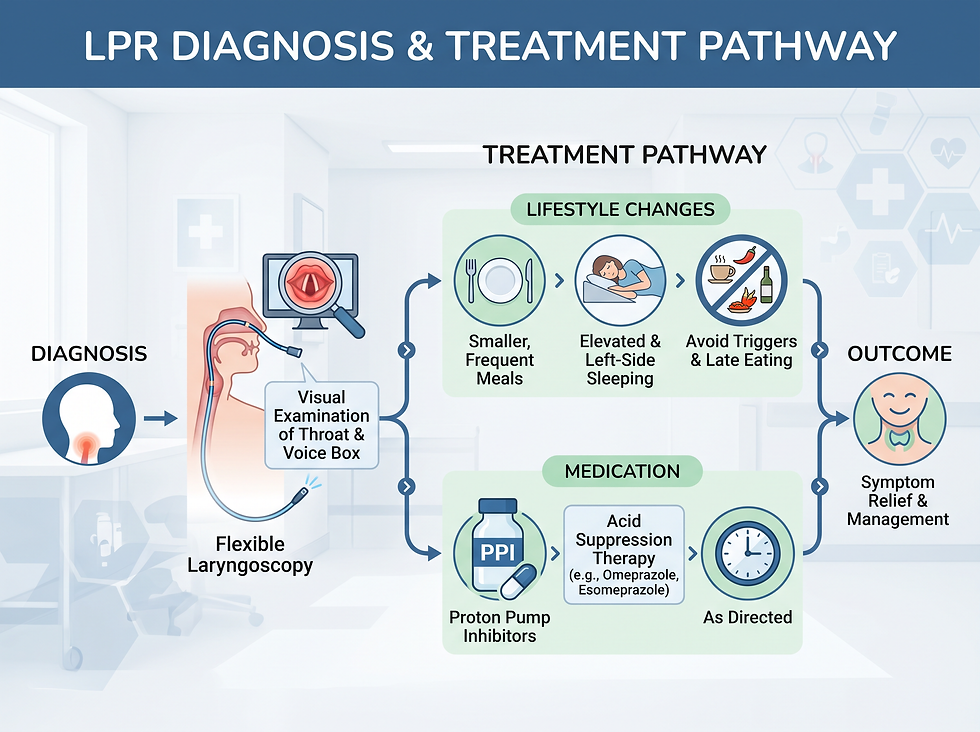
Diagnosing LPR typically involves a specialized evaluation by an ear, nose, and throat (ENT) professional. The process often begins with a flexible laryngoscopy, where a thin, lighted tube is passed through the nose to view the throat for signs of inflammation or tissue damage. If LPR is suspected, a provider may recommend a trial of medication to see if symptoms improve, confirming the diagnosis through successful treatment.
In more complex cases, additional testing may be required to assess the severity of the reflux or rule out other conditions. An upper endoscopy allows for a closer look at the esophagus and stomach, while an esophageal pH test monitors acid levels over a 24-hour period. Esophageal manometry may also be used to measure the strength and coordination of the sphincter muscles.
Diagnostic Tool | Primary Purpose and Function |
Flexible Laryngoscopy | Direct visualization of throat inflammation and tissue damage. |
Upper Endoscopy | Evaluation of the esophagus, stomach, and sphincter integrity. |
Esophageal pH Test | 24-hour monitoring of acid levels in the throat and esophagus. |
Esophageal Manometry | Measurement of muscle activity and sphincter pressure. |
Management and Treatment Strategies

The primary approach to managing LPR involves addressing the underlying causes through lifestyle and dietary modifications. Because LPR can be triggered by even small amounts of reflux, these adjustments are often highly effective. Healthcare providers recommend eating five to six small meals throughout the day rather than three large ones and avoiding spicy, rich, or acidic foods that increase gastric irritation.
Medication plays a supporting role, primarily to neutralize acid and protect sensitive tissues while they heal. Proton pump inhibitors (PPIs) or H2 blockers may be prescribed for several months. It is important to note that healing throat tissues can take time, and it may be several months before the full impact of lifestyle changes is felt. Surgery is rarely necessary and is typically reserved for cases involving structural defects like a hiatal hernia.
Conclusion
Laryngopharyngeal reflux is a manageable condition that requires a proactive approach to dietary and lifestyle habits. By identifying personal triggers and protecting the voice and throat during the healing process, most individuals can achieve significant relief without the need for long-term medication. Early diagnosis and consistent management are key to preventing complications such as vocal cord lesions or chronic respiratory irritation.
Call to Action: If you are experiencing persistent hoarseness, a chronic cough, or the sensation of a lump in your throat, consult with a healthcare professional or an ear, nose, and throat specialist. Identifying LPR early can help you implement the necessary lifestyle changes to protect your vocal health and long-term well-being.
Frequently Asked Questions
1. What exactly is "silent reflux"?
Silent reflux, or LPR, is a type of acid reflux that affects the throat and voice box rather than the chest. It is called "silent" because it often lacks the typical heartburn symptoms associated with standard reflux.
2. How does LPR differ from GERD?
GERD primarily affects the lower esophagus and causes heartburn. LPR involves acid traveling higher up into the throat (larynx and pharynx) and causes symptoms like hoarseness and throat clearing.
3. Can I have LPR and GERD at the same time?
Yes, some individuals experience both conditions simultaneously, while others only have the throat-centered symptoms of LPR.
4. Why does LPR cause hoarseness?
Stomach acid is highly irritating to the vocal cords. When acid reaches the larynx, it causes inflammation (laryngitis), which results in a raspy or lowered voice register.
5. What is the "globus sensation"?
Globus sensation is the feeling that something is stuck in your throat or that there is a persistent lump that you cannot swallow or clear away.
6. Can LPR affect my breathing?
Yes, if acid particles are inhaled into the windpipe or lungs, a process known as silent aspiration, it can cause wheezing, chronic cough, and worsening of asthma.
7. Are there specific foods I should avoid?
Common triggers include caffeine, chocolate, alcohol, mint, spicy foods, and acidic items like citrus or onions, all of which can relax the esophageal sphincters.
8. Does smoking affect LPR?
Smoking is a significant risk factor as tobacco smoke relaxes the esophageal sphincters and is often associated with chronic coughing, which increases abdominal pressure.
9. How is LPR diagnosed?
Diagnosis is typically made by an ENT specialist through a physical exam, a review of symptoms, and procedures like a flexible laryngoscopy to view the throat.
10. What is a flexible laryngoscopy?
It is a simple in-office procedure where a thin, lighted camera is passed through the nose to allow a doctor to see the inside of the throat and larynx.
11. Is medication always necessary for LPR?
Not always. Many people find relief through lifestyle and dietary changes alone, though medications like PPIs can help speed up the tissue healing process.
12. How long does it take for LPR to heal?
Throat tissues are very sensitive and take time to recover. It may take several months of consistent lifestyle changes and medication before symptoms fully resolve.
13. Can LPR lead to cancer?
Long-term, untreated inflammation of the larynx due to chronic acid exposure is considered a risk factor for the development of laryngeal cancer.
14. Why is sleeping on the left side recommended?
Sleeping on your left side positions the lower esophageal sphincter in an air pocket above the stomach contents, which helps prevent reflux during the night.
15. When should I see a doctor about throat clearing?
If you find yourself clearing your throat constantly for more than a few weeks, especially if accompanied by hoarseness or a cough, you should seek a professional evaluation.
Related Reading
Medical Disclaimer: The information provided in this article is for educational purposes only and is not intended as medical advice, diagnosis, or treatment. Always seek the advice of your physician or other qualified health provider with any questions you may have regarding a medical condition. Never disregard professional medical advice or delay in seeking it because of something you have read here.
Comments