Abdominoperineal Resection (APR Surgery)

Updated: 2 days ago
Medically reviewed by Dr. Baraa Alnahhal, MD · Last reviewed: October 2026
Quick Answer
Abdominoperineal resection (APR) is a surgery that removes the lower large intestine and the anal opening to treat rectal cancer, so surgeons create a permanent colostomy for waste elimination [1]. It can be done through large incisions or laparoscopically [1]. Patients typically spend several days in the hospital [1], and long-term success depends on strict lifting restrictions and regular follow-up care.
What the research says
For very-low rectal cancers that do not involve the sphincter, APR and low anterior resection had similar cancer outcomes. In a US multicenter registry analysis of 431 patients with stage I to III rectal cancer located less than 5 cm from the anorectal junction (154 of them, 35.7%, had an APR), disease-free survival did not differ between APR and low anterior resection (adjusted hazard ratio 0.90; 95% CI 0.53 to 1.52; P=.70) over a median follow-up of 42.5 months. Overall survival and complication rates also did not differ significantly, and the authors concluded the findings support either operation for very-low rectal cancer without sphincter involvement (PubMed: Muldoon et al., J Gastrointest Surg, 2024) [2].
Placing a flap of omentum into the pelvis after APR did not improve wound healing and was linked to more perineal hernias. A meta-analysis of 14 studies (1,894 patients, 839 of whom had omentoplasty after APR) found no significant reduction in presacral abscess (relative risk 1.11; 95% CI 0.79 to 1.56), while the risk of perineal hernia was higher with omentoplasty (relative risk 1.85; 95% CI 1.26 to 2.72). The authors said the findings do not support routine omentoplasty in APR for cancer (PubMed: Blok et al., Ann Surg, 2020) [3].
What is an abdominoperineal resection (APR surgery)?
Abdominoperineal resection, commonly known as APR surgery, is a definitive treatment for rectal cancer. It is specifically recommended when a cancerous tumor is situated so low in the rectum that it involves or is dangerously close to the anal sphincter muscles. By removing the anus, rectum, and a portion of the sigmoid colon, surgeons aim to achieve complete tumor removal and reduce the risk of local recurrence.
The surgery is considered a major intervention and is often performed by colorectal specialists. Depending on the patient's health and the tumor's characteristics, the procedure may be done via an open approach with a single large incision or through minimally invasive laparoscopic or robotic methods [1]. Regardless of the technique, the result is a permanent change in how the body eliminates waste, requiring the use of a colostomy bag [1].

Preparing for Surgery
Preparation for an APR is extensive and involves multiple healthcare professionals. Patients must undergo various tests, including blood work and advanced imaging like CT or MRI scans [1], to map the extent of the disease. A critical part of the preparation is meeting with an ostomy nurse to determine the best location on the abdomen for the stoma [1].
Preparation Step | Action Required |
Lifestyle Changes | Stop smoking several weeks prior; avoid alcohol [1] |
Medication Review | Disclose all medications, supplements, and sleep apnea history [1] |
Dietary Restrictions | Clear liquid diet starting the day before surgery [1] |
Bowel Preparation | Complete bowel cleansing the morning of the procedure [1] |
How is abdominoperineal resection (APR) surgery performed?
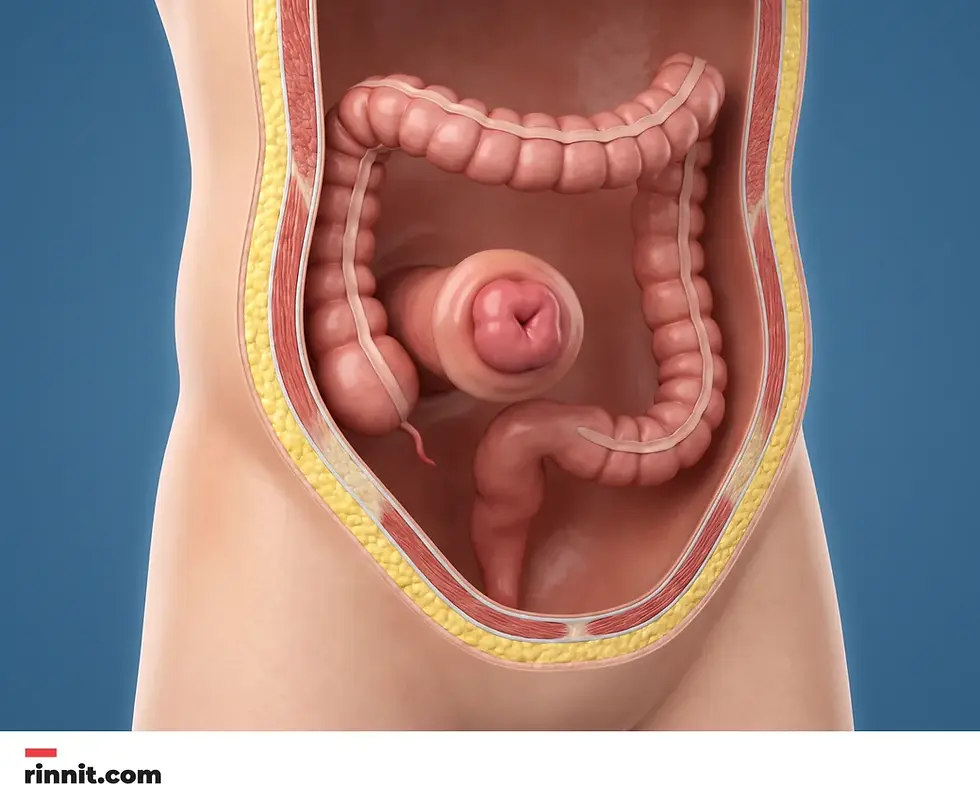
During the operation, the patient is placed under general anesthesia [1]. The surgeon begins by making incisions in the belly to access the pelvic organs. The sigmoid colon, rectum, and anus are carefully detached from their surrounding blood vessels and removed as a single unit [1]. This collective removal is necessary because these organs share a common vascular supply and lymphatic drainage path.
Once the organs are removed, the surgeon removes the associated lymph nodes [1] to check for the spread of cancer. The skin where the anus was previously located is then permanently closed [1]. Finally, the surgeon brings the end of the remaining colon through an opening in the abdominal wall to create the permanent stoma [1]. The entire process typically takes several hours to complete [1].
What are recovery and outlook like after abdominoperineal resection (APR)?
Following an APR, patients remain in the hospital for several days [1] to ensure stable recovery. During this time, a catheter is used to drain the bladder, and a drainage tube may be placed in the abdomen [1] to prevent fluid buildup. Pain management is a priority, and patients are encouraged to begin walking and transitioning to soft foods as soon as possible [1].
The Recovery Timeline
Recovery from major abdominal surgery is a gradual process. The first few weeks focus on wound healing and mastering ostomy care. Patients are provided with one-on-one education from ostomy nurses and are given the necessary supplies for home care [1].
First 24-48 Hours: Transition to soft foods and initial walking.
Days 3-7: Hospital discharge once pooping and pain management are stable.
Weeks 1-6: Gradual return to light activities; continued soft food diet.
Weeks 6-8: Lifting restrictions (no heavy objects) to prevent hernias [1].

What are the risks and complications of abdominoperineal resection (APR)?
As with any major surgery, APR carries significant risks [1]. Potential immediate complications include bleeding, infection, and the development of blood clots in the legs that could travel to the lungs [1]. Long-term risks include the development of a perineal hernia in the area where the rectum was removed or a hernia around the stoma site [1]. Patients must monitor their recovery closely and contact their surgeon immediately if they experience high fever, severe abdominal pain, or significant difficulty with their ostomy [1].
Conclusion
Abdominoperineal resection is a life-saving procedure that requires significant physical and emotional adjustment. While the transition to living with a permanent colostomy is challenging, the surgery remains a vital tool in the fight against lower rectal cancer. By working closely with a dedicated surgical and nursing team, patients can successfully navigate the recovery process and return to a high quality of life.
Frequently Asked Questions
1. What is the difference between APR and other rectal surgeries?
APR involves the permanent removal of the anus and rectum, whereas other surgeries may allow for the reconnection of the bowel to the anal canal.
2. Is a colostomy after APR surgery permanent?
Yes, because the anal opening is removed and closed, a colostomy is a permanent requirement for waste elimination.
3. How long will I be in the hospital after APR?
Most patients stay in the hospital for several days to ensure they can manage their pain and care for their new ostomy.
4. When can I return to work after surgery?
Return to work depends on your healing progress and the nature of your job, but it typically takes at least a few weeks.
5. Are there lifting restrictions after an APR?
Yes, you must avoid lifting heavy objects for six to eight weeks to reduce the risk of developing a hernia.
6. Can I shower with a colostomy bag?
Yes, you can shower as usual, but you should avoid soaking in baths, hot tubs, or swimming pools during the initial recovery period.
7. What are the signs of an infection after surgery?
Signs include a fever over 101.5°F, redness, swelling, or increased pain at the incision sites.
8. Will I need a special diet after surgery?
You will need to follow a soft food diet for several weeks as your digestive system adjusts to the changes.
9. Can APR surgery be performed laparoscopically?
Yes, many surgeons use laparoscopic or robotic techniques to perform APR, which involves smaller incisions and potentially faster recovery.
10. What is a perineal hernia?
A perineal hernia is a potential complication where internal tissues bulge through the area where the anus and rectum were removed.
Related Reading
What Is Rectal Cancer? A Plain-Language Guide to the Signs, Causes, and Treatment explains rectal cancer symptoms, diagnosis and treatment.
Colostomy: Procedure, Types, and Recovery describes the permanent colostomy created during APR.
Anal Cancer: Symptoms, Causes, Treatment & Complete Guide covers anal cancer, which sometimes requires APR.
Colectomy: Types, Procedure, Risks and Recovery Explained explains surgery to remove part of the colon.
References
Cleveland Clinic. Abdominoperineal Resection (APR): Procedure & Recovery. Cleveland Clinic. Jul. 16, 2025. https://my.clevelandclinic.org/health/treatments/3897-laparoscopic-abdominoperineal-resection-basic-surgical-steps
Muldoon RL, Bethurum AJ, Gamboa AC, et al. Comparison of outcomes of abdominoperineal resection vs low anterior resection in very-low rectal cancer. J Gastrointest Surg. 2024;28(9):1450-1455. PMID 38897287. https://doi.org/10.1016/j.gassur.2024.06.008
Blok RD, Hagemans JAW, Klaver CEL, et al. A systematic review and meta-analysis on omentoplasty for the management of abdominoperineal defects in patients treated for cancer. Ann Surg. 2020;271(4):654-662. PMID 30921047. https://doi.org/10.1097/SLA.0000000000003266
Medical Disclaimer
This article is for informational purposes only and does not constitute medical advice. Always seek the advice of your physician or other qualified health provider with any questions you may have regarding a medical condition. Never disregard professional medical advice or delay in seeking it because of something you have read here.



Comments