A Comprehensive Guide to the Nuss Procedure

Updated: 3 days ago
Medically reviewed by Dr. Baraa Alnahhal, MD · Last reviewed: October 2026
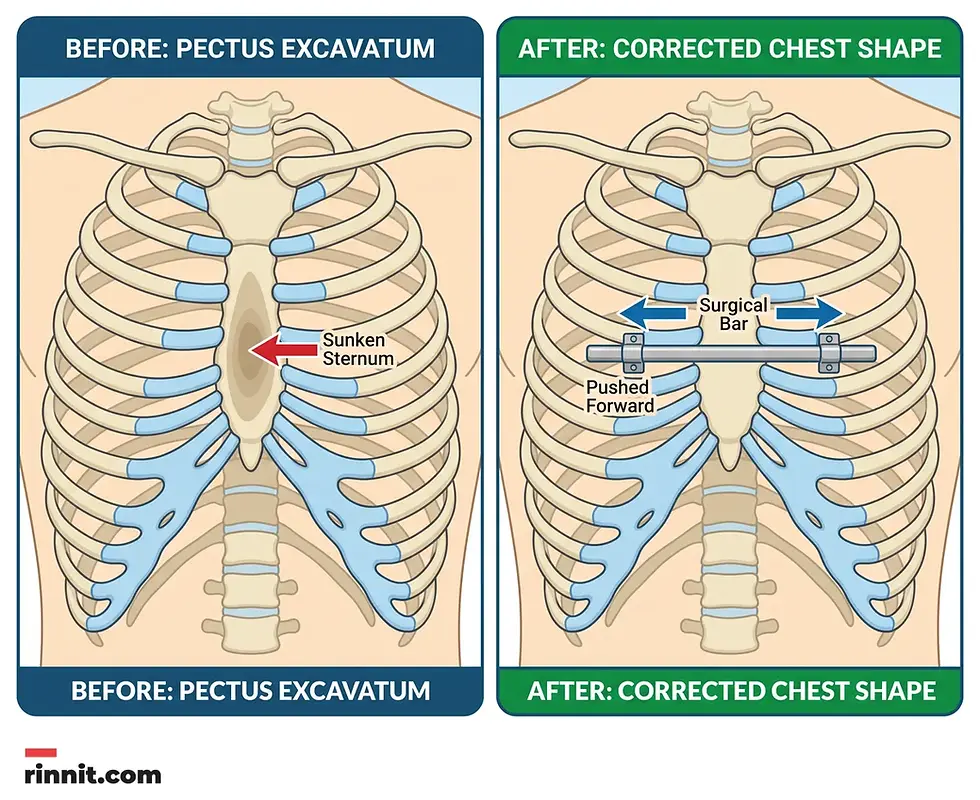
The Nuss procedure is a minimally invasive surgical technique used to correct pectus excavatum, a congenital condition where the breastbone appears sunken. [1] By inserting one or more curved titanium bars under the sternum, surgeons can immediately flatten the chest and allow for proper bone growth. While the recovery process takes approximately six months and the bars remain in place for three years, the procedure significantly improves physical health and appearance. [1]
Quick Answer: What is the Nuss procedure?
The Nuss procedure is a minimally invasive surgery that corrects a sunken chest by placing metal bars under the breastbone to push it forward. [1] Typically performed on teenagers, it takes up to four hours, and the bars stay in for three years before removal. [1] Most patients see immediate results, improved lung and heart function, and low recurrence. [1]
What the research says
Nerve cryoablation shortens the hospital stay. A meta-analysis of 11 studies (922 children after the Nuss procedure: 476 with intercostal nerve cryoablation and 446 controls) found a hospital stay shorter by 2.2 days (95% CI -2.8 to -1.8) at the cost of 23 more minutes in the operating room (95% CI 10-39), with reduced opioid use and comparable pain scores and complication rates (Marques et al., European Journal of Pediatric Surgery, 2025) [2].
Repair can improve heart function and exercise capacity. In a meta-analysis of 21 studies (1,087 patients, mean age 18.9 years), sternal advancement surgery, including minimally invasive repair, significantly improved resting cardiac output (P = 0.04), ejection fraction (P = 0.03) and exercise capacity (VO2max and oxygen pulse, both P < 0.001), with no significant change in respiratory parameters (Belgacem et al., Journal of Thoracic Disease, 2025) [3].
Bar displacement risk varies widely and can be reduced. A systematic review of 13 studies spanning 23 years found bar displacement rates from 0.9% to 33.3%, with stabilization methods such as bridge fixation, shorter bars, multipoint fixation and adjunct stabilizers significantly reducing displacement (Ahmed et al., Journal of Chest Surgery, 2025) [4].
What happens during Nuss procedure surgery and recovery?
The Nuss procedure is a significant surgical event that requires careful preparation and a structured recovery period to ensure the best possible outcome.
Stage | Key Details | Duration/Timeline |
Pre-Surgery | CT/MRI scans and lung function tests. [1] | Days before surgery. |
Procedure | Bar insertion under general anesthesia. [1] | Up to 4 hours. [1] |
Hospital Stay | Monitoring and pain management. | Usually overnight. [1] |
Initial Recovery | No heavy lifting or contact sports. [1] | First 4 weeks. |
Full Recovery | Return to all physical activities. | 6 months. [1] |
Bar Removal | Outpatient procedure to remove bars. [1] | After 3 years. [1] |

What are the benefits of the Nuss procedure?
The primary goal of the Nuss procedure is to restore the natural shape of the chest, which offers both aesthetic and functional advantages. By flattening the chest wall, the procedure alleviates pressure on the internal organs, allowing the heart and lungs to function more efficiently. [1]
Respiratory Function: Many patients report a significant reduction in shortness of breath and an increased ability to engage in prolonged physical activity. [1]
Cardiovascular Health: Relieving pressure on the heart can reduce heart palpitations and improve overall circulation.
Structural Stability: The titanium bars provide a stable framework for the breastbone to grow in the correct position, with a very low risk of the chest sinking again once the bars are removed. [1]
What are the risks of the Nuss procedure, and what is post-operative care like?
As with any surgery, the Nuss procedure carries certain risks, including bleeding, infection, and the potential for the metal bars to move out of place. [1] To minimize these risks, patients must follow strict guidelines during the first month of recovery.
Proper post-operative care involves maintaining a straight posture and avoiding any activities that involve twisting the torso. [1] Patients are advised to bend only at the hips and avoid rolling onto their sides while sleeping during the initial four-week period. [1] Pain management is also a critical component of recovery, often involving a combination of nerve cryoablation, acetaminophen, and other prescribed medications to ensure patient comfort. [1] [2]

What is the long-term outlook after the Nuss procedure?
The long-term success rate of the Nuss procedure is exceptionally high. [1] Most patients see a normal chest shape immediately after surgery, and the results are maintained long after the bars are removed at the three-year mark. Regular follow-up appointments with a surgeon are necessary to monitor wound healing and ensure the bars remain in the correct position until they are ready for removal. [1]
Frequently Asked Questions
What is the Nuss procedure?
The Nuss procedure is a minimally invasive surgery that uses metal bars to correct pectus excavatum, also known as a sunken chest.
At what age should the procedure be done?
The Nuss procedure is most commonly performed on teenagers, usually starting at age 14, though it can also be done on adults.
How long do the bars stay in the chest?
The bars typically remain in place for three years to allow the breastbone to grow into its new, correct shape.
Is the surgery painful?
Yes, it is a significant procedure, but pain is managed with nerve cryoablation and various medications during and after the hospital stay.
When can I go back to school or work?
Most patients are able to return to school or work within about one month after the surgery.
Are there restrictions on physical activity?
For the first month, heavy lifting, contact sports, and twisting movements must be avoided to prevent the bars from moving.
What happens if the bars move?
If you feel the bars have shifted, you should contact your healthcare provider immediately for an evaluation.
How long is the hospital stay?
Most patients stay in the hospital overnight, though some may require a slightly longer stay for monitoring.
Will the chest sink again after bar removal?
There is a very low risk of the breastbone sinking again once the bars have been in place for the full three years.
What are the main benefits of the surgery?
Benefits include an improved chest appearance, better heart and lung function, and relief from chest pain and shortness of breath.
Related Reading
Pectus Excavatum: What a Sunken Breastbone Means for Your Heart, Lungs, and Confidence explains sunken chest, the condition the Nuss procedure corrects.
Ravitch Procedure for Chest Wall Correction describes an open surgery alternative for chest wall correction.
Pectus Carinatum: Understanding Symptoms, Causes, and Modern Correction Options explains a protruding chest wall and how it is corrected.
Thoracoscopy: Types, How It's Done, Risks and Recovery covers the camera-guided chest technique used during the Nuss procedure.
References
Cleveland Clinic. Nuss Procedure. Cleveland Clinic. Last updated March 9, 2022. https://my.clevelandclinic.org/health/treatments/22635-nuss-procedure
Marques D, Vieira R, Fragoso A, et al. Intercostal nerve cryoablation for postoperative pain control after the Nuss procedure in children: a systematic review and meta-analysis. European Journal of Pediatric Surgery. 2025;36(3):198-209. PMID 40992428. https://doi.org/10.1055/a-2708-2796
Belgacem A, Abane C, Tricard J, et al. Sternal advancement surgery for pectus excavatum: a systematic review and meta-analysis of cardiac and respiratory function outcomes. Journal of Thoracic Disease. 2025;17(7):4897-4908. PMID 40809271. https://doi.org/10.21037/jtd-2025-347
Ahmed HS, Pulkurthi SR, Dias AF, et al. Bar dislocation after pectus excavatum repair: a systematic review of risk factors, stabilization techniques, and management strategies. Journal of Chest Surgery. 2025;58(3):85-98. PMID 40082081. https://doi.org/10.5090/jcs.24.118
Medical disclaimer
The information provided in this article is for educational purposes only and should not be used as a substitute for professional medical advice, diagnosis, or treatment. Always seek the advice of your physician or other qualified health provider with any questions you may have regarding a medical condition.



Comments