What Is Zika Virus? Symptoms, Causes, and Prevention

Updated: 3 days ago
Medically reviewed by Dr. Baraa Alnahhal, MD · Last reviewed: October 2026
Quick Answer
Zika virus is a viral infection spread mainly by Aedes mosquitoes, and also through sex, from pregnant person to baby and rarely through transfusion. Most people have no symptoms, though some get fever, rash, joint pain and red eyes. Infection in pregnancy can cause microcephaly and other birth defects. There is no specific medicine or vaccine, so prevention is key. [1] [2] [3]
What the research says
Birth defects are possible, but not the rule: According to PubMed, a systematic review and meta-analysis of 25 reports (4,683 participants, mostly from South America) found microcephaly in about 3.9% (95% CI 2.4 to 5.4) of newborns of mothers infected during pregnancy. Brain calcifications were the most commonly reported finding, followed by ventriculomegaly, joint abnormalities, and eye abnormalities. (Nithiyanantham et al., Can J Public Health, 2019)
Guillain-Barré syndrome is rare: Using data from 11 locations, researchers estimated about 2.0 reported cases of Guillain-Barré syndrome per 10,000 Zika infections (95% credible interval 0.5 to 4.5). (Mier-Y-Teran-Romero et al., BMC Med, 2018)
Babies without visible defects still need follow-up: A meta-analysis of 476 children exposed to Zika in the womb who had normal head size found language delay in 29.7% (95% CI 21.7 to 38.2), motor delay in 11.5% (4.8 to 20.1), and non-language cognitive delay in 6.5% (4.1 to 9.3). The authors note high variability between studies and no unexposed comparison group, so results should be read with caution. (Marbán-Castro et al., Int J Environ Res Public Health, 2022)
Key takeaways
Feature | Details |
Primary cause | A flavivirus spread by Aedes aegypti and Aedes albopictus mosquitoes |
Transmission | Mosquito bites, sexual contact, pregnancy (to the baby), rarely blood transfusion |
Common symptoms | Fever, rash, joint pain, red eyes, headache (most people have none) |
Major risk | Congenital Zika Syndrome: brain and other birth defects in babies infected before birth |
Diagnosis | Blood or urine tests for the virus |
Treatment | Symptom relief (rest, fluids, acetaminophen); no specific antiviral or vaccine |
Prevention | Insect repellent, protective clothing, screens or bed nets, safe sex, travel precautions |

Zika is carried by Aedes mosquitoes and is most dangerous during pregnancy.
What is Zika virus?
Zika is a viral infection caused by a flavivirus, a type of RNA virus usually spread by insects. The virus was first identified in the Zika Forest of Uganda in 1947, and it gained worldwide attention during a large outbreak in the Americas in 2015 and 2016. [1]
It is carried mainly by Aedes aegypti and Aedes albopictus mosquitoes. These mosquitoes live in many parts of the world, including parts of the United States, and Zika spreads in Mexico and parts of Central America, South America, Africa, and South and Southeast Asia. [1] For tips on avoiding bites in general, see our guide to mosquito bites.
How Zika spreads
Mosquito bites are the most common way to get Zika, but it can spread in other ways too. [1]
Mosquito bites: an Aedes mosquito bites an infected person and then bites someone else.
Pregnancy (vertical transmission): an infected pregnant person can pass the virus to the baby through the placenta.
Sexual contact: the virus can spread through oral, anal, or vaginal sex. It can stay in semen longer than in other body fluids, and it spreads even when the infected person has no symptoms or symptoms have ended. In one study in Puerto Rico, infectious virus was found in the semen of 8 of 97 patients for up to 38 days after it was first detected. [1][7]
Blood transfusion: rare, but reported.
What are the symptoms and causes of Zika virus?
For most people, Zika is a "silent" infection with no noticeable symptoms. When symptoms do appear, they are usually mild and last several days to about a week. [1]
Common signs of infection
Fever and headache: a mild rise in temperature with head pain.
Skin rash: a mix of raised and flat red or discolored areas, sometimes itchy.
Joint pain: especially in the hands and feet, often with general body aches.
Red eyes: redness in the whites of the eyes, usually without discharge. [1]
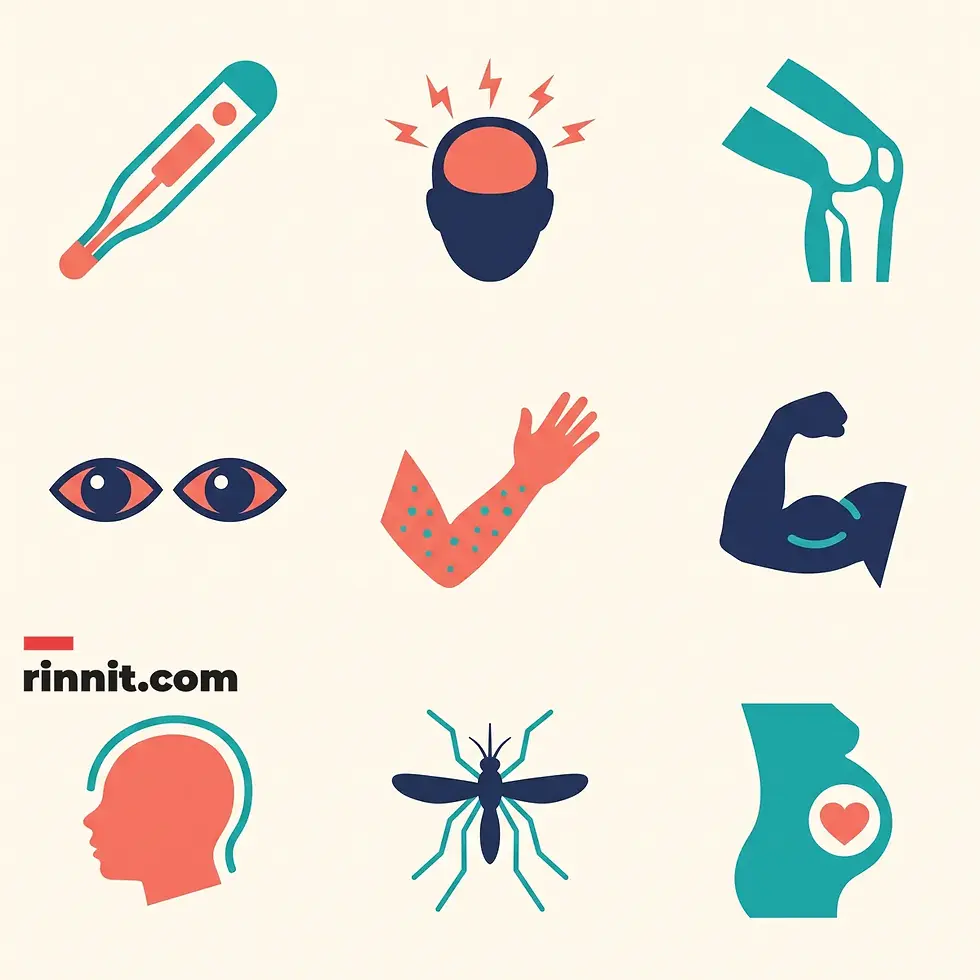
Most people with Zika have mild symptoms or none at all.
Serious complications
Although the infection itself is usually mild, Zika can lead to serious problems. [1]
Guillain-Barré syndrome (GBS): a rare autoimmune disorder in which the immune system attacks the nerves, causing weakness and, in severe cases, paralysis. Most people recover over weeks to months. Read more in our guide to Guillain-Barré syndrome. [1][5]
Congenital Zika Syndrome: a group of birth defects in babies infected before birth. The best known is microcephaly, a much smaller than average head. Others include improper brain development, eye damage, hearing loss, joint problems, and excess muscle tone. [1] A meta-analysis of 14 studies (912 participants) found higher odds of microcephaly in children of mothers infected during pregnancy (odds ratio 2.7, 95% CI 1.5 to 4.7). [8]
Most babies born to someone who had Zika during pregnancy do not have Zika-related conditions. About 1 in 20 do. [1]
How is Zika virus diagnosed and managed?
Zika can be hard to recognize because its symptoms resemble other tropical illnesses such as dengue and chikungunya. See our guide to chikungunya for a comparison.
Testing
A healthcare provider diagnoses Zika by looking for signs of the virus in blood or urine. Testing is usually done when you have symptoms and have been to a place with Zika risk, so tell your provider if you or a sexual partner traveled recently. [1]
Treatment
There is no medicine that treats or cures Zika, and no vaccine to prevent it. Care is supportive. [3]
Rest and fluids: get plenty of sleep and drink fluids to prevent dehydration.
Fever and pain relief: acetaminophen can reduce fever and pain.
Avoid aspirin and NSAIDs: do not take aspirin or other non-steroidal anti-inflammatory drugs until dengue has been ruled out, to reduce the risk of bleeding. [3]
Pregnancy monitoring: pregnant people who test positive are closely monitored by their pregnancy care provider. [1]
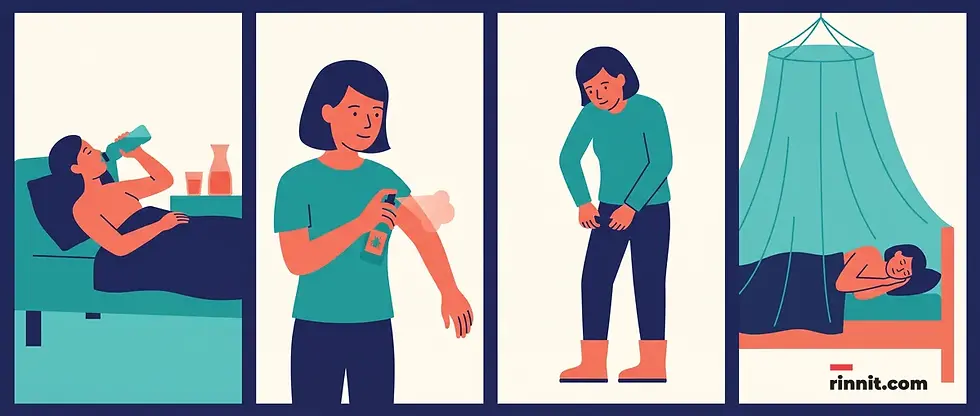
Rest and fluids help symptoms; repellent, covered skin, and bed nets help prevent infection.
How can you prevent Zika virus and stay safe?
Because there is no vaccine, preventing infection is the best protection, especially for anyone who is pregnant or planning a pregnancy. [1]
Mosquito protection
EPA-registered repellents: use insect repellent, for example products containing DEET, picaridin, or IR3535, as directed. [1]
Protective clothing: wear long sleeves and long pants, ideally treated with permethrin.
Environment control: use window screens, air conditioning, and bed nets. Empty standing water where mosquitoes breed.
Travel and sexual safety
Travel awareness: check CDC travel notices before visiting tropical and subtropical regions, and avoid areas with Zika risk if you are pregnant or trying to become pregnant. [2]
After travel: avoid mosquito bites for at least three weeks after you return, and use condoms or avoid sex for three months, even without symptoms. [1]
If you have had Zika: women should use condoms or avoid sex for two months after symptoms start, and men for three months. [1]
Conclusion
Zika remains a public health concern mainly because of what it can do during pregnancy. For most adults it is mild and brief, but the possibility of lifelong conditions in babies makes prevention important. Staying informed about travel risks and protecting yourself from mosquito bites reduce your exposure. To learn about other infections spread by animals and insects, see our overview of infectious diseases.
Learn more. Communicating how infections spread and how to prevent them keeps families safe. Explore the infographic templates in the Rinnit.com marketplace to create clear, visual guides about mosquito protection and prenatal health.
Frequently Asked Questions
What is Zika virus?
A viral infection spread mainly by Aedes mosquitoes.
Where did Zika come from?
It was first identified in the Zika Forest of Uganda in 1947.
How is Zika spread?
Mostly through mosquito bites, but also through sex, from a pregnant person to the fetus, and, rarely, through blood transfusions.
Which mosquitoes carry Zika?
Aedes aegypti and Aedes albopictus.
Are these mosquitoes active at night?
They bite mostly during the day, but they can also bite at night.
What are the most common symptoms?
Fever, rash, joint pain, red eyes, and headache.
Do most people get sick?
No. Most people have no symptoms or only mild ones.
How long do symptoms last?
Usually from several days to about a week.
Is Zika dangerous for everyone?
It is mainly dangerous for pregnant people and their babies, because the virus can affect the baby's brain development.
What is microcephaly?
A condition in which a baby's head is much smaller than expected, usually because the brain has not developed properly.
Can Zika cause other birth defects?
Yes, including eye damage, hearing loss, and problems with joints and muscle tone.
What is Congenital Zika Syndrome?
A pattern of birth defects seen in some babies infected with Zika before birth.
Can Zika cause paralysis?
In rare cases it can trigger Guillain-Barré syndrome, an autoimmune condition that causes muscle weakness and, in severe cases, paralysis.
How is Zika diagnosed?
Through blood or urine tests.
When should I get tested?
If you have symptoms and have traveled to, or live in, an area with Zika risk, or have a sexual partner who has. Tell your provider about any recent travel.
Is there a vaccine for Zika?
No. There is currently no vaccine to prevent Zika.
Is there a cure for Zika?
No. There is no specific medicine to treat the virus itself.
How do I treat the symptoms?
With rest, fluids, and acetaminophen for fever and pain.
Why should I avoid aspirin?
To reduce the risk of bleeding. Aspirin and other NSAIDs should be avoided until dengue has been ruled out.
Can I get Zika more than once?
Experts believe a past infection likely protects against future infection, but this is still being studied.
How long does Zika stay in the body?
The virus is usually gone from the blood within about a week, but it can stay in semen for weeks to months.
Can men spread Zika?
Yes, through sexual contact.
How long should men wait to have sex after Zika?
Men with Zika should use condoms or avoid sex for three months after symptoms start.
How long should women wait to have sex after Zika?
Women with Zika should use condoms or avoid sex for two months after symptoms start.
Can Zika be spread through breastfeeding?
The virus has been found in breast milk, but there are no confirmed cases of spread this way.
Should pregnant women travel to Zika areas?
No. Avoiding travel to areas with Zika risk is strongly recommended during pregnancy and when trying to conceive.
What if my partner traveled to a Zika area?
Use condoms or avoid sex for the recommended period after their return. If you are pregnant, ask your pregnancy care provider how long to continue.
How can I prevent mosquito bites?
Use insect repellent, cover your skin with clothing, and use window screens or a bed net.
Which insect repellents work best?
EPA-registered repellents, such as those containing DEET, picaridin, or IR3535.
Is it safe to use repellent during pregnancy?
Yes. EPA-registered repellents are safe for pregnant people when used as directed.
Can I use repellent on babies?
Do not use insect repellent on babies younger than 2 months. Use mosquito netting over the crib or stroller instead.
What is permethrin?
An insecticide used to treat clothing and gear so they repel mosquitoes.
Does air conditioning help?
Yes. Air conditioning and screened windows keep mosquitoes out of living spaces.
Why is standing water a problem?
Aedes mosquitoes lay their eggs in standing water, even small amounts.
Can Zika spread in the United States?
Yes. Local mosquito-borne spread has occurred in Florida and Texas in the past.
Is Zika still a threat?
Outbreaks are less common than during 2015 and 2016, but the virus still circulates in many countries. Check the CDC's list of areas at risk before you travel.
What is a flavivirus?
A family of viruses that includes Zika, dengue, West Nile, and yellow fever.
Can Zika cause eye problems in adults?
Most often it causes temporary red eyes (conjunctivitis). Babies infected before birth can have lasting eye damage.
Does Zika affect fertility?
Current evidence does not show lasting fertility problems, although the virus can stay in semen for weeks to months.
Can Zika be found in saliva?
It has been detected in saliva, but spread through saliva has not been proven.
What is the placenta's role in Zika?
The virus can cross the placenta and infect the developing baby.
Are all babies born to infected mothers affected?
No. Most babies born to someone with Zika do not have Zika-related conditions.
How many babies are affected?
About 1 in 20 (5%) babies born to people infected with Zika during pregnancy have Zika-related birth defects.
Can Zika cause miscarriage?
Zika infection during pregnancy can cause pregnancy loss, including miscarriage or stillbirth.
How does Zika affect the brain?
It can interfere with brain development, leading to a smaller brain, missing brain folds, or loss of brain tissue.
Can Zika cause hearing loss?
Yes. Babies infected before birth can have irreversible hearing and vision problems.
Is Zika a new virus?
No. It was discovered in 1947 but caused large outbreaks only recently, notably in the Americas in 2015 and 2016.
Can pets get Zika?
There is no evidence that Zika is a health threat to dogs or cats.
What should I do if I think I have Zika?
Contact your healthcare provider, especially if you are pregnant or could become pregnant.
Where can I find travel information?
The CDC website lists areas at risk for Zika and travel recommendations.
Related Reading
What Is Microcephaly? A Plain-Language Guide for Parents — the best-known birth defect linked to Zika.
Guillain-Barré Syndrome: When the Immune System Turns on Your Nerves — symptoms, causes, treatment, and recovery.
What Are Mosquito Bites? A Plain-Language Guide — the reaction, the itch, and how to prevent bites.
Chikungunya: The Mosquito-Borne Virus Behind Sudden Fever and Severe Joint Pain — another virus that looks like Zika.
References
Cleveland Clinic. Zika Virus. Cleveland Clinic. Last updated June 9, 2026. Accessed October 18, 2026. https://my.clevelandclinic.org/health/diseases/16077-zika-virus
Centers for Disease Control and Prevention. Zika Virus. CDC. Last reviewed July 28, 2026. Accessed October 18, 2026. https://www.cdc.gov/zika/index.html
Centers for Disease Control and Prevention. Treatment of Zika. CDC. May 15, 2024. Accessed October 18, 2026. https://www.cdc.gov/zika/treatment/index.html
Nithiyanantham SF, Badawi A. Maternal infection with Zika virus and prevalence of congenital disorders in infants: systematic review and meta-analysis. Can J Public Health. 2019;110(5):638-648. PMID 31077071. https://doi.org/10.17269/s41997-019-00215-2
Mier-Y-Teran-Romero L, Delorey MJ, Sejvar JJ, et al. Guillain-Barré syndrome risk among individuals infected with Zika virus: a multi-country assessment. BMC Med. 2018;16(1):67. PMID 29759069. https://doi.org/10.1186/s12916-018-1052-4
Marbán-Castro E, Vazquez Guillamet LJ, Pantoja PE, et al. Neurodevelopment in normocephalic children exposed to Zika virus in utero with no observable defects at birth: a systematic review with meta-analysis. Int J Environ Res Public Health. 2022;19(12):7319. PMID 35742566. https://doi.org/10.3390/ijerph19127319
Medina FA, Torres G, Acevedo J, et al. Duration of the presence of infectious Zika virus in semen and serum. J Infect Dis. 2019;219(1):31-40. PMID 30059980. https://doi.org/10.1093/infdis/jiy462
Ba F, Li H, Ding S, et al. Zika virus-related birth defects and neurological complications: a systematic review and meta-analysis. Rev Med Virol. 2025;35(2):e70019. PMID 40037985. https://doi.org/10.1002/rmv.70019
Medical disclaimer
This article is for informational purposes only and is not medical advice. Always consult a qualified healthcare professional for diagnosis and treatment decisions.



Comments