What Are Mosquito Bites? A Plain-Language Guide to the Itch, the Reaction, and How to Prevent Them

Updated: 3 days ago
Medically reviewed by Dr. Baraa Alnahhal, MD · Last reviewed: October 17, 2026
Quick Answer: Key Facts About Mosquito Bites
A mosquito bite is an itchy bump caused by a female mosquito injecting saliva while feeding on blood, triggering an immune reaction. [1] Most bites stop itching and heal within a few days, while skeeter syndrome is a stronger allergic reaction, most common in children. [1] Calamine or antihistamines ease itching, and repellents, covering clothing and removing standing water prevent bites. [1] [2]
Question | Answer |
What is a mosquito bite? | An itchy bump caused by a female mosquito injecting saliva into your skin as she feeds on your blood — the saliva triggers an immune reaction. [1] |
How long does it last? | Most bites stop itching and heal on their own in a few days. [2] |
What is skeeter syndrome? | A stronger allergic reaction causing large, swollen, inflamed areas — most common in children. [1] |
What helps the itch? | Calamine lotion, nonprescription antihistamine or corticosteroid cream, a baking soda paste, an ice cube, or 10 seconds of pressure. [2] |
How do I prevent bites? | Use a repellent with DEET, picaridin, oil of lemon eucalyptus, IR3535, PMD, or 2-Undecanone; wear a hat, long sleeves, and long pants; treat clothing with permethrin; and get rid of standing water around your home. [1] |
What the research says
DEET and picaridin are the best-supported repellents. A clinical review of arthropod bites concluded that applying repellent containing DEET at 10% to 35% or picaridin at 20% is the best method for preventing bites, and noted that severe mosquito reactions (skeeter syndrome) may require prednisone. (Juckett, Am Fam Physician, 2013) [3]
Permethrin-treated clothing protected well in lab tests, but results varied by mosquito. In laboratory tests of permethrin-treated military shirt fabric, the fabric gave 100% protection against Anopheles farauti bites for at least 50 cold-water washes (only 4.8%–19.0% of mosquitoes fed through untreated fabric). Protection against Aedes aegypti was more variable. (Frances et al., J Med Entomol, 2014) [4]
What Is a Mosquito Bite, Exactly?
Mosquito bites are the itchy bumps that form on the skin after mosquitoes feed on your blood. The good news is that the bumps usually go away without treatment in a few days. [1]
Some mosquito bites may get very swollen, sore, and inflamed. This type of reaction, sometimes called skeeter syndrome (skeet-er SIN-drohm), is most common in children. [1]
There's also a more serious side to mosquito bites: they can cause severe illnesses if the insects carry certain viruses or parasites. Infected mosquitoes can spread West Nile virus, Zika virus, the viruses that cause yellow fever and some types of brain infection, and the parasite that causes malaria. [1]

Why Do Mosquito Bites Itch?
Mosquito bites are caused by female mosquitoes feeding on your blood. As a biting mosquito fills itself with blood, it injects saliva into your skin. The saliva triggers an immune system reaction that results in the classic itching and bump. [1]
Mosquitoes find their targets using smell. They are attracted to odors such as sweat, floral scents, and exhaled carbon dioxide. [1]
What Does a Normal Bite Look Like?
Mosquito bites often happen on parts of the body that aren't covered by clothing. [1]
Most mosquito bites stop itching and heal on their own in a few days. [2]
What Is Skeeter Syndrome?
A severe reaction to mosquito bites can cause a large, swollen, inflamed area, a hive-like rash, and swelling around the eyes. This big-reaction pattern is called skeeter syndrome, and children are more likely to have a severe reaction than adults. [1]
Skeeter syndrome is the result of an allergic reaction to proteins in mosquito saliva — and it's sometimes mistaken for a bacterial infection. [2] There's no simple blood test to detect mosquito antibodies (the substances the body produces during an allergic reaction) in blood. [2] Mosquito allergy is diagnosed by determining whether the large areas of swelling and itching occurred after mosquito bites. [2]

When Should You See a Doctor?
You won't need to see your doctor for a mosquito bite unless you develop a fever or other symptoms that sometimes develop after such bites. [2]
Contact your health care provider if the mosquito bites seem to occur with warning signs of a serious condition. These might include a high fever, severe headache, body aches, and signs of infection. [1]
Warning sign | What it could mean |
High fever | Possible mosquito-borne illness |
Severe headache | Possible mosquito-borne illness |
Body aches | Possible mosquito-borne illness |
Signs of infection at the bite | Scratching can break the skin and cause infection |
Who Gets Bitten More Often?
Risk factors for mosquito bites include sweating, wearing floral scents, living in an area where mosquitoes are active, and spending time outside without using mosquito repellent. [1]
What Diseases Can Mosquitoes Carry?
Mosquitoes can carry germs that cause certain diseases, such as West Nile virus, the viruses that cause yellow fever and dengue fever, and the parasite that causes malaria. [1] The mosquito gets a virus or parasite by biting an infected person or animal. [1] Then, when it's biting you, the mosquito can transfer that virus or parasite to you through its saliva. [1]
Disease | Where it occurs |
West Nile virus | Occurs in the United States |
Dengue fever | Occurs in the United States |
Some types of encephalitis (brain infection) | Occurs in the United States |
Malaria | Far more common in tropical areas of the world |
Yellow fever | Far more common in tropical areas of the world |
Scratching bites can also lead to infection on its own — a common complication regardless of what the mosquito was carrying.
How Can You Treat a Mosquito Bite at Home?
Most mosquito bites stop itching and heal on their own in a few days. [2] These self-care tips may make you more comfortable:
Applying a lotion, cream, or paste. Avoid scratching itchy bites. It may help to apply calamine lotion or a nonprescription antihistamine cream or corticosteroid cream. Or try dabbing the bite with a paste made of baking soda and water. Reapply the cream or paste three times a day until the itch is gone. [2]
Rubbing with an ice cube. Try soothing an itchy bite by rubbing it with an ice cube for 30 seconds. [2]
Applying pressure. Another way to soothe an itchy bite is by applying pressure for 10 seconds. [2]
Taking an oral antihistamine. For stronger reactions, try a nonprescription antihistamine that doesn't cause sleepiness, such as cetirizine (Children's Zyrtec Allergy, Zyrtec Allergy, others) or loratadine (Alavert, Claritin, others). [2]
Home remedy | How to use it |
Calamine lotion | Apply to the bite; reapply three times a day until the itch is gone |
Nonprescription antihistamine cream | Apply to the bite; reapply three times a day |
Corticosteroid cream | Apply to the bite; reapply three times a day |
Baking soda paste | Dab on the bite (baking soda mixed with water); reapply three times a day |
Ice cube | Rub on the bite for 30 seconds |
Pressure | Apply pressure to the bite for 10 seconds |
Oral antihistamine (cetirizine or loratadine) | Take by mouth for stronger reactions; choose nonsedating versions |
How Do You Prevent Mosquito Bites?
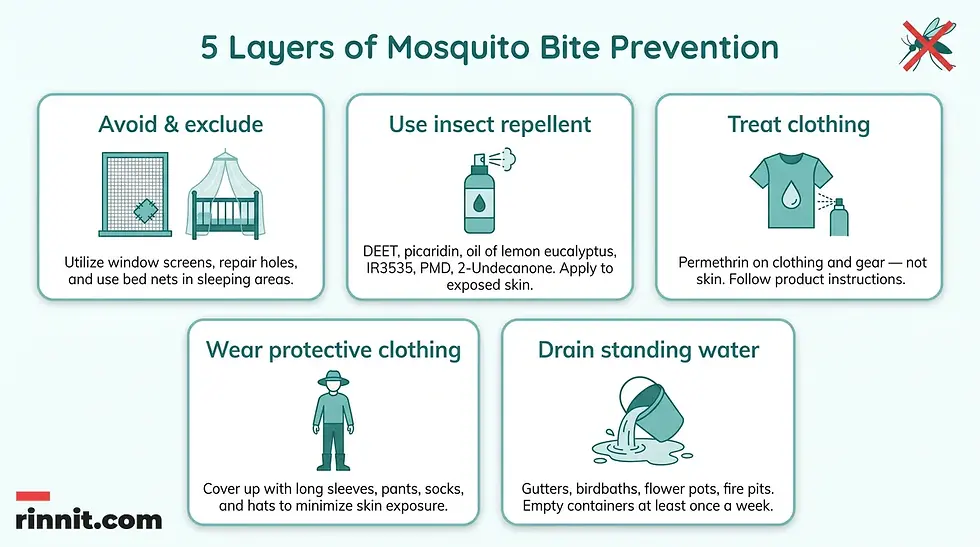
Mosquitoes bite during both day and night, and they can live indoors [1] — so prevention matters even in the evening and inside the house. Protection comes in five layers.
Layer 1: Avoid and Exclude Mosquitoes
Limit exposure to mosquitoes by repairing any tears in the screens on windows, doors, and camping gear; using mosquito netting over strollers and cribs; using mosquito netting when sleeping outdoors; and selecting self-care products that don't have scents. [1]
Layer 2: Use Insect Repellent
Use insect repellent when mosquitoes are active. The most effective insect repellents in the United States include one of these active ingredients: DEET; icaridin (also called picaridin); oil of lemon eucalyptus; IR3535; para-menthane-diol (PMD); and 2-Undecanone. [1]
These ingredients temporarily repel mosquitoes and ticks, and DEET may offer longer lasting protection. [1] Whichever product you choose, read the label before you apply it. If you're using a spray repellent, apply it outdoors and away from food. [1] You may need to reapply it 6 to 8 hours later if you're still in an area where mosquitoes are active. [1]
If you're also using sunscreen, put it on first, about 20 minutes before applying the repellent. [1] Avoid products that combine sunscreen and repellent, because you'll likely need to reapply sunscreen more often than repellent. [1] Use only as much repellent as you need, and wash your hands after applying it. [1]
Used according to package directions, these products are generally safe for children and adults, with a few exceptions:
Repellent safety rule | Applies to |
Don't use DEET | Infants younger than 2 months [1] |
Don't use icaridin (picaridin) | Infants younger than 6 months [1] |
Check the label — some aren't suitable | Oil of lemon eucalyptus for children under 3 years |
Don't use | Para-menthane-diol on children under 3 years |
Don't let repellent get on hands | Young children (they might get it in their mouths) |
Don't apply near eyes and mouth | Everyone |
Don't apply under clothing | Everyone |
Don't apply over sunburns, cuts, wounds, or rashes | Everyone |
Wash off with soap and water | When the risk of mosquito bites has passed |
Layer 3: Treat Clothing and Outdoor Gear
Permethrin is an insecticide and insect repellent used for added protection. This product is made to use on clothing and outdoor gear, not skin [1] — check the product label for instructions. Some sporting goods stores sell clothing pretreated with permethrin. [1] Don't wash bed nets or set them in sunlight, as this breaks down permethrin. [1] Clothing sprayed with permethrin can offer protection for two washings and up to two weeks. [1]
Layer 4: Use Protective Clothing and Gear
Weather permitting, wear a hat, long-sleeved shirts, and long pants. [1]
Layer 5: Take Preventive Medicine
Get vaccinations or take preventive medicine that your health care provider has suggested. [1]
If you tend to have large or severe reactions to mosquito bites — skeeter syndrome — you might want to take a nondrowsy, nonprescription antihistamine when you know you'll be exposed to mosquitoes. [1]
Drain Standing Water
Mosquitoes need standing water to breed. Get rid of it to keep your house and yard free of mosquito pools: unclog roof gutters; empty children's wading pools at least once a week, and preferably more often; change water in birdbaths at least weekly; get rid of old tires in your yard; empty outdoor flower pots regularly or store them upside down so they can't collect water; and drain your fire pit if water collects there. [1]
How Should You Prepare for a Doctor's Appointment?
You usually won't need to see your doctor for a mosquito bite unless you develop a fever or other symptoms that sometimes develop after such bites. [2]
Before your appointment, make a list of: your symptoms and how long you've had them; all medicines, vitamins, and supplements you take, including the doses; and questions to ask your doctor. [2]
Question to ask | Why it's useful |
What can I do to stop the itch? | Gets practical relief advice for your situation |
Is the area around my mosquito bite infected? | Checks for the most common complication |
Does the medicine you're prescribing have any side effects? | Helps you use the treatment safely |
How will I know if I need more care? | Sets clear expectations for follow-up |
In the meantime, if itching is a problem, try a nonprescription, nonsedating antihistamine such as cetirizine. [2]
The Bottom Line
Mosquito bites are one of life's most universal small annoyances — an itchy bump caused by mosquito saliva that usually heals on its own in a few days. Most people manage fine with a little calamine lotion, an ice cube, or a 10-second squeeze. But it's worth knowing the exceptions: children are more prone to the large, swollen reactions called skeeter syndrome, and scratching any bite hard enough can break the skin and invite infection.
The bigger stakes are the diseases mosquitoes can carry — West Nile, dengue, and some encephalitis in the United States; malaria and yellow fever in tropical regions. That's where prevention earns its keep. A repellent with DEET or picaridin, covered skin, permethrin-treated gear, and a yard without standing water add up to real protection.

If bites are itchy, frequent, or followed by a fever, use this guide to decide your next move — and talk to your health care provider when warning signs appear. Rinnit.com's plain-language guides break down what's happening in your body and what actually helps, so you can spend less time scratching and more time enjoying the outdoors.
Frequently Asked Questions
What causes mosquito bites?
Female mosquitoes feeding on your blood. As a mosquito fills itself with blood, it injects saliva into your skin. The saliva triggers an immune system reaction that causes the itching and bump.
Why are mosquitoes attracted to me?
Mosquitoes are attracted to smells, such as sweat, floral scents, and exhaled carbon dioxide. Risk factors for bites include sweating, wearing floral scents, living where mosquitoes are active, and spending time outside without repellent.
How long does a mosquito bite last?
Most bites stop itching and heal on their own in a few days.
What is skeeter syndrome?
A severe reaction to mosquito bites that causes a large, swollen, inflamed area, a hive-like rash, and swelling around the eyes. It's an allergic reaction to proteins in mosquito saliva and is most common in children. It's sometimes mistaken for a bacterial infection.
What's the fastest way to stop the itch?
Apply calamine lotion, a nonprescription antihistamine cream, a corticosteroid cream, or a baking soda paste three times a day; rub an ice cube on the bite for 30 seconds; or apply pressure for 10 seconds. For stronger reactions, a nonsedating antihistamine like cetirizine or loratadine can help.
What's the best insect repellent?
The most effective repellents in the United States contain DEET, icaridin (picaridin), oil of lemon eucalyptus, IR3535, para-menthane-diol (PMD), or 2-Undecanone. DEET may last longer. Follow the label, apply sunscreen first (about 20 minutes before repellent), and avoid combo sunscreen-repellent products.
What diseases can mosquitoes spread?
West Nile virus, Zika virus, and the viruses that cause malaria, yellow fever, dengue fever, and some types of brain infection (encephalitis). West Nile, dengue, and some encephalitis occur in the United States; malaria and yellow fever are far more common in tropical areas.
When should I see a doctor for a mosquito bite?
If the bites come with a high fever, severe headache, body aches, or signs of infection — or if the bite area looks infected from scratching.
Can a mosquito bite get infected?
Yes. Scratching can break the skin and let bacteria in. Call your provider if the bite becomes more red, warm, swollen or painful, oozes pus, or you get a fever.
Is it safe to use DEET on children?
Yes, when used as the label directs, DEET is generally safe for children older than 2 months. Do not use it on babies younger than 2 months, and have an adult apply it while avoiding a child's eyes, mouth and hands.
Related Reading
Read next on Rinnit.com:
References
Mayo Clinic Staff. Mosquito bites - Symptoms and causes. Mayo Clinic. November 15, 2024. https://www.mayoclinic.org/diseases-conditions/mosquito-bites/symptoms-causes/syc-20375310
Mayo Clinic Staff. Mosquito bites - Diagnosis and treatment. Mayo Clinic. November 15, 2024. https://www.mayoclinic.org/diseases-conditions/mosquito-bites/diagnosis-treatment/drc-20375314
Juckett G. Arthropod bites. Am Fam Physician. 2013;88(12):841-847. PMID 24364549. https://pubmed.ncbi.nlm.nih.gov/24364549/
Frances SP, et al. Protection From Mosquito Biting Provided by Permethrin-Treated Military Fabrics. J Med Entomol. 2014;51(6):1220-1226. PMID 26309310. https://doi.org/10.1603/ME14084
Medical disclaimer
This article is for general information only and is not medical advice. Always consult a qualified healthcare professional for diagnosis and treatment decisions.



Comments