What Is the Common Cold? Symptoms, Causes, Diagnosis and Treatment

Updated: 2 days ago
Medically reviewed by Dr. Baraa Alnahhal, MD · Last reviewed: October 17, 2026
Quick Answer
The common cold is a viral upper respiratory infection that causes a sore throat, runny or stuffy nose, sneezing and cough. It spreads through droplets and contaminated surfaces [3], has no cure, and is treated with rest, fluids and symptom-relief medicines [4] [5]. See a healthcare provider if symptoms last more than 10 days, worsen, or if fever returns late in the illness.
Key takeaways
Key point | What to know |
What it is | A contagious viral infection of the upper respiratory tract |
How common | The most frequent illness a person experiences in a lifetime |
Who gets it | |
Main cause | |
Duration | Most colds resolve in 7 to 10 days |
Treatment | |
Contagion window | From 1 to 2 days before symptoms up to 2 weeks; most contagious the first 3 days |
What the research says
Antibiotics do not help a common cold, and they can cause side effects. A Cochrane systematic review of randomised trials found that people given antibiotics for the common cold did no better than those on placebo in terms of lack of cure or persisting symptoms (risk ratio 0.83; 95% CI 0.60-1.14; 6 trials, 1,147 participants). Adverse effects were more likely with antibiotics (RR 1.8; 95% CI 1.01-3.21), and adults had a significantly higher risk (RR 2.62; 95% CI 1.32-5.18). The authors concluded that routine antibiotic use for colds is not recommended (Kenealy and Arroll, Cochrane Database Syst Rev, 2025 [1]).
Evidence on herbal remedies in children is growing but still limited. A 2026 systematic review and meta-analysis of 66 randomised trials (7,176 children) found that oral herbal medicine improved the overall effective rate compared with conventional medicine (RR 1.16; 95% CI 1.12-1.21) and was linked to fewer, mostly mild, adverse events, with moderate-certainty evidence. The authors call for further high-quality, multicentre trials, and the products studied varied, so this does not mean any specific herbal product is proven (Kim et al., Front Pharmacol, 2026 [2]).
What Is the Common Cold?

The common cold is a contagious upper respiratory infection that affects the nose, throat, sinuses and windpipe (trachea). It is one of the most widespread illnesses in the world, so widespread that it is typically the most frequent illness a person will experience in an entire lifetime.
A common misconception is that one single virus causes the cold. In reality, more than 200 different viruses [5] [6] can cause cold symptoms. The most common culprit is the rhinovirus. More than 100 different types of rhinovirus exist, and rhinoviruses are the most common cause of colds [3] [5]. Coronaviruses, the same family of viruses that causes COVID-19, are also among the many viruses that can cause an ordinary cold.
How often you catch a cold depends heavily on age:
Babies and young children get sick more often because their immune systems have had less exposure and training. Adults who have lived through decades of viral encounters recognize similar viruses more quickly and fight them off more effectively.
What are the signs and symptoms of the common cold?
Cold symptoms tend to appear in stages rather than all at once. Knowing the typical progression can help you gauge whether you are on a normal recovery track or whether something more serious may be developing.

Stage 1: Early (days 1 to 3)
The first symptom for roughly half of all people is a tickle or sore throat. This early stage is also when sneezing, a runny nose, nasal congestion, cough and hoarseness begin.
Stage 2: Active (days 4 to 7)
Symptoms from Stage 1 continue, and may be joined by body aches, headache, runny eyes and nose, fatigue and fever. Fever is more common in children than in adults during a cold.
Stage 3: Late (days 8 to 10)
Symptoms begin to wind down, and many people feel completely free and clear. A nagging cough, however, can linger, sometimes lasting up to two months after a respiratory infection.
Stage | Days | Typical symptoms |
Early | 1 to 3 | Sore throat (first symptom for about 50%), sneezing, runny or stuffy nose, cough, hoarseness |
Active | 4 to 7 | Stage 1 symptoms plus body aches, headache, runny eyes, fatigue, possible fever |
Late | 8 to 10 | Symptoms wind down; lingering cough possible |
Symptoms in babies
Babies show cold symptoms somewhat differently. Typical signs include a runny nose (clear at first, thickening to gray, yellow or green), sneezing, a fever between 101°F and 102°F (38.3°C to 38.9°C), loss of appetite, increased drooling from a sore throat, cough, irritability and slightly swollen glands.
What Causes the Common Cold?
Rhinoviruses are the most common cause of colds [3] [5], but more than 200 viruses can produce the same symptoms. The virus must reach your mucous membranes, the moist linings of your nostrils, eyes or mouth, to take hold.
Colds spread from person to person in two main ways:
Understanding the contagion timeline helps explain why colds spread so easily:
Contagion milestone | Timing |
Can begin spreading before symptoms appear | 1 to 2 days before |
Incubation period after exposure | Usually 2 or 3 days [5] |
Most contagious period | First 3 days of symptoms |
Can remain contagious | Up to 2 weeks |
What complications can the common cold cause?
For most people, a cold causes no serious complications and clears within 7 to 10 days. The common cold is not fatal. However, people with weakened immune systems face a higher risk of complications, including asthma flare-ups, sinus infections and ear infections [3]. If the virus travels to the lungs and causes a wet, phlegmy cough that keeps you awake, the illness may have progressed to a chest cold (acute bronchitis).
How Is the Common Cold Diagnosed?
In most cases, no testing is needed. A healthcare provider can diagnose a cold based on a physical exam and your symptom history, checking for swollen nostrils, a stuffy nose, a red and irritated throat, swollen lymph nodes in the neck and clear lungs.
Tests are only ordered if COVID-19, the flu or another condition is suspected. These may include a nasal swab or, in some cases, a chest X-ray to rule out bronchitis or pneumonia.
Cold vs. Flu vs. COVID-19: What's the Difference?
Because colds, flu and COVID-19 share overlapping symptoms, it is worth knowing how they differ. The following comparison table summarizes the key distinctions.
Feature | Common cold | Flu (influenza) | COVID-19 |
Virus type | 200+ viruses, mostly rhinoviruses | Influenza viruses | SARS-CoV-2 (a coronavirus) |
Onset | Gradual [6] | Sudden [6] | Variable |
Fever | Rare in adults; possible in children | Common, with chills | Common |
Body aches | Mild | More severe | Possible |
Runny or stuffy nose | Common | Sometimes | Common |
Loss of taste or smell | Rare | Rare | Possible |
Shortness of breath | Rare | Rare | Possible |
Diarrhea | Rare | Sometimes in children | Possible |
Complications | Rare | Can be life-threatening | Can be life-threatening |
Note that some coronavirus variants cause milder illness that overlaps heavily with the common cold: runny nose, cough, sore throat, headache and congestion. When in doubt, testing is the only way to know for certain.
Cold Treatment: What Actually Helps?
There is no cure for the common cold. The illness must run its course, and most colds resolve in 7 to 10 days. Treatment focuses entirely on relieving symptoms while your immune system does the work.
Over-the-counter medicines can ease symptoms, but not all of them are safe for children [4] [6], so always check with a healthcare provider before giving cold medicine to a child. It is also important to avoid combining multiple multi-symptom medicines, since doubling up on the same active ingredients can cause organ damage.
Symptom | Over-the-counter option |
Headache, fever, body aches | |
Stuffy nose | Decongestants such as pseudoephedrine (Sudafed) [4] |
Sneezing, runny nose | Antihistamines such as diphenhydramine (Benadryl) |
Dry cough | Cough suppressants such as dextromethorphan (Robitussin); not routinely for children under 5 |
Thick mucus | Expectorants such as guaifenesin (Mucinex) to thin and loosen mucus |
One critical point: antibiotics do not work on colds because colds are caused by viruses, not bacteria [5] [6]. A provider may prescribe antibiotics only if a bacterial complication develops, such as an ear infection or pneumonia.
Caring for a baby with a cold
Babies require gentler care. Never give a baby over-the-counter cough or cold medicines unless a provider prescribes them [6]. Focus on comfort and hydration: breast milk or formula for babies under 6 months, and small amounts of water can be added at 6 months and older. Saline drops about 15 minutes before feeding, followed by gentle suction with a rubber bulb, can clear a baby's nose. Use petroleum jelly on the outside of the nostrils only, run a clean cool-mist humidifier, or sit in a steamy bathroom for 15 minutes.
Outlook: What Happens After a Cold?
Most colds resolve in 7 to 10 days without serious complications, and the common cold is not fatal. A nagging cough may linger well after other symptoms fade. If your symptoms worsen late in the illness or a fever returns, see a healthcare provider, because a secondary infection such as bronchitis, sinusitis or pneumonia may be developing.
How Can You Prevent a Cold?
Preventing a cold centers on good hygiene, such as frequent handwashing [4] [6], and supporting your immune system with sleep, a healthy diet and exercise.
Wash your hands frequently: before eating or preparing food, after using the bathroom, after blowing your nose, and after contact with a sick person.
Avoid touching your face, especially your eyes, nose and mouth.
Clean frequently touched surfaces, since cold viruses can survive on objects for hours.
Use hand sanitizer when soap and water are unavailable.
Support your immune system with adequate sleep, a healthy diet and regular exercise.
Stay home when you are sick to protect others.
For babies, keep them away from people with colds, clean their toys regularly, avoid sharing toys that have been mouthed, and make sure adults around them practice hand hygiene. Keep immunizations up to date: vaccines do not prevent colds, but they prevent complications such as bacterial ear and lung infections. The flu vaccine and COVID-19 vaccine are recommended for children 6 months and older.
Cold Remedies: What Works, What Doesn't?
Popular supplements have not lived up to their reputation. Zinc, vitamin C and echinacea have not been proven to prevent colds. Zinc may shorten an illness or reduce symptoms in some people, but it carries a risk: nasal zinc sprays in particular have been linked to permanent loss of smell.
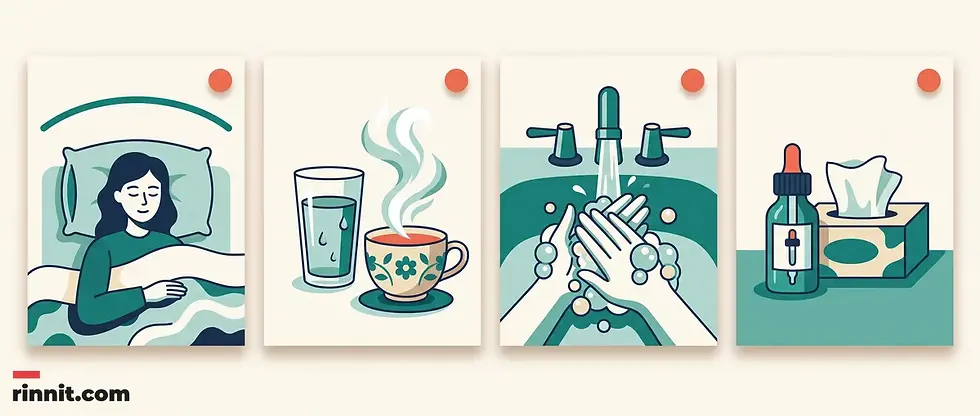
The single best remedy remains rest. Taking a few days off at the start of a cold not only helps your body recover, it also keeps you from spreading germs. Drinking plenty of fluids keeps your nose and throat moist, while alcohol and caffeine can be drying and are best avoided.
When Should You See a Healthcare Provider?
See a healthcare provider for a cold if you have a high fever, chest pain, ear pain, breathing trouble or symptoms lasting more than 10 days.
When a baby needs care
Babies warrant extra vigilance. Contact a provider, or seek emergency care, if a baby has:
Any fever at 2 months old or younger
Difficulty breathing (nostrils widening with each breath, fast or labored breathing, ribs showing with each breath, wheezing, or blue lips)
Not eating or drinking (dehydration risk)
Ear pain or stomach pain
Excessive crankiness, unusual sleepiness, or vomiting
A cough lasting more than 3 weeks [4]
Seems to be getting sicker rather than better
What questions should you ask your provider about the common cold?
Useful questions for your provider about the common cold include whether it could be flu or COVID-19, which medicines are safe and when to return.
Could my symptoms be flu or COVID-19 rather than a cold?
Which over-the-counter medicines are safe for me or my child?
Are any of my current medicines unsafe to combine with cold remedies?
What signs should prompt me to call back or go to the ER?
Is the lingering cough something to worry about?
Conclusion
The common cold is an unavoidable fact of life, the most frequent illness most people will ever experience. More than 200 viruses can cause it, there is no cure, and antibiotics will not help. The good news is that nearly every cold resolves within 7 to 10 days with rest, fluids and simple symptom relief. Smart hygiene habits (handwashing, avoiding face-touching and staying home when sick) protect both you and your community. And if symptoms linger past 10 days, worsen, or return with a fever, a healthcare provider can check for the secondary infections that colds sometimes set the stage for.
Want to explain the common cold, or any health topic, visually? Rinnit's ready-made infographic templates make it easy to create clear, shareable health visuals for your audience.
Frequently Asked Questions
What is the common cold?
The common cold is a contagious viral infection of the upper respiratory tract: the nose, throat, sinuses and windpipe.
What causes the common cold?
More than 200 different viruses can cause colds. Rhinoviruses, of which there are over 100 types, are the most common cause of colds. Coronaviruses can also cause ordinary colds.
How do you catch a cold?
Colds spread when you inhale droplets from a sick person's sneeze or cough, or when you touch a contaminated surface, like a doorknob, and then touch your eyes, nose or mouth.
How long does a common cold last?
Most colds resolve in 7 to 10 days, though a cough can linger much longer.
How many colds do adults get per year?
Adults typically get two to three colds per year. Young children get four or more.
Why do babies get so many colds?
Babies' immune systems have had little exposure to viruses, so they have not yet learned to recognize and fight them off. As people age, their immune systems recognize similar viruses more quickly.
Is a cold contagious before symptoms start?
Yes. You can spread a cold one to two days before symptoms appear, and remain contagious for up to two weeks. You are most contagious during the first three days of symptoms.
What is the incubation period of a cold?
Symptoms usually begin 2 or 3 days after infection with the virus.
What are the first symptoms of a cold?
For roughly half of people, the first symptom is a tickle or sore throat, followed by sneezing and a runny nose.
Does a cold cause fever?
Fever is uncommon in adults with a cold, but children may develop a low fever. Higher fevers suggest flu or another infection.
Can you catch a cold from the cold weather itself?
Cold weather is not the direct cause; viruses are. However, people spend more time indoors in close contact during winter, and research in mice suggests cooler nose temperatures may impair the immune response that fights rhinoviruses.
Why is it called the "common" cold?
It is the most frequent illness most people experience in a lifetime, making it the most common infection worldwide.
Is a cold the same as the flu?
No. They are caused by different viruses. Flu typically arrives suddenly with fever, chills and more severe body aches, and flu complications can be life-threatening.
How can you tell a cold from COVID-19?
COVID-19 is more likely to cause fever, chills or shaking, shortness of breath, loss of taste or smell and diarrhea. However, some variants overlap heavily with cold symptoms, so testing is the only reliable way to tell.
What is a chest cold?
A chest cold (acute bronchitis) occurs when the virus travels down into the lungs, causing a wet cough with phlegm, a cough that keeps you awake, shortness of breath and chest soreness.
Can you take a shower when you have a cold?
Yes. Warm steam can even help loosen congestion.
What should you drink when you have a cold?
Plenty of fluids (water, warm teas, broths) keep your nose and throat moist. Avoid alcohol and caffeine, which can be drying.
Does chicken soup help a cold?
Warm fluids like chicken soup can soothe a sore throat and thin mucus, though soup itself is not a cure.
Should you stay home from work with a cold?
Staying home for the first few days is the best remedy. It supports rest and prevents spreading germs to coworkers.
Can you exercise with a cold?
Light activity may be fine with symptoms above the neck, but rest is best during the first few days while you are most contagious.
Does honey help a cold cough?
Honey can soothe a cough in people over 1 year old, but it must never be given to infants under 12 months due to botulism risk.
Is zinc good for a cold?
Zinc has not been proven to prevent colds, though it may shorten illness in some people. Nasal zinc sprays have been linked to permanent loss of smell.
Does vitamin C prevent colds?
No. Vitamin C has not been proven to prevent colds, despite its long-standing reputation.
Does echinacea work for colds?
Echinacea has not been proven to prevent or cure colds.
Can you take antibiotics for a cold?
No. Colds are caused by viruses, and antibiotics only work against bacteria. Providers may prescribe antibiotics for bacterial complications like ear infections or pneumonia.
What over-the-counter medicines help a cold?
Pain relievers like acetaminophen or ibuprofen for aches and fever, decongestants for a stuffy nose, antihistamines for sneezing and runny nose, cough suppressants for dry cough, and expectorants to thin mucus.
Is it safe to combine cold medicines?
No. Combining multi-symptom medicines risks doubling up on active ingredients, which can cause organ damage. Always check labels and ask a provider.
Can children take over-the-counter cold medicine?
Not all cold medicines are safe for children. Always check with a healthcare provider before giving any cold medicine to a child. Cough suppressants are not routinely recommended for children under 5.
What can you give a baby with a cold?
Focus on comfort, fluids (breast milk or formula under 6 months), saline drops with gentle suction before feedings, and a clean cool-mist humidifier. Never give babies OTC cold medicines unless prescribed.
How do you clear a baby's stuffy nose?
Use saline drops about 15 minutes before feeding, then gently suction with a rubber bulb. Put petroleum jelly on the outside of the nostrils only.
Can you use a humidifier for a cold?
Yes. A clean cool-mist humidifier adds moisture to the air and can ease congestion. Clean it thoroughly and regularly.
How do you sleep with a stuffy nose?
Extra pillows to elevate your head, a humidifier, and saline sprays can all help you breathe more comfortably at night.
Can a cold turn into pneumonia?
Yes, though rarely. If symptoms worsen late in the illness or fever returns, a secondary infection such as pneumonia may be developing.
When should you worry about a cold?
Contact a provider if you have a high fever, chest pain, ear pain, difficulty breathing, an asthma flare-up, or symptoms lasting more than 10 days or getting worse.
Is a fever with a cold normal?
Low fever is possible in children with a cold but uncommon in adults. A high fever suggests flu or another illness.
Can you get a cold from someone who doesn't look sick?
Yes. People can spread a cold one to two days before symptoms appear.
How long do cold viruses live on surfaces?
Cold viruses can survive on objects like doorknobs for several hours.
Does cold medicine cure a cold?
No. Cold medicines only relieve symptoms; the immune system must clear the virus on its own.
Why does a cough last after a cold?
A lingering cough can persist for up to two months after a respiratory infection as the airways finish healing. This is usually not dangerous if symptoms are otherwise improving.
Can you get a cold while pregnant?
A cold is not usually dangerous during pregnancy, but pregnant people should consult a provider before taking cold medicines and should call right away if flu or fever develops.
How do you prevent spreading a cold to your family?
Wash hands frequently, avoid touching your face, clean shared surfaces, use hand sanitizer, and stay home while most contagious, which is the first three days of symptoms.
Is hand sanitizer effective against cold viruses?
When soap and water are unavailable, hand sanitizer is a reasonable alternative for cleaning your hands.
Does blowing your nose help a cold?
Gentle nose-blowing clears mucus, but blowing too hard can push mucus into sinuses and ears. Blow gently, one nostril at a time.
Can allergies cause cold-like symptoms?
Allergies can cause runny nose, sneezing and congestion, but they do not cause fever or body aches and are not contagious.
Why do colds happen more in winter?
People spend more time indoors in close contact during winter, and research suggests cooler nose temperatures may weaken the immune response to rhinoviruses.
Can you get a cold in summer?
Yes. Colds occur year-round, though other viruses like enteroviruses cause more summer colds.
Is green mucus a sign you need antibiotics?
No. Mucus often thickens and changes color as a cold progresses. This is normal immune activity, not proof of a bacterial infection.
Should you drink juice with a cold?
Warm or room-temperature fluids help. Some juices can be soothing, but water, tea and broth are best for hydration.
Can stress cause you to catch more colds?
Chronic stress and poor sleep can weaken immune defenses, making you more susceptible to viruses.
Does garlic cure a cold?
Garlic has not been proven to cure or prevent colds, though it is a healthy food.
Can you swim with a cold?
Rest is best during the first few days while you are contagious. Light activity after symptoms improve is generally fine.
What color should cold mucus be?
Cold mucus is typically clear at first, then thickens to white, yellow or green as the immune system fights the virus.
Why does your voice change with a cold?
Virus-related inflammation of the vocal cords causes hoarseness during a cold.
Can a cold cause an ear infection?
Yes. Cold-related congestion can block the tubes draining the middle ear, leading to bacterial ear infections, especially in children.
Should you take a day off work with a cold?
Yes, especially during the first few days, when rest helps you recover and staying home prevents spreading the virus.
Is it OK to fly with a cold?
Flying with a congested nose can cause painful ear pressure. Decongestants before takeoff and landing may help, but check with a provider.
How do you know a cold is getting better?
Symptoms begin to wind down around days 8 to 10, and most people feel free and clear within 7 to 10 days.
When should a baby with a cold go to the ER?
Seek emergency care if a baby under 2 months has any fever, or if any baby has difficulty breathing, wheezing, blue lips, dehydration, or seems to be getting sicker.
Can a 2-month-old have a cold?
Yes, but any fever in an infant 2 months or younger requires an immediate call to a healthcare provider.
Related Reading
References
Kenealy T, Arroll B. Antibiotics for the common cold and acute purulent rhinitis. Cochrane Database Syst Rev. 2025;11(11):CD000247. PMID 41277585. https://doi.org/10.1002/14651858.CD000247.pub4
Kim SD, Lee SW, Woo SC, et al. Pediatric efficacy and safety in common cold treated with herbal medicine (PEACH): a systematic review and meta-analysis. Front Pharmacol. 2026;16:1703997. PMID 41614073. https://doi.org/10.3389/fphar.2025.1703997
Centers for Disease Control and Prevention. About Common Cold. CDC. Accessed October 30, 2026. https://www.cdc.gov/common-cold/about/index.html
National Health Service. Common cold. NHS. Page last reviewed March 22, 2024. https://www.nhs.uk/conditions/common-cold/
National Library of Medicine. Common Cold. MedlinePlus. Last updated November 16, 2022. https://medlineplus.gov/commoncold.html
American Academy of Family Physicians. Colds and the Flu. familydoctor.org. Last updated August 20, 2026. https://familydoctor.org/condition/colds-and-the-flu/
Medical disclaimer
This content is for general informational purposes only and is not a substitute for professional medical advice, diagnosis or treatment. Always seek the advice of a qualified healthcare provider with any questions you may have regarding a medical condition.



Comments