What Is Ocular Hypertension? Symptoms, Causes, and Treatments

Updated: 2 days ago
Medically reviewed by Dr. Baraa Alnahhal, MD · Last reviewed: October 2026
Quick Answer: What is Ocular Hypertension?
Ocular hypertension is high pressure inside the eye that exceeds the normal range of 11 to 21 mmHg on two or more visits. It occurs when the eye's fluid does not drain properly or is overproduced. Unlike glaucoma, it does not involve optic nerve damage, but it needs careful monitoring so it does not progress to a more serious condition. [1]
What the research says
Pressure-lowering drops cut the chance of developing glaucoma. In a randomized trial of 1,636 people with ocular hypertension and no glaucoma damage, the 5-year (60-month) chance of developing primary open-angle glaucoma was 4.4% with eye drops versus 9.5% with observation alone (hazard ratio 0.40, 95% CI 0.27–0.59). The authors noted that not everyone needs treatment, and that it should be considered for people at moderate or high risk (Kass et al., Arch Ophthalmol, 2002). [2]
Some people are at higher risk than others. In the same study, older age, higher eye pressure, larger cup-to-disc ratio, and a thinner central cornea predicted who went on to develop glaucoma. Corneal thickness was described as a powerful predictor (Gordon et al., Arch Ophthalmol, 2002). [3]
Laser treatment can reduce the need for drops. In a trial of 718 people with open-angle glaucoma or ocular hypertension, 74.2% of those who started with selective laser trabeculoplasty needed no drops at 36 months to keep pressure at target. Quality of life was similar to the eye-drop group (EQ-5D 0.89 vs 0.90) (Gazzard et al., Lancet, 2019). [4]
Key Takeaways: Ocular Hypertension at a Glance
Feature | Details |
Normal Pressure Range | 11 to 21 mmHg |
Primary Risk | Development of glaucoma and vision loss |
Common Symptoms | Generally asymptomatic; rare eye pain |
Diagnosis | Tonometry, Pachymetry, and Slit Lamp exams |
Treatment | Pressure-lowering eye drops, monitoring, or laser surgery |

What is ocular hypertension?
Ocular hypertension is a widespread condition affecting between 3 million and 6 million people in the United States. It is characterized by elevated intraocular pressure (IOP) resulting from an imbalance in the eye's fluid dynamics. The eye constantly produces aqueous humor to maintain its shape and health; however, if the drainage system fails to remove an equal amount of fluid, pressure builds up within the globe. [1]
While the condition itself does not immediately cause vision loss, it serves as a critical warning sign. High pressure can eventually compress and damage the optic nerve, leading to glaucoma. Because the optic nerve is the direct link between the eye and the brain, any damage to this structure can result in irreversible blindness.
Why does ocular hypertension usually cause no symptoms?
One of the most challenging aspects of ocular hypertension is that it rarely presents noticeable symptoms. Most individuals with high eye pressure feel perfectly fine and have no changes in their vision. This "silent" nature is why regular eye examinations are the only reliable way to detect the condition. [1]
In rare instances, some individuals may experience slight eye pain, particularly when moving their eyes or touching them. However, common symptoms of other eye issues, such as headaches or dizziness, are not typically associated with ocular hypertension.
What are the risk factors for ocular hypertension?
Certain demographic and medical factors can increase the likelihood of developing ocular hypertension. Understanding these risks helps healthcare providers determine the frequency of necessary eye screenings.
Risk Category | Factors Increasing Risk |
Demographics | Being over age 40; Black or Hispanic ethnicity |
Family History | History of glaucoma or high eye pressure in relatives |
Medical Conditions | Diabetes, high blood pressure, or extreme nearsightedness (myopia) |
Medications | Long-term use of steroid-based medications |
Physical Factors | Thinner central cornea or previous eye injuries/surgeries |
What causes the fluid build-up behind ocular hypertension?
The elevation in pressure is almost always tied to the anterior chamber angle, the drainage system located between the iris and the cornea. If this "angle" is blocked or narrowed, fluid cannot escape efficiently. [1]
Overproduction: The eye produces more aqueous humor than the drainage system can handle. [1]
Drainage Blockage: The drainage angle may be physically closed or obstructed by pigment flakes (pigment dispersion syndrome) or protein flakes (pseudoexfoliation syndrome). [1]
Structural Damage: Previous eye injuries or surgeries can alter the eye's natural drainage pathways. [1]
Stress: Recent research suggests that high levels of stress may contribute to temporary increases in intraocular pressure. [1]
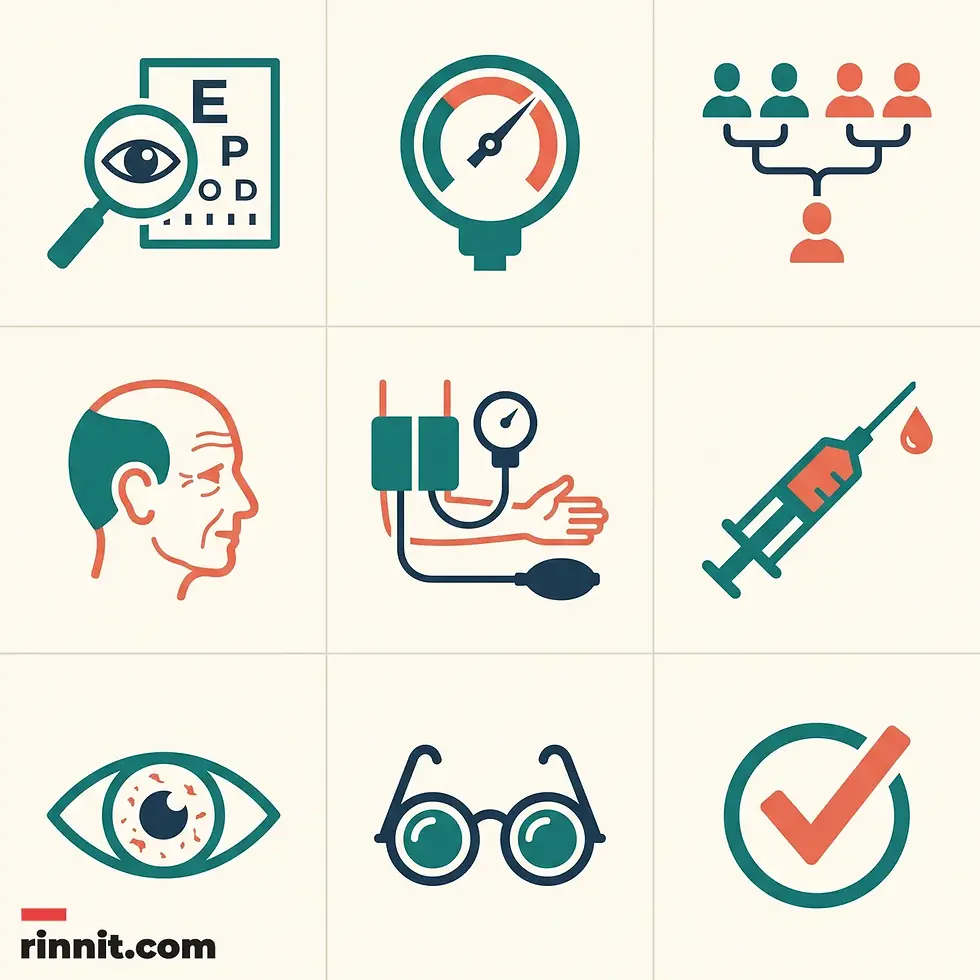
How is ocular hypertension diagnosed and tested?
Because there are no obvious symptoms, eye care specialists use a suite of diagnostic tools to measure pressure and assess the health of the eye.
A tonometry test is the primary method for measuring inner eye pressure, while pachymetry is used to measure the thickness of the cornea, as a thinner cornea can affect pressure readings. Gonioscopy allows the provider to inspect the drainage angle directly, and Optical Coherence Tomography (OCT) provides high-resolution images of the optic nerve to ensure no damage has occurred. [1]
How is ocular hypertension managed and treated?
The goal of treatment is to lower intraocular pressure to a safe level for each person to reduce the risk of glaucoma. In some cases, your provider may choose to monitor the situation closely with regular eye exams instead of starting treatment right away. [1]
Medication Options
Most patients who need treatment are given daily eye drops that either reduce fluid production or increase fluid drainage. Common classes of medications include prostaglandins, beta-blockers, and alpha-adrenergic agonists. Each medication has a specific dosing schedule, ranging from once to four times per day. [1]
Surgical Interventions
If eye drops are not effective or cause significant side effects, surgical options may be considered. Laser trabeculoplasty is a common outpatient procedure that uses a focused beam of light to clear blockages in the drainage system, allowing fluid to flow more freely. [1]

Conclusion
Ocular hypertension is a lifelong condition that requires consistent management, but it does not have to lead to vision loss. By maintaining regular appointments with an eye care specialist and adhering to prescribed treatments, individuals can effectively protect their optic nerve and maintain their sight for years to come.
For more visual health resources and tools, explore our infographic templates.
Frequently Asked Questions
Is ocular hypertension the same as glaucoma?
No, but it is a major risk factor for developing glaucoma.
What is a normal eye pressure reading?
Between 11 and 21 mmHg.
Can I feel high eye pressure?
Usually no, though some people feel slight pain when touching their eyes.
How often should I have my eye pressure checked?
As often as your eye specialist recommends.
Does high blood pressure cause high eye pressure?
Both high and low blood pressure are listed as risk factors for ocular hypertension.
Can stress increase my eye pressure?
Yes, studies show a link between stress and increased intraocular pressure.
Are there natural ways to lower eye pressure?
Exercise and a healthy diet support eye health, but they do not replace medical treatment.
Can I go blind from ocular hypertension?
Not directly, but it can lead to glaucoma, which can cause blindness.
What happens if I don't treat it?
You face a much higher risk of permanent optic nerve damage.
Are eye drops the only treatment?
Monitoring and laser surgery are also options.
Do eye drops have side effects?
They can cause redness, stinging, or irritation in some patients.
Is ocular hypertension hereditary?
Yes, a family history increases your risk.
Can nearsightedness affect my eye pressure?
Extreme myopia is a significant risk factor.
What is tonometry?
A quick, painless test to measure the pressure inside your eye.
What is a slit lamp?
A microscope used by eye doctors to examine the structures of your eye.
Can smoking affect eye pressure?
Yes, smoking is detrimental to overall eye health.
What foods are good for eye pressure?
Leafy greens and fish rich in omega-3 fatty acids.
Can steroids cause high eye pressure?
Yes, long-term use of steroid medications is a known cause.
What is aqueous humor?
The clear fluid that fills the front part of the eye.
Can eye injuries cause high pressure later in life?
Yes, past trauma can damage the eye's drainage system.
Is it common in children?
It is much more common in adults over the age of 40.
What is bilateral ocular hypertension?
When the pressure is high in both eyes.
What is unilateral ocular hypertension?
When the pressure is high in only one eye.
Can I wear contacts if I have high eye pressure?
Usually yes, but you should discuss this with your eye doctor.
Does caffeine affect eye pressure?
Some studies suggest it may cause a temporary increase.
What is a visual field test?
A test to see if you have lost any peripheral (side) vision.
What is OCT?
Optical Coherence Tomography, a test that takes pictures of the back of your eye.
How long do I need to take eye drops?
They are often long-term, but your eye specialist will decide whether you need them, since some people are monitored without drops.
Can I stop taking drops if my pressure is normal?
Not on your own. A normal reading usually means the drops are working, so ask your eye specialist before stopping.
What is laser trabeculoplasty?
A laser procedure to help fluid drain better from the eye.
Is the laser surgery painful?
It is generally quick and performed with numbing drops.
Can diabetes cause high eye pressure?
Yes, diabetes is a recognized risk factor.
What is pigment dispersion syndrome?
When pigment from the iris blocks the eye's drainage.
What is pseudoexfoliation syndrome?
A condition where protein flakes build up and block drainage.
Does thin cornea matter?
Yes, a thinner cornea can lead to underestimated pressure readings.
Can I prevent ocular hypertension?
You can't prevent all risks, but regular exams help manage it early.
Does eye pressure change throughout the day?
Yes, it naturally fluctuates.
Is it related to eye strain?
No, eye strain from screens is different from intraocular pressure.
Can I drive with ocular hypertension?
Yes, as long as your vision has not been damaged by glaucoma.
Does it cause headaches?
Not typically; headaches are usually unrelated.
What is mmHg?
Millimeters of mercury, the standard unit for measuring pressure.
Can I exercise with high eye pressure?
Moderate exercise is generally beneficial, but consult your doctor.
Is it more common in certain ethnicities?
It is more prevalent among Black and Hispanic populations.
What is the anterior chamber?
The space in the front of the eye where fluid flows.
What is the iris?
The colored part of the eye.
What is the cornea?
The clear outer layer at the front of the eye.
Can eye cancer cause high pressure?
In rare cases, tumors can block the drainage system.
Is it a permanent condition?
Yes, it requires ongoing monitoring and management.
Can I get it in just one eye?
Yes, this is called unilateral ocular hypertension.
Who should I see for this?
An ophthalmologist or optometrist (eye care specialists).
Related Reading
Learn more in our guide to Glaucoma Tests: Types, What to Expect and What Results Mean.
Learn more in our guide to Tonometry (Eye Pressure Test): Types, What to Expect and Normal Eye Pressure.
References
Cleveland Clinic. Ocular Hypertension. Cleveland Clinic. Last updated December 19, 2022. https://my.clevelandclinic.org/health/diseases/24621-ocular-hypertension
Kass MA, Heuer DK, Higginbotham EJ, et al. The Ocular Hypertension Treatment Study: a randomized trial determines that topical ocular hypotensive medication delays or prevents the onset of primary open-angle glaucoma. Arch Ophthalmol. 2002;120(6):701-713. PMID 12049574. https://doi.org/10.1001/archopht.120.6.701
Gordon MO, Beiser JA, Brandt JD, et al. The Ocular Hypertension Treatment Study: baseline factors that predict the onset of primary open-angle glaucoma. Arch Ophthalmol. 2002;120(6):714-720. PMID 12049575. https://doi.org/10.1001/archopht.120.6.714
Gazzard G, Konstantakopoulou E, Garway-Heath D, et al. Selective laser trabeculoplasty versus eye drops for first-line treatment of ocular hypertension and glaucoma (LiGHT): a multicentre randomised controlled trial. Lancet. 2019;393(10180):1505-1516. PMID 30862377. https://doi.org/10.1016/S0140-6736(18)32213-X
Disclaimer
This article is for informational purposes only and does not constitute medical advice. Always seek the advice of a qualified health provider with any questions regarding a medical condition.



Comments