What Is Complement 3 Glomerulopathy (C3G)? Symptoms, Causes, Diagnosis, Treatment & Outlook

Updated: 3 days ago
Medically reviewed by Dr. Baraa Alnahhal, MD · Last reviewed: November 2026
Quick Answer: What is complement 3 glomerulopathy (C3G)?
Complement 3 glomerulopathy (C3G) is a kidney disease in which an overactive complement system damages its own C3 proteins, whose fragments lodge in the kidney filters. [9] A kidney biopsy confirms it and distinguishes its two types. [5] [9] Treatment combines supportive care with complement-targeted medicines iptacopan and pegcetacoplan, approved by the FDA in 2025 to reduce proteinuria. [7] [6] [8] It cannot be prevented. [9]
Key takeaways
What it is: a group of rare, immune-related kidney conditions in which damaged complement 3 proteins get trapped in the kidney's filters (glomeruli). [9]
How rare: very rare — about 2 to 3 out of every 1 million people. [5] [9]
Chronic: the condition slowly worsens over time. [9]
Two types: dense deposit disease (DDD) mostly affects children and young adults; C3 glomerulonephritis (C3GN) mostly affects adults 30 and older. [9]
Key symptoms: blood and protein in the urine, less urination, swelling, high blood pressure, fatigue, recurrent infections and gout. [9]
Diagnosis: blood tests, a urine test, eGFR calculation and a kidney biopsy (the biopsy determines the type). [9]
Cure: none currently — but two complement-targeted medicines are now FDA-approved specifically for C3G to reduce proteinuria: iptacopan (adults, March 2025) and pegcetacoplan (ages 12 and older, July 2025). [7] [6] [8]
Other management: blood pressure medications, statins, corticosteroids and a renal diet; dialysis or a kidney transplant if kidney failure occurs. [9]
Key complication: about 50% develop kidney failure within 10 years of diagnosis. [5] [9]
Prevention: C3G is not preventable. [9]
What the research says
Kidney failure is common in C3G, and some features predict it. In a UK and Ireland cohort of 80 patients with C3G (21 with dense deposit disease and 59 with C3 glomerulonephritis), 20 of the 70 with follow-up data (29%) progressed to end-stage kidney disease after a median of 28 months. Age over 16, the dense deposit disease subtype, and crescentic glomerulonephritis independently predicted it (Medjeral-Thomas et al., Clin J Am Soc Nephrol, 2014) [1].
Iptacopan lowered proteinuria in a phase 3 trial. In APPEAR-C3G, 74 adults with biopsy-confirmed C3G were randomized (38 to iptacopan, 36 to placebo). At 6 months, 24-hour urine protein-creatinine ratio fell 30.2% with iptacopan and rose 7.6% with placebo — a 35.1% relative reduction (95% CI 13.8–51.1; p = 0.0014). Serious adverse events occurred in 8% of the iptacopan group and 3% of the placebo group (Kavanagh et al., Lancet, 2025) [2].
Pegcetacoplan also lowered proteinuria in a phase 3 trial. In VALIANT, 124 adolescents and adults with C3G or primary immune-complex MPGN were randomized; at week 26, proteinuria was a relative 68.1% lower with pegcetacoplan than with placebo (95% CI 57.3–76.2). The composite kidney endpoint (stable eGFR plus at least a 50% proteinuria reduction) was met by 49% versus 3%, while the histologic activity score did not differ significantly between groups (Fakhouri et al., N Engl J Med, 2025) [3].
What Is Complement 3 Glomerulopathy (C3G)?
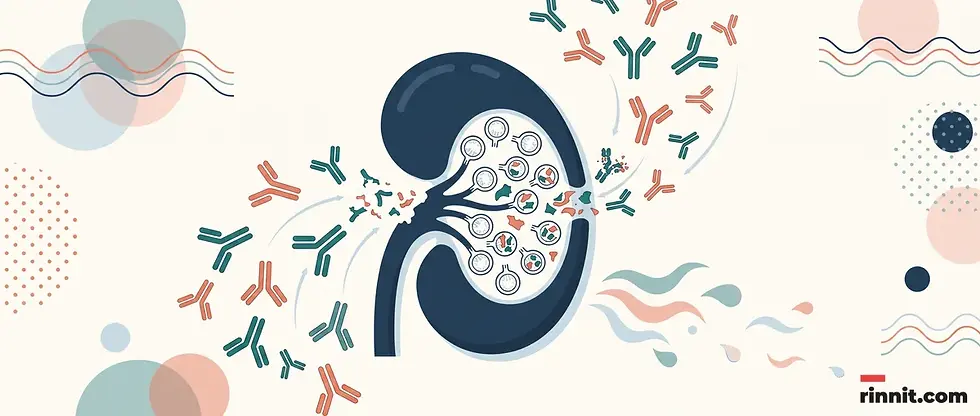
Complement 3 glomerulopathy (C3G) is a group of conditions that affect how well your kidneys work. [9] Your kidneys filter your blood and remove waste and extra water to make urine.
The name breaks down into two parts. "Complement 3" refers to a protein in your blood that is important to your immune system. "Glomerulopathy" (pronounced "glo-MARE-yoo-LOP-uh-thee") refers to damage in your glomeruli (pronounced "glo-MARE-yoo-lye"). Glomeruli are groups of tiny blood vessels in your kidneys that help filter your blood and make urine.
Before 2013, healthcare providers used the terms "membranoproliferative glomerulonephritis (MPGN) type I, II or III" or "mesangioproliferative glomerulonephritis." Those terms have since been replaced — providers now use C3G to classify this group of conditions. [5] [9]
Is C3G chronic? Yes. C3G is a chronic condition [5], which means it slowly gets worse over time. [9]
How common is C3G? It is very rare. Healthcare providers estimate it affects 2 to 3 out of every 1 million people. [5] [9]
The two types of C3G
There are two types of C3G. Providers determine the type according to what kind of damage and inflammation the glomeruli show when kidney tissue samples are examined under a microscope. [5] [9]
Type | Former name | Defining feature | Who it affects most |
Dense deposit disease (DDD) | MPGN type II | Dense deposits that look like ribbons in the glomerular basement membrane (GBM) | Children and young adults, into their early to mid-20s |
C3 glomerulonephritis (C3GN) | MPGN type I or III | Absence of the dense deposits in the GBM that define DDD | People 30 and older |
C3G Symptoms
Common symptoms of both types of C3G include:
Blood in your urine (hematuria).
High levels of protein in your urine (proteinuria).
Urinating less than usual (oliguria).
Low levels of protein in your blood (hypoalbuminemia).
Swelling (edema), usually around the hands, ankles and feet.
High blood pressure (hypertension).
Infections that go away and reappear (recurrent infections).
Feeling extremely tired (fatigue).
Gout. [9]
Both types of C3G can also cause kidney failure. Symptoms of kidney failure include fatigue, nausea and vomiting, confusion or trouble concentrating, swelling, and urinating more than usual. [9]
C3G may also cause symptoms that do not affect your kidneys or how they function. These may include vision problems, specifically from the accumulation of protein and calcium deposits (drusen) in the macula — the central part of the eye that controls sharp vision — and lipodystrophy, a condition involving abnormal fat distribution. [5] [9]

Symptom | Medical term | What it means |
Blood in urine | Hematuria | Often an early sign the filters are damaged |
Protein in urine | Proteinuria | Damaged filters leak protein that should stay in the blood |
Urinating less | Oliguria | Reduced urine output as filtering slows |
Low blood protein | Hypoalbuminemia | Protein lost through urine lowers blood levels |
Swelling | Edema | Typically around hands, ankles and feet |
High blood pressure | Hypertension | A common consequence of kidney damage |
Recurrent infections | — | Infections that go away and reappear |
Extreme tiredness | Fatigue | A hallmark of both the disease and developing kidney failure |
Gout | — | Listed among the common symptoms of both types |
Vision problems | Drusen in the macula | Protein and calcium deposits in the eye |
Lipodystrophy | — | Abnormal fat distribution, a non-kidney manifestation |
What Causes C3G?
Complement 3 glomerulopathy occurs when your complement system stops working the way it should. The complement system consists of proteins in your blood that are part of your immune system. It helps enhance ("complement") your immune system by fighting foreign invaders like bacteria and viruses.
If you have C3G, your complement system works harder than normal, which damages your complement 3 (C3) proteins. Damaged parts of your C3 proteins trap themselves in your glomeruli, which makes it harder for your glomeruli to filter your blood or create urine. Without treatment to slow down the damage, C3G will continue to harm your kidneys and affect kidney function — and this can lead to kidney failure. [9]
Stage | What happens |
1. Complement dysfunction | The complement system stops working as it should |
2. Overactivity | The system works harder than normal, damaging C3 proteins |
3. Protein trapping | Damaged C3 protein fragments lodge themselves in the glomeruli |
4. Filter damage | The glomeruli can no longer filter blood or make urine effectively |
5. Progression | Kidney damage continues, potentially leading to kidney failure |
What triggers the complement dysfunction? In most cases of C3G, providers are not sure exactly what causes the complement system to malfunction. [9] However, known and suspected factors include:
Gene mutations. In some cases, mutations in your C3, CFH and other complement system genes cause C3G. [5] [9]
Monoclonal gammopathy. This blood disorder affects the plasma cells in your bone marrow and may indirectly cause a kidney injury that impairs the alternative pathway (AP) of complement, which could cause C3G. [9]
Autoantibodies. Researchers suspect that autoantibodies — proteins your immune system makes that mistakenly target normal body tissues — may also affect the complement system. There is not enough research yet to confirm that autoantibodies definitively cause C3G. [9]
Who does C3G affect? It can affect anyone, and it equally affects men and women. The average age of diagnosis is 23. DDD tends to appear at a younger average age than C3GN. [5] [9]
The main complication. Approximately 50% of people with C3G develop kidney failure within 10 years of diagnosis. [5] [9]
How Is C3G Diagnosed?
A healthcare provider may use several tests to evaluate your kidneys' health and effectiveness:
Test | How it works | What it reveals |
Blood tests | A thin needle (about the size of a standard earring post) withdraws a small amount of blood from a vein in your arm | Whether complement proteins look normal and whether excessive wastes are in your blood |
eGFR (estimated glomerular filtration rate) | Calculated from serum creatinine or cystatin C in a blood sample | How well your kidneys clean your blood |
Urinalysis (urine test) | You provide a urine sample in a special cup; a lab tests it | Microscopic amounts of protein or blood in urine |
Kidney biopsy | A needle or small incision removes a small piece of kidney tissue for lab examination | Damaged C3 protein parts in the glomeruli (indicating C3G) and the C3G type, based on presence or absence of dense deposits |
The kidney biopsy is the definitive test — it both confirms C3G and determines whether you have DDD or C3GN, according to the presence or absence of dense deposits in the glomerular basement membrane. [5] [9]
C3G Treatment Options
Currently, there is no cure for C3G. [9] However, healthcare providers and medical researchers are studying the disease and conducting trials in the hope of finding one.
Treatment has changed in recent years. In 2025, the FDA approved two complement-targeted medicines specifically for C3G, [7] [6] [8] and providers combine them with supportive therapies to slow the progression of C3G and manage symptoms:

Treatment | How it helps |
Iptacopan (Fabhalta) | An oral capsule taken twice daily that blocks factor B, a key protein of the alternative complement pathway. The FDA approved it in March 2025 for adults with C3G to reduce proteinuria |
Pegcetacoplan (Empaveli) | A subcutaneous medicine that blocks C3 and C3b, central proteins of the complement system. The FDA approved it in July 2025 for people 12 and older with C3G or primary immune-complex MPGN, including C3G that returns after a kidney transplant, to reduce proteinuria |
Blood pressure medications (ACE inhibitors, ARBs) | Reduce the pressure inside your glomeruli, which reduces the amount of protein that leaks into your urine |
Cholesterol-lowering drugs (statins) | Lower cholesterol and reduce kidney damage |
Diet changes (renal dietitian) | A special diet promotes growth or maintains a healthy weight; cutting back on sodium (salt), saturated fat and cholesterol reduces kidney damage |
Corticosteroids (steroids) | Anti-inflammatory drugs that help stop your immune system from attacking your glomeruli |
Eculizumab | A monoclonal antibody drug used for rare blood diseases that is not FDA-approved for C3G; it may improve kidney function by reducing protein in your urine and improving your glomerular filtration rate |
Dialysis | Performs the work of your kidneys if kidney failure develops — cleans your blood by removing wastes and excess fluids |
Kidney transplant | A surgeon replaces your failing kidney with a donor's healthy kidney |
Complement-targeted medicines come with safety requirements. The FDA warns that iptacopan increases the risk of serious infections caused by encapsulated bacteria, so vaccinations should be completed or updated at least two weeks before the first dose, and the drug is available only through a restricted safety program. [6] The 2025 approvals were based on reductions in proteinuria; how much these medicines lower the long-term risk of kidney failure is still being studied.
If you have DDD or C3GN and also have monoclonal gammopathy, a provider will recommend further evaluations to check for underlying conditions. [9]
Outlook and Prognosis
About half of people who have C3G develop kidney failure within 10 years of diagnosis. [5] [9] There is no cure for kidney failure. However, with proper diagnosis and treatment, you may still live a long life without many drastic changes to your quality of life. [9]
You cannot prevent C3G. [9]
Living With C3G
If you have C3G, healthcare providers will work with you to develop the best treatment plan, which may include medications, supportive therapies and lifestyle changes:
Taking medications as prescribed by your provider.
Changing your eating patterns.
Avoiding nonsteroidal anti-inflammatory drugs (NSAIDs), which may increase how fast kidney failure develops. [9]
Taking care of your mental health. Having a rare condition can be isolating, and knowing that C3G may cause kidney failure can increase your risk of depression. [9] Talk to your provider about your mental health and get the treatments you need. Ask your provider if there are support groups for people with C3G — meeting others who have C3G can help you feel less alone.
When should you see a healthcare provider? Contact a provider if you have symptoms of C3G, including any changes to your urine. These may be signs that your kidneys are not working as they should. And if you have C3G, make sure your provider refers you to a kidney specialist — a nephrologist, who diagnoses and treats conditions that affect the kidneys. [9]
Questions to ask your healthcare provider:
How do you know that I have C3G?
If I don't have C3G, what other condition might I have?
What type of C3G do I have?
What treatment options do you recommend, including the newer complement-targeted medicines?
What changes should I make to my eating patterns?
Do you think I'll have kidney failure?
Can you refer me to a nephrologist?
Conclusion
Complement 3 glomerulopathy is a rare, chronic condition in which an overactive complement system damages its own C3 proteins, and those damaged fragments become trapped in the glomeruli — the kidneys' microscopic filters. The result is a slow, steady decline in the kidneys' ability to clean blood and make urine, announced by telltale signs such as blood and protein in the urine, swelling around the hands and ankles, high blood pressure, fatigue and recurrent infections.
There is no cure today, but treatment has moved forward: the FDA approved iptacopan and pegcetacoplan in 2025 to reduce proteinuria [7], and they sit alongside a proven supportive toolkit of blood pressure medications that ease pressure inside the filters, statins, corticosteroids and a renal diet. If kidney failure develops — the outcome for about half of patients within a decade of diagnosis — dialysis and kidney transplant take over the kidneys' work, and many people go on to live long lives without drastic changes to their quality of life.
Because C3G is rare and slow-moving, early referral to a nephrologist, consistent medication use, careful diet choices, avoidance of NSAIDs, and attention to mental health make a real difference. Give yourself time and space to learn about the condition and your options, lean on your providers and support groups, and keep asking questions.
Want to explain health topics like this one visually? Infographics make complex concepts easy for readers of every age. Rinnit's infographic templates help you build clear, professional visuals for your own audience.
Frequently Asked Questions
What is complement 3 glomerulopathy?
C3G is a group of rare immune-related kidney conditions in which damaged complement 3 proteins get trapped in the glomeruli, the kidneys' tiny filters, impairing their ability to filter blood and make urine.
What does "complement 3" mean?
Complement 3 refers to a protein in your blood that is important to your immune system.
What does "glomerulopathy" mean?
Glomerulopathy (glo-MARE-yoo-LOP-uh-thee) means damage to the glomeruli — groups of tiny blood vessels in the kidneys that filter blood and make urine.
How do you pronounce glomerulopathy?
Glomerulopathy is pronounced "glo-MARE-yoo-LOP-uh-thee," and glomeruli is pronounced "glo-MARE-yoo-lye."
Is C3G the same as MPGN?
C3G and MPGN are closely related. Before 2013, providers called these conditions membranoproliferative glomerulonephritis (MPGN) type I, II or III, or mesangioproliferative glomerulonephritis. They now use C3G as the umbrella classification.
How rare is C3G?
Very rare — it affects about 2 to 3 out of every 1 million people.
Is C3G chronic?
Yes. C3G is chronic, meaning it slowly gets worse over time.
What are the two types of C3G?
Dense deposit disease (DDD, formerly MPGN type II) and C3 glomerulonephritis (C3GN, formerly MPGN type I or III).
What is dense deposit disease?
DDD is a type of C3G defined by dense deposits that look like ribbons in the glomerular basement membrane. It primarily affects children and young adults into their early to mid-20s.
What is C3 glomerulonephritis?
C3GN is defined by the absence of the dense deposits that characterize DDD, and it primarily affects people 30 and older.
How do providers tell the two types apart?
By looking at kidney tissue samples under a microscope after a kidney biopsy — the presence or absence of dense deposits in the glomerular basement membrane determines the type.
Who does C3G affect?
Anyone. It equally affects men and women, with an average diagnosis age of 23.
Is C3G genetic?
Sometimes. In some cases, mutations in the C3, CFH and other complement system genes cause C3G. But in most cases, the exact cause of the complement dysfunction is unknown.
What are the first signs of C3G?
Common early signs include blood in the urine, protein in the urine, urinating less than usual, and swelling around the hands, ankles and feet.
What does C3G do to your urine?
C3G causes blood (hematuria) and high protein levels (proteinuria) in the urine, and often reduces how much you urinate.
What is hematuria?
Blood in your urine.
What is proteinuria?
Abnormally high levels of protein in your urine, which indicates the kidney filters are leaking.
What is hypoalbuminemia?
Low levels of protein in your blood, caused by protein leaking out through the damaged filters.
Does C3G cause high blood pressure?
Yes — hypertension is one of the common symptoms.
Can C3G affect your eyes?
Yes. It may cause vision problems from the accumulation of protein and calcium deposits (drusen) in the macula.
What is lipodystrophy in C3G?
A non-kidney symptom sometimes associated with C3G, involving abnormal fat distribution in the body.
Does C3G cause fatigue?
Yes — extreme tiredness is a common symptom, and fatigue also appears when kidney failure develops.
Why do people with C3G get infections often?
Recurrent infections — infections that go away and reappear — are a common symptom of C3G. The complement system normally helps fight invaders like bacteria and viruses.
Can C3G cause gout?
Yes, gout is listed among the common symptoms of both types of C3G.
What are the symptoms of kidney failure?
Fatigue, nausea and vomiting, confusion or trouble concentrating, swelling, and urinating more than usual.
How does C3G damage the kidneys?
An overactive complement system damages C3 proteins; the damaged fragments trap themselves in the glomeruli, making it harder to filter blood and make urine.
What is the complement system?
A group of blood proteins that are part of your immune system and help fight foreign invaders such as bacteria and viruses.
What are autoantibodies?
Proteins your immune system makes that mistakenly target normal body tissues. Researchers suspect they may affect the complement system in C3G, but there is not enough research to confirm they definitively cause it.
What is monoclonal gammopathy?
A blood disorder that affects the plasma cells in your bone marrow. It may indirectly cause a kidney injury that impairs the alternative pathway of complement, which could cause C3G.
What is the alternative pathway of complement?
One of the activation routes of the complement system; impairment of this pathway (often through monoclonal gammopathy-related kidney injury) may lead to C3G.
Can C3G be prevented?
No — you cannot prevent C3G.
How is C3G diagnosed?
Through blood tests, eGFR calculation, urinalysis and a kidney biopsy. The biopsy confirms C3G and determines the type.
What does a kidney biopsy show in C3G?
Damaged parts of C3 proteins in the glomeruli, plus the presence or absence of dense deposits that distinguish DDD from C3GN.
What is eGFR?
The estimated glomerular filtration rate — a value calculated from serum creatinine or cystatin C in a blood sample that estimates how well your kidneys clean your blood.
Is there a cure for C3G?
Not currently. Researchers are studying the disease and conducting trials in the hope of finding a cure, but two FDA-approved medicines can now reduce the protein leaking into the urine.
Is there an FDA-approved treatment for C3G?
Yes. The FDA approved iptacopan (Fabhalta) in March 2025 for adults with C3G, and pegcetacoplan (Empaveli) in July 2025 for people 12 and older with C3G or primary immune-complex MPGN. Both are approved to reduce proteinuria. Providers also use supportive therapies to slow progression and manage symptoms.
What is iptacopan (Fabhalta)?
An oral capsule taken twice daily that blocks factor B, a key protein in the alternative complement pathway. In the APPEAR-C3G trial, it produced a 35.1% relative reduction in proteinuria versus placebo at 6 months. It raises the risk of serious infections from encapsulated bacteria, so vaccinations are completed or updated before starting.
What is pegcetacoplan (Empaveli)?
A subcutaneous medicine that blocks C3 and C3b, central proteins of the complement system. In the VALIANT trial, it produced a 68.1% relative reduction in proteinuria versus placebo at 26 weeks. Its FDA approval covers people 12 and older, including those whose C3G returned after a kidney transplant.
Do ACE inhibitors help C3G?
Yes — ACE inhibitors and ARBs reduce the pressure inside your glomeruli, which reduces the amount of protein leaking into your urine.
Do statins help C3G?
Statins can — providers may recommend statins to lower cholesterol and reduce kidney damage.
What role does diet play in C3G?
A renal dietitian can create a special diet to promote growth or maintain a healthy weight. Cutting back on sodium, saturated fat and cholesterol helps reduce damage to your kidneys.
What are corticosteroids used for in C3G?
Corticosteroids are anti-inflammatory drugs that help stop your immune system from attacking your glomeruli.
What is eculizumab?
A monoclonal antibody drug that treats rare blood diseases. It is not FDA-approved for C3G, but it may improve kidney function by reducing protein in the urine and improving the glomerular filtration rate.
When is dialysis needed?
Dialysis performs the work of your kidneys if kidney failure develops — about half of people with C3G develop kidney failure. Dialysis cleans the blood by removing wastes and excess fluids.
Can you get a kidney transplant with C3G?
Yes — a kidney transplant helps treat kidney failure. A surgeon removes your failing kidney and replaces it with a donor's healthy kidney.
What percentage of C3G patients develop kidney failure?
Approximately 50% develop kidney failure within 10 years of diagnosis.
What is the long-term outlook for C3G?
About half of patients develop kidney failure within 10 years, but with proper diagnosis and treatment, many live long lives without many drastic changes to quality of life.
Should people with C3G avoid NSAIDs?
Yes — NSAIDs may increase how fast kidney failure develops, so providers recommend avoiding them.
Which specialist treats C3G?
A nephrologist — a kidney specialist who diagnoses and treats conditions affecting the kidneys.
How does C3G affect mental health?
Having a rare condition can be isolating, and the risk of kidney failure can increase depression risk. Providers recommend discussing mental health openly and asking about C3G support groups.
What questions should I ask my doctor about C3G?
Ask how the diagnosis was made, what type you have, what treatment is recommended (including the newer complement-targeted medicines), what diet changes to make, whether kidney failure is likely, and request a referral to a nephrologist.
Can C3G recur after a kidney transplant?
Yes. The underlying complement problem can persist, so C3G can return in a transplanted kidney. Pegcetacoplan's FDA approval includes C3G that recurs after a transplant. Discuss recurrence risk and monitoring with your nephrologist.
Related Reading
C3 Complement Blood Test: Normal Range and What Low or High C3 Means explains the blood test that measures complement C3 and what low or high levels mean.
References
Medjeral-Thomas NR, O'Shaughnessy MM, O'Regan JA, et al. C3 glomerulopathy: clinicopathologic features and predictors of outcome. Clin J Am Soc Nephrol. 2014;9(1):46-53. PMID: 24178974. https://doi.org/10.2215/CJN.04700513
Kavanagh D, Bomback AS, Vivarelli M, et al. Oral iptacopan therapy in patients with C3 glomerulopathy: a randomised, double-blind, parallel group, multicentre, placebo-controlled, phase 3 study. Lancet. 2025;406(10512):1587-1598. PMID: 41016405. https://doi.org/10.1016/S0140-6736(25)01148-1
Fakhouri F, Bomback AS, Ariceta G, et al. Trial of pegcetacoplan in C3 glomerulopathy and immune-complex MPGN. N Engl J Med. 2025;393(22):2210-2220. PMID: 41337715. https://doi.org/10.1056/NEJMoa2501510
Zand L, Kattah A, Fervenza FC, et al. C3 glomerulonephritis associated with monoclonal gammopathy: a case series. Am J Kidney Dis. 2013;62(3):506-514. PMID: 23623956. https://doi.org/10.1053/j.ajkd.2013.02.370
Martín B, Smith RJH. C3 glomerulopathy. In: Adam MP, Feldman J, Mirzaa GM, et al., eds. GeneReviews. Seattle, WA: University of Washington, Seattle; 1993-2026. Initial posting July 20, 2007; last update April 5, 2018. PMID: 20301598. https://www.ncbi.nlm.nih.gov/books/NBK1425/
U.S. Food and Drug Administration. FDA approves first treatment for adults with complement 3 glomerulopathy, a rare kidney disease, to reduce proteinuria. FDA. March 20, 2025. https://www.fda.gov/drugs/news-events-human-drugs/fda-approves-first-treatment-adults-complement-3-glomerulopathy-rare-kidney-disease-reduce
Apellis Pharmaceuticals. FDA approves Apellis' EMPAVELI (pegcetacoplan) as the first C3G and primary IC-MPGN treatment for patients 12 and older [press release]. Apellis Pharmaceuticals. July 28, 2025. https://www.globenewswire.com/news-release/2025/07/28/3122935/0/en/FDA-Approves-Apellis-EMPAVELI-pegcetacoplan-as-the-First-C3G-and-Primary-IC-MPGN-Treatment-for-Patients-12-and-Older.html
National Organization for Rare Disorders. C3 glomerulopathy. NORD Rare Disease Database. Last updated March 2, 2026. https://rarediseases.org/rare-diseases/c3-glomerulopathy-dense-deposit-disease-and-c3-glomerulonephritis/
Cleveland Clinic. Complement 3 glomerulopathy (C3G). Cleveland Clinic Health Library. Last updated June 10, 2023. https://my.clevelandclinic.org/health/diseases/25074-c3g
Medical disclaimer
This article is for informational purposes only and is not a substitute for professional medical advice, diagnosis, or treatment. Always consult a qualified healthcare provider with questions about a medical condition or before starting or changing any treatment plan.



Comments