What Is Collagenous Colitis? Signs, Causes, Diagnosis and Treatment

Updated: 2 days ago
Medically reviewed by Dr. Baraa Alnahhal, MD · Last reviewed: October 17, 2026
Quick Answer: What is collagenous colitis?
Collagenous colitis is a rare, microscopic type of inflammatory bowel disease in which the collagen layer of the colon lining becomes abnormally thickened, causing chronic watery, non-bloody diarrhea [1] [2]. Because the colon looks normal on colonoscopy, diagnosis requires tissue biopsies [1]. Most people respond well to avoiding trigger foods, antidiarrheal medicines and a short course of corticosteroids [1].
Key takeaways
Chronic, watery, non-bloody diarrhea: collagenous colitis is a subtype of microscopic colitis, a rare form of inflammatory bowel disease [1] [2].
A normal-looking colon: the colon lining looks completely normal during colonoscopy; the swollen, thickened collagen layer is only visible under a microscope in biopsy samples [1].
More common in women: women are affected about three times more often than men [1].
The exact cause is unknown: theories include past infections, autoimmune reactions, certain medications, and colon allergens [1].
Most people find relief: trigger-food elimination, antidiarrheal medicines, and corticosteroids help [1], and many people may be able to taper medication over time.
What the research says
Budesonide works well for microscopic colitis, but symptoms often return after it stops. In a systematic review and meta-analysis of 9 studies of budesonide for microscopic colitis (the umbrella condition that includes collagenous colitis), the pooled odds ratio for a clinical response was 7.34 (95% CI 4.08-13.19) after induction treatment and 8.35 (95% CI 4.14-16.85) with maintenance treatment, and histological response was also higher with budesonide than with placebo. Relapse rates were above 50% after treatment stopped, with no difference between the budesonide and placebo groups. The review pooled microscopic colitis as a whole rather than collagenous colitis alone (Sebastian et al., Eur J Gastroenterol Hepatol, 2019 [3]).
Some common medicines are linked to microscopic colitis; the smoking link is less clear-cut. In a systematic review and meta-analysis that pooled 45 studies, NSAID use (OR 2.57, 95% CI 1.45-4.53) and statin use (OR 2.15, 95% CI 1.14-4.05) were linked to higher odds of microscopic colitis when compared with controls who had a biopsy showing no microscopic colitis. Proton pump inhibitor use and smoking were linked to it only when compared with randomly selected controls (current smoking OR 2.40, 95% CI 1.64-3.50). The pooled studies were cohort, case-control and cross-sectional designs, so they show association rather than proof of cause (Rancz et al., J Gastroenterol Hepatol, 2025 [4]).
Collagenous colitis is uncommon, and microscopic colitis is diagnosed more often in women and older adults. In a meta-analysis of 42 population-based studies (91,148 microscopic colitis cases from 10 countries in North America and Europe, 1984-2020), the pooled incidence of collagenous colitis was 3.94 per 100,000 person-years (95% CI 3.08-5.05) and the pooled prevalence was 8.68 per 100,000 people (95% CI 3.96-19.01). Microscopic colitis incidence was associated with female sex and older age, and females were diagnosed with microscopic colitis at an earlier age than males. The data came only from North America and Europe (Yu et al., Clin Gastroenterol Hepatol, 2026 [5]).
What Is Collagenous Colitis?
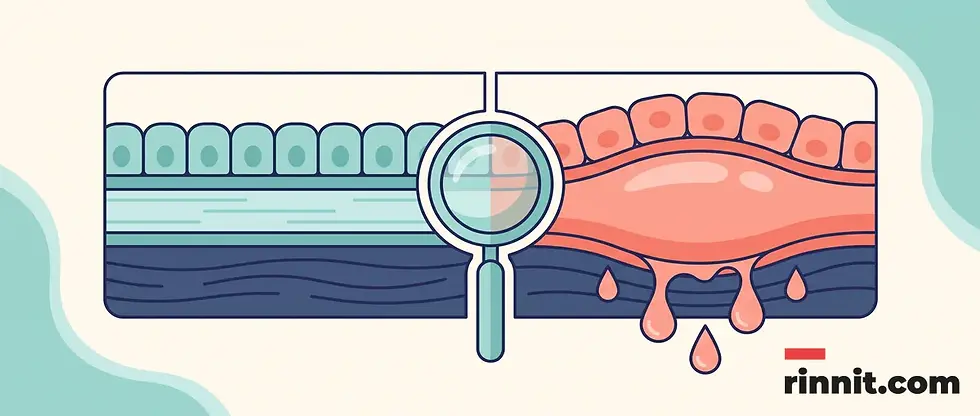
Collagenous colitis is a rare type of inflammatory bowel disease (IBD) that causes chronic, watery diarrhea [1]. The name comes from the way the condition affects the lining of the colon (large intestine).
Collagen is the protein your body uses to build connective tissues. In the colon, a thin band of collagen sits in the middle layer of the lining. In collagenous colitis, this collagen layer becomes abnormally swollen and thickened. There is one important catch: you cannot see this change during a routine colonoscopy [1]. The thickened collagen is only visible when a pathologist examines biopsy samples under a microscope [1].
That is why collagenous colitis belongs to a family of conditions called microscopic colitis — the bowel looks normal to the naked eye, and only microscopic examination reveals the problem.
Term | Plain-language meaning |
Collagenous colitis | A rare form of IBD where the colon's collagen layer thickens, causing watery diarrhea |
Collagen | The protein that builds connective tissue, including a middle layer of the colon lining |
Colon (large intestine) | The final section of the digestive tract that absorbs water and forms stool |
Inflammatory bowel disease (IBD) | Ongoing irritation and inflammation inside the intestines |
Microscopic colitis | Colitis that only shows up under a microscope, not during routine colonoscopy |
Pathologist | A doctor who examines tissue samples under a microscope to make a diagnosis |
How it fits with other bowel conditions
Like all IBD, collagenous colitis is ongoing. Symptoms tend to come and go — they improve, worsen, and then return [1]. It is not the same as ulcerative colitis or Crohn's disease, and it is not the same as typical "colitis" that a colonoscopy can spot directly.
Feature | Collagenous colitis | Typical colitis (e.g., ulcerative colitis) |
Diarrhea | Chronic, watery, never bloody | Often bloody, with mucus |
Colonoscopy appearance | Looks normal | Visible inflammation, redness, ulcers |
Diagnosis | Biopsy samples examined under a microscope | Visible during colonoscopy plus biopsy |
Rarity | Rare | Far more common |
Who Gets Collagenous Colitis?
Collagenous colitis is uncommon, and certain groups are more likely to develop it. The most striking pattern is the gender split: women are diagnosed roughly three times more often than men [1], and it is most frequently found in middle-aged and older adults [5].
Risk factor | Detail |
Female sex | Female-to-male ratio of about 3:1 [1] |
Family history | A biological family member with IBD raises the likelihood [1] |
Other digestive conditions | Bile acid malabsorption (BAM), celiac disease, or irritable bowel syndrome (IBS) [1] |
Autoimmune conditions | Systemic autoimmune diseases such as rheumatoid arthritis or scleroderma [1] |
Smoking | May increase risk by as much as 5 times [1] |
Certain medications | NSAIDs, proton pump inhibitors (PPIs), and SSRIs may reduce bowel immunity or injure the lining [1] |
What Are the Symptoms of Collagenous Colitis?
The hallmark symptom is chronic, watery diarrhea — and unlike many other forms of colitis, it is never bloody. Episodes can happen many times a day [1], and the urgency can make them hard to hold in.

Symptom | What it looks like |
Chronic watery diarrhea | The primary symptom; may occur many times a day; watery and never bloody |
Urgency | Diarrhea that is hard to hold in, often with little warning |
Abdominal pain or cramps | Discomfort in the belly accompanying flare-ups |
Dehydration | Fluid loss from frequent watery stools; a warning sign of more severe illness |
Weight loss | Unintended weight loss in more severe cases |
Joint pain and stiffness | Extra-intestinal inflammation affecting the joints |
Skin rashes or sores | Extra-intestinal inflammation showing up on the skin |
Extreme fatigue | Ongoing tiredness that accompanies the inflammation |
Digestive problems | Stomach pain and general digestive upset |
Some people experience inflammation outside the digestive tract as well. Joint pain and stiffness, skin rashes or sores, extreme tiredness, and general digestive problems can all occur alongside the bowel symptoms [1].
What Causes Collagenous Colitis?
The exact cause is unknown, but researchers have several leading theories.
One theory points to an unidentified infection that once damaged the colon lining [1]. Another treats it as an autoimmune disease, in which the immune system produces inflammation by mistake [1] — acting as though something is infecting or injuring the colon when nothing actually is.
Specific triggers researchers suspect include:
Possible trigger | How it may contribute |
Colon-damaging infections | Infections such as C. diff (Clostridioides difficile) or Yersinia that injure the colon lining [1] |
Long-term medications | NSAIDs and other drugs that slowly injure the colon lining over time [1] |
Colon allergens | Allergens in the colon, such as pollen or certain foods, that provoke inflammation [1] |
What Are the Complications?
The good news is that the inflammation in collagenous colitis is usually not severe, and it rarely leads to the serious complications associated with severe forms of colitis [1].
Complication | Why it happens |
Dehydration | The most common complication, caused by frequent watery diarrhea [1] |
Weight loss | Nutrient and fluid loss from chronic diarrhea |
Other inflammation symptoms | Joint, skin, and fatigue symptoms that improve with treatment |
Most people improve with treatment, which keeps these complications manageable [1].
How Is Collagenous Colitis Diagnosed?
Getting the right diagnosis can be a process. Many different conditions cause chronic diarrhea, and a provider has to suspect microscopic colitis before running the specific tests for it [1].
The diagnostic pathway looks like this:
Step | What happens |
1. Clinical evaluation | The provider reviews your chronic watery diarrhea pattern, symptoms, medical history, and medications |
2. Ruling out other causes | Tests to exclude infections, celiac disease, bile acid malabsorption, and other common causes of chronic diarrhea |
3. Colonoscopy | A colonoscopy is performed — but the colon looks normal |
4. Multiple biopsies | |
5. Microscopic examination | A pathologist examines the samples under a microscope and identifies the thickened collagen layer, confirming the diagnosis [1] |
The biopsy step is the decisive one. Without multiple biopsy samples sent to the lab, collagenous colitis can be missed entirely, which is one reason people with this condition often have symptoms for months or longer before a firm diagnosis.
What Are the Treatment Options?
Treatment follows an escalating approach, starting with the simplest measures and moving up only if symptoms persist.

Treatment | Details |
Dietary changes | Eliminate common trigger foods and drinks, especially dairy, gluten, sweets, alcohol, and caffeine [1] |
Antidiarrheal medicines (OTC) | Bismuth subsalicylate or psyllium to slow watery stools and add bulk [1] |
Antidiarrheal medicines (prescription) | Loperamide to reduce the frequency of diarrhea [1] |
Corticosteroids | |
Biologic therapy |
What Is the Outlook for People With Collagenous Colitis?
With the right diagnosis and treatment, most people find relief. Some people go into remission, meaning all signs and symptoms disappear entirely [1]. For others, symptoms reappear occasionally and come and go over time [1].
Some people may need medications on and off for life [1], but the overall picture is encouraging. This is a treatable condition, and once it is properly identified, quality of life typically improves significantly.
How Do You Live With Collagenous Colitis?
Living with collagenous colitis usually means staying observant about your body and your habits. Many people find it helpful to keep a simple symptom diary that tracks diarrhea frequency, foods, drinks, and medications, because patterns often emerge that make flare-ups predictable. Eliminating your known trigger foods — dairy, gluten, sweets, alcohol, and caffeine — is usually the easiest ongoing step.
If you take NSAIDs, PPIs, or SSRIs for other conditions, ask your provider whether adjusting those medications could help your bowels. And if you smoke, quitting is one of the most meaningful changes you can make, since smoking may multiply your risk of this condition several times over.
Do not resign yourself to living with undiagnosed chronic diarrhea. It can be frustrating to have a condition that seems to rule your life and resists diagnosis, but collagenous colitis is treatable, and you should start feeling better soon once the right plan is in place.
When to See a Healthcare Provider
See a provider if watery diarrhea persists for more than a few weeks, especially if it happens many times a day. Seek prompt care if you notice signs of dehydration (dizziness, dark urine, dry mouth), unintended weight loss, fever, or if over-the-counter antidiarrheals provide no relief after a couple of weeks.
Questions to Ask Your Healthcare Provider
Could my chronic diarrhea be microscopic colitis?
Will my colonoscopy include multiple biopsies of the colon lining?
Which of my current medications could be contributing to this?
Which foods or drinks are most likely to trigger my symptoms?
How long should I try budesonide before we evaluate whether it is working?
What are the chances my symptoms will return after treatment ends?
Conclusion
Collagenous colitis is a rare but genuinely treatable form of inflammatory bowel disease. Its watery, non-bloody diarrhea and its invisibility during colonoscopy make it easy to miss — but multiple biopsies examined under a microscope can confirm it, and most people respond well to dietary changes, antidiarrheal medicines, and short courses of corticosteroids. If chronic watery diarrhea has been disrupting your life, pushing for a thorough workup is worth it.
Want to turn complex health information into clear, shareable visuals? Rinnit's infographic templates make it easy to create professional health infographics for your audience.
Frequently Asked Questions (FAQ)
What is collagenous colitis?
Collagenous colitis is a rare type of inflammatory bowel disease in which the collagen layer of the colon lining becomes abnormally swollen and thickened. This thickening causes chronic, watery, non-bloody diarrhea and can only be detected by examining colon biopsy samples under a microscope.
Is collagenous colitis a type of IBD?
Yes. It is a rare form of inflammatory bowel disease (IBD) and a subtype of microscopic colitis. Like other IBD, it involves ongoing irritation and inflammation inside the intestines, with symptoms that come and go over time.
What causes collagenous colitis?
The exact cause is unknown. Researchers suspect a past infection that damaged the colon lining, an autoimmune reaction in which the immune system inflames the colon by mistake, medications that injure the colon over time, or allergens in the colon such as pollen or certain foods.
Is collagenous colitis hereditary?
There is a family-connection pattern: having a biological family member with IBD raises your risk. The condition itself is not a simple inherited trait, but genetics appear to play some role in who develops it.
How is collagenous colitis diagnosed?
It is diagnosed with a colonoscopy combined with multiple biopsies of the colon lining. The colon looks normal during the procedure, but a pathologist examining the biopsy samples under a microscope can identify the thickened collagen layer.
Can collagenous colitis be seen during a colonoscopy?
No. The colon looks completely normal during a routine colonoscopy. The thickened collagen is microscopic, which is why multiple biopsy samples must be sent to the lab for diagnosis. That is why it is called "microscopic colitis."
What are the symptoms of collagenous colitis?
The main symptom is chronic, watery diarrhea that never contains blood and may occur many times a day with strong urgency. Abdominal pain, cramps, dehydration, weight loss, joint pain, skin rashes, and extreme fatigue can also occur.
Is the diarrhea in collagenous colitis bloody?
No. Unlike many other forms of colitis, the diarrhea in collagenous colitis is watery and never bloody. Bloody diarrhea suggests a different diagnosis and should be evaluated promptly.
Who is most likely to get collagenous colitis?
Women are diagnosed roughly three times more often than men, and the condition is most common in middle-aged and older adults. Risk is also higher with a family history of IBD, other digestive conditions, autoimmune diseases, smoking, and use of certain medications.
Does smoking increase the risk of collagenous colitis?
Yes. Research suggests smoking may increase the risk by as much as five times. Quitting smoking is one of the most impactful changes someone at risk can make.
Can medications cause collagenous colitis?
Certain medications may contribute, including NSAIDs, which can injure the colon lining over time, as well as PPIs and SSRIs, which may reduce the bowel's immune defenses. Always talk to your provider before changing any prescription medication.
What foods should I avoid with collagenous colitis?
Common trigger foods and drinks include dairy, gluten, sweets, alcohol, and caffeine. Eliminating these is usually the first treatment step, though individual triggers vary, so a symptom diary can help identify your personal patterns.
Can collagenous colitis cause dehydration?
Yes. Dehydration is the most common complication because of frequent watery diarrhea. Signs include dizziness, dark urine, and dry mouth, and persistent dehydration warrants prompt medical attention.
Does collagenous colitis cause weight loss?
It can. Unintended weight loss is a warning sign of more severe illness and typically reflects the combined fluid and nutrient loss from chronic diarrhea.
Can collagenous colitis affect the joints?
Yes. Some people experience extra-intestinal inflammation, which can cause joint pain and stiffness alongside the digestive symptoms. These symptoms usually improve with treatment.
Can collagenous colitis cause skin problems?
Yes. Extra-intestinal inflammation can produce skin rashes or sores in some people. This reflects the same immune-system activity driving the bowel inflammation.
Does collagenous colitis cause fatigue?
Extreme tiredness is one of the extra-intestinal symptoms some people experience. It generally improves as the underlying inflammation is treated.
Is collagenous colitis the same as microscopic colitis?
Collagenous colitis is a subtype of microscopic colitis. Microscopic colitis is the broader family name for colitis that only shows up under a microscope; collagenous colitis is the version defined by a thickened collagen layer in the colon lining.
What is the difference between collagenous and lymphocytic colitis?
Both are types of microscopic colitis. In collagenous colitis, the collagen layer of the colon lining is thickened; in lymphocytic colitis, there is an increased number of lymphocytes (immune cells) in the lining instead. Both cause watery diarrhea and are treated similarly.
Is collagenous colitis cancer?
No. It is an inflammatory condition, not a form of cancer, and it does not by itself increase colon cancer risk the way some other forms of colitis do.
Is collagenous colitis curable?
There is no definitive cure, but it is highly treatable. Many people enter remission with all symptoms gone, and some can eventually stop medication. Others manage occasional flare-ups with medication on and off.
What medications treat collagenous colitis?
Treatment typically starts with over-the-counter antidiarrheals such as bismuth subsalicylate or psyllium, or prescription loperamide. If diarrhea persists, a short course of the corticosteroid budesonide is used. Cases that resist steroids may be treated with biologic DMARDs.
Does budesonide work for collagenous colitis?
Yes. Budesonide, a gut-targeted corticosteroid, is the standard prescription treatment when dietary changes and antidiarrheals are not enough. Most people improve on a short course.
What are biologic DMARDs?
Biologic DMARDs are advanced anti-inflammatory medications that target specific immune pathways. In collagenous colitis, they are reserved for cases that do not respond to corticosteroids.
Can I take loperamide for collagenous colitis?
Loperamide is a commonly prescribed antidiarrheal that slows the bowel and reduces stool frequency. It is safe for most people with this condition, but confirm with your provider, especially if you have fever or severe pain.
Is psyllium helpful for collagenous colitis?
Psyllium, a soluble fiber supplement, can add bulk to watery stools and reduce frequency. It is a widely used over-the-counter option for managing symptoms.
What is bismuth subsalicylate used for in this condition?
Bismuth subsalicylate is an over-the-counter antidiarrheal that reduces stool frequency and fluidity. It is often the first medication tried before prescription options.
How long does collagenous colitis treatment last?
Treatment duration varies. Some people improve within weeks and stay well, while others need medications on and off for years. Your provider will tailor the plan to how your symptoms behave.
Can collagenous colitis go into remission?
Yes. Some people go into full remission, with all signs and symptoms disappearing. Others experience occasional returns of symptoms that respond again to treatment.
Will collagenous colitis come back?
For some people, symptoms reappear occasionally even after successful treatment. This does not mean treatment failed — it means the condition may need occasional management over time.
Is collagenous colitis dangerous?
Usually not. The inflammation is typically not severe and rarely causes the complications of severe colitis. The main risks are dehydration and weight loss from frequent diarrhea, which are manageable with treatment.
Can collagenous colitis be prevented?
There is no proven way to prevent it. Avoiding smoking, reviewing medications with your provider, and managing digestive health are sensible steps, especially if you have risk factors such as a family history of IBD.
Does stress cause collagenous colitis?
Stress is not known to cause collagenous colitis. The suspected causes are infection, autoimmune activity, medications, and allergens. Stress can, however, worsen how any digestive condition feels.
Can alcohol trigger collagenous colitis symptoms?
Alcohol is one of the common trigger drinks. Eliminating it is a standard first step in treatment, and many people notice clear improvement after giving it up.
Does caffeine make collagenous colitis worse?
Caffeine is a common trigger. Cutting back on coffee, tea, energy drinks, and other caffeinated beverages is typically recommended as part of treatment.
Should I go gluten-free with collagenous colitis?
Gluten is a common trigger food, so a gluten elimination trial is often recommended. This is different from celiac disease treatment, however, so discuss testing and diet plans with your provider.
Can dairy worsen collagenous colitis?
Dairy is a frequently reported trigger. Many people improve by eliminating milk, cheese, and other dairy products, at least temporarily, to see whether symptoms settle.
Are sweets a trigger for collagenous colitis?
Sweets are among the commonly cited trigger foods, likely because of their effect on the gut environment. Eliminating them is a standard part of the initial dietary plan.
Does collagenous colitis increase the risk of other autoimmune diseases?
People with collagenous colitis are more likely to already have other autoimmune conditions such as rheumatoid arthritis or scleroderma. Having the condition does not necessarily cause new autoimmune diseases to develop.
Can IBS be confused with collagenous colitis?
Yes. Both cause chronic bowel symptoms, and the colon looks normal in both. The difference is that collagenous colitis shows a thickened collagen layer on biopsy, which IBS does not.
What is the connection between celiac disease and collagenous colitis?
People with collagenous colitis have a higher-than-average rate of celiac disease, and providers often screen for it. Both involve immune-driven inflammation of the digestive tract.
Can collagenous colitis cause nausea?
Nausea is not a hallmark symptom, but general digestive upset and stomach pain occur in some people. Persistent nausea should be discussed with your provider.
Does collagenous colitis affect children?
It is rare in children. The condition is most commonly diagnosed in middle-aged and older adults, particularly women.
Can collagenous colitis be seen on a CT scan?
No. The changes are microscopic. CT scans and routine colonoscopy cannot detect the thickened collagen layer; only biopsy samples examined under a microscope can.
How many biopsies are needed to diagnose collagenous colitis?
Multiple biopsy samples from different areas of the colon lining are taken during colonoscopy. Multiple samples improve the chance of detecting the patchy thickened collagen.
Who reads the biopsies for collagenous colitis?
A pathologist — a doctor trained to examine tissue samples under a microscope — reviews the biopsy slides and identifies the thickened collagen that confirms the diagnosis.
Can collagenous colitis develop after an infection?
Researchers suspect it can. Infections that damage the colon lining, such as C. diff and Yersinia, are among the leading suspected triggers.
Is collagenous colitis an autoimmune disease?
One leading theory describes it as autoimmune — the immune system producing inflammation by mistake, as though the colon were infected or injured when it is not. The theory is not yet proven.
Can PPIs cause collagenous colitis?
Proton pump inhibitors are among the medications suspected of contributing, possibly by reducing the bowel's immune defenses. Discuss medication risks with your provider rather than stopping treatment on your own.
Can SSRIs contribute to collagenous colitis?
SSRIs are among the medications that may reduce bowel immunity and are associated with a higher likelihood of microscopic colitis. Never stop an antidepressant without consulting your prescriber.
Are NSAIDs linked to collagenous colitis?
Yes. NSAIDs can injure the colon lining over time and are one of the medications most strongly associated with microscopic colitis. A medication review with your provider is a standard step in management.
What is the female-to-male ratio in collagenous colitis?
Women are diagnosed about three times more often than men, giving a female-to-male ratio of approximately 3:1.
How common is collagenous colitis?
It is a rare condition, and one of the rarer forms of inflammatory bowel disease. Precise incidence varies by region, but it is far less common than ulcerative colitis or Crohn's disease.
Does collagenous colitis damage the colon permanently?
The inflammation is usually not severe and rarely causes lasting colon damage. Most of the impact comes from the diarrhea itself — fluid and weight loss — rather than structural damage.
Can I exercise with collagenous colitis?
Yes. Regular gentle exercise supports overall digestive health. During severe flare-ups with dehydration risk, adjust intensity and keep fluids up.
What should I drink with collagenous colitis?
Focus on hydration: water, oral rehydration solutions, and broths help replace fluids lost to diarrhea. Limit alcohol, caffeine, and sugary drinks, which can aggravate symptoms.
Will probiotics help collagenous colitis?
Evidence is limited. Some people report symptom improvement, but probiotics are not a standard treatment. Discuss with your provider before adding them.
Can collagenous colitis cause anemia?
Anemia is not typical, since the diarrhea is not bloody and the inflammation is usually not severe. If anemia develops, your provider will investigate other causes.
How quickly does treatment work for collagenous colitis?
Many people feel improvement within days to weeks of starting dietary changes and antidiarrheals, with corticosteroid responses often appearing within one to two weeks.
Can I stop my medication once symptoms improve?
Some people taper off successfully and remain in remission; others need medication on and off for life. Work with your provider on a tapering plan rather than stopping abruptly.
When should I see a doctor about chronic diarrhea?
See a doctor if watery diarrhea lasts more than a few weeks, occurs many times daily, or is accompanied by weight loss, dehydration, or signs that over-the-counter treatments are not helping.
What questions should I ask about collagenous colitis?
Ask whether microscopic colitis is being considered, whether your colonoscopy will include multiple biopsies, which of your medications may contribute, which foods to eliminate, and what the plan is if first-line treatment fails.
Related Reading
References
Cleveland Clinic. Collagenous Colitis. Cleveland Clinic. Medically reviewed; last updated June 5, 2025. https://my.clevelandclinic.org/health/diseases/collagenous-colitis
Nielsen OH, Fernandez-Banares F, Sato T, et al. Microscopic colitis: etiopathology, diagnosis, and rational management. eLife. 2022;11:e79397. PMID: 35913459. https://doi.org/10.7554/eLife.79397
Sebastian S, Wilhelm A, Jessica L, et al. Budesonide treatment for microscopic colitis: systematic review and meta-analysis. Eur J Gastroenterol Hepatol. 2019;31(8):919-927. PMID: 31211724. https://doi.org/10.1097/MEG.0000000000001456
Rancz A, Teutsch B, Obeidat M, et al. Risk factors for microscopic colitis: a systematic review and meta-analysis. J Gastroenterol Hepatol. 2025;40(9):2148-2162. PMID: 40673380. https://doi.org/10.1111/jgh.70007
Yu HJ, Kim S, Oh J, et al. Global incidence, prevalence, and risk factors of microscopic colitis, 1984-2020: a systematic review and meta-analysis. Clin Gastroenterol Hepatol. Published online April 14, 2026. PMID: 41985775. https://doi.org/10.1016/j.cgh.2026.03.039
Medical disclaimer
This article is for general educational purposes only and is not a substitute for professional medical advice, diagnosis, or treatment. Always consult a qualified healthcare provider with questions about a medical condition or before making changes to your diet, medications, or treatment plan.



Comments