What Is Charles Bonnet Syndrome? Symptoms, Causes, Diagnosis and Management

Updated: 2 days ago
Medically reviewed by Dr. Baraa Alnahhal, MD · Last reviewed: October 17, 2026
Quick Answer: What is Charles Bonnet syndrome?
Charles Bonnet syndrome is a condition that causes visual hallucinations in people who have lost vision, affecting 10% to 30% of people with significant vision loss. [4] [6] It happens because the brain fills in missing visual information and is not related to psychiatric conditions. [4] [5] There is no cure, but hallucinations usually fade within a year or two. [4] [5]
Key takeaways
Charles Bonnet syndrome causes visual hallucinations after a person develops low vision. [5]
The brain creates the images to fill in gaps after vision loss; it is not a psychiatric condition. [5]
Hallucinations can be simple colored patterns or complex scenes with animals, buildings, and people. [4] [6]
Most hallucinations are vivid with the eyes open, silent, and either still or moving like a TV show. [4] [7]
An estimated 10% to 30% of people with significant vision loss experience CBS, most often after age 80. [4] [6]
There is no cure, but most people stop having hallucinations within a year or two as the brain adjusts. [4] [5]
What the research says
CBS is common among people with vision problems, though estimates vary by setting. A meta-analysis of 49 studies covering 20,303 ophthalmic patients found a pooled prevalence of 10.2% (95% CI, 7.23% to 14.1%). Rates were highest in vision rehabilitation patients (24.6%), and patients with retinal disease, low vision, and glaucoma had similar rates, between 11.8% and 17.7%. Because the studied settings differ so much, estimates vary widely (Christoph et al., Brain Res Bull, 2025). [1]
Macular degeneration carries a particularly high rate. A systematic review and meta-analysis of 18 studies with more than 4,303 patients with age-related macular degeneration found an overall CBS prevalence of 15.8% (95% CI, 11.0% to 21.2%). The rate was 7.2% among consecutively recruited clinic patients with neovascular AMD and 31.6% among visitors to visual rehabilitation centers (Niazi et al., Acta Ophthalmol, 2020). [2]
Any new or unusual symptoms still deserve a proper evaluation. A systematic review found no adequately powered studies on whether CBS is linked to cognitive decline, so no firm conclusion can be drawn. Among 134 case reports, 16 patients developed dementia, and these patients often had only partial insight into their hallucinations. This is why providers check thinking and memory, and why changes should be reported (Russell and Burns, Int Psychogeriatr, 2014). [3]
What Is Charles Bonnet Syndrome?

Charles Bonnet syndrome (CBS) is a condition that happens after a person develops low vision. It makes you experience visual hallucinations. [5] Healthcare providers also call it visual release hallucinations. [4]
A hallucination is something you sense that seems real, but isn't. Other people around you will not see or experience it. If you have visual release hallucinations, your brain creates images that are not coming from your eyes. [5] Importantly, visual release hallucinations are not related to psychiatric conditions. [4] [6]
The hallucinations can take two broad forms. Simple hallucinations (called unformed hallucinations) look like bright-colored patterns that show up over everything you see. Complex hallucinations (called formed hallucinations) include more detailed images, like animals, buildings, or people that do not exist. [4] [6]
You will probably know the images are not real. [6] [7] Even when you can tell the hallucinations are not really there, they can still make you feel stressed or upset. However, the hallucinations should not speak to you or touch you. [4]
Symptoms of Charles Bonnet Syndrome
Seeing visual release hallucinations is the main CBS symptom. The table below summarizes the most common types of images people see.

Hallucination Type | Examples |
Imaginary or fantasy animals | Fictional creatures like dragons, unicorns, or monsters from a movie |
Nature scenes | Waterfalls, trees, mountains, bugs, or a park scene |
People or animals you know | Faces of loved ones, coworkers, or neighbors from your past or present; pets or other animals |
Repeated patterns | A brick wall, netting, a web, or another grid-like pattern that repeats the same shape and lines |
No matter what you see, the hallucinations tend to follow a set of general characteristics:
Characteristic | What It Means |
Clearer with eyes open | Images are clearer and more vivid when your eyes are open; closing your eyes may make them cloudy or harder to "see" |
In color or black-and-white | Hallucinations can appear in full color or in grayscale |
Silent | They do not make you hear any unusual sounds |
Still or moving | Images can be static or move like pictures in a TV show |
Repetitive or changing | You may see the same image or scene each time, or something different each time |
What Causes Charles Bonnet Syndrome?
Losing some or all of your vision causes CBS. Experts think it happens when your brain tries to fill in the gaps after you experience vision loss. [5]
Normally, your retina converts light into a visual signal for your brain. If you have low vision, your eyes cannot transmit as much information to your brain as it is used to. When this happens, your brain may try completing the picture on its own. It may use your memories or make up new images. [5]
Conditions Linked to Charles Bonnet Syndrome
Several eye and health conditions that reduce vision are associated with developing CBS:
Related Condition | Type of Vision Impact |
Age-related macular degeneration | Central vision loss |
Stroke | Can damage visual pathways |
Cataracts | Clouded lens reduces clarity |
Glaucoma | Progressive vision loss |
Retinitis pigmentosa | Inherited retinal disease |
Diabetes-related retinopathy | Retinal damage from diabetes |
Optic neuritis | Inflammation of the optic nerve |
Giant cell arteritis | Inflammation affecting blood flow to the eyes |
Eye removal (enucleation or evisceration) | Complete loss of vision in the eye |
Risk Factors
Your risk of visual release hallucinations increases as you age. [4] [6] An estimated 10% to 30% of people with significant vision loss experience CBS, and it is more common after age 80. [6]
You may be more likely to develop Charles Bonnet syndrome if you live alone or are not socially connected to many people. [4] [6] Spending a lot of time in the dark, such as indoors with natural light blocked out, may increase your risk, too. [4] [6]
How Is Charles Bonnet Syndrome Diagnosed?
A healthcare provider or eye care specialist will diagnose the hallucinations with a physical exam and a complete eye exam. They will ask about your medical history. [4] [5] It helps to tell your provider when you first experienced a hallucination and whether you know you have any eye conditions that reduce your vision.
It is also important to mention if you have recently had eye surgery or started a new medication, since hallucinations can be a temporary side effect. [4]
To rule out other issues that can cause hallucinations, your provider may give you a neurological exam or use imaging tests like an MRI or CT scan. Other conditions that can cause similar symptoms include Alzheimer's disease, drug and alcohol withdrawal, Lewy body dementia, Parkinson's disease, and schizophrenia. [4] [6] A thorough evaluation helps providers tell these conditions apart from CBS.
Treatment and Management
Is There a Treatment for Charles Bonnet Syndrome?
There are no treatments that can cure or prevent CBS. [5] Fortunately, many people have fewer hallucinations, or stop having them completely, once their brain and eyes adjust to having reduced vision. This adjustment period usually takes a year or two. [5]
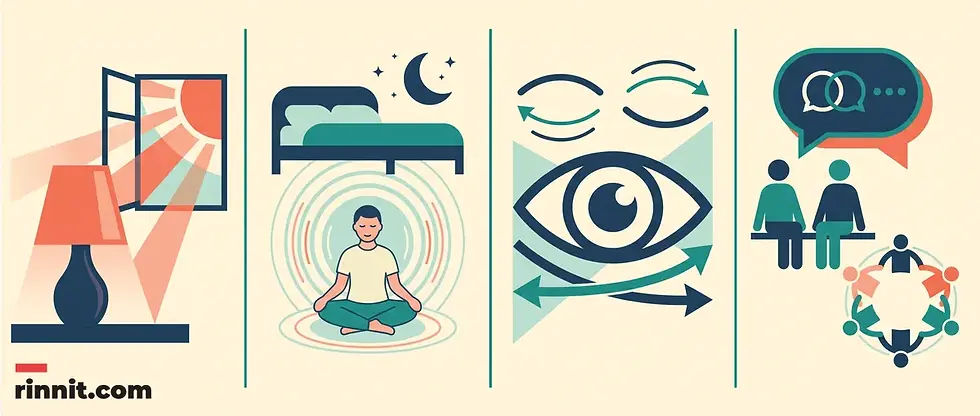
A healthcare provider can suggest ways to manage the hallucinations. These are not treatments that stop visual release hallucinations, but they can help your brain adjust. The table below summarizes the main strategies.
Management Strategy | How It Helps |
Adding lighting | Spending more time in brightly lit environments can reduce how often CBS occurs; open blinds or curtains during the day and turn on extra lamps at night |
Sleep and stress management | Resting and relaxing support overall and mental health; providers may suggest relaxation techniques like meditation or breathing exercises |
Intentional eye movements | Blinking may help dismiss a hallucination; moving your eyes to focus on something else takes the brain's attention off the image |
Medications | No medications treat CBS itself, but anti-anxiety medications or antidepressants may be prescribed if the hallucinations affect your mental health |
Staying socially connected | Time with loved ones keeps the brain active and engaged and reduces isolation; providers may recommend a support group with others who have CBS |
When Should I See My Healthcare Provider?
Visit a healthcare provider or eye care specialist as soon as you notice any changes in your eyes or vision. The sooner the underlying cause of CBS is diagnosed, the better. Tell your provider if you are having more, or more intense, visual release hallucinations. They may be able to suggest other ways to help manage them.
Outlook and Prognosis
You might have to manage CBS for a while. It may disappear over time, but it can take a year or two to go away. [5]
Experiencing hallucinations can make some daily tasks or moving around unfamiliar places difficult. Do not be afraid to ask for help from your healthcare provider or trusted loved ones. They can help you get the support and accommodations you need to keep doing your favorite activities.
The good news is that most people adjust to Charles Bonnet syndrome and stop experiencing visual release hallucinations. [5] Experiencing any kind of hallucination can be scary, and it may feel even more upsetting to learn the condition affecting your vision is what causes it. But the symptoms you are experiencing are real, even if the images you see are not, and you deserve to feel safe and supported no matter what.
Conclusion
Charles Bonnet syndrome is one of the most misunderstood conditions in eye health, but understanding it is the first step toward feeling less alarmed by what you see. The hallucinations are the brain's attempt to compensate for lost visual input, not a sign of mental illness, and most people adjust within a year or two as the brain gets used to reduced vision. Simple, low-cost habits (brighter rooms, enough sleep, deliberate blinking and gaze shifting, and staying connected to family, friends, and support groups) can meaningfully reduce how often the images appear. Talking openly with your eye care specialist about what you are seeing speeds up an accurate diagnosis and opens the door to accommodations that keep daily life comfortable.
Want to explain health topics like this one visually? Complex medical topics like this one are far easier to grasp when they are broken into simple visuals, which is why Rinnit's infographic templates can help you turn health information into clear explainers for yourself, your family, or your community.
Frequently Asked Questions
What is Charles Bonnet syndrome?
Charles Bonnet syndrome (CBS) is a condition that happens after you develop low vision and causes visual hallucinations: images your brain creates that are not coming from your eyes.
What are visual release hallucinations?
Visual release hallucinations are another name for the hallucinations in Charles Bonnet syndrome. The "release" refers to the brain filling in visual information that the eyes can no longer supply.
What causes Charles Bonnet syndrome?
Losing some or all of your vision causes CBS. Experts think the brain tries to fill in the gaps after vision loss, using memories or making up new images to complete the picture.
Is Charles Bonnet syndrome a mental illness?
No. Visual release hallucinations are not related to psychiatric conditions. A psychiatric condition does not cause these hallucinations.
Can Charles Bonnet syndrome go away?
Yes, for many people it does. Many people have fewer hallucinations or stop having them completely once their brain and eyes adjust to reduced vision, usually within a year or two.
Is there a cure for Charles Bonnet syndrome?
No. There are no treatments that can cure or prevent CBS, but most people adjust and stop experiencing hallucinations over time.
How common is Charles Bonnet syndrome?
An estimated 10% to 30% of people with significant vision loss experience CBS, depending on the group studied.
Who gets Charles Bonnet syndrome?
People who have lost some or all of their vision, most often those over age 80.
Does Charles Bonnet syndrome only affect older people?
It most often happens after age 80, but it is tied to vision loss at any age, and your risk increases as you age.
What does a Charles Bonnet hallucination look like?
Hallucinations can be simple bright-colored patterns over everything you see, or complex images like animals, buildings, and people that do not exist.
What are formed hallucinations?
Formed hallucinations are complex images, such as animals, buildings, or people that do not exist.
What are unformed hallucinations?
Unformed hallucinations are simple bright-colored patterns that show up over everything you see.
Can you see dragons with Charles Bonnet syndrome?
Yes. Imaginary or fantasy animals, including fictional creatures like dragons, unicorns, or movie monsters, are among the reported hallucination types.
Can you see dead loved ones with Charles Bonnet syndrome?
People can see faces of loved ones, coworkers, or neighbors from their past or present. These are images created by the brain, not real people, and they are not caused by a psychiatric condition.
Can Charles Bonnet syndrome show moving images?
Yes. Hallucinations can be still (static) images or moving pictures like a TV show.
Are Charles Bonnet hallucinations silent?
Yes. The hallucinations are silent and will not make you hear any unusual sounds.
Are Charles Bonnet hallucinations in color?
They can be in color or black-and-white.
Are Charles Bonnet hallucinations worse with your eyes open or closed?
They are clearer and more vivid when your eyes are open. Closing your eyes may make the images cloudy or harder to "see."
Do Charles Bonnet hallucinations speak to you?
No. The hallucinations should not speak to you or touch you.
Can you tell that Charles Bonnet hallucinations are not real?
You will probably know the images are not real, although they can still make you feel stressed or upset even when you recognize they are hallucinations.
Does Charles Bonnet syndrome mean you are going crazy?
No. The hallucinations result from vision loss and the brain filling in missing information, not from a psychiatric condition.
What eye conditions cause Charles Bonnet syndrome?
Conditions include age-related macular degeneration, cataracts, glaucoma, retinitis pigmentosa, diabetes-related retinopathy, optic neuritis, and giant cell arteritis, as well as stroke and eye removal (enucleation or evisceration).
Can macular degeneration cause Charles Bonnet syndrome?
Yes. Age-related macular degeneration is one of the conditions related to developing CBS.
Can cataracts cause Charles Bonnet syndrome?
Yes. Cataracts are listed among the conditions related to developing CBS.
Can glaucoma cause Charles Bonnet syndrome?
Yes. Glaucoma is one of the conditions related to developing CBS.
Can a stroke cause Charles Bonnet syndrome?
Yes. Stroke is among the conditions related to developing CBS.
Can eye surgery cause Charles Bonnet syndrome?
Eye removal (enucleation or evisceration) is related to developing CBS, and recent eye surgery is something to tell your provider about because hallucinations can also be a temporary medication or surgery side effect.
What are the risk factors for Charles Bonnet syndrome?
Risk factors include aging (usually after 80), living alone, low social connection, and spending a lot of time in the dark with natural light blocked out.
Does being alone increase Charles Bonnet syndrome risk?
You may be more likely to develop CBS if you live alone or are not socially connected to many people.
Does darkness increase Charles Bonnet syndrome risk?
Spending a lot of time in the dark, such as indoors with natural light blocked out, may increase your risk.
How is Charles Bonnet syndrome diagnosed?
A provider or eye care specialist diagnoses it with a physical exam, a complete eye exam, and a medical history review, sometimes adding neurological exams or imaging to rule out other causes.
What tests are used to diagnose Charles Bonnet syndrome?
A physical exam, a complete eye exam, and sometimes a neurological exam or imaging tests like an MRI or CT scan to rule out other issues that cause hallucinations.
Can Charles Bonnet syndrome be confused with other conditions?
Yes. Alzheimer's disease, drug and alcohol withdrawal, Lewy body dementia, Parkinson's disease, and schizophrenia can cause similar symptoms, which is why evaluation matters.
Can medication cause hallucinations like Charles Bonnet syndrome?
Hallucinations can be a temporary side effect of some medications, so tell your provider if you recently started a new medication.
Is Charles Bonnet syndrome dangerous?
The hallucinations themselves are not dangerous, but you should report any changes in vision or more intense hallucinations to a provider to manage the condition well and rule out other causes.
How long does Charles Bonnet syndrome last?
It can take a year or two for the hallucinations to go away as the brain and eyes adjust to reduced vision, though many people have fewer hallucinations before that.
How do you stop Charles Bonnet syndrome hallucinations?
There is no way to stop them directly, but adding lighting, getting plenty of sleep, managing stress, blinking or shifting your gaze, and staying socially connected can help your brain adjust.
Does light help with Charles Bonnet syndrome?
Yes. Spending more time in brightly lit environments can reduce how often you experience CBS.
Does blinking help with Charles Bonnet syndrome?
Blinking may help dismiss a hallucination, and moving your eyes to focus on something else can help, too.
Are there medications for Charles Bonnet syndrome?
No medications treat CBS itself, but a provider may prescribe anti-anxiety medications or antidepressants if the hallucinations affect your mental health.
Should I tell my family about Charles Bonnet syndrome hallucinations?
Yes. Talking to loved ones and healthcare providers about what you are seeing and feeling helps you feel safe and supported, and staying socially connected is itself a management strategy.
Can Charles Bonnet syndrome affect daily life?
You may find it difficult to do some daily tasks or move around unfamiliar places while experiencing hallucinations, but providers and loved ones can help you get the support and accommodations you need.
When should I see a doctor for Charles Bonnet syndrome?
See a provider or eye care specialist as soon as you notice any changes in your eyes or vision, and tell them if hallucinations are becoming more frequent or intense.
What is the outlook for Charles Bonnet syndrome?
Most people adjust to Charles Bonnet syndrome and stop experiencing visual release hallucinations, generally within a year or two.
Is Charles Bonnet syndrome the same as schizophrenia?
No. CBS hallucinations come from vision loss and are not related to psychiatric conditions, although schizophrenia can cause similar-seeming symptoms that a provider should rule out.
Related Reading
Living with Low Vision: A Guide to Management and Rehabilitation
Glaucoma: The Silent Threat to Vision, and How Early Treatment Can Protect Your Sight
Cataracts: Symptoms, Causes, Diagnosis and Treatment — What You Need to Know
Diabetic Retinopathy: Symptoms, Causes, Diagnosis & Treatment — Complete Guide
References
Christoph SEG, Boden KT, Siegel R, et al. The prevalence of Charles-Bonnet syndrome in ophthalmic patients: a systematic review and meta-analysis. Brain Res Bull. 2025;223:111282. PMID: 40049460. https://doi.org/10.1016/j.brainresbull.2025.111282
Niazi S, Krogh Nielsen M, Singh A, et al. Prevalence of Charles Bonnet syndrome in patients with age-related macular degeneration: systematic review and meta-analysis. Acta Ophthalmol. 2020;98(2):121-131. PMID: 31654492. https://doi.org/10.1111/aos.14287
Russell G, Burns A. Charles Bonnet syndrome and cognitive impairment: a systematic review. Int Psychogeriatr. 2014;26(9):1431-1443. PMID: 24848082. https://doi.org/10.1017/S1041610214000763
Mars JA, Rojas LC, Gurnani B. Charles Bonnet syndrome. In: StatPearls. Treasure Island (FL): StatPearls Publishing; updated December 13, 2025. PMID: 36256781. https://www.ncbi.nlm.nih.gov/books/NBK585133/
American Academy of Ophthalmology. What is Charles Bonnet syndrome? Reviewed by Brenda Pagan-Duran, MD. EyeSmart. Published December 2, 2025. https://www.aao.org/eye-health/diseases/what-is-charles-bonnet-syndrome
American Society of Retina Specialists. Charles Bonnet Syndrome. Retina Health Series. Accessed October 30, 2026. https://www.asrs.org/patients/retinal-diseases/38/charles-bonnet-syndrome
National Health Service (UK). Charles Bonnet syndrome. NHS. Page last reviewed June 17, 2026. https://www.nhs.uk/conditions/charles-bonnet-syndrome/
Medical disclaimer
This article is for informational purposes only and is not a substitute for professional medical advice, diagnosis, or treatment. Always seek the advice of a qualified healthcare provider or eye care specialist with any questions about a medical condition, changes in vision, or treatment options. Never disregard professional medical advice or delay seeking it because of something you have read here.



Comments