Living with Low Vision: A Guide to Management and Rehabilitation

Updated: 2 days ago
Medically reviewed by Dr. Baraa Alnahhal, MD · Last reviewed: September 2026
TL;DR
Low vision is a permanent visual impairment that cannot be fully corrected with standard glasses, contacts, or surgery. It significantly impacts daily activities such as reading and driving, but it is not total blindness. Caused by conditions like macular degeneration or glaucoma, low vision requires specialized management. Through vision rehabilitation and assistive technologies, individuals can maximize their remaining sight and maintain a high quality of life.
Quick Answer
Low vision refers to a chronic visual impairment that persists despite standard medical interventions. In clinical terms, it is often defined as having a visual acuity of 20/70 or worse, or a visual field restricted to 20 degrees or less. Unlike total blindness, some functional vision remains, which can be enhanced through specialized aids and rehabilitation services. Managing low vision involves identifying the underlying cause and utilizing tools to support independence.
Defining Low Vision
Low vision is more than just a need for stronger glasses; it is a lasting change in how a person perceives the world. Healthcare professionals define it as moderate to severe visual impairment that interferes with essential tasks. While terms like "partially sighted" or "legally blind" are often used, they fall under the broader umbrella of low vision, which encompasses a wide range of visual challenges.
It is important to distinguish low vision from total blindness. Most people with low vision still have some level of functional sight. The goal of modern eye care is not just to treat the underlying condition but to help individuals adapt to their visual limitations using specialized training and assistive devices.
Identifying the Signs and Symptoms
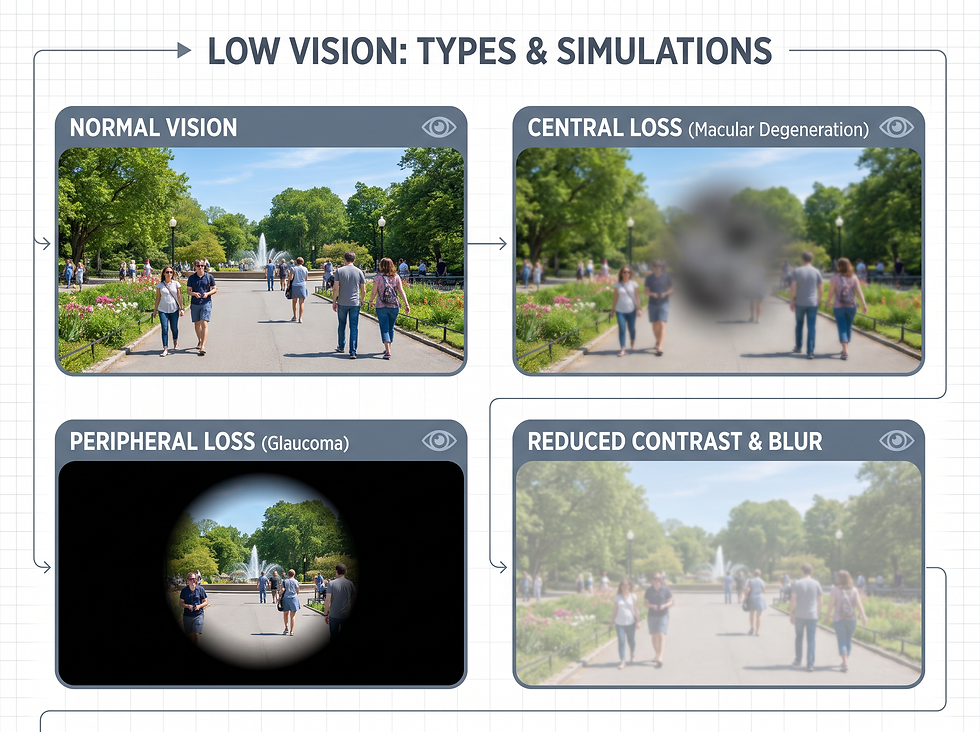
Low vision manifests differently depending on the individual and the underlying cause. Some may experience a loss of central vision, making it difficult to recognize faces or read text directly in front of them. Others might suffer from peripheral vision loss, often referred to as tunnel vision, which can make navigating environments challenging.
Beyond clarity, low vision affects how the eyes process light and space. Common issues include reduced depth perception, difficulty distinguishing objects from similar backgrounds, and increased sensitivity to glare. In children, signs may be more subtle, such as frequent squinting, holding objects unusually close to the face, or misaligned eye movements.
Types of Vision Loss and Their Impact
Central Vision: Difficulty seeing objects directly in front; impacts reading and facial recognition.
Peripheral Vision: Loss of side vision; creates a "tunnel" effect and affects navigation.
Contrast Sensitivity: Difficulty distinguishing objects from backgrounds of similar shades.
Night Vision: Significant struggle to see in low-light or dark environments.
Depth Perception: Trouble judging distances between objects, increasing fall risks.
Common Causes of Permanent Impairment
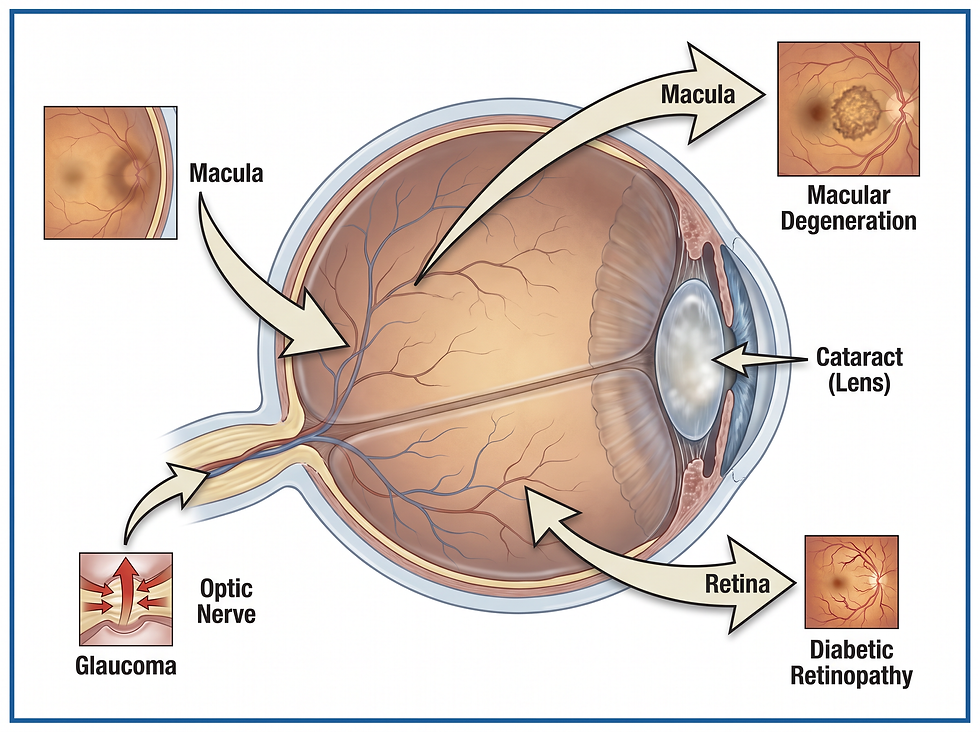
Low vision can be the result of age-related conditions, systemic diseases, or congenital factors. Macular degeneration is a leading cause among older adults, primarily affecting central vision. Glaucoma, another progressive condition, typically damages the optic nerve and impacts peripheral and night vision first.
Systemic health issues like diabetes and high blood pressure can also lead to permanent vision loss through retinopathy. In younger populations, low vision may stem from birth defects, eye injuries, or brain-related issues such as a stroke. Regardless of the cause, early detection and a specialized management plan are essential for preserving as much function as possible.
Management and Rehabilitation Strategies
While low vision is permanent, it does not mean a loss of independence. Low vision specialists, who are optometrists or ophthalmologists with advanced training, can develop personalized rehabilitation plans. These plans often include occupational therapy to learn new ways of performing daily tasks and orientation training to navigate safely.
Assistive technology plays a pivotal role in modern management. From simple magnifying lenses and high-contrast materials to advanced text-to-speech software and wearable smart devices, the options are vast. Adjusting lighting in the home and using large-print resources are also effective, low-cost ways to improve daily functioning.
Common Management Tools
Optical Aids: Magnifying lenses, telescopes, and specialized prismatic glasses.
Non-Optical Aids: Large-print books, high-contrast keyboards, and tactile markers.
Assistive Technology: Screen magnifiers, text-to-speech apps, and smart home devices.
Rehabilitation: Occupational therapy and orientation and mobility training.

Conclusion
Low vision presents significant challenges, but it is a condition that can be managed with the right support and tools. By understanding the nature of the impairment and seeking help from specialists, individuals can continue to lead active, fulfilling lives. The combination of medical care, vision rehabilitation, and innovative technology ensures that a diagnosis of low vision is not the end of independence, but the beginning of a new way of seeing.
If you or a loved one are struggling with daily tasks due to vision changes, schedule a consultation with a low vision specialist. Taking proactive steps today can help you maximize your sight and maintain your independence for years to come.
Frequently Asked Questions
Can low vision be corrected with surgery?
No. By definition, low vision is a permanent impairment that cannot be fully corrected with standard surgery, glasses, or contacts.
What is the difference between low vision and legal blindness?
Low vision is a broad term for significant impairment; legal blindness is a specific clinical definition used to determine eligibility for government services.
What are the first signs of low vision in adults?
Common early signs include difficulty reading standard print, struggling to recognize familiar faces, and trouble driving at night.
How do I know if my child has low vision?
Look for frequent squinting, holding objects very close to their face, or eyes that appear misaligned or flutter uncontrollably.
What is macular degeneration?
It is an age-related condition that causes the gradual loss of central vision, often resulting in a blurry or blind spot in the center of sight.
Can glaucoma cause low vision?
Yes. Glaucoma damages the optic nerve and typically results in the loss of peripheral (side) vision and poor night vision.
What are visual aids?
Visual aids are specialized tools, such as magnifiers or high-contrast materials, designed to help people with low vision perform daily tasks.
What is a low vision specialist?
A low vision specialist is an eye doctor (optometrist or ophthalmologist) with extra training in helping people maximize their remaining vision.
Can I still drive with low vision?
This depends on the severity of the impairment and local laws. A specialist can assess whether you meet the safety requirements for driving.
What is contrast sensitivity?
It is the ability to distinguish an object from its background, which is often significantly reduced in people with low vision.
Is low vision the same as being nearsighted?
No. Nearsightedness can usually be corrected with standard glasses; low vision persists even with the best possible corrective lenses.
What is Charles Bonnet syndrome?
It is a condition where people with significant vision loss experience visual hallucinations, which are not related to mental health issues.
How can I make my home safer for someone with low vision?
Improve lighting, use high-contrast colors for stairs and doorways, and remove tripping hazards like loose rugs.
Are there apps to help with low vision?
Yes. Many apps offer text-to-speech, screen magnification, and object recognition to assist with daily activities.
Can low vision get worse over time?
It depends on the underlying cause. Conditions like glaucoma or macular degeneration are progressive and require ongoing medical monitoring.
Medical Disclaimer: The information provided in this article is for educational purposes only and should not be considered medical advice. Always seek the counsel of a qualified healthcare professional regarding any vision or eye health concerns.
Comments