What Is Cavernous Sinus Thrombosis? Why This Rare Clot Is a Medical Emergency

Updated: 2 days ago
Medically reviewed by Dr. Baraa Alnahhal, MD · Last reviewed: October 2026
Quick Answer
Cavernous sinus thrombosis is a medical emergency in which a blood clot forms in the veins behind the eyes, trapping an infection and blocking blood drainage from the brain. [4] It usually develops 5 to 10 days after an untreated face or head infection. [4] Treatment starts immediately in intensive care. [4] Seek emergency care for a severe headache with eye swelling.
Key takeaways
Cavernous sinus thrombosis is a rare blood clot in the veins behind the eyes, beneath the brain, that usually forms in response to a facial or skull infection. [4]
The earliest sign is typically a severe headache that worsens despite pain medicine, followed by swelling or bulging in one or both eyes. [4]
Untreated, the condition worsens rapidly toward confusion, drowsiness, coma, and death. [4] It is fatal in about 1 in 3 cases. [4]
Staphylococcus aureus bacteria cause the underlying infection in up to 70% of cases; [4] sinus infections, boils, dental abscesses, and ear infections are the most common sources. [4]
Treatment begins immediately in the ICU with IV antibiotics, blood thinners, and sometimes corticosteroids or sinus surgery, often before the diagnosis is confirmed. [3] [4]
Thanks to antibiotics, more than 70% of patients now survive, though just under 20% of survivors experience vision problems and nerve damage. [4]
What the research says
Rare, with recent mortality estimates of about 11%. A 2024 review of cavernous sinus thrombosis estimates its incidence at 0.2 to 1.6 per 100,000 people, with recent morbidity of roughly 15% and mortality of roughly 11%. The authors stress that rapid identification and treatment may reduce the risk of a poor outcome or death. This is a narrative review rather than a new trial (Housley et al., Neurosurg Clin N Am, 2024) [1].
Anticoagulation was linked to lower mortality in sinusitis-related cases. A systematic review pooled individual data from 110 adults (72 articles) with cavernous sinus thrombosis caused by sinusitis. Mortality was 3.3% in patients given anticoagulants versus 18% in those who were not (p = 0.022; adjusted odds ratio 0.067, 95% CI 0.009 to 0.475). The authors call this a strong suggestion rather than proof, because supporting evidence is limited, and advise careful consideration in patients with high blood sugar (Akarapas et al., Eur Arch Otorhinolaryngol, 2024) [2].
Even with prompt treatment, some patients are left with lasting deficits. In a case series of 6 patients with septic cavernous sinus thrombosis, all had headache, fever, eye movement problems, swelling around the eyes, and bulging of the eye, and all received IV antibiotics and anticoagulation. None died, but 4 of 6 were discharged with neurological deficits (vision loss in 1, eye movement problems in 3). The mean time from first presentation to diagnosis was 2.8 days and the average hospital stay was 21 days. This is a very small series, so it illustrates the pattern rather than proving it (Branson et al., Ophthalmic Plast Reconstr Surg, 2019) [3].
What Is Cavernous Sinus Thrombosis?

Cavernous sinus thrombosis is a rare, potentially life-threatening blood clot in your cavernous sinuses. Your cavernous sinuses are located behind your eyes, beneath your brain. [4] These vein channels collect blood from your eyes and face and drain it toward the jugular veins in your neck. They help drain the blood from your brain and face. If a blood clot forms in one of these veins, often in response to an infection, the clot can restrict blood flow from your brain. [4]
The name describes the condition itself. "Cavernous" refers to the network of veins in the area, "sinus" refers to the hollow vein channels (not your nasal sinuses, though they sit nearby), and "thrombosis" means a blood clot. Together, they describe a clot forming in this critical drainage region of the head.
Cavernous sinus thrombosis can cause long-term damage to your brain, eyes, and nerves. [4] Without prompt treatment, it may result in death. [1]
How Common Is Cavernous Sinus Thrombosis?
Cavernous sinus thrombosis is so rare that it is difficult to predict how many cases happen each year. [4] Cases have declined substantially in the modern era, thanks to the widespread availability of antibiotics. [4] Antibiotics can cure infections that may have otherwise caused a blood clot.
This decline is one of the clearest success stories of the antibiotic era: before antibiotics existed, the condition nearly always resulted in death. [4] Today, with rapid treatment, more than 70% of patients survive. [4]
Symptoms of Cavernous Sinus Thrombosis
One of the earliest symptoms of cavernous sinus thrombosis is a severe headache that gets worse even with pain medicine. [4] The pain may feel sharp immediately or worsen over several days. The pain may feel especially pronounced around or behind one or both eyes. [4]
Symptoms are related to pressure build-up in your cavernous sinuses and can worsen rapidly.
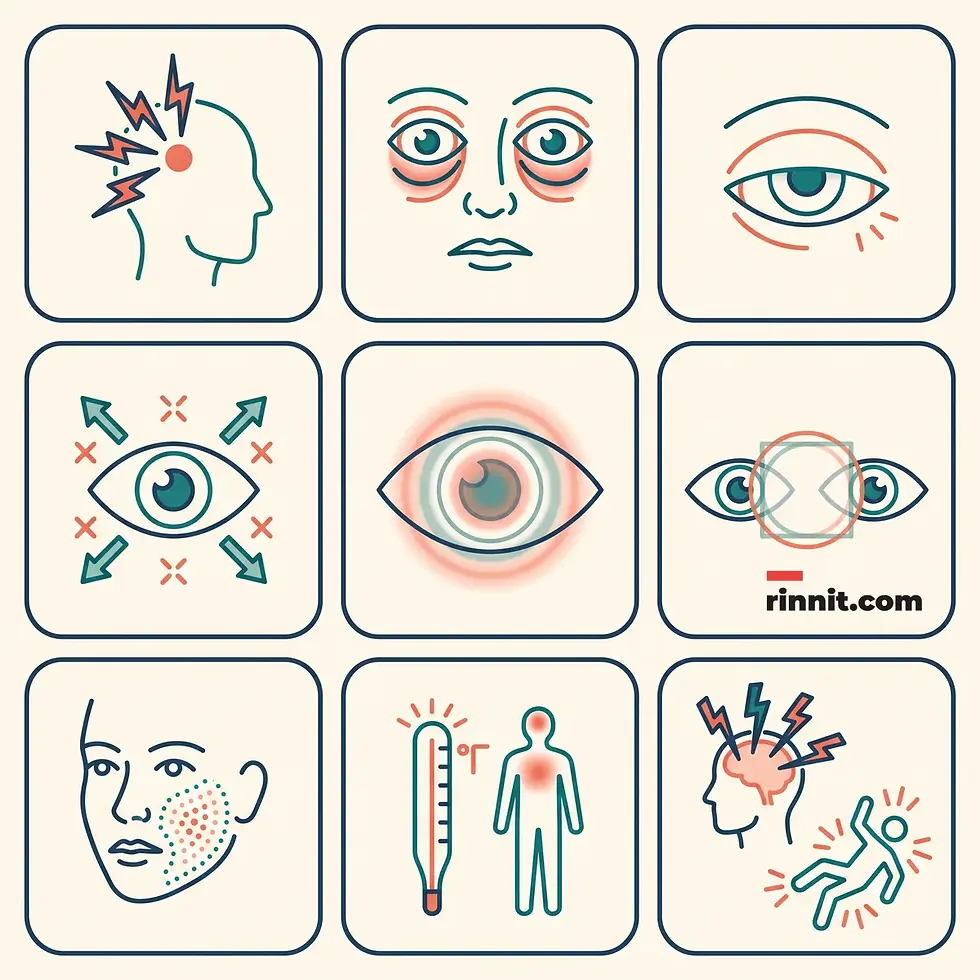
Symptom | What It Feels or Looks Like |
Severe, sharp headache | Pain that worsens despite pain medicine; especially strong around or behind one or both eyes |
Bulging or swelling around the eyes | Starts in one eye, then spreads to both |
Droopy eyelids | One or both eyelids begin to sag |
Pain when moving the eyes | Attempting to move one or both eyes triggers pain |
Inability to move the eyes | One or both eyes become fixed and cannot move |
Blurred vision | Vision becomes hazy or unclear |
Seeing double | Objects appear doubled |
Facial numbness | Reduced sensation on part of the face |
Fever | Elevated body temperature from the underlying infection |
Seizures | Sudden episodes of uncontrolled electrical activity in the brain |
If the condition goes untreated, it worsens until symptoms progress to confusion and sleepiness. A coma and death often follow. [4] That is why receiving treatment before the condition reaches this stage is crucial.
How Quickly Does It Occur?
Cavernous sinus thrombosis may show up five to 10 days after having an untreated infection in your face or skull. [4] The first sign of a clot is usually a headache. [4] Symptoms related to your eyes, such as bulging and swelling, may happen shortly after the headache or develop gradually.
This timing matters for two reasons. First, it means a person who "recovered" from a sinus infection a week ago may still be developing a complication. Second, once symptoms appear, they progress fast. The window between first symptoms and a life-threatening state is short, which is why this condition is treated as an emergency from the first visit.
What Causes Cavernous Sinus Thrombosis?
Cavernous sinus thrombosis is most often a complication of a bacterial infection in your face or skull. [4] The blood in your cavernous sinus veins clots to prevent the infection from spreading. Instead of stopping the spread, however, the clot traps the infection. [4] It prevents blood from flowing away from your brain. The blood creates pressure in your cavernous sinuses, causing common symptoms like headache and eye pain.
Infectious Cause | How It Reaches the Cavernous Sinuses |
Sinus infection (sinusitis) | The sinuses sit directly adjacent to the cavernous sinuses, providing a short route |
Boils | Infections of the skin on the face can drain inward through facial veins |
Dental abscesses | Infections at the tooth root can travel upward through the facial and skull veins |
Ear infections | Infections of the ear can extend through connected veins of the skull |
In up to 70% of cases, Staphylococcus aureus bacteria cause the infection. [4] Other types of bacteria and some fungi may also cause infections that lead to cavernous thrombosis. [4] There are also a few documented cases of cavernous sinus thrombosis related to COVID-19 infection. [4]
Rarely, the clot forms in response to a head injury instead of an infection. [4] Trauma to the head can damage the veins in the cavernous sinus region directly, triggering clot formation without any infection involved.
Risk Factors
Because cavernous sinus thrombosis follows infections, your risk is tied to how infections in the central face and head are managed. Delaying treatment for sinus infections, dental abscesses, or facial skin infections raises the odds that bacteria spread. Facial infections in the "danger triangle" region, roughly the area from the bridge of the nose to the corners of the mouth, are of particular concern, because veins in this region drain toward the cavernous sinuses. The small number of COVID-19-related cases suggests that severe systemic infections can also rarely trigger the clotting process.
How Is Cavernous Sinus Thrombosis Diagnosed?
Diagnosis can be tricky, as cavernous sinus thrombosis shares symptoms with more common conditions, like an eye infection or a migraine. [4] Still, your healthcare provider may suspect cavernous sinus thrombosis based on your symptoms, especially if you currently have or recently had a sinus infection.
Diagnostic Test | What It Shows |
MRI | Detailed images that can identify clots in the cavernous sinuses |
CT scan | Imaging that can reveal clots and complications in the sinuses and skull |
MRI with venogram (MRV) | The most sensitive imaging procedure for this diagnosis; contrast dye injected into a vein makes blood flow visible during the MRI |
Bacteria culture test | Blood or body fluids such as sinus fluid are checked for the bacteria or fungi causing the infection |
Spinal tap (lumbar puncture) | Shows whether the infection has spread to the brain, as with meningitis, a complication of cavernous sinus thrombosis |
Because cavernous sinus thrombosis is a potentially life-threatening condition that can progress quickly, your provider may begin treatment before confirming your diagnosis. [4] Waiting for full test results can cost critical hours, so the treatment protocol starts as soon as suspicion is strong.
Management and Treatment
Cavernous sinus thrombosis requires immediate treatment. You will likely be admitted into an intensive care unit (ICU) so your provider can monitor you closely. [4]

Treatment | How It Works |
Antibiotics | Given through an IV to clear the infection causing the clot; started immediately, even before tests identify the exact pathogen, using broad-spectrum drugs that cover S. aureus; treatment may continue in the hospital for several weeks |
Anticoagulants | Blood-thinning medicines such as heparin stop the clot from growing and prevent new clots from forming; you may need them for several months after initial treatment |
Corticosteroids | Steroids reduce the inflammation causing pressure in your sinuses; given after antibiotic treatment has begun |
Sinus surgery | Surgery drains fluid build-up related to your infection and blood clot |
Antibiotics are the cornerstone of treatment, and they are deliberately time-sensitive. You will likely receive them before diagnostic tests confirm what pathogen (bacteria, fungus, or other) is causing your infection. To be safe, you receive broad-spectrum antibiotics that can kill a wide range of bacteria [3] [4], with particular attention to S. aureus, the most common culprit.
Outlook and Prognosis
What can you expect if you have cavernous sinus thrombosis? The prognosis has transformed over the past century. Before antibiotics, cavernous sinus thrombosis nearly always resulted in death. Now, more than 70% of people survive. [4]
Still, many people experience complications. Just under 20% of survivors have vision problems and nerve damage. [4] Other complications include frequent headaches, vision loss in one or both eyes, seizures, meningitis, and sepsis. [4]
Outcome | Detail |
Survival | More than 70% of patients survive with prompt treatment |
Vision and nerve problems | Just under 20% of survivors experience these lasting complications |
Frequent headaches | Can persist after recovery |
Vision loss | May occur in one or both eyes |
Seizures | A possible complication during or after the illness |
Meningitis | Infection spreading to the brain's lining |
Sepsis | A body-wide response to the infection |
Having cavernous sinus thrombosis may lead to other dangerous clots, like clots in your legs (deep vein thrombosis), lungs (pulmonary embolism), or brain (stroke). [4] Speak with your provider about the likelihood your condition will lead to complications, and ask about the warning signs so you can prevent complications whenever possible.
Can Cavernous Sinus Thrombosis Be Prevented?
Cavernous sinus thrombosis is rare, and it is not something you can screen for. What you can control is how you handle infections in your face and head. The single most effective preventive habit is treating sinus infections, dental abscesses, boils, and ear infections promptly rather than letting them linger. Prompt treatment of these common infections closes off the pathway this condition follows.
It is also worth remembering that a headache or eye pain is far more likely to signal a less serious condition than cavernous sinus thrombosis. However, the combination of a severe, unresponsive headache with eye swelling, fever, or eye movement problems is the specific pattern that deserves immediate emergency attention.
When to Seek Care
Seek care immediately if you experience any of the following symptoms: [4]
Warning Sign | Why It Matters |
Sharp headache that doesn't improve with headache medicine | The earliest typical sign of the clot |
Headache that worsens when you lie on your back or bend down | Pressure in the cavernous sinuses increases with position |
Eye pain or swelling that affects one eye or both | Pressure spreading toward the eyes |
Feeling sick, weak, or drowsy | Progression toward confusion and reduced alertness |
Shortness of breath | A possible sign the condition is affecting your whole system |
Fever | Ongoing infection feeding the clot |
Conclusion
Cavernous sinus thrombosis is one of the rarest emergencies in medicine, but its stakes make it one of the most important to recognize. A severe headache that refuses to respond to pain medicine, combined with swelling or bulging around the eyes, is the pattern to never ignore, especially in the week or so after a facial, sinus, dental, or ear infection. Modern medicine has turned a nearly certain death sentence into a condition that more than 70% of patients survive, but that outcome depends entirely on speed: treatment begins in the ICU, with IV antibiotics and blood thinners, often before the last test result arrives.
Want to explain health topics like this one visually? Turning complex medical information into visuals people can understand is powerful work. If you create health content, Rinnit's ready-made infographic templates help you communicate critical concepts clearly and quickly.
Frequently Asked Questions
What is cavernous sinus thrombosis?
Cavernous sinus thrombosis is a rare, potentially life-threatening blood clot that forms in the cavernous sinuses, vein channels located behind your eyes, beneath your brain. It usually develops in response to a bacterial infection in your face or skull. [4]
Where are the cavernous sinuses?
The cavernous sinuses are located behind your eyes, beneath your brain. They are vein channels that drain blood from your brain and face toward the jugular veins in your neck. [4]
Is cavernous sinus thrombosis fatal?
Cavernous sinus thrombosis can be. The condition is fatal in about 1 in 3 cases. Before antibiotics, it nearly always resulted in death. Today, more than 70% of patients survive with prompt treatment. [4]
How rare is cavernous sinus thrombosis?
Cavernous sinus thrombosis is extremely rare, so rare that experts cannot reliably estimate how many cases occur each year. Cases have declined substantially in the modern era thanks to the widespread availability of antibiotics. [4]
What causes cavernous sinus thrombosis?
Cavernous sinus thrombosis is most often a complication of a bacterial infection in your face or skull. The blood in the cavernous sinus veins clots in an attempt to contain the infection, but the clot ends up trapping it and blocking blood drainage from the brain. [4]
Which infections can lead to cavernous sinus thrombosis?
The most common sources are sinus infections (sinusitis), boils, dental abscesses, and ear infections. [4] Each of these sits close enough to the cavernous sinuses that bacteria can travel along the facial and skull veins.
What bacteria causes the infection?
In up to 70% of cases, Staphylococcus aureus bacteria cause the underlying infection. Other bacteria and some fungi may also be responsible, and a few documented cases have been linked to COVID-19 infection. [4]
Can you get cavernous sinus thrombosis without an infection?
Rarely, yes. The clot can also form in response to a head injury rather than an infection [4], when trauma damages the veins in the cavernous sinus region directly.
How quickly does cavernous sinus thrombosis develop?
Cavernous sinus thrombosis may appear five to 10 days after an untreated infection in your face or skull. Once it begins, symptoms can worsen rapidly. [4]
What is the first symptom?
A severe headache that gets worse even with pain medicine is one of the earliest symptoms. The pain may feel sharp immediately or build over several days, and is often strongest around or behind one or both eyes. [4]
Why does the headache hurt around the eyes?
The cavernous sinuses sit directly behind the eyes. When a clot creates pressure buildup in these channels, the pain is typically felt around or behind the eyes.
What eye symptoms should I watch for?
Watch for bulging or swelling around one eye that then spreads to both, droopy eyelids, pain when moving the eyes, an inability to move one or both eyes, blurred vision, and seeing double. [4]
Why does the swelling spread to both eyes?
The two cavernous sinuses are connected. Pressure and inflammation that start on one side often spread across, which is why eye swelling usually begins on one side and then involves both.
Can cavernous sinus thrombosis cause seizures?
Yes. Seizures are listed among the possible symptoms as pressure builds in the cavernous sinuses and affects the surrounding brain tissue.
How does cavernous sinus thrombosis differ from a migraine?
Cavernous sinus thrombosis and a migraine can look similar, which is why diagnosis is difficult. [4] Both can cause severe headaches and eye-related symptoms. A key difference is that cavernous sinus thrombosis typically follows a recent facial or sinus infection, causes progressive eye swelling and bulging, and produces fever, features a migraine does not have.
How is it different from an eye infection?
An eye infection is usually confined to the eye's surface or orbit. Cavernous sinus thrombosis causes bulging of the eyes from pressure behind them, double vision, fixed eye movements, and systemic signs like fever. It originates in the brain's venous drainage system, not the eye itself.
How is cavernous sinus thrombosis diagnosed?
Diagnosis typically combines imaging (MRI, CT scans, and especially MRI with venogram, the most sensitive test), bacteria culture tests on blood or sinus fluid, and sometimes a spinal tap to check whether the infection has spread to the brain. [4]
What is an MRV?
MRV stands for MRI with venogram. During the procedure, a contrast dye is injected into a vein to make blood flow easier to see during the MRI. It is the most sensitive imaging procedure for diagnosing cavernous sinus thrombosis. [4]
Can it really be treated before tests confirm it?
Yes. Because the condition is life-threatening and progresses quickly, providers often begin treatment before the diagnosis is fully confirmed. [4] Suspicion based on symptoms, especially a recent sinus infection, is enough to start.
Does it need to be treated in the hospital?
Yes. Cavernous sinus thrombosis requires immediate treatment, and you will likely be admitted to an intensive care unit so providers can monitor you closely. [4]
How is cavernous sinus thrombosis treated?
Treatment includes intravenous antibiotics to clear the infection, anticoagulants (blood thinners) such as heparin to stop the clot from growing and prevent new ones, corticosteroids to reduce inflammation, and sometimes sinus surgery to drain fluid buildup. [4]
Why are antibiotics started before test results come back?
Treatment is time-sensitive. Waiting for cultures to identify the exact pathogen could cost critical hours, so providers give broad-spectrum antibiotics immediately, drugs designed to kill a wide range of bacteria [4], especially S. aureus.
How long does antibiotic treatment last?
Antibiotic treatment may continue in the hospital for several weeks [4], since the infection feeding the clot must be fully cleared.
What do anticoagulants do?
Blood-thinning medicines like heparin stop the existing clot from growing, giving your body time to break it down, and prevent new clots from forming. You may need anticoagulants for several months after the initial treatment. [4]
When are corticosteroids used?
Providers may prescribe steroids to reduce the inflammation causing pressure in the sinuses. They are given after antibiotic treatment has begun [4], never as a substitute for it.
When is surgery needed?
Sinus surgery may be needed to drain fluid buildup related to the infection and the blood clot [4], restoring drainage in the affected sinus area.
What is the survival rate?
More than 70% of people with cavernous sinus thrombosis now survive, compared with nearly universal death before the antibiotic era. [4]
What long-term complications can survivors expect?
Just under 20% of survivors experience vision problems and nerve damage. Frequent headaches, vision loss in one or both eyes, seizures, meningitis, and sepsis are also possible complications. [4]
Can it cause vision loss?
Yes. Vision loss in one or both eyes is a known complication [4], along with blurred vision and double vision during the acute illness.
Can cavernous sinus thrombosis lead to other blood clots?
Yes. Having the condition may lead to other dangerous clots, including deep vein thrombosis in the legs, pulmonary embolism in the lungs, and stroke in the brain. [4]
Can meningitis happen because of it?
Yes. Meningitis, infection of the brain's protective lining, is a recognized complication. A spinal tap is used to check whether the infection has spread. [4]
What should I do if my headache won't respond to pain medicine?
If you have a sharp headache that does not improve with headache medicine, especially with eye swelling, fever, or eye movement problems, or a recent sinus or dental infection, seek emergency care immediately.
Does the headache get worse in certain positions?
Yes. A headache that worsens when you lie on your back or bend down is one of the listed warning signs [4], because these positions increase pressure in the cavernous sinuses.
Is cavernous sinus thrombosis contagious?
No. The condition itself is a blood clot, not an infection you can catch. The underlying bacterial infection that caused it may spread between people, but the clot will not.
How can I reduce my risk?
Treat facial, sinus, dental, and ear infections promptly rather than letting them linger, and watch for the warning pattern of a severe unresponsive headache with eye symptoms after any head infection. Prompt treatment of common infections is the best protection against this rare complication.
Related Reading
What Is Cerebral Venous Sinus Thrombosis (CVST)? Symptoms, Causes, Diagnosis, Treatment, and Outlook explains blood clots in other veins that drain the brain.
Acute Sinusitis (Sinus Infection): Symptoms, Causes & Treatment covers sinus infections, a common source of this clot.
Orbital Cellulitis: Recognizing the Signs of a Serious Eye Infection describes a serious eye socket infection with similar warning signs.
Bacterial Meningitis: What It Is, Why It's a Medical Emergency, and How Vaccines and Antibiotics Fight It explains a brain infection that can occur alongside this condition.
References
Housley SB, McPheeters MJ, Raygor KP, Bouslama M, Scullen T, Davies JM. Cavernous sinus thrombosis. Neurosurg Clin N Am. 2024;35(3):305-310. PMID: 38782523. https://doi.org/10.1016/j.nec.2024.02.002
Akarapas C, Wiwatkunupakarn N, Sithirungson S, Chaiyasate S. Anticoagulation for cavernous sinus thrombosis: a systematic review and individual patient data meta-analysis. Eur Arch Otorhinolaryngol. 2024 (published online September 23, 2024);282(3):1127-1134. PMID: 39312001. https://doi.org/10.1007/s00405-024-08992-4
Branson SV, McClintic E, Yeatts RP. Septic cavernous sinus thrombosis associated with orbital cellulitis: a report of 6 cases and review of literature. Ophthalmic Plast Reconstr Surg. 2019;35(3):272-280. PMID: 30320718. https://doi.org/10.1097/IOP.0000000000001231
Cleveland Clinic. Cavernous sinus thrombosis: symptoms, causes & treatment. Cleveland Clinic Health Library. Last updated July 18, 2022. https://my.clevelandclinic.org/health/diseases/23520-cavernous-sinus-thrombosis
Medical disclaimer
This article is for general informational purposes only and is not a substitute for professional medical advice, diagnosis, or treatment. Always seek the advice of your physician or other qualified health provider with any questions you may have regarding a medical condition. Never disregard professional medical advice or delay seeking it because of something you have read here. If you think you may have a medical emergency, call your doctor or emergency services immediately.



Comments