What Is Cerebral Venous Sinus Thrombosis (CVST)? Symptoms, Causes, Diagnosis, Treatment, and Outlook

Updated: 2 days ago
Medically reviewed by Dr. Baraa Alnahhal, MD · Last reviewed: October 17, 2026
Quick Answer
Cerebral venous sinus thrombosis (CVST) is a rare blood clot in a large brain vein that raises pressure in the brain and can cause a worsening headache, seizures or a stroke. [1] It is treated quickly with anticoagulant medication and sometimes clot-busting drugs, surgery or pressure-reducing treatment. [7] Most people recover fully when the clot is found and treated early. [3] [4]
Key takeaways
CVST is a blood clot in one of the brain's large draining veins, accounting for only about 1% of strokes. [1] [4]
The most common symptom is a headache that keeps getting worse; seizures and changes in thinking or neurologic function can also occur. [1]
It strikes more often in females, most often in people under 55, and is linked to pregnancy, birth control pills, trauma, infections, and inherited clotting disorders.
Prompt brain imaging (MRI, CT, or venography) is the fastest route to diagnosis and better outcomes. [1] [4]
With treatment, about 8 to 9 out of 10 people can go back to their daily activities. [1]
Long-term blood thinners and regular follow-up appointments lower the chance of the clot returning. [1]
What the research says
Newer blood thinners appear to work about as well as warfarin. A systematic review and meta-analysis of 19 studies (16 observational studies with 1,735 patients and 3 randomized trials with 215) found that, compared with vitamin K antagonists such as warfarin, direct oral anticoagulants had comparable risks of recurrent venous thromboembolism (relative risk 0.85, 95% CI 0.52–1.37), major hemorrhage (0.70, 0.40–1.21), death (1.14, 0.54–2.43), and complete venous recanalization (0.98, 0.87–1.11). The authors caution that the evidence is limited and should be confirmed by ongoing trials (Yaghi et al., Stroke, 2022; https://doi.org/10.1161/STROKEAHA.122.039579). [8]
CVST linked to the vaccine-related clotting syndrome VITT has worse outcomes. In a UK multicenter cohort of 95 patients with CVST after COVID-19 vaccination, 70 had vaccine-induced immune thrombotic thrombocytopenia (VITT). Death or dependency occurred in 47% (33 of 70) of those with VITT versus 16% (4 of 25) of those without it. Among VITT patients, a poor outcome was less frequent with non-heparin anticoagulants (36% vs 75%) and with intravenous immunoglobulin (40% vs 73%) (Perry et al., Lancet, 2021). [6]
What Is Cerebral Venous Sinus Thrombosis?
Cerebral venous sinus thrombosis (CVST) is a blood clot that forms in one of the brain's larger veins. Unlike the more familiar arterial stroke, where a clot blocks blood rushing into the brain, a CVST clot blocks a vein that drains blood out of the brain.

When a major brain vein gets blocked, blood cannot exit the way it should. It is forced to flow the wrong way, which raises the pressure inside the skull and causes the brain to swell. [1] That pressure buildup is what produces the headaches, seizures, and other problems associated with CVST.
The condition is rare and accounts for only about 1% of all strokes. Because its symptoms often mimic migraine or other common headaches, getting a prompt diagnosis matters enormously.
Where the Clots Form
The brain drains through a network of large channels called venous sinuses. CVST clots most often appear in the following locations.
Sinus Location | What It Is |
Transverse sinus | A major drainage channel running across the back of the skull |
Superior sagittal sinus | The long vein channel running along the top of the brain |
Inferior sagittal sinus | A smaller channel beneath the superior sagittal sinus |
Sigmoid sinuses | Channels that carry blood toward the veins of the neck |
Cavernous sinus | A channel located behind the eye |
Deep sinuses of the cortex | Vein channels deeper inside the brain |
How Common Is CVST?
CVST is genuinely rare. Recent estimates from high-income countries put it at about 1 to 2 cases per 100,000 adults each year. [7] It can occur at any age, even in infancy. [1]
Who Does CVST Affect?
CVST happens more often in females, and most people who develop it are under 55 [1]. Your risk rises if you already have certain health conditions, summarized below.
Condition | Why It Raises Risk |
Pregnancy | Hormone shifts and blood-flow changes increase clotting tendency |
Nephrotic syndrome | A kidney condition that makes blood more prone to clotting |
Cancer | Tumors and their treatments can activate the clotting system |
Vasculitis | Inflammation of blood vessels can promote clots |
Sarcoidosis | An inflammatory disease that can affect blood vessels |
Obesity | Higher body weight is linked to a greater clotting risk |
COVID-19 | Infection can trigger abnormal clotting |
Thrombophilia | An inherited tendency for blood to clot too easily |
Liver disease | Impaired liver function disrupts the balance of clotting proteins |
Symptoms of Cerebral Venous Sinus Thrombosis
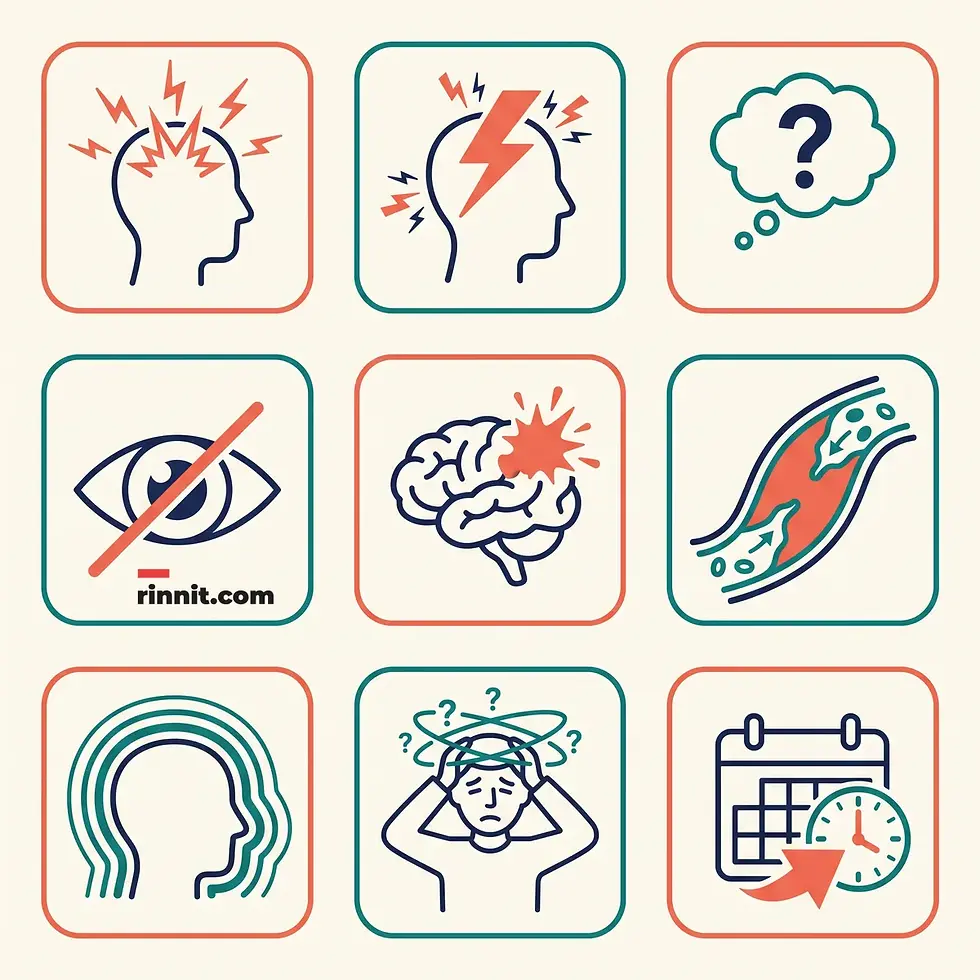
Symptoms depend on how bad the clot is and where it sits. Some people notice a gradual buildup; others are thrown into an emergency. The classic pattern is a headache that keeps getting worse and does not respond to usual pain relievers.
Symptom | What It Looks Like |
Worsening headache | The most common sign; a headache that grows steadily stronger instead of improving |
Seizures | Sudden, uncontrolled electrical bursts in the brain causing shaking, stiffness, or altered awareness |
Altered mental status | Confusion, drowsiness, or unusual behavior when a large brain bleed develops |
New neurologic deficits | Fresh problems such as weakness, numbness, or difficulty speaking that appear suddenly |
Symptoms can develop over hours or weeks, which is one reason CVST is easy to mistake for a persistent migraine, tension headache, or viral illness. If a headache keeps escalating day after day, that escalation itself is the warning sign worth acting on.
What Causes CVST?
CVST has a shorter list of triggers than many other health conditions, but the triggers are meaningful. Five common triggers are below. [7]
Cause | How It Leads to a Clot |
Pregnancy | Blood naturally clots more easily during pregnancy to reduce bleeding at delivery |
Birth control pills | Oral contraceptives containing estrogen raise the blood's tendency to clot |
Trauma | A head injury can damage the vein wall and start the clotting process |
Thrombophilia | An inherited condition that makes blood clot easily |
Infection | Infections such as COVID-19 can activate abnormal clotting |
It is worth noting that a very small number of people developed CVST after receiving a COVID-19 vaccine. [7] In one large US study, the risk of CVST in the two weeks after a COVID-19 diagnosis was about 6 times higher than after an mRNA COVID-19 vaccine. [9]
Complications of CVST
If the clot goes untreated, rising pressure inside the skull can produce serious complications. These include loss of vision, hemorrhage (bleeding from a broken blood vessel), severe headache, seizures, and stroke. [7] Each of these reflects the same underlying problem: blood trapped inside the skull with nowhere to go.
How Is CVST Diagnosed?
Doctors diagnose CVST with brain imaging, and speed matters. A prompt diagnosis gives you the best chance of avoiding complications, because treatment started early prevents the pressure buildup that damages brain tissue.
Diagnostic Test | What It Shows |
Brain MRI with contrast (dye) | Detailed images of brain tissue and the veins around it |
Brain CT with contrast | A fast scan that highlights blood vessels and bleeding |
Magnetic resonance venography (MRV) | Imaging focused specifically on the brain's veins |
CT venography | A CT-based look at the venous sinuses |
Cerebral angiography | X-ray images of blood vessels using injected dye |
Hypercoagulability panel (blood test) | Checks whether you have an inherited or acquired clotting disorder |
How Is Cerebral Venous Sinus Thrombosis Treated?
Treatment has two goals: dissolve or prevent the clot, and protect the brain from pressure damage.
Treatment | How It Works |
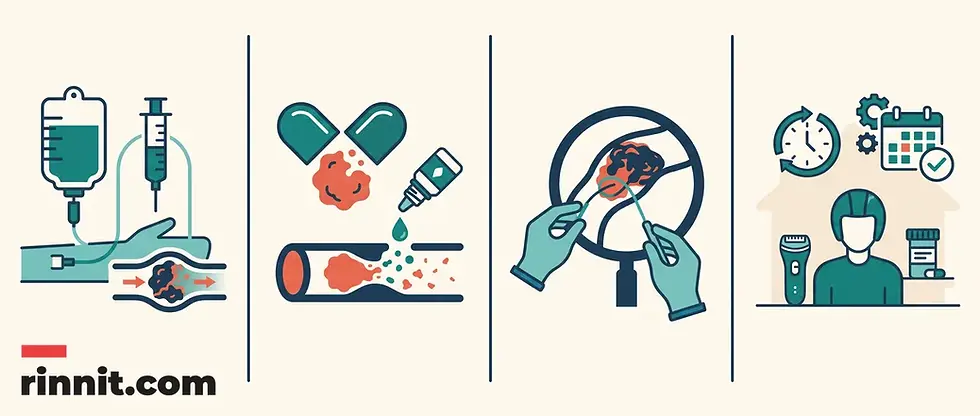
Anticoagulants (e.g., heparin) | Blood thinners that stop the clot from growing; used even during pregnancy |
Thrombolytics | "Clot-busting drugs" that actively break down the existing clot |
Antibiotics | Used when an infection caused the thrombosis |
Thrombectomy (surgery) | Surgical removal of the clot in severe cases |
Acetazolamide or pressure procedures | Lowers intracranial (brain) pressure |
Antiepileptic medicines | Prevent or treat seizures |
After the acute phase, most people take a longer course of blood thinners. You may be prescribed warfarin (Coumadin or Jantoven) or a direct oral anticoagulant such as rivaroxaban, apixaban, or dabigatran for three to 12 months, depending on what caused the clot. [1] People with thrombophilia may need warfarin for the rest of their lives. [1]
Warfarin dosing takes real care. The dose must be high enough to prevent new clots but not so high that a simple cut won't stop bleeding. [2] That is why your provider will run frequent blood tests to check how quickly your blood clots while you are on warfarin. [2]
How Fast Does Treatment Work?
Heparin given through an IV or injection works very quickly. [5] Because warfarin can take about a week to reach full effect, providers keep patients on heparin until the warfarin kicks in, then stop the heparin. [5] You may start feeling better as the clot resolves and the pressure in your skull comes down.
What Is the Outlook?
The outlook for CVST is generally good compared with other types of stroke. About 8 to 9 out of 10 people with CVST can go back to their daily activities after treatment [1]. People who receive the right diagnosis and treatment at the right time generally recover well. [1] [3]
CVST is categorized by how long symptoms have been present before diagnosis.
Category | Duration | Notes |
Acute | Up to 48 hours | Sudden onset |
Subacute | More than 48 hours, up to 30 days | The most common type |
Chronic | One month or longer | Slowly developing |
One important caveat: CVST can happen again. That recurrence risk is exactly why anticoagulants are prescribed after the clot is treated and why follow-up appointments should never be skipped. [1]
Prevention
Some risk factors cannot be changed, but several can.
Prevention Step | How It Helps |
Discuss anticoagulants for future pregnancies | If you had CVST while pregnant, blood thinners may lower your risk in later pregnancies |
Consider progestin-only contraceptives | Since estrogen-containing birth control pills can cause CVST, a progestin-only option removes that trigger |
Avoid smoking with oral contraceptives | The combination of smoking and birth control pills multiplies CVST risk |
Manage underlying conditions | Treating nephrotic syndrome, thrombophilia, and other clotting risks reduces overall danger |
Living With CVST
After a CVST, your provider will keep you on an anticoagulant or "blood thinner" to prevent a second clot. [1] The medication that protects you from a dangerous clot also raises your risk of bleeding from everyday cuts. Practical adjustments help: be careful when using knives, and consider switching to an electric razor, which is safer than a blade. [2]
You will need regular check-ins, perhaps every few months, while taking anticoagulants. [1] If you miss a dose of warfarin, contact your provider. [1] [2] You may also need another CT or MRI with contrast about six months after the event to follow up on the clot's status. [1]
When to Go to the ER
Call 911 if you are taking warfarin and develop any sign of dangerous bleeding:
Questions to Ask Your Provider
Question | Why It Matters |
What caused my CVST? | Identifying the cause guides how long you need treatment |
How long do I need treatment? | Duration ranges from three months to life depending on the cause |
How high is my risk of it happening again? | Recurrence risk shapes your long-term medication plan |
Because CVST can return, attending every follow-up appointment matters. Your provider wants to make sure your medication dose stays correct and that your daily habits, from shaving to cutting food, stay as safe as possible.
Conclusion
Cerebral venous sinus thrombosis is a rare but serious blood clot in the brain's draining veins. Its hallmark is a headache that keeps worsening, and its triggers include pregnancy, birth control pills, trauma, infections, and inherited clotting disorders. The good news is that modern imaging and anticoagulant therapy have transformed the outlook, and about 8 to 9 out of 10 people return to their daily activities after treatment. If you experience a steadily worsening headache, seizures, or sudden changes in thinking or neurologic function, seek urgent medical care. Early action is the single biggest factor in whether CVST ends in full recovery.
If you found this article helpful, explore our infographic templates to present health information visually for your own audience.
Frequently Asked Questions
What is cerebral venous sinus thrombosis?
CVST is a blood clot in one of the brain's large veins. It blocks blood draining out of the brain, raises pressure inside the skull, and causes the brain to swell.
Is CVST a type of stroke?
Yes, technically. CVST accounts for about 1% of all strokes, but it involves veins rather than arteries.
How rare is CVST?
Recent estimates from high-income countries put it at about 1 to 2 cases per 100,000 adults each year, making it a rare condition.
Can children get CVST?
Yes. CVST can occur at any age, even in infancy.
Who is most likely to get CVST?
Females are affected more often than males, and most cases occur in people under 55.
What is the most common symptom of CVST?
A headache that keeps getting worse is the most common symptom.
Does a CVST headache ever get better on its own?
No. A CVST headache escalates instead of improving, and it typically resists ordinary pain relievers.
Can CVST cause seizures?
Yes, seizures are a recognized symptom of CVST.
Can CVST cause confusion or behavior changes?
Yes. A large brain bleed associated with CVST can cause altered mental status and new neurologic deficits.
Does CVST cause vision loss?
CVST can. Loss of vision is one of the potential complications when pressure builds inside the skull.
What are venous sinuses in the brain?
Venous sinuses are the large vein channels, such as the transverse and superior sagittal sinuses, that drain blood out of the brain.
Where do CVST clots usually form?
Most often in the transverse sinus, superior sagittal sinus, inferior sagittal sinus, sigmoid sinuses, cavernous sinus, or deep sinuses of the cortex.
Why does a brain vein clot raise pressure in the head?
Because blood cannot exit the brain normally, it flows the wrong way, backs up, and pushes pressure upward until the brain swells.
Can pregnancy cause CVST?
Yes. Pregnancy naturally makes blood more prone to clotting, which is one reason CVST happens more in women.
Do birth control pills cause CVST?
Oral contraceptives are a known cause. Progestin-only contraceptives can be used instead to remove the estrogen trigger.
Does smoking with birth control pills increase CVST risk?
Yes. The combination of smoking and oral contraceptives raises the risk further, so avoiding both helps.
Can a head injury cause CVST?
Yes, trauma is one of the recognized causes because it can damage the vein wall.
What is thrombophilia?
Thrombophilia is an inherited condition that makes your blood clot more easily than normal.
Does thrombophilia change treatment length?
Yes. People with thrombophilia may need to take warfarin for the rest of their lives.
Can COVID-19 cause CVST?
Yes, infection is a recognized cause. A very small number of people also developed CVST after a COVID-19 vaccine, but in one large study the risk after COVID-19 infection was about 6 times higher than after an mRNA vaccine.
Do other conditions raise CVST risk?
Yes. Nephrotic syndrome, cancer, vasculitis, sarcoidosis, obesity, and liver disease all increase risk.
How is CVST diagnosed?
Through brain imaging, such as an MRI or CT with contrast, venography studies, cerebral angiography, and clotting blood tests.
What is an MRV?
Magnetic resonance venography is imaging focused specifically on the veins of the brain, ideal for spotting a venous clot.
Why is a hypercoagulability panel done?
A hypercoagulability panel checks whether you have a clotting disorder, which affects how long you will need blood thinners.
What is the first treatment for CVST?
Anticoagulants such as heparin, which stop the clot from growing, are started quickly — even during pregnancy.
What are thrombolytics?
Clot-busting drugs that actively dissolve the existing clot.
When is surgery used for CVST?
Surgical removal of the clot, called thrombectomy, is reserved for severe cases.
How is brain pressure reduced?
With acetazolamide or medical procedures designed to lower intracranial pressure.
Are seizures treated in CVST?
Yes, antiepileptic medicines are given to prevent or control seizures.
How long do people take blood thinners after CVST?
Warfarin or a direct oral anticoagulant is typically taken for three to 12 months, depending on the cause.
What are direct oral anticoagulants?
Drugs such as rivaroxaban, apixaban, and dabigatran, taken by mouth, that can be used instead of warfarin after initial treatment.
Why does warfarin need frequent blood tests?
Because the dose must stay balanced — strong enough to prevent clots, but not so strong that cuts won't stop bleeding.
What is the survival rate for CVST today?
About 8 to 9 out of 10 people with CVST can go back to their daily activities after treatment.
Can CVST come back?
Yes, recurrence is possible, which is why anticoagulants and regular follow-ups are essential.
What lifestyle changes help after CVST?
Being careful with knives, switching to an electric razor, and avoiding injury-prone activities while on blood thinners.
When should I call 911 while on warfarin?
If you have bleeding you cannot stop, a severe headache, coughing up large amounts of bright red blood, vomiting blood, or bright red blood in your stool.
What follow-up imaging is needed after CVST?
A repeat CT or MRI with contrast about six months later to check the clot's status.
Can CVST be prevented?
Some risk factors can be managed: discussing anticoagulants for future pregnancies, choosing progestin-only contraceptives, and avoiding smoking.
Is CVST an emergency?
Yes. Prompt diagnosis and treatment give you the best chance of avoiding life-threatening complications.
How long does CVST last?
Symptoms can build over hours or weeks. Doctors call CVST acute when symptoms began within 48 hours, subacute when they began 2 to 30 days earlier (the most common type), and chronic after more than a month. Treatment usually lasts 3 to 12 months.
Related Reading
References
Cleveland Clinic. Cerebral Venous Sinus Thrombosis. Cleveland Clinic Health Library. Last updated October 7, 2026. https://my.clevelandclinic.org/health/diseases/22560-cerebral-venous-sinus-thrombosis
American Heart Association. A Guide to Taking Warfarin. American Heart Association. Last reviewed October 24, 2024. https://www.heart.org/en/health-topics/arrhythmia/prevention--treatment-of-arrhythmia/a-patients-guide-to-taking-warfarin
Capecchi M, Abbattista M, Martinelli I. Cerebral venous sinus thrombosis. J Thromb Haemost. 2018;16(10):1918-1931. PMID: 29923367. https://doi.org/10.1111/jth.14210
Idiculla PS, Gurala D, Palanisamy M, et al. Cerebral Venous Thrombosis: A Comprehensive Review. Eur Neurol. 2020;83(4):369-379. PMID: 32877892. https://doi.org/10.1159/000509802
National Blood Clot Alliance. Treatment of Thrombosis. Stop The Clot. May 4, 2013. https://www.stoptheclot.org/news/treatment-of-thrombosis/
Perry RJ, Tamborska A, Singh B, et al. Cerebral venous thrombosis after vaccination against COVID-19 in the UK: a multicentre cohort study. Lancet. 2021;398(10306):1147-1156. PMID: 34370972. https://doi.org/10.1016/S0140-6736(21)01608-1
Bonda KC, Das JM. Venous Sinus Thrombosis (Archived). In: StatPearls [Internet]. Treasure Island (FL): StatPearls Publishing; 2026 Jan-. Updated February 22, 2026. PMID 32809433. https://www.ncbi.nlm.nih.gov/books/NBK560598/
Yaghi S, Saldanha IJ, Misquith C, et al. Direct Oral Anticoagulants Versus Vitamin K Antagonists in Cerebral Venous Thrombosis: A Systematic Review and Meta-Analysis. Stroke. 2022;53(10):3014-3024. PMID: 35938419. https://doi.org/10.1161/STROKEAHA.122.039579
Taquet M, Husain M, Geddes JR, et al. Cerebral venous thrombosis and portal vein thrombosis: a retrospective cohort study of 537,913 COVID-19 cases. EClinicalMedicine. 2021;39:101061. PMID: 34368663. https://doi.org/10.1016/j.eclinm.2021.101061
Medical disclaimer
This article is for informational purposes only and is not a substitute for professional medical advice, diagnosis, or treatment. Always consult a qualified healthcare provider regarding any medical condition. If you experience a severe or worsening headache, seizures, or sudden neurologic symptoms, seek emergency medical care immediately.



Comments