What Is Cardiogenic Pulmonary Edema? Causes, Symptoms, and Treatment

Updated: 2 days ago
Medically reviewed by Dr. Baraa Alnahhal, MD · Last reviewed: October 17, 2026
Quick Answer: What is cardiogenic pulmonary edema?
Cardiogenic pulmonary edema is a dangerous buildup of extra fluid in the lungs caused by pressure problems in the heart, usually heart failure. [4] The fluid makes breathing hard and can lead to organ damage from lack of oxygen. [9] Medications can remove the excess fluid [4], though procedures may also be needed, and the outlook depends on the underlying cause. [4]
What the research says
Breathing support that keeps the airway open lowers the need for a breathing tube. A meta-analysis of 10 randomized trials (1,465 adults with severe respiratory distress) found that prehospital CPAP reduced the intubation rate (RR 0.43, 95% CI 0.27–0.67) and shortened hospital stay by about 4 days (WMD −4.19, 95% CI −5.62 to −2.77). No significant effect on in-hospital mortality was seen (RR 0.83, 95% CI 0.64–1.07) (Meng et al., J Clin Nurs, 2022) [6].
BiPAP and CPAP performed similarly. In a systematic review of 6 randomized trials (320 participants with acute cardiogenic pulmonary edema or solid tumors), BiPAP did not differ significantly from CPAP in patients whose respiratory failure was due to acute cardiogenic pulmonary edema for progression to intubation (RR 1.49, 95% CI 0.63–3.62) or in-hospital mortality (RR 0.71, 95% CI 0.25–1.99) (Faqihi et al., Ann Thorac Med, 2021) [7].
Morphine has been linked to worse outcomes, although the evidence is observational. A meta-analysis of 6 observational studies (152,859 patients with acute cardiogenic pulmonary edema) found morphine use was associated with higher in-hospital mortality (OR 2.39, 95% CI 1.13–5.08) and greater need for invasive ventilation (OR 6.14, 95% CI 5.84–6.46). The authors noted that randomized trials are needed to confirm cause and effect (Witharana et al., Ther Adv Cardiovasc Dis, 2022) [8].
Key takeaways
Cardiogenic pulmonary edema is a life-threatening accumulation of extra fluid in the lungs caused by pressure rising and blood collecting on the left side of the heart, usually because of heart failure. [4]
The condition affects people with heart conditions, especially heart failure. [9] About 6.7 million American adults have heart failure [2], and an estimated 80% of them have pulmonary edema. [9]
Key warning signs include trouble breathing when lying down or exerting yourself, shortness of breath that wakes you from sleep, leg swelling, tiredness, and gaining more than 2 pounds a day. [4]
Congestive heart failure is the most common cause, with arrhythmia, cardiomyopathy, left-sided valve problems, and heart attack as other causes. [9]
Treatment combines medications (diuretics and vasodilators) [4], low-salt eating, and sometimes procedures such as PCI, valve replacement, bypass surgery, ventricular assist devices, ECMO, or heart transplant. [9]
The outlook depends on the cause: about 50% survive one year after hospital discharge [9], and 1 in 3 people hospitalized for heart failure lives five or more years after their stay. [4]
What Is Cardiogenic Pulmonary Edema?
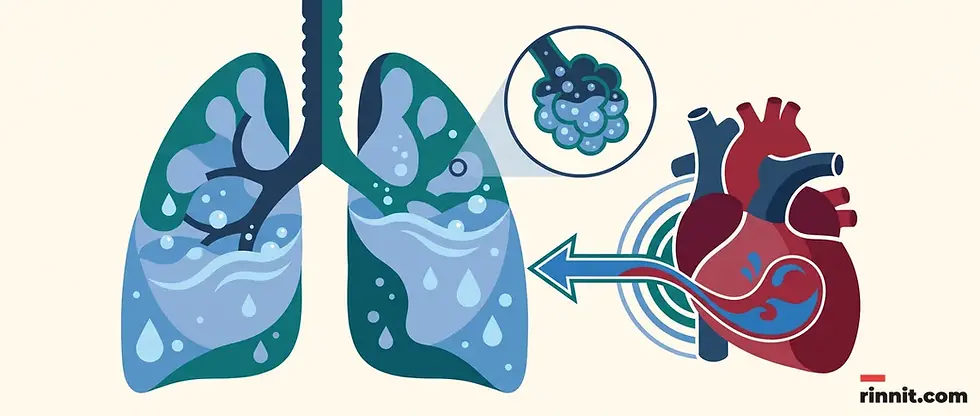
Cardiogenic pulmonary edema is an accumulation of extra fluid in your lungs that can be life-threatening. This fluid comes from pressure going up and blood collecting on the left side of your heart, usually because of heart failure. [4] The extra fluid in the lungs makes it hard to breathe, and cardiac edema can also lead to organ damage from a lack of enough oxygen. [9]
Cardiac edema, cardiogenic pulmonary edema, and heart edema are different names for the same problem: too much fluid in your lungs that makes breathing difficult.
Cardiogenic Pulmonary Edema vs. Other Types of Edema
Comparison | What it means |
|---|---|
Cardiac (cardiogenic) edema vs. pulmonary edema | Both mean too much fluid in the lungs that makes it hard to breathe. Cardiogenic pulmonary edema is a type of pulmonary edema with a heart problem as its cause. The non-cardiogenic type is caused by an injury to the lungs. |
Cardiac edema vs. renal edema | Both are names for excess fluid in your organs. With cardiac edema, there is too much fluid in your lungs. Renal edema is swelling in the body caused by kidney problems that keep the kidneys from removing enough fluid. Heart failure can cause both. In renal edema, your kidneys cannot get enough fluid out of your blood and into your urine. |
For a broader look at fluid retention in the body, see our guide to edema.
Who Does Cardiogenic Pulmonary Edema Affect?
Cardiac edema affects people with heart conditions, especially heart failure. [9] About 6.7 million American adults have heart failure [2], and an estimated 80% of people with heart failure have pulmonary edema. [9]
Symptoms of Cardiogenic Pulmonary Edema
The symptoms of cardiogenic pulmonary edema center on breathing difficulty and fluid retention. They include difficulty breathing when exerting yourself or lying down, shortness of breath that wakes you from sleep, swelling in your legs, tiredness, and a weight increase of more than two pounds a day. [4]

Symptom | Description |
|---|---|
Exertional and positional breathing difficulty | Difficulty breathing when exerting yourself or lying down |
Nighttime breathlessness | Shortness of breath that wakes you from sleep |
Leg swelling | Swelling in your legs |
Tiredness | Unusual fatigue |
Rapid weight gain | Weight increase of more than two pounds a day, a sign the body is retaining fluid |
Weighing yourself every day at the same time can help you know whether your cardiac edema is getting worse. It may be easiest to step on the scale before breakfast, but after you pee. [4] If you gain more than two pounds a day, your body is probably retaining fluid. [4]
Causes of Cardiogenic Pulmonary Edema
Congestive heart failure is the most common cause of heart edema. Other causes include abnormal heart rhythm (arrhythmia), cardiomyopathy, problems with the valves on the left side of your heart such as narrowing or regurgitation (blood going the wrong way), and heart attack. [9]
Cause | How it leads to fluid in the lungs |
|---|---|
Congestive heart failure | The most common cause; the failing heart raises pressure on its left side |
Abnormal heart rhythm (arrhythmia) | An irregular heartbeat disrupts normal pumping |
Cardiomyopathy | A disease of the heart muscle weakens pumping |
Left-sided heart valve problems | Narrowing or regurgitation (blood going the wrong way) raises pressure on the left side of the heart |
Heart attack | Damage to the heart muscle impairs its ability to pump |
How Is Cardiogenic Pulmonary Edema Diagnosed?
Your healthcare provider will do a physical exam, ask about your medical history, and order testing. After your exam, your provider may order tests that help show what is going on. [9]
Test | What it does |
|---|---|
Electrocardiogram (EKG) | Records the heart's electrical activity |
Chest X-ray | Shows fluid in the lungs and the size of the heart |
Echocardiogram | Uses ultrasound to see how well the heart pumps and how the valves work |
Blood tests | Check heart function and related markers |
Pulmonary arterial catheter | Uses a catheter to check the pressure in your pulmonary artery |
Treatment for Cardiogenic Pulmonary Edema
Treatment targets the extra fluid and the underlying heart problem. Medications get rid of the extra fluid, but your healthcare provider may need to do procedures as well, and treatments vary depending on the cause. [9]

Medications
Medication | What it does |
|---|---|
Vasodilators | Widen your blood vessels |
Diuretics | Help you get more fluids out of your body |
If you have heart failure, your healthcare provider will ask you to take salt out of your diet. This includes both the salt you add to food and the salt already present in prepared or processed foods. [4]
Procedures and Invasive Treatments
Procedure | What it does |
|---|---|
Percutaneous coronary intervention (PCI) | Opens a blocked heart artery |
Ventricular assist device | Mechanically supports the heart's pumping |
Heart valve replacement | Replaces a damaged heart valve |
Coronary artery bypass graft | Restores blood flow around a blocked artery |
Intra-aortic balloon pump (IABP) | Helps your heart pump better |
Extracorporeal membrane oxygenation (ECMO) | Temporarily does the work of the heart and lungs |
Heart transplant | Replaces a failing heart with a donor heart |
Home Care and Self-Management
Other things that may help include exercising on most days of the week, raising your swollen legs up when you are sitting, wearing support (compression) stockings for swollen legs, and raising the head of your bed if you have fluid in your lungs. [4]
Outlook and Prognosis
Pulmonary edema is life-threatening, but your prognosis depends on what caused it. [4] One year after discharge from a hospital, about 50% survive cardiac edema. [9]
Heart failure, a common cause of cardiogenic pulmonary edema, is a chronic disease that can get better with treatment. Out of every three people who have been in the hospital because of heart failure, one person lives five or more years after their stay. [4]
Outlook measure | Statistic |
|---|---|
One-year survival after hospital discharge for cardiac edema | About 50% |
Five-year survival after heart failure hospitalization | 1 in 3 people |
Prevention
Since cardiogenic pulmonary edema happens when you already have a problem with your heart, the best way to reduce your risk is by keeping your heart strong and healthy. Ways to do that include eating foods that are low in saturated fats and trans fats, exercising every day, not using tobacco products, and limiting how much alcohol you drink. [2] [4]
Heart-healthy habit | Benefit |
|---|---|
Eat foods low in saturated and trans fats | Reduces strain on the heart |
Exercise every day | Keeps the heart strong |
Avoid tobacco products | Protects blood vessels and heart function |
Limit alcohol | Prevents damage to the heart muscle |
Living With Cardiogenic Pulmonary Edema
Early diagnosis and treatment are better than waiting to get care. [2] Keep going to your regular checkups with your provider so they can keep an eye on any cardiac issues you have that may lead to cardiac edema. [9] Taking the medicines your provider gives you can prevent heart problems you have from getting worse. [9]
When to Contact Your Provider
You should contact your provider if you have a hard time breathing when you exert yourself or lie down, shortness of breath that makes you wake up, or swollen legs. [9]
When to Go to the ER
Call 911 if you are having trouble breathing or if you are having chest pain. [9]
Questions to Ask Your Doctor
Question | Why it matters |
|---|---|
What's the cause of my cardiac edema? | Determines the treatment plan and outlook |
Can you treat what's causing my cardiac edema? | Clarifies whether the underlying cause is fixable |
What changes do I need to make to how I live? | Sets expectations for diet, activity, and self-care |
Conclusion
Cardiogenic pulmonary edema is a life-threatening buildup of extra fluid in the lungs caused by rising pressure and blood collecting on the left side of the heart, most often because of heart failure. The condition affects roughly 6.7 million American adults with heart failure, and an estimated 80% of people with heart failure develop pulmonary edema. Warning signs include trouble breathing when lying down or exerting yourself, shortness of breath that wakes you from sleep, leg swelling, tiredness, and gaining more than two pounds a day. Congestive heart failure is the most common cause, along with arrhythmia, cardiomyopathy, left-sided valve problems, and heart attack. Treatment combines diuretics and vasodilators with a low-salt diet, heart-healthy habits, and sometimes procedures such as PCI, valve replacement, bypass grafting, ventricular assist devices, ECMO, or heart transplant. The outlook depends on the cause, with about half of patients surviving one year after hospital discharge and 1 in 3 heart failure hospitalizations extending five or more years. Daily weighing, regular checkups, and prompt emergency care for chest pain or severe breathing trouble give you the best chance of staying ahead of this condition.
If you or a loved one is managing heart-related fluid buildup, work closely with your healthcare provider on medications, salt restriction, and self-monitoring. Knowledge and early action are your best tools.
If you would like to turn your own health content into clear, shareable visuals like the ones in this guide, explore Rinnit's infographic templates to build patient-friendly graphics in minutes.
Frequently Asked Questions
What is cardiogenic pulmonary edema?
Cardiogenic pulmonary edema is an accumulation of extra fluid in your lungs that can be life-threatening. It comes from pressure going up and blood collecting on the left side of your heart, usually because of heart failure. [4]
Why is cardiogenic pulmonary edema dangerous?
The extra fluid makes it hard to breathe, and cardiac edema can lead to organ damage from a lack of enough oxygen. [9]
Is cardiogenic pulmonary edema the same as pulmonary edema?
Both mean you have too much fluid in your lungs that makes breathing difficult. Cardiogenic pulmonary edema is a type of pulmonary edema with a heart problem as its cause, while the non-cardiogenic type is caused by an injury to your lungs. [9]
What is the difference between cardiac edema and renal edema?
Both are names for excess fluid in your organs. With cardiac edema, there is too much fluid in your lungs. Renal edema is body swelling caused by kidney problems. In renal edema, your kidneys cannot get enough fluid out of your blood and into your urine. Heart failure can cause both. [9]
What other names are used for this condition?
The condition is also called cardiac edema, heart edema, and cardiogenic pulmonary edema. All refer to too much fluid in the lungs that makes it hard to breathe.
Who gets cardiogenic pulmonary edema?
Cardiac edema affects people with heart conditions, especially heart failure. [9]
How many people have heart failure?
About 6.7 million American adults have heart failure. [2]
How common is pulmonary edema in people with heart failure?
An estimated 80% of people with heart failure have pulmonary edema. [9]
What does cardiogenic pulmonary edema feel like?
People experience difficulty breathing when exerting themselves or lying down, shortness of breath that wakes them from sleep, leg swelling, tiredness, and rapid weight gain of more than two pounds a day. [4] [9]
Why does breathing get harder when lying down?
Fluid redistributes into the lungs when you lie flat, and the extra fluid in the lungs makes it hard to breathe.
Why does shortness of breath wake me up at night?
Fluid building up in the lungs while you sleep can trigger breathlessness strong enough to wake you.
Why do my legs swell with cardiogenic pulmonary edema?
Fluid retention is a common feature of heart problems; excess fluid collects in the legs as well as the lungs.
Why am I gaining weight so quickly?
A weight increase of more than two pounds a day is a sign your body is probably retaining fluid. [4] [9] Weigh yourself daily at the same time, ideally before breakfast and after you pee [4] [9], to catch this early.
What is the most common cause of cardiogenic pulmonary edema?
Congestive heart failure is the most common cause of heart edema. [9]
What other conditions cause cardiogenic pulmonary edema?
Abnormal heart rhythm (arrhythmia), cardiomyopathy, problems with the valves on the left side of your heart (such as narrowing or regurgitation, where blood goes the wrong way), and heart attack can all cause it. [9]
What does regurgitation mean in a heart valve?
Regurgitation means blood is going the wrong way through a valve [9], raising pressure on the left side of the heart.
How is cardiogenic pulmonary edema diagnosed?
Your healthcare provider will do a physical exam, ask about your medical history, and order tests such as an EKG, chest X-ray, echocardiogram, blood tests, or a pulmonary arterial catheter. [9]
What is a pulmonary arterial catheter?
A pulmonary arterial catheter is a catheter used to check the pressure in your pulmonary artery. [9]
How is cardiogenic pulmonary edema treated?
Medications can get rid of the extra fluid, but your healthcare provider may also need to perform procedures. Treatments vary depending on the cause. [9]
What medications treat cardiogenic pulmonary edema?
Vasodilators widen your blood vessels, and diuretics help you get more fluids out of your body. [9]
Why do I need to cut salt from my diet?
If you have heart failure, your provider will ask you to take salt out of your diet. This includes salt you add to food and salt that is already in prepared or processed foods [4] [9], because salt makes your body retain fluid.
What procedures may be needed?
Procedures include percutaneous coronary intervention (PCI), ventricular assist device, heart valve replacement, coronary artery bypass graft, intra-aortic balloon pump (IABP), extracorporeal membrane oxygenation (ECMO), and heart transplant. [9]
What is an intra-aortic balloon pump?
An IABP is a device that helps your heart pump better. [9]
When is a heart transplant considered?
A heart transplant may be considered when the underlying heart problem is severe and other treatments are not enough.
What lifestyle changes help at home?
Exercising on most days of the week, raising your swollen legs when sitting, wearing compression stockings for swollen legs, and raising the head of your bed if you have fluid in your lungs can all help. [4] [9]
What is the outlook for cardiogenic pulmonary edema?
Pulmonary edema is life-threatening, but your prognosis depends on what caused it. [4] [9] One year after discharge from a hospital, about 50% survive cardiac edema. [9]
What is the outlook for heart failure causing the edema?
Heart failure is a chronic disease that can get better with treatment. [9] Out of every three people hospitalized for heart failure, one person lives five or more years after their stay. [4] [9]
Can cardiogenic pulmonary edema be prevented?
Since it happens when you already have a heart problem, the best way to reduce your risk is by keeping your heart strong and healthy through diet, exercise, avoiding tobacco, and limiting alcohol. [4] [9]
What foods help reduce my risk?
Foods that are low in saturated fats and trans fats help keep your heart strong and healthy. [9]
Should I avoid tobacco and alcohol?
Yes. Not using tobacco products and limiting alcohol are recommended ways to reduce your risk. [9]
How should I monitor my fluid levels at home?
Weigh yourself every day at the same time. It is easiest to step on the scale before breakfast, but after you pee. If you gain more than two pounds a day, your body is probably retaining fluid. [4] [9]
When should I call my healthcare provider?
Contact your provider if you have a hard time breathing when you exert yourself or lie down, shortness of breath that makes you wake up, or swollen legs. [9]
When should I go to the ER?
Call 911 if you are having trouble breathing or if you are having chest pain. [9]
What questions should I ask my doctor?
Ask what is causing your cardiac edema, whether the cause can be treated, and what changes you need to make to how you live. [9]
Does early treatment matter?
Yes. When a provider diagnoses and treats cardiogenic pulmonary edema early, outcomes are better than if you wait to get care. [9] Regular checkups let your provider watch for cardiac issues that may lead to cardiac edema. [9]
Will my medications prevent things from getting worse?
Taking the medicines your provider prescribes can prevent the heart problems you have from getting worse. [9]
Related Reading
References
Brakenhielm E, González A, Díez J. Role of cardiac lymphatics in myocardial edema and fibrosis: JACC review topic of the week. J Am Coll Cardiol. 2020;76(6):735-744. PMID 32762908. https://doi.org/10.1016/j.jacc.2020.05.076
Centers for Disease Control and Prevention. About heart failure. CDC. Last updated May 15, 2024. https://www.cdc.gov/heart-disease/about/heart-failure.html
Hu D, Li L, Li S, et al. Lymphatic system identification, pathophysiology and therapy in the cardiovascular diseases. J Mol Cell Cardiol. 2019;133:99-111. PMID 31181226. https://doi.org/10.1016/j.yjmcc.2019.06.002
Merck Manual Consumer Version. Heart failure (HF). Merck Manuals. Last updated September 2026. https://www.merckmanuals.com/home/heart-and-blood-vessel-disorders/heart-failure/heart-failure-hf
Merck Manual Professional Version. Edema. Merck Manuals. Last updated October 2026. https://www.merckmanuals.com/professional/cardiovascular-disorders/symptoms-of-cardiovascular-disorders/edema
Meng M, Zhang J, Chen L, et al. Prehospital noninvasive positive pressure ventilation for severe respiratory distress in adult patients: an updated meta-analysis. J Clin Nurs. 2022;31(23-24):3327-3337. PMID 35212078. https://doi.org/10.1111/jocn.16224
Faqihi BM, Trethewey SP, Morlet J, et al. Bilevel positive airway pressure ventilation for non-COPD acute hypercapnic respiratory failure patients: a systematic review and meta-analysis. Ann Thorac Med. 2021;16(4):306-322. PMID 34820018. https://doi.org/10.4103/atm.atm_683_20
Witharana TN, Baral R, Vassiliou VS. Impact of morphine use in acute cardiogenic pulmonary oedema on mortality outcomes: a systematic review and meta-analysis. Ther Adv Cardiovasc Dis. 2022;16:17539447221087587. PMID 35343809. https://doi.org/10.1177/17539447221087587
Cleveland Clinic. Cardiogenic Pulmonary Edema. Cleveland Clinic. Last updated April 30, 2022. https://my.clevelandclinic.org/health/diseases/22941-cardiogenic-pulmonary-edema
Medical disclaimer
This article is for general informational purposes only and is not a substitute for professional medical advice, diagnosis, or treatment. Always seek the advice of a qualified healthcare provider with any questions about a medical condition. Never disregard professional medical advice or delay seeking it because of something you have read here. If you are having trouble breathing or chest pain, call 911 immediately.



Comments