What Is Cardiac Amyloidosis? Symptoms, Causes, Diagnosis and Treatment

Updated: 3 days ago
Medically reviewed by Dr. Baraa Alnahhal, MD · Last reviewed: October 17, 2026
Quick Answer: What is cardiac amyloidosis?
Cardiac amyloidosis is a disease in which abnormal, misshapen proteins build up in the heart muscle, stiffening its walls so the heart cannot fill and pump properly. The two main forms are light-chain (AL) and transthyretin (ATTR) amyloidosis. It causes shortness of breath, swelling and fatigue and can lead to heart failure. Earlier treatment leads to a better outlook. [5]
Key takeaways
Cardiac amyloidosis is the buildup of misshapen proteins in the heart. It thickens heart walls, forces the heart to work harder, and weakens the heart, and it is a leading cause of restrictive cardiomyopathy.
The two main types are light-chain (AL) amyloidosis, where abnormal proteins come from the bone marrow, and transthyretin (ATTR) amyloidosis, where they come from the liver. ATTR has hereditary (variant) and wild-type (aging-related) forms.
Main symptoms include shortness of breath, swelling in the belly and legs, fatigue lasting several days, and heart palpitations during a normal routine. Protein deposits elsewhere can also cause tingling, numbness, dizziness, and blood pressure drops.
Complications include atrial fibrillation, bradycardia, ventricular tachycardia, bundle branch block, cardiorenal syndrome, heart failure, restrictive cardiomyopathy, and stroke.
There is no cure currently, but amyloid-specific medications can slow or stop abnormal protein production, and early diagnosis and treatment limit long-term damage.
What the research says
Tafamidis lowered death in ATTR cardiomyopathy. In the ATTR-ACT trial, 441 patients with transthyretin amyloid cardiomyopathy were randomized to tafamidis or placebo for 30 months. All-cause mortality was 29.5% (78 of 264) with tafamidis versus 42.9% (76 of 177) with placebo (hazard ratio 0.70; 95% CI 0.51–0.96), and cardiovascular hospitalizations were lower (relative risk ratio 0.68) (Maurer et al., N Engl J Med, 2018) [1].
Vutrisiran, which lowers liver production of transthyretin, reduced death and cardiovascular events. In the HELIOS-B trial, 655 patients with ATTR cardiomyopathy received vutrisiran or placebo every 12 weeks. The risk of death from any cause plus recurrent cardiovascular events was lower (hazard ratio 0.72; 95% CI 0.56–0.93; p = 0.01), as was the risk of death from any cause through 42 months (hazard ratio 0.65; 95% CI 0.46–0.90) (Fontana et al., N Engl J Med, 2025) [2].
What Is Cardiac Amyloidosis?

Cardiac amyloidosis is a disease in which misshapen, abnormal proteins accumulate inside the heart. These proteins are not shaped like normal proteins. When they clump together, they deposit in the heart muscle and thicken its walls. [5]
The thickened walls change how the heart works. The heart has to work harder to fill with blood and pump it out. Over time, this extra strain weakens and damages the heart, and it can lead to heart failure. [5]
Cardiac amyloidosis is a leading cause of restrictive cardiomyopathy, a condition where the heart muscle becomes stiff and cannot fill properly. [5] The disease is not only a heart problem. Amyloid protein often builds up in other parts of the body at the same time. However, the buildups in the heart usually cause the most severe problems. [5]
Types of Cardiac Amyloidosis
There are two main types of cardiac amyloidosis. [5] They differ in where the abnormal proteins come from and how the disease behaves.
Type | Where abnormal proteins come from | Key details |
Light-chain amyloidosis (AL) | Bone marrow | Abnormal proteins originate in the bone marrow. This form progresses quickly, and prognosis is generally worse. |
Transthyretin amyloidosis (ATTR) | Liver | Transthyretin (TTR) is a protein the liver normally produces. ATTR has two forms: a hereditary (variant) type caused by a change in the TTR gene, and a wild-type form caused by aging-related changes to the protein. |
In ATTR amyloidosis, the problem is not that the liver produces too much protein. The transthyretin protein itself becomes misshapen, either through an inherited gene change or through age-related changes, and the misshapen protein then clumps together in tissues including the heart. [1]
Because amyloidosis is a systemic disease, people with cardiac amyloidosis often have problems outside the heart, involving the nervous system, kidneys, digestive tract, and musculoskeletal system, such as carpal tunnel syndrome or spinal stenosis. [4]
Cardiac Amyloidosis Symptoms
Symptoms of cardiac amyloidosis get progressively worse over time. As protein builds up and the heart muscle stiffens, people develop increasingly severe heart failure symptoms. [5]
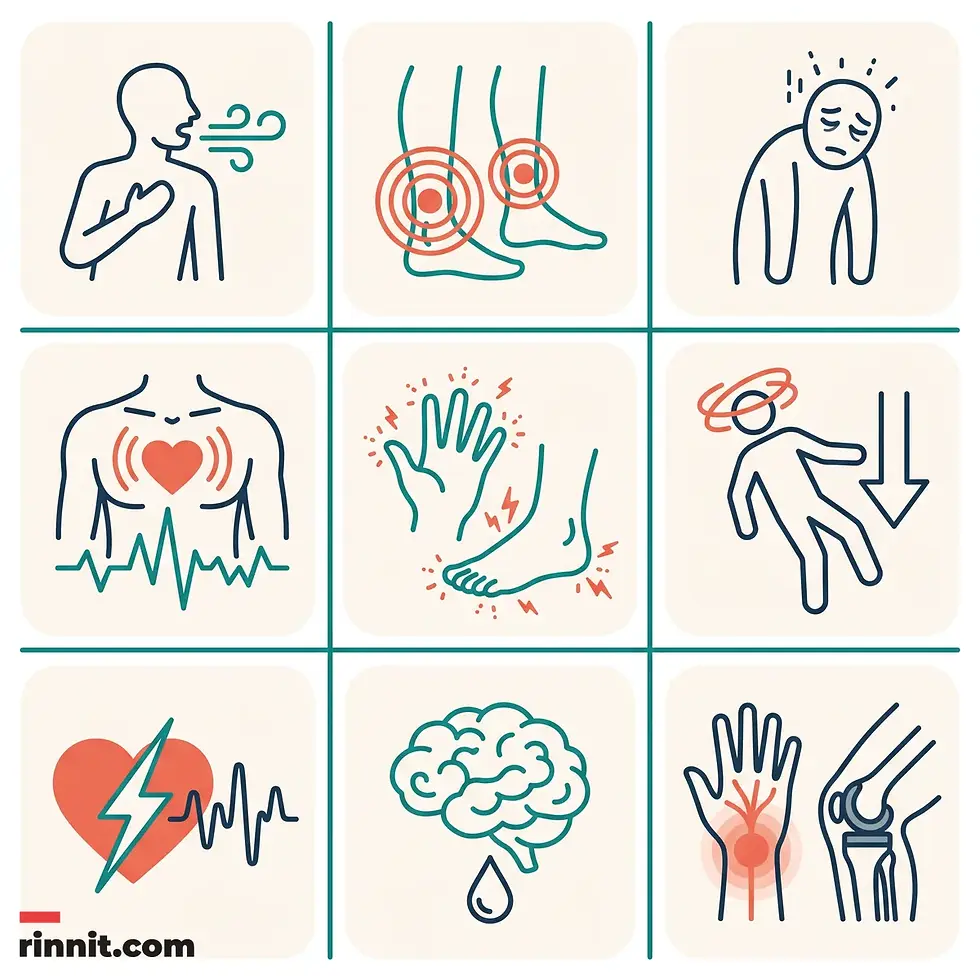
The most common signs include shortness of breath during activity or even at rest, swelling in the belly and legs, fatigue that lasts for several days, and heart palpitations that happen during a normal daily routine. [5]
Symptom | What it feels like |
Shortness of breath | Struggling to catch your breath during activity or while resting |
Swelling (edema) | Fluid buildup in the belly and lower legs |
Fatigue | Feeling worn out for several days at a time |
Heart palpitations | Heart fluttering or racing during your normal routine |
Symptoms When Amyloid Builds Up Elsewhere
When amyloid deposits form outside the heart, they can cause additional symptoms that help point toward the diagnosis. Deposits in the nerves of the hands and feet cause peripheral neuropathy, which feels like tingling or numbness. Deposits affecting the autonomic nervous system cause dysautonomia, which produces lightheadedness, dizziness, and drops in blood pressure when changing positions. [5]
What Causes Cardiac Amyloidosis?
The cause depends on the type. In AL amyloidosis, the abnormal proteins originate from disorders of the bone marrow. In ATTR amyloidosis, the cause is either a change in the TTR gene that produces transthyretin, or aging-related changes that misshape the protein the liver produces. [5]
Type | Cause |
AL amyloidosis | Disorders of the bone marrow that produce abnormal light-chain proteins |
ATTR amyloidosis (hereditary/variant) | A change in the TTR gene that makes misshapen transthyretin protein |
ATTR amyloidosis (wild-type) | Aging-related changes that misshape transthyretin protein produced by the liver |
Cardiac Amyloidosis Complications
The protein buildup does more than stiffen the heart. Amyloid deposits can disrupt the heart's electrical system and damage other organs. Known complications include a range of arrhythmias, heart failure, restrictive cardiomyopathy, and stroke. [5]
Complication | What happens |
Atrial fibrillation (AFib) | Irregular, often rapid heartbeat in the heart's upper chambers |
Bradycardia | Abnormally slow heartbeat |
Ventricular tachycardia | Dangerous rapid heartbeat in the heart's lower chambers |
Bundle branch block | Damage to the heart's electrical conduction pathways |
Cardiorenal syndrome | Problems involving both the heart and the kidneys |
Heart failure | The weakened heart cannot pump enough blood |
Restrictive cardiomyopathy | Stiffened heart muscle that cannot fill properly |
Stroke | Can result from blood clots; AFib in cardiac amyloidosis carries a high risk of clots |
How Cardiac Amyloidosis Is Diagnosed
Because amyloidosis is a systemic disease, providers look at the whole-body picture rather than the heart alone. Diagnosis combines blood and urine tests with imaging, electrical testing, and sometimes tissue biopsy. [5]
Test | What it shows |
Blood and urine tests | Amyloid proteins and markers of heart function, including protein in the urine |
Electrocardiogram (EKG) | The heart's electrical activity and conduction problems |
Echocardiogram with strain | Thickened heart muscle and how well it moves |
Cardiac MRI | Distinguishes cardiac amyloidosis from other causes of cardiomyopathy |
Nuclear imaging ("amyloid" scans) | Directly shows amyloid protein buildup in the heart |
Biopsy | Heart (myocardial) tissue or tissue from elsewhere, examined for protein deposits |
Genetic testing | Identifies genetic causes such as the TTR gene change |
Red Flags Providers Watch For
When heart failure symptoms appear alongside certain additional findings, they raise suspicion for cardiac amyloidosis. These clues include atrial fibrillation, thickened left ventricle walls, conduction system disease, elevated cardiac biomarkers, and protein in the urine. [5]
Certain past health history also raises the odds. A history of carpal tunnel syndrome, lumbar spinal stenosis, peripheral or autonomic neuropathy, prior shoulder surgery, or hip or knee replacement can all be hints that point toward amyloidosis rather than a more common heart problem. [5]
Cardiac Amyloidosis Treatment
Treatment for cardiac amyloidosis depends on the type and falls into three main groups. [5] Treatment does not cure the disease, but it slows or stops abnormal protein production, manages symptoms, and can replace a badly damaged organ in some cases.
Treatment group | What it does |
Amyloid-specific medications | Slow or stop the production of abnormal proteins |
Symptom management | Treats heart failure symptoms, arrhythmias, and swelling to keep people comfortable |
Organ transplantation | Replaces a severely damaged organ, such as the heart or liver |
Medications for Amyloid Production
Amyloid-specific medications target the root of the problem. In AL amyloidosis, chemotherapy and/or immunotherapy target the abnormal bone marrow plasma cells that make the light-chain proteins. [4] In ATTR amyloidosis, newer medications either stabilize the transthyretin protein so it stays in its normal shape [1] or reduce the liver's production of the protein altogether. [2]
Managing Symptoms
Symptom management follows heart failure care principles. Providers use loop diuretics to reduce fluid buildup and swelling, medications to control heart rate and rhythm in AFib, and treatments such as midodrine when blood pressure drops on standing. Because AFib in cardiac amyloidosis carries a high risk of blood clots, guidelines recommend blood thinners whenever AFib is present. [4]

Outlook: Is Cardiac Amyloidosis Curable?
There is no cure for cardiac amyloidosis at this time. [5] However, the outlook has improved significantly with recent therapies, and research continues, including clinical trials exploring new treatments. [5]
Prognosis depends on several factors: the type of amyloidosis, the person's age, how long the disease was present before diagnosis, how quickly treatment begins, and what other health conditions or complications are present. [5] Prognosis is generally worse in AL amyloidosis because it progresses quickly. [5] ATTR amyloidosis runs a slower course, but it is still a significant disease.
Cardiac amyloidosis is the leading cause of death in people with amyloidosis. The more quickly treatment begins, the better the outlook and life expectancy tend to be. Early diagnosis and treatment limit long-term damage to the heart. [5]
Living With Cardiac Amyloidosis
A cardiac amyloidosis diagnosis is life-changing. People with the condition need regular check-ups and frequent monitoring appointments. It helps to ask the care team which symptoms count as emergency warning signs, and to share that list with loved ones so they know when to act quickly. [5]
Support communities can make a real difference. Amyloidosis organizations offer resources and communities that connect people living with the condition, and a care team can help make those connections. [5]
Conclusion
Cardiac amyloidosis shows why the heart depends on proteins keeping their proper shape. When misshapen proteins pile up in the heart muscle, the walls thicken, the heart works harder, and failure can follow. The good news is that newer medications can now slow or stop the process that creates those abnormal proteins, and starting treatment early protects the heart from long-term damage.
If you notice shortness of breath, persistent swelling, unusual fatigue, or palpitations, especially with a history of carpal tunnel syndrome or neuropathy, ask your provider whether amyloidosis could be part of the picture. Early testing changes outcomes.
Want to explain health topics like this one visually? Infographics make complex concepts easy for readers of every age. Rinnit's infographic templates help you build clear, professional visuals for your own audience.
Frequently Asked Questions
What is cardiac amyloidosis?
Cardiac amyloidosis is a disease where misshapen, abnormal proteins build up in the heart muscle. The deposits thicken the heart walls, force the heart to work harder, and weaken it over time. It is a leading cause of restrictive cardiomyopathy.
Is cardiac amyloidosis a heart attack?
No. Cardiac amyloidosis is not a heart attack. It is a buildup of abnormal proteins in the heart muscle, not a blockage of blood flow to the heart. However, it can cause heart failure and other serious heart problems over time.
What causes the protein buildup in cardiac amyloidosis?
In AL amyloidosis, abnormal proteins come from the bone marrow. In ATTR amyloidosis, they come from the liver, either through a change in the TTR gene or through aging-related changes to the transthyretin protein.
What is the difference between AL and ATTR amyloidosis?
AL amyloidosis comes from the bone marrow and progresses quickly. ATTR amyloidosis comes from the liver and has two forms: hereditary (variant) type from a TTR gene change, and wild-type from aging-related changes. ATTR generally runs a slower course.
What does restrictive cardiomyopathy mean?
Restrictive cardiomyopathy means the heart muscle has become stiff and cannot fill with blood properly. Cardiac amyloidosis is a leading cause of this condition.
What are the main symptoms of cardiac amyloidosis?
The main symptoms are shortness of breath during activity or at rest, swelling in the belly and legs, fatigue lasting several days, and heart palpitations during a normal daily routine.
Why does swelling happen with cardiac amyloidosis?
As the heart weakens, it cannot pump blood efficiently. Fluid backs up in the body and collects in the legs, ankles, and belly, causing swelling called edema.
Can cardiac amyloidosis affect nerves?
Yes. Amyloid deposits outside the heart can cause peripheral neuropathy, which produces tingling or numbness in the hands and feet. Deposits can also affect the autonomic nervous system.
What is dysautonomia in amyloidosis?
Dysautonomia is dysfunction of the autonomic nervous system caused by amyloid deposits. It causes lightheadedness, dizziness, and drops in blood pressure when changing positions.
Can cardiac amyloidosis cause irregular heartbeat?
Yes. Complications include atrial fibrillation, bradycardia, and ventricular tachycardia. Amyloid deposits can disrupt the heart's electrical conduction system, including bundle branch block.
Does cardiac amyloidosis increase stroke risk?
Yes. Complications include stroke, which can result from blood clots; atrial fibrillation in cardiac amyloidosis carries a high risk of clots.
What is cardiorenal syndrome?
Cardiorenal syndrome is a complication where problems involve both the heart and the kidneys. It can occur as cardiac amyloidosis affects circulation and organ function.
Is carpal tunnel syndrome related to cardiac amyloidosis?
Carpal tunnel syndrome can be a clue. A history of carpal tunnel syndrome, lumbar spinal stenosis, shoulder surgery, or hip and knee replacement can all be hints that point toward amyloidosis when heart symptoms appear.
How is cardiac amyloidosis diagnosed?
Diagnosis combines blood and urine tests, an electrocardiogram, an echocardiogram with strain imaging, cardiac MRI, nuclear imaging scans that show amyloid buildup, tissue biopsy, and sometimes genetic testing.
What is an "amyloid scan"?
Nuclear imaging tests, sometimes called amyloid scans, directly show amyloid protein buildup in the heart. They help distinguish cardiac amyloidosis from other causes of cardiomyopathy.
Why is a biopsy needed?
A biopsy takes a small tissue sample, either from the heart muscle or another site, and examines it for amyloid protein deposits. It helps confirm the diagnosis.
What red flags suggest cardiac amyloidosis?
Heart failure symptoms combined with atrial fibrillation, thickened left ventricle walls, conduction disease, elevated cardiac biomarkers, protein in the urine, neuropathy, or a history of carpal tunnel syndrome raise suspicion.
Is cardiac amyloidosis curable?
There is no cure currently. However, amyloid-specific medications can slow or stop abnormal protein production, and treatments manage symptoms. Researchers continue to study new therapies in clinical trials.
What medications treat cardiac amyloidosis?
Treatment includes amyloid-specific medications that slow or stop abnormal protein production, plus symptom management medications for heart failure, fluid buildup, and arrhythmias.
Can organ transplantation help with cardiac amyloidosis?
Yes. Organ transplantation can replace a badly damaged organ, such as the heart or liver, as one of the three main treatment approaches for cardiac amyloidosis.
How does cardiac amyloidosis affect life expectancy?
Prognosis depends on the type, age, how long the disease was present before diagnosis, how quickly treatment starts, and other health conditions. Prognosis is generally worse in AL amyloidosis. The sooner treatment begins, the better the outlook and life expectancy.
Is cardiac amyloidosis the main cause of death in amyloidosis?
Yes. Cardiac amyloidosis is the leading cause of death in people with amyloidosis, which is why early detection and treatment of heart involvement matters so much.
What can I do living with cardiac amyloidosis?
Keep regular check-ups and frequent monitoring appointments, ask the care team which symptoms count as emergency warning signs, and share that list with loved ones. Amyloidosis organizations offer resources and communities for support.
Can cardiac amyloidosis be prevented?
There is no proven way to prevent it. The hereditary ATTR form involves a change in the TTR gene, and wild-type ATTR relates to aging. Limiting damage focuses on early diagnosis, prompt treatment, and careful monitoring.
When should I call my doctor about heart symptoms?
Call your provider if you develop shortness of breath, swelling in your legs or belly, unusual fatigue lasting days, or palpitations during routine activities, especially with a history of carpal tunnel syndrome or neuropathy.
Related Reading
Cardiac PYP Scan: Testing for ATTR Cardiac Amyloidosis explains the nuclear scan used to diagnose ATTR cardiac amyloidosis.
Heart Biopsy (Endomyocardial Biopsy): Procedure, Risks and Results explains the catheter procedure that takes tiny samples of heart muscle.
References
Maurer MS, Schwartz JH, Gundapaneni B, et al. Tafamidis treatment for patients with transthyretin amyloid cardiomyopathy. N Engl J Med. 2018;379(11):1007-1016. PMID: 30145929. https://doi.org/10.1056/NEJMoa1805689
Fontana M, Berk JL, Gillmore JD, et al. Vutrisiran in patients with transthyretin amyloidosis with cardiomyopathy. N Engl J Med. 2025;392(1):33-44. PMID: 39213194. https://doi.org/10.1056/NEJMoa2409134
Garcia-Pavia P, Rapezzi C, Adler Y, et al. Diagnosis and treatment of cardiac amyloidosis: a position statement of the ESC Working Group on Myocardial and Pericardial Diseases. Eur Heart J. 2021;42(16):1554-1568. PMID: 33825853. https://doi.org/10.1093/eurheartj/ehab072
Kittleson MM, Ruberg FL, Ambardekar AV, et al. 2023 ACC expert consensus decision pathway on comprehensive multidisciplinary care for the patient with cardiac amyloidosis. J Am Coll Cardiol. 2023;81(11):1076-1126. PMID: 36697326. https://doi.org/10.1016/j.jacc.2022.11.022
Cleveland Clinic. Cardiac amyloidosis. Cleveland Clinic Health Library. Last updated October 10, 2025. https://my.clevelandclinic.org/health/diseases/22598-cardiac-amyloidosis
Medical disclaimer
This article is for general informational purposes only and does not constitute medical advice. Always consult a qualified healthcare provider for diagnosis and treatment of any medical condition.



Comments