What Is Bloom Syndrome? Causes, Symptoms, and Care

Updated: 3 days ago
Medically reviewed by Dr. Baraa Alnahhal, MD · Last reviewed: October 2026
Quick Answer: What is Bloom syndrome?
Bloom syndrome is an inherited genetic condition that raises the risk of infections, significant growth delays, sun sensitivity and cancer. It is caused by a fault in the BLM gene, and if both parents carry a mutation, each child has a 1 in 4 chance of inheriting it. There is no cure, but antibiotics, sun protection and cancer screenings help. [1]
Key takeaways
Bloom syndrome is a rare genetic condition affecting fewer than 300 known people worldwide, and it is most common among people of Ashkenazi (Eastern European) Jewish descent. [1]
It is caused by mutations in the BLM gene inherited from both parents. [1] [4]
Key effects include shorter-than-average stature, narrow faces with large ears, high-pitched voices, extreme sun sensitivity with rash after sun exposure, frequent ear and lung infections, and a sharply increased risk of several cancers at a younger age.
There is no cure, but consistent sun protection, prompt infection treatment, and regular cancer screenings make a meaningful difference.
What the research says
A scoping review confirms the core features of Bloom syndrome. Analyzing 49 sources published between 2000 and 2023, researchers described Bloom syndrome (also called congenital telangiectatic erythema) as a rare autosomal recessive disorder marked by below-average height, a narrow face, a red rash on sun-exposed skin, and increased cancer risk, caused by BLM gene mutations that lead to abnormal chromosome breaks (Wojtara et al., JMIR Dermatology, 2023). [4]
*Carrying a single BLM* mutation did not raise cancer risk in an Israeli registry study.** Among 474 asymptomatic heterozygous carriers of ATM, BLM, or FANCC mutations (186 of them BLM carriers), followed for 4,721 person-years, 15 new cancers were diagnosed and no single cancer occurred more often than expected (Laitman et al., Cancer Genetics, 2016). [5]
Experts recommend specialist centers for cancer surveillance. An American Association for Cancer Research expert workshop on DNA repair disorders, including Bloom syndrome, concluded that all patients have elevated risks of syndrome-associated cancers (many presenting in childhood), that data on true cancer incidence are limited, that almost no evidence-based surveillance approaches exist, and that care should involve centralized centers of excellence (Walsh et al., Clinical Cancer Research, 2017). [6]
What Is Bloom Syndrome?
Bloom syndrome is an inherited (genetic) condition that causes changes to many systems in your body. People with Bloom syndrome are at increased risk for infections, significant growth delays, sun sensitivities, and cancer. [1]
Who Does Bloom Syndrome Affect?
Bloom syndrome is rare in all populations, but it is most common among people of Ashkenazi (Eastern European) Jewish descent. [2] Fewer than 300 people worldwide are known to have this condition. [1]
Bloom syndrome is also known by other names: Bloom-Torre-Machacek syndrome and congenital telangiectatic erythema. [1] [2]
How Bloom Syndrome Affects the Body
People with Bloom syndrome may be shorter than average, have narrow faces with large ears, and have high-pitched voices. [3] They are also at higher risk of developing certain conditions, summarized in the table below. [1]
Cancer Risk
Bloom syndrome increases the risk of many cancers, especially at a younger age. [3] The chance of developing more than one cancer is also significantly increased. [1] Cancers associated with Bloom syndrome include:
Cancer Type | Notes |
Wilms tumor | A type of kidney cancer that typically affects children |
Gastrointestinal (digestive system) cancers | |
Leukemia | |
Lymphoma | |
Osteosarcoma | A type of bone cancer [2] |
Skin cancer |
Symptoms of Bloom Syndrome
Bloom syndrome causes many different symptoms, but not every person with the condition has every symptom. Symptoms range from mild to severe. [1]

Causes of Bloom Syndrome
Bloom syndrome is a genetic disorder that children may inherit from their parents. In people with Bloom syndrome, the BLM gene does not function as it should. [1] [3]
Each parent contributes chromosomes that contain a copy of the BLM gene to their baby. If both parents have a change (mutation) in one of their two BLM genes, then their child has a 1 in 4 chance of developing Bloom syndrome when they inherit a mutation from both parents. [1]
Inheritance Pattern | Explanation |
Both parents carry one mutated BLM gene | Each pregnancy carries a 1 in 4 (25%) chance the child inherits the mutation from both parents and develops Bloom syndrome [1] |
One mutated gene inherited | The child becomes a carrier like the parent, without developing the condition |
No mutations inherited | The child neither has the condition nor carries the mutation |
Can Bloom Syndrome Be Prevented?
Bloom syndrome is an inherited condition. There is nothing you can do to prevent or stop the gene mutation. However, before getting pregnant, you and your partner can undergo genetic testing to find out whether you carry mutations in the BLM gene associated with Bloom syndrome. [1]
Diagnosis and Tests
Healthcare providers sometimes diagnose Bloom syndrome during pregnancy. When the fetus is not growing as it should, providers may perform genetic amniocentesis, a type of prenatal testing, to check for the condition. [1]
After a baby is born, you or your baby's healthcare provider may notice symptoms. Diagnosis typically involves the following steps:
Management and Treatment
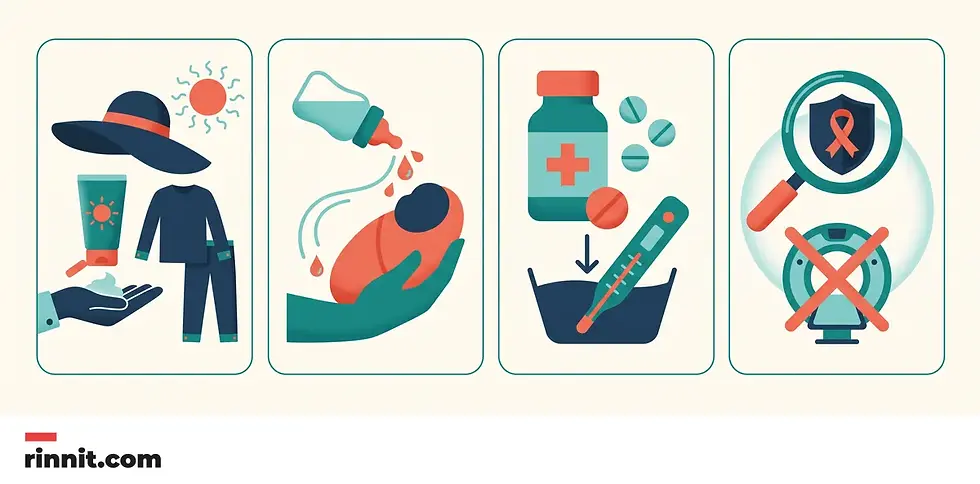
There is no specific treatment for this condition. Bloom syndrome treatment focuses on treating and managing any symptoms. [1]
Area of Care | Approach |
Feeding support (babies) | Feeding issues are common; extra fluids and feedings are recommended to prevent dehydration and malnutrition [1] |
Infection treatment | |
Cancer screening (all ages) | |
Sun protection | Frequent sunscreen application plus protective clothing and hats whenever outside to protect from sun damage [1] |
Radiation avoidance | |
Cancer treatment adjustments |
Living With Bloom Syndrome
Follow your healthcare provider's instructions to keep yourself or your child as healthy as possible. Apply sunscreen frequently and wear protective clothing and hats whenever you are outside to protect against sun damage. [1] Sticking to recommended cancer screening schedules is one of the most important protective steps.
Outlook and Prognosis
Is Bloom Syndrome Curable?
There is no cure for Bloom syndrome — you or your child will always have it. However, many people with Bloom syndrome live into adulthood. [1] [2]
What to Expect
If you have Bloom syndrome, your risk of developing certain cancers by early adulthood increases. Complications from cancer are the leading cause of death in people with Bloom syndrome. [2] But detecting cancer early gives you the best chance for successful treatment, which is why following your healthcare provider's recommendations for regular cancer screenings matters so much. [1]
People with Bloom syndrome are sensitive to ionizing radiation, which can damage cells. Your provider may recommend that you avoid or limit radiation exposure, including CT scans and X-rays. If you develop cancer, Bloom syndrome may affect your cancer treatment — providers often recommend that people with Bloom syndrome avoid radiation therapy. [1] [2]
Conclusion
Bloom syndrome is a rare but important condition to understand. Caused by a faulty BLM gene inherited from both parents, it touches nearly every body system — growth, skin, immunity, metabolism, and above all, cancer risk. With fewer than 300 known cases worldwide, it is exceptionally uncommon, yet for the families it affects, daily care decisions make a real difference.
The pillars of living well with Bloom syndrome are clear: rigorous sun protection every day, prompt treatment of infections, feeding support for infants, and disciplined, regular cancer screenings. Early cancer detection offers the best chance for successful treatment, and avoiding unnecessary radiation exposure protects already-sensitive cells. If you are planning a pregnancy and have Ashkenazi Jewish heritage or a family history of the condition, genetic testing is available for both partners.
Frequently Asked Questions
What is Bloom syndrome?
Bloom syndrome is an inherited (genetic) condition that causes changes to many systems in your body, including increased risk for infections, significant growth delays, sun sensitivities, and cancer. [1]
How rare is Bloom syndrome?
Bloom syndrome is very rare. Fewer than 300 people worldwide are known to have this condition. [1]
Who is most likely to have Bloom syndrome?
While Bloom syndrome is rare in all populations, it is most common among people of Ashkenazi (Eastern European) Jewish descent. [1] [2]
What other names does Bloom syndrome have?
Bloom syndrome is also known as Bloom-Torre-Machacek syndrome and congenital telangiectatic erythema. [1] [2]
What causes Bloom syndrome?
Bloom syndrome is caused by a fault in the BLM gene. Children inherit one copy of the gene from each parent; if both parents carry a mutation, a child who inherits the mutation from both parents develops the condition. [1]
What are the chances of inheriting Bloom syndrome?
If both parents have a mutation in one of their two BLM genes, their child has a 1 in 4 (25%) chance of developing Bloom syndrome. [1]
What are the most common symptoms?
Common symptoms include shorter-than-average stature, narrow faces with large ears, high-pitched voices, extreme sun sensitivity, frequent ear and lung infections, growth problems, skin rash after sun exposure, and developmental delays. [1]
How does Bloom syndrome affect growth?
Bloom syndrome causes significant growth delays, both during fetal development and after birth, often resulting in shorter-than-average adult stature.
How does Bloom syndrome affect the skin?
People with Bloom syndrome have extreme sun sensitivity. [1] Sun exposure causes a red rash or skin lesions, so daily sun protection is essential.
What cancers are associated with Bloom syndrome?
Bloom syndrome increases the risk of many cancers at a younger age, including Wilms tumor, gastrointestinal cancers, leukemia, lymphoma, osteosarcoma, and skin cancer — particularly squamous cell cancer. The risk of developing more than one cancer is also significantly increased. [1]
Is Bloom syndrome curable?
No. There is no cure for Bloom syndrome, and a person with the condition will always have it. However, many people with Bloom syndrome live into adulthood. [1] [2]
What is the leading cause of death in Bloom syndrome?
Complications from cancer are the leading cause of death, which is why regular cancer screenings are so important. [1] [2]
How is Bloom syndrome diagnosed?
Bloom syndrome may be diagnosed prenatally through genetic amniocentesis when fetal growth is not progressing as expected. After birth, diagnosis involves a physical examination at well-baby care visits and a blood test that checks the makeup of chromosomes. [1]
How are infections treated in people with Bloom syndrome?
Healthcare providers prescribe antibiotics to treat infections promptly. [2]
Why should people with Bloom syndrome avoid CT scans and X-rays?
People with Bloom syndrome are sensitive to ionizing radiation, which can damage their cells. Providers often recommend avoiding or limiting radiation exposure. [1] [2]
How does Bloom syndrome affect cancer treatment?
If cancer develops, Bloom syndrome may affect how treatment is delivered. Providers often recommend that people with Bloom syndrome avoid radiation therapy. [1] [2]
Can Bloom syndrome be prevented?
No. It is an inherited condition, and the gene mutation cannot be prevented or stopped. [1]
Can genetic testing help before pregnancy?
Yes. Before getting pregnant, you and your partner can undergo genetic testing to find out whether you carry mutations in the BLM gene associated with Bloom syndrome. [1]
How should someone with Bloom syndrome protect themselves from the sun?
Apply sunscreen frequently and wear protective clothing and hats whenever outside to protect against sun damage. [1]
What feeding support do babies with Bloom syndrome need?
Feeding issues are common in babies with Bloom syndrome. Providers may recommend extra fluids and feedings to prevent dehydration and malnutrition. [1]
Related Reading
References
Cleveland Clinic. Bloom Syndrome. Cleveland Clinic Health Library. Medically reviewed; last updated November 29, 2022. Accessed October 15, 2026. https://my.clevelandclinic.org/health/diseases/24484-bloom-syndrome
Hafsi W, Badri T, Rice AS. Bloom syndrome. In: StatPearls. Treasure Island (FL): StatPearls Publishing; updated July 3, 2023. PMID 28846287. https://www.ncbi.nlm.nih.gov/books/NBK448138/
National Cancer Institute. Bloom syndrome. NCI Dictionary of Cancer Terms. Accessed November 5, 2026. https://www.cancer.gov/publications/dictionaries/cancer-terms/def/bloom-syndrome
Wojtara MS, Kang J, Zaman M. Congenital telangiectatic erythema: scoping review. JMIR Dermatol. 2023;6:e48413. PMID 37796556. https://doi.org/10.2196/48413
Laitman Y, Boker-Keinan L, Berkenstadt M, et al. The risk for developing cancer in Israeli ATM, BLM, and FANCC heterozygous mutation carriers. Cancer Genet. 2016;209(3):70-74. PMID 26778106. https://doi.org/10.1016/j.cancergen.2015.12.006
Walsh MF, Chang VY, Kohlmann WK, et al. Recommendations for childhood cancer screening and surveillance in DNA repair disorders. Clin Cancer Res. 2017;23(11):e23-e31. PMID 28572264. https://doi.org/10.1158/1078-0432.CCR-17-0465
Medical disclaimer
This article is for general informational purposes only and does not constitute medical advice. It is based on published health information and should not replace consultation with a qualified healthcare professional. Always seek personalized medical guidance for genetic conditions, cancer screening, and treatment decisions.



Comments