What Is ARFID? Avoidant/Restrictive Food Intake Disorder Explained

Updated: 2 days ago
Medically reviewed by Dr. Baraa Alnahhal, MD · Last reviewed: October 2026
Quick Answer
ARFID (avoidant/restrictive food intake disorder) is an eating disorder in which someone restricts how much or how many foods they eat, driven not by body image but by fear of choking, sensory aversions or lack of interest. [1] [2] It can cause weight loss, nutrient deficiencies and serious, even life-threatening, complications. [1] [2] It is treated mainly with CBT [1] and team-based nutrition support.
Key takeaways
ARFID (avoidant/restrictive food intake disorder) severely limits the amount and type of food a person eats, without body image concerns or a desire to lose weight. [1]
It is driven by fear of eating consequences (choking, vomiting), sensory aversions to texture, color, taste, or smell, and loss of interest in eating. [1]
ARFID is not the same as picky eating. Picky eating does not harm growth or health and usually fades; ARFID causes health complications and will not go away without treatment. [1]
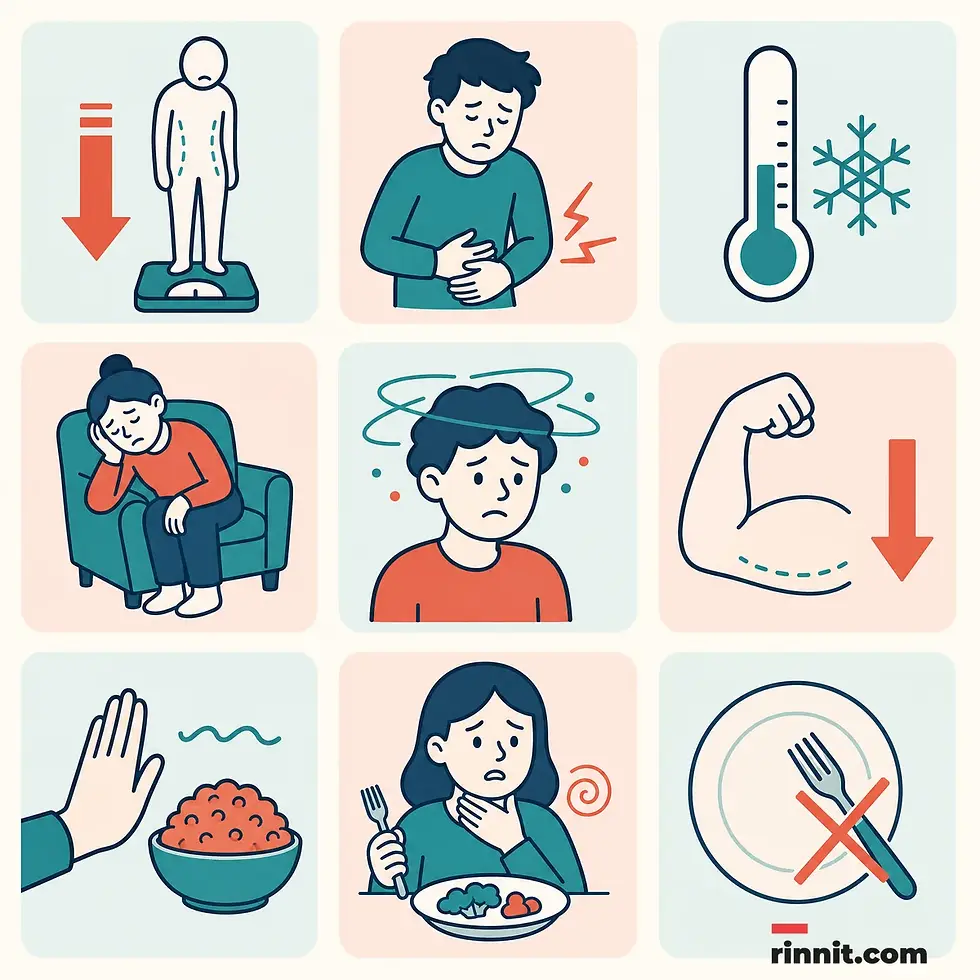
Physical signs include significant weight loss, fatigue, low body temperature, fainting, muscle weakness, and constipation; in children it can delay puberty and growth. [1]
Complications can be life-threatening, including malnutrition, dehydration, electrolyte imbalance, anemia, low blood pressure, and cardiac arrest. [1]
The main treatment is cognitive behavioral therapy, often combined with medications and, when needed, temporary tube feeding. [1]
There is no known way to prevent ARFID [1], but early treatment with a supportive care team offers real progress.
What the research says
ARFID is common, but how common depends heavily on study quality. A meta-analysis of 26 studies (n = 122,861) found a pooled prevalence of 11.14% (95% CI 8.16-14.5%) using random-effects analysis, falling to 4.51% (95% CI 0.7-10.68%) once study quality was taken into account. Even the lower estimate shows ARFID is a common disorder. (Nicholls-Clow et al., Clin Psychol Rev, 2024) [3]
ARFID can harm the body even when a child is not underweight. A systematic review and meta-analysis of 132 studies in children and young people found evidence of low weight, nutritional deficiencies, and low bone mineral density. Most were in the healthy-weight to underweight range, and some had a slow heart rate or low blood pressure. (James et al., BMJ Paediatr Open, 2024) [4]
Cognitive behavioral therapy designed for ARFID looks promising, but larger trials are still needed. In an open study of 20 children and teens (ages 10-17) who started 20-30 sessions of CBT for ARFID, clinicians rated 17 (85%) as much or very much improved, patients added an average of 16.7 new foods, and 70% no longer met criteria for ARFID after treatment. The authors called for randomized controlled trials. (Thomas et al., Int J Eat Disord, 2020) [5]
What is ARFID?

Avoidant/restrictive food intake disorder (ARFID) is a condition that causes a person to limit the amount and type of food they eat. [1] Unlike many other eating disorders, it is not the result of a distorted self-image or an attempt to lose body weight. [1]
Instead, ARFID develops for other reasons. It can cause people to lose interest in eating, feel anxious about the consequences of eating, such as choking on food or vomiting, or avoid foods with an unwanted color, taste, texture, or smell. [1]
Healthcare providers sometimes call ARFID "selective eating disorder," because a person may choose only a few foods they feel are OK to eat. [1] They may also create rituals or patterns of behavior around eating, such as eating their food in a specific order. [1]
Because ARFID affects nutrient intake, it can harm overall health. [1] Left untreated, it may lead to life-threatening complications. [1]
Is ARFID the same as picky eating?
No. This distinction matters because the two are often confused.
Children may avoid certain foods simply because they do not like the look, taste, smell, or texture. [1] Picky eating usually targets only a few foods, does not affect a child's appetite or their growth and development, and can go away as a child grows. [1]
ARFID is different. It causes complications that affect appetite and overall health because of a lack of adequate nutrition, and the condition does not go away without treatment. [1]
How common is ARFID?
ARFID is a newer diagnosis in the Diagnostic and Statistical Manual of Mental Disorders, Fifth Edition (DSM-5). [1] Because of that, there is not yet much data available to estimate how the condition affects the population at large. [1] What is known is that ARFID can affect anyone, including adults and children, and it is most common during childhood. [1]
What are the signs and symptoms of ARFID?
Signs and symptoms of ARFID can affect both how a person feels physically and how they behave. [1]
Physical sign | What it looks like |
Significant weight loss [1] | Noticeable drop in body weight |
Constipation [1] | Difficulty passing stool |
Abdominal pain [1] | Stomach cramps or an upset stomach |
Low body temperature [1] | Body running cooler than normal |
Lethargy [1] | Persistent tiredness and low energy |
Irregular menstrual cycles [1] | Changes to the menstrual period |
Fainting or dizziness [1] | Spells of lightheadedness or passing out |
Lanugo [1] | Fine hair growing on the body |
Muscle weakness [1] | Reduced strength |
Behavioral changes that may signal ARFID include:
Behavioral change | What it looks like |
Feeling full before meals [1] | Having no appetite |
Difficulty paying attention [1] | Trouble focusing |
Limiting food intake [1] | Eating smaller and smaller amounts |
Texture-only eating [1] | Only eating foods with certain textures |
Fear of eating consequences [1] | Worry about vomiting or choking after eating |
Worsening picky eating [1] | The restricted food range keeps shrinking |
One important diagnostic point: ARFID is not associated with a negative body image or a desire to lose weight. [1]
What causes ARFID?
The exact cause of avoidant/restrictive food intake disorder is unknown. [1] [2] Research suggests it may result from a combination of factors, including underlying anxiety disorders [1]:
Certain risk factors make someone more likely to develop ARFID:
Risk factor | Details |
Traumatic experiences involving food [1] | Such as food insecurity, force-feeding, or choking |
Underlying neurological or developmental conditions [1] | Including anxiety, depression, and ADHD |
Aversion to certain textures [1] | Sensory sensitivity to food textures |
Fear that food will harm the body [1] | Worry about the consequences of eating |
Family history of eating disorders [1] | Biological family members with eating disorders |
What are the complications of ARFID?
The consequences of restricting food can be serious and far-reaching:
Complication | Description |
Malnutrition [1] | The body not getting needed nutrients |
Dehydration [1] | Not getting enough fluids |
Electrolyte imbalance [1] | Disrupted mineral levels in the body |
Anemia [1] | Low red blood cell count |
Low blood pressure [1] | Blood pressure dropping below normal |
Osteoporosis [1] | Weakened bones |
Cardiac arrest [1] | The heart suddenly stopping |
Delayed puberty [1] | Slower-than-expected development |
Growth changes [1] | Altered physical growth, especially in children |
These consequences can be life-threatening. [1] In some cases, a person diagnosed with ARFID will not show obvious signs or symptoms because their body adapts to the stress. [1] Test results may even be inconclusive even though the condition is life-threatening. [1]
ARFID can also affect social life. People may avoid seeing loved ones or skip activities that involve food, such as family meals or dinner parties. [1] [2] This strains relationships and can interfere with work or school responsibilities. [1]
How is ARFID diagnosed?
Healthcare providers diagnose ARFID by checking specific criteria. [1] An ARFID diagnosis is made when all of the following are true:
Diagnostic criterion | Requirement |
Significant weight loss and growth difficulties in children; the body not getting enough nutrients; dependence on tube feeding, vitamins, or supplements; and/or food restriction affecting interpersonal relationships | |
Limited intake is not caused by food insecurity, religious fasting, or an underlying medical condition or treatment | |
Not body-image driven [1] | Limited intake is not caused by a negative body image or a desire to lose weight or change body shape |
Medical exceptions [1] | If restriction results from a medical condition or treatment, it exceeds the expected side effect and causes major health complications |
Alongside these criteria, providers may perform a physical exam plus blood or urine tests to check general health, nutrient levels, and organ function, because the side effects of ARFID can affect several different parts of the body. [1]
How is ARFID treated?
Treatment for ARFID focuses on three goals:
The main treatment for ARFID is cognitive behavioral therapy (CBT). [1] Through CBT, people learn to recognize problematic thoughts and behaviors that affect their health, feel less fear or anxiety around food, and become more comfortable with sensory challenges. [1]
Medications may also help restore mind and body to good health and prevent life-threatening complications. [1] These can include antipsychotic medications, antidepressants, or medications that stimulate appetite. [1] It is important to discuss any medication's side effects with a provider before starting.
In some cases, providers deliver nutrition through a temporary feeding tube (enteral nutrition). [1] This flexible tube goes through the nose or directly into the stomach or small intestine, allowing nutrients into the body while bypassing the mouth. [1]
Care team member | Role |
Primary care physician [1] | Coordinates overall care and monitoring |
Mental health professional or CBT therapist [1] | Delivers the main treatment |
Gastroenterologist [1] | Treats digestive complications |
Speech-language pathologist [1] | Helps with eating function challenges |
Complication specialists [1] | Treat any resulting health complications |

How soon will I feel better after treatment?
Treatment for ARFID takes time. [1] There is no specific timeline for improvement because each person is different. [1] Relief typically begins as a person becomes more comfortable getting the nutrients their body needs.
Ongoing support from the care team is usually needed throughout life to monitor progress and watch for complications that may arise. [1]
What can I expect if I have ARFID?
ARFID is a mental health condition that affects the body physically. [1] Many cases look similar to picky eating in their early stages, but the consequences of food restriction can be serious, and even life-threatening, if left untreated. [1] While children usually grow out of picky eating, ARFID requires medical intervention that can be lifelong. [1]
Hospital visits and stays are common with ARFID. [1] Because the diagnosis is relatively new, no single treatment works for everyone. However, most people make progress with combined methods of treatment, such as medications and cognitive behavioral therapy together. [1]
Can ARFID be prevented?
There is no known way to prevent avoidant/restrictive food intake disorder. [1]
When should I see a healthcare provider?
Visit a healthcare provider if you or a loved one:
Warning sign | Why it matters |
Cannot eat or drink [1] | Immediate nutritional risk |
Feels anxious during meals [1] | Possible food-related fear |
Has no interest in eating [1] | Loss of appetite can signal ARFID |
Loses significant weight [1] | A key ARFID symptom |
Experiences any ARFID signs or symptoms [1] | Early evaluation leads to better outcomes |
It is not easy for a person with a mental health condition to see that they need help, or want it. [1] The support of loved ones can encourage someone to get the care they need. [1]
Useful questions to ask a provider include: What is my diagnosis? Do I need a mental health therapist? Are there side effects to the prescribed medication? What can I do to get enough nutrients if I am unable to eat? And do I need a feeding tube? [1]
Conclusion
ARFID (avoidant/restrictive food intake disorder) is an eating disorder driven by fear, anxiety, sensory aversions, or low interest in eating, not by body image concerns. [1] [2] It limits the amount and type of food a person eats to a degree that can cause weight loss, malnutrition, and other serious or life-threatening complications, and it does not resolve on its own. [1]
The good news is that treatment exists. Cognitive behavioral therapy is the main approach, often strengthened by medications, temporary nutrition support, and a multidisciplinary care team. [1] While recovery takes time and may involve lifelong monitoring, most people make progress with combined treatment. [1] If you or a loved one shows these signs, talk to a healthcare provider early. And if you create health education materials, Rinnit's infographic templates can help turn conditions like this into clear, visual guides for your audience.
Frequently Asked Questions
What is ARFID in simple terms?
ARFID (avoidant/restrictive food intake disorder) is an eating disorder in which a person severely limits how much food they eat or how many foods they will eat. [1] Unlike other eating disorders, it is not caused by body image concerns. [1] [2] It is driven by fear of eating, sensory aversions, or loss of interest in food. [1] [2]
Is ARFID the same as being a picky eater?
No. Picky eating usually targets a few foods, does not harm growth or health, and often fades as children grow. [1] ARFID causes real health complications from inadequate nutrition, does not go away without treatment, and can be life-threatening. [1]
What causes ARFID?
The exact cause is unknown, but research suggests anxiety, fear, genetic changes, social and cultural influences, and trauma may all play a role. [1] Risk factors include food-related trauma (such as choking or force-feeding), conditions like anxiety, depression, or ADHD, texture aversions, fear that food will harm the body, and a family history of eating disorders. [1]
Is ARFID a form of autism?
No. ARFID may share some characteristics with autism spectrum disorder, such as aversion to certain food textures, but they are different conditions. [1]
How is ARFID different from anorexia?
Both conditions involve restricting food, but the motivation differs. Anorexia nervosa involves a negative self-image and restricting food to change how the body looks. [1] ARFID involves restrictive eating that is not caused by a distorted self-image. [1]
What are the symptoms of ARFID?
Physical signs include significant weight loss, constipation, abdominal pain, low body temperature, lethargy, irregular menstrual cycles, fainting or dizziness, fine body hair (lanugo), and muscle weakness. [1] Behavioral signs include feeling full before meals, difficulty paying attention, limiting food intake, eating only certain textures, fear of choking or vomiting, and picky eating that keeps worsening. [1]
Can ARFID be dangerous?
Yes. Complications can include malnutrition, dehydration, electrolyte imbalance, anemia, low blood pressure, osteoporosis, delayed puberty, and cardiac arrest. [1] In some cases the consequences are life-threatening, even when test results appear inconclusive. [1]
How is ARFID diagnosed?
Providers diagnose ARFID using specific DSM-5 criteria: limited food intake that causes significant weight loss or growth problems, nutrient deficiency, dependence on supplements or tube feeding, or damaged relationships, and that is not caused by food insecurity, fasting, medical conditions, or body image concerns. [1] [2] Physical exams and blood or urine tests check health and organ function. [1]
What is the treatment for ARFID?
The main treatment is cognitive behavioral therapy (CBT), which helps people recognize problematic thoughts and behaviors, reduce fear and anxiety around food, and handle sensory challenges. [1] Medications such as antipsychotics, antidepressants, or appetite stimulants may also be used, and some people receive temporary nutrition through a feeding tube. [1]
Does ARFID go away on its own?
No. Unlike picky eating, ARFID will not resolve without treatment. [1] It often requires ongoing medical care, sometimes lifelong, and hospital visits are common. [1]
How long does ARFID treatment take?
There is no set timeline, because each person is different. [1] Relief generally comes as someone grows more comfortable getting the nutrients their body needs, and continued support from the care team is usually necessary to monitor progress and complications.
Can ARFID be prevented?
There is no known way to prevent ARFID. [1] The best step is to seek evaluation and treatment as early as possible when warning signs appear.
Related Reading
References
Cleveland Clinic. Avoidant/Restrictive Food Intake Disorder (ARFID). Cleveland Clinic Health Library. Last updated April 4, 2023. Accessed October 15, 2026. https://my.clevelandclinic.org/health/diseases/24869-arfid-avoidant-restrictive-food-intake-disorder
Attia E, Walsh BT. Avoidant/Restrictive Food Intake Disorder (ARFID). Merck Manual Professional Version. Last updated January 2026. Accessed October 15, 2026. https://www.merckmanuals.com/professional/psychiatric-disorders/feeding-and-eating-disorders/avoidant-restrictive-food-intake-disorder-arfid
Nicholls-Clow R, Simmonds-Buckley M, Waller G. Avoidant/restrictive food intake disorder: systematic review and meta-analysis demonstrating the impact of study quality on prevalence rates. Clin Psychol Rev. 2024;114:102502. PMID: 39298990. https://doi.org/10.1016/j.cpr.2024.102502
James RM, O'Shea J, Micali N, et al. Physical health complications in children and young people with avoidant restrictive food intake disorder (ARFID): a systematic review and meta-analysis. BMJ Paediatr Open. 2024;8(1). PMID: 38977355. https://doi.org/10.1136/bmjpo-2024-002595
Thomas JJ, Becker KR, Kuhnle MC, et al. Cognitive-behavioral therapy for avoidant/restrictive food intake disorder: feasibility, acceptability, and proof-of-concept for children and adolescents. Int J Eat Disord. 2020;53(10):1636-1646. PMID: 32776570. https://doi.org/10.1002/eat.23355
Medical disclaimer
The information provided in this article is for educational purposes only and is not intended as medical advice. Always seek the advice of your physician or other qualified health provider with any questions you may have regarding a medical condition.



Comments