Colon Stricture: Symptoms, Causes, Diagnosis and Treatment

Updated: 2 days ago
Medically reviewed by Dr. Baraa Alnahhal, MD · Last reviewed: October 2026
Quick Answer: Can you still poop with a colon stricture?
A colon stricture may still let you poop, depending on severity. In mild cases, passing stool may simply be more difficult or less frequent; in moderate cases, constipation becomes more common and stool may be narrower. In severe cases, the stricture can completely block stool from passing [1], which is a medical emergency requiring immediate care.
Key takeaways
What it is: a narrowing of the large intestine (colon) that slows or blocks stool [1].
Most common causes: inflammatory bowel disease, diverticulitis, surgical scar tissue, hernias, colon cancer, and radiation therapy.
Main warning sign: lower abdominal pain with constipation, diarrhea, bloating, or nausea.
Biggest risk if untreated: bowel obstruction — a life-threatening medical emergency.
How it's diagnosed: colonoscopy (the gold standard), CT scan, and MRI [1].
Treatment options: low-fiber diet, medications, endoscopic balloon dilation, stents, strictureplasty, and bowel resection.
What the research says
Balloon dilation can delay or avoid surgery for short Crohn's disease strictures. In a systematic review and meta-analysis of 24 non-randomized studies (1,163 patients with Crohn's disease strictures, 69% of them anastomotic), the surgical intervention rate was 27% over median follow-up periods of 15-70 months, and major adverse events occurred in 4% of patients. Strictures shorter than 4 cm carried a lower risk of needing surgery (risk ratio 0.48, 95% CI 0.26-0.90). The included studies were non-randomized and limited to Crohn's disease, so they do not cover every cause of colon stricture (Navaneethan et al., Surg Endosc, 2016 [4]).
Stenting a Crohn's stricture succeeds technically more often than it relieves symptoms. In a meta-analysis of 9 studies (163 patients) of endoscopic stenting for Crohn's disease strictures, the stent was placed successfully in 93% of procedures (95% CI 87.3-96.3), but clinical success was 60.9% (95% CI 51.6-69.5). Repeat stenting was needed in 9.6% of patients, perforation occurred in 2.7%, and abdominal pain in 17.9%; pooled spontaneous stent migration was 43.9% but varied widely between studies (Chandan et al., Inflamm Bowel Dis, 2023 [5]).
For a cancer-related blockage, a stent used as a bridge to surgery matched emergency surgery on long-term survival. In a meta-analysis of 24 studies (2,508 patients with colorectal cancer and a malignant obstruction; 5 randomized trials, 3 prospective studies and 16 retrospective studies), 5-year survival was similar with stents and with emergency surgery (OR 0.91, 95% CI 0.70-1.17), as was 5-year disease-free survival (OR 1.35, 95% CI 0.91-2.02). Most of the included studies were not randomized (Cao et al., Int J Colorectal Dis, 2019 [6]).
What Is a Colon Stricture?
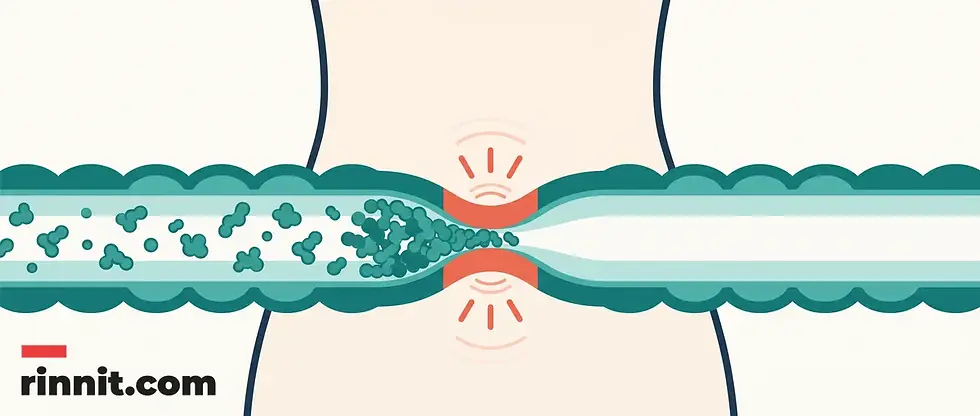
A colon stricture — also called an intestinal stricture — is a narrowing of the large intestine, the final section of the digestive tract where stool is formed and stored before elimination. The narrowing develops gradually as inflammation, scar tissue, or a physical mass reduces the internal diameter of the colon wall.
Think of the colon as a tube that waste material travels through. When part of that tube pinches inward, everything that passes through it has to squeeze through a smaller opening. In a mild stricture, stool can still pass, though the process becomes more difficult or less frequent. In a moderate stricture, constipation becomes more likely and stool may be noticeably narrower or harder to pass. In a severe stricture, the passage may close off entirely, making it impossible to poop at all [1].
That complete blockage is not just uncomfortable — it is a serious medical emergency. Without treatment, a stricture can also lead to complications such as infection, malnutrition, and impaired absorption of medications. The good news is that colon strictures are treatable, and with early diagnosis and a personalized care plan, many people manage their symptoms and prevent future problems.
Severity at a glance
Severity | What happens | Level of concern |
Mild | Stool passes, but elimination is more difficult or less frequent | Manageable; needs medical monitoring |
Moderate | Constipation is more likely; stool is narrower or harder to pass | Requires active treatment |
Severe | Complete blockage — unable to poop at all | Medical emergency |
Colon Stricture Symptoms: What to Watch For
Because a stricture interferes with the normal movement of stool, gas, and fluid through the colon, the symptoms tend to cluster around digestion and elimination. Pain is typically felt in the lower abdomen and may come and go in waves or persist constantly.

The most common signs include:
Symptom | What it feels like |
Abdominal pain | Often in the lower abdomen; may be intermittent or constant |
Constipation | Straining and a feeling of incomplete emptying |
Diarrhea | Loose or frequent stools alongside other symptoms |
Bloating | A sense of tightness and distension from trapped gas and stool [1] |
Nausea and vomiting | Queasiness, sometimes with vomiting [1] |
Weight loss | Unintended loss of weight over time |
Symptoms often worsen gradually as the narrowing progresses, which is why ongoing or repeated digestive complaints deserve a provider's attention rather than a wait-and-see approach.
What Causes a Colon Stricture?
Colon strictures rarely appear out of nowhere. They are almost always the consequence of another condition affecting the colon or the abdomen, which damages tissue or physically crowds the bowel over time.
Cause | How it narrows the colon |
Inflammatory bowel disease (IBD) | Crohn's disease and ulcerative colitis cause repeated inflammation; scarring gradually narrows the passage |
Diverticulitis | Inflamed pouches in the colon wall lead to swelling and scar tissue that tightens the lumen |
Adhesions | Bands of scar tissue after abdominal surgery can compress the colon from the outside |
Hernias | Organs or tissue push through weak spots in the abdominal wall and can compress the colon |
Colon cancer | Tumors growing inside the colon physically obstruct the passage |
Radiation therapy | Radiation directed at the abdomen to treat cancer damages colon tissue, leaving scarring strictures |
Colon Stricture Complications
A stricture left untreated does not stay static. The narrowing can worsen, and the backup of stool creates downstream problems throughout the digestive system.
Complication | Why it happens |
Bowel obstruction | The stricture completely blocks passage of waste material — a serious emergency |
Increased risk of infection | Backed-up stool becomes a breeding ground for bacteria |
Malnutrition | Chronic constipation or complete blockage makes it harder to absorb essential nutrients |
Stricture recurrence | |
Impaired medication delivery | A narrowed, blocked colon makes it harder for the body to absorb medications, affecting treatment effectiveness |
How Is a Colon Stricture Diagnosed?
Diagnosis begins with a physical exam. A provider will review your medical history, current symptoms, and any past abdominal surgeries, then palpate the abdomen to check for tenderness or masses. However, a physical exam alone cannot confirm a stricture — imaging and direct visualization are required.
Test | What it does |
Colonoscopy | The gold standard. A camera is passed through the rectum to view the colon directly, and tissue samples (biopsies) can be taken to determine the underlying cause |
CT scan (computed tomography) | Cross-sectional X-ray images of the abdomen and pelvis reveal the stricture's location, severity, and involvement of surrounding tissues and organs; often used first when a severe stricture is suspected |
MRI | Magnetic fields and radio waves produce detailed images of the colon and surrounding soft tissue, helping identify the cause and assess the level of inflammation |
How Is a Colon Stricture Treated?
Treatment depends on the stricture's severity, its underlying cause [2], and your overall health. The approach typically moves from conservative measures to minimally invasive procedures, and finally to surgery when needed.

Treatment | How it works | When it's used |
Low-fiber diet | Reduces bulky stool and eases passage through the narrowed segment; a registered dietitian can tailor the plan | Mild cases and first-line management |
Corticosteroids or immunomodulators | Reduce inflammation that contributes to narrowing | Strictures caused by inflammatory conditions |
Endoscopic balloon dilation | A scope with a deflated balloon is inserted into the colon; the balloon is inflated at the stricture site to widen the passage | Short, accessible strictures [4] |
Stent placement | A small expandable tube is placed during colonoscopy to hold the stricture open | |
Strictureplasty | A surgical procedure that widens the narrowed segment without removing tissue | Short, uncomplicated strictures |
Resection surgery (colectomy) | The affected portion of the colon is removed and the healthy ends are reconnected | Severe, lengthy, or hard-to-reach strictures |
Colon Stricture Outlook
Your prognosis depends on several factors working together. The underlying cause matters most: because IBD and diverticulitis are chronic, lifelong conditions, a stricture caused by either requires ongoing management, and the prognosis of the underlying disease shapes the stricture's outlook. Severity also plays a role — milder strictures are easier to treat and carry a better prognosis than severe complete blockages. Your response to treatment, and whether complications like bowel obstruction have already occurred, round out the picture. Even after a bowel obstruction, a complete cure is possible.
With proper diagnosis and treatment, many people experience good outcomes and maintain a good quality of life.
Living With a Colon Stricture
Diet: low-fiber foods that are easier to pass
A low-fiber diet reduces the bulk and size of stool, putting less strain on the narrowed passage. It is often the single most effective day-to-day step.
Eat more of | Eat less of |
White bread, pasta, rice | Raw vegetables and fruits (especially skins and seeds) |
Well-cooked soft vegetables (avoid raw and skins) | Whole grains (brown rice, whole-wheat bread) |
Ripe fruits without skins or seeds | Nuts, seeds, beans |
Skinless lean meats, poultry, fish | Corn |
Eggs | Cruciferous vegetables (broccoli, cauliflower, cabbage) |
Smoothies and juices without pulp | Spicy foods, if they irritate your gut |
Clear, creamed, or strained soups | Carbonated drinks (they worsen bloating) |
Mashed potatoes | Alcohol (dehydrates and worsens constipation) |
Well-cooked oatmeal or cream of wheat | — |
Yogurt without high-fiber additions | — |
When to see a healthcare provider
Ongoing abdominal pain, constipation, or diarrhea should prompt a visit to your provider. Early diagnosis is the best way to avoid complications like bowel obstruction. Seek emergency care immediately if you cannot pass stool at all, experience severe abdominal pain, or have persistent vomiting — these are signs of a possible complete blockage.
Questions to ask your provider
What is the likely cause of my colon stricture?
Are there other conditions that could be causing my symptoms?
What treatment options are available for my specific case?
What are the chances of successful treatment?
Will I need dietary changes to manage the stricture?
What is the long-term outlook?
A note from providers: colon strictures can sound scary, but many people experience good long-term outcomes after successful treatment. Early diagnosis is key, and a personalized plan combined with sensible dietary steps can keep symptoms in check.
Conclusion
A colon stricture is a narrowing of the large intestine that usually stems from another condition — inflammatory bowel disease, diverticulitis, surgical scar tissue, hernias, colon cancer, or prior radiation therapy. While mild strictures may only make elimination more difficult, severe strictures can completely block stool and become life-threatening emergencies. The combination of dietary adjustments, anti-inflammatory medications, endoscopic procedures, and, when necessary, surgery gives providers a full toolkit for managing the condition. If you have persistent lower abdominal pain, changes in bowel habits, or unexplained bloating, early evaluation is your best protection.
Want more visual guides that explain conditions like this at a glance? Explore Rinnit's infographic templates.
Frequently Asked Questions (FAQ)
What is a colon stricture?
A colon stricture is a narrowing of the large intestine that slows or blocks the passage of stool, usually caused by another condition affecting the colon or abdomen.
Can you still poop with a colon stricture?
Yes, in mild and moderate cases. Mild strictures make elimination more difficult or less frequent; moderate strictures cause narrower, harder-to-pass stool. Only severe strictures cause a complete blockage.
What does a colon stricture feel like?
Most people experience lower abdominal pain (intermittent or constant), constipation, bloating, and sometimes nausea or vomiting.
Is a colon stricture dangerous?
It can be. Left untreated, a stricture can progress to a bowel obstruction, which is a life-threatening medical emergency.
What are the symptoms of a colon stricture?
Abdominal pain, constipation, diarrhea, bloating, nausea, vomiting, and unintended weight loss.
How do I know if my colon is narrowed?
Persistent changes in bowel habits, ongoing lower abdominal pain, and narrower-than-usual stool warrant evaluation with a colonoscopy and imaging.
What causes a colon stricture?
Inflammatory bowel disease, diverticulitis, surgical scar tissue (adhesions), hernias, colon cancer, and radiation therapy to the abdomen.
Can Crohn's disease cause a stricture?
Yes. Repeated inflammation from Crohn's disease creates scarring that gradually narrows the intestinal passage — stricturing Crohn's is one of the most common causes.
Can ulcerative colitis cause a stricture?
Yes. Chronic inflammation and scarring from ulcerative colitis can also narrow the colon.
Can diverticulitis cause a stricture?
Yes. Inflamed pouches in the colon wall produce swelling and scar tissue that can tighten the intestinal passage.
Can surgery cause a colon stricture?
Yes. After abdominal surgery, bands of scar tissue called adhesions can compress the colon from the outside.
Can a hernia cause a colon stricture?
Yes. When organs or tissue push through weak spots in the abdominal wall, they can compress the colon.
Can colon cancer cause a stricture?
Yes. Tumors growing inside the colon physically obstruct the passage of stool.
Can radiation therapy cause a colon stricture?
Yes. Radiation aimed at the abdomen to treat cancer can damage colon tissue and leave scarring strictures.
Who is most at risk for a colon stricture?
People with inflammatory bowel disease, diverticulitis, prior abdominal surgery, abdominal hernias, colon cancer, or a history of abdominal radiation therapy.
Is a colon stricture hereditary?
The stricture itself is not inherited, but conditions that cause it — such as IBD — can run in families.
How is a colon stricture diagnosed?
Through a physical exam followed by colonoscopy (the gold standard), CT scans, and MRI.
Is colonoscopy the best test for a stricture?
Colonoscopy is considered the gold standard because it allows direct visualization and biopsy of the narrowed segment.
What does a CT scan show for a colon stricture?
It reveals the stricture's location, severity, and involvement of surrounding tissues and organs.
When is an MRI used for a colon stricture?
An MRI produces detailed soft-tissue images that help identify the cause and assess the level of inflammation.
How serious is a colon stricture?
It ranges from manageable to life-threatening depending on severity. Complete blockage is a medical emergency.
What happens if a colon stricture goes untreated?
It can progress to bowel obstruction, increase infection risk, cause malnutrition, and impair medication absorption.
Can a colon stricture cause a bowel obstruction?
Yes — a severe stricture can completely block the passage of waste material, causing obstruction.
What are the signs of a bowel obstruction?
Inability to pass stool, severe abdominal pain, persistent vomiting, and significant bloating. Seek emergency care immediately.
Can a colon stricture cause weight loss?
Yes. Chronic constipation or blockage makes nutrient absorption harder, leading to unintended weight loss.
Can a colon stricture cause diarrhea?
Yes. People with strictures can experience alternating constipation and diarrhea.
Can a stricture cause constipation?
Yes — constipation, straining, and a feeling of incomplete emptying are hallmark symptoms.
Can a colon stricture cause bloating?
Yes. Trapped gas and stool behind the narrowing cause tightness and abdominal distension.
Can a colon stricture heal on its own?
Not typically. The structural narrowing usually requires treatment, though inflammation-driven narrowing can improve with medication.
Can you cure a colon stricture?
Treatment can effectively resolve or manage strictures through diet, medication, endoscopic procedures, or surgery, though recurrence is possible with chronic conditions.
How do you treat a colon stricture?
Options include a low-fiber diet, corticosteroids or immunomodulators, endoscopic balloon dilation, stent placement, strictureplasty, and bowel resection.
What is endoscopic balloon dilation?
A procedure in which a balloon is inflated at the stricture site during colonoscopy to widen the narrowed passage; it works best for short, accessible strictures.
What is a stent for a colon stricture?
A small expandable tube placed during colonoscopy to hold the narrowed segment open.
What is strictureplasty?
A surgical procedure that widens the narrowed segment without removing any colon tissue, used for short, uncomplicated strictures.
When is surgery needed for a colon stricture?
Surgery is recommended for severe, lengthy, or hard-to-reach strictures, or when minimally invasive approaches fail.
What is a bowel resection for a stricture?
The affected portion of the colon is removed and the healthy ends are reconnected.
What medications treat a colon stricture?
Corticosteroids and immunomodulators reduce inflammation in strictures caused by inflammatory conditions; there is no medication that dissolves a scar-tissue stricture.
What diet is best for a colon stricture?
A low-fiber diet with white bread, pasta, rice, well-cooked soft vegetables, skinless lean proteins, eggs, and pulp-free juices.
Should I avoid fiber with a stricture?
Yes — high-fiber foods like raw vegetables, whole grains, nuts, seeds, and corn create bulkier stool that presses against the narrowed passage.
Can spicy food make a stricture worse?
Spicy foods can irritate the gut in some people and may worsen symptoms.
Does alcohol affect a colon stricture?
Yes — alcohol dehydrates and worsens constipation, adding strain on the narrowed colon.
How long does it take to recover from stricture treatment?
Recovery depends on the approach: dietary and medication changes show effect over weeks, balloon dilation recovery is typically rapid, and surgical recovery can take several weeks to months.
Can a colon stricture come back?
Yes. Strictures can recur after treatment, especially when the underlying cause is chronic, such as IBD or diverticulitis.
What is the outlook for a colon stricture?
With proper diagnosis and treatment, many people achieve good outcomes and maintain a good quality of life, though chronic underlying conditions require ongoing management.
Is a colon stricture life-threatening?
Not by itself in its early stages, but an untreated severe stricture can lead to bowel obstruction, which is life-threatening.
How do I know if my stricture is severe?
Inability to pass stool at all, severe pain, persistent vomiting, and significant bloating indicate a severe stricture — go to the emergency room.
Can a stricture cause nausea?
Yes — backed-up stool and gas commonly cause nausea and sometimes vomiting.
What is the difference between a stricture and an obstruction?
A stricture is the physical narrowing; an obstruction is the complete blockage that a severe stricture can cause.
Can I exercise with a colon stricture?
Light to moderate activity is generally fine, but severe strictures and post-surgical recovery require provider guidance.
How can I prevent a colon stricture?
You cannot fully prevent it, but early treatment of IBD and diverticulitis, and awareness after abdominal surgery or radiation, helps catch narrowing early.
Does a colon stricture get worse over time?
It often progresses without treatment as the underlying cause continues to damage or compress the colon.
Can a stricture affect medication absorption?
Yes — a narrowed or blocked colon makes it harder for the body to absorb medications, which can reduce treatment effectiveness.
When should I see a doctor about possible stricture symptoms?
See a provider promptly for ongoing abdominal pain, constipation, diarrhea, or bloating; seek emergency care for complete inability to pass stool.
Is a colon stricture the same as a narrowed esophagus?
No — a colon stricture involves the large intestine; a narrowed esophagus is a separate condition of the food pipe, though both are types of strictures.
Can children get colon strictures?
Strictures can occur at any age, typically in the context of IBD, surgery, or other underlying conditions.
Related Reading
References
Crohn's & Colitis Foundation. Strictures. Crohn's & Colitis Foundation. Published November 28, 2018. Accessed October 15, 2026. https://www.crohnscolitisfoundation.org/emr/emr-ibd-education-tool/strictures
Ismail MS, Charabaty A. Management of Crohn's stricture: medical, endoscopic and surgical therapies. Frontline Gastroenterol. 2022;13(6):524-530. PMID: 36250181. https://doi.org/10.1136/flgastro-2021-101827
Sleiman J, El Ouali S, Qazi T, et al. Prevention and treatment of stricturing Crohn's disease: perspectives and challenges. Expert Rev Gastroenterol Hepatol. 2021;15(4):401-411. PMID: 33225766. https://doi.org/10.1080/17474124.2021.1854732
Navaneethan U, Lourdusamy V, Njei B, et al. Endoscopic balloon dilation in the management of strictures in Crohn's disease: a systematic review and meta-analysis of non-randomized trials. Surg Endosc. 2016;30(12):5434-5443. PMID: 27126619. https://doi.org/10.1007/s00464-016-4902-1
Chandan S, Dhindsa BS, Khan SR, et al. Endoscopic stenting in Crohn's disease-related strictures: a systematic review and meta-analysis of outcomes. Inflamm Bowel Dis. 2023;29(7):1145-1152. PMID: 35880681. https://doi.org/10.1093/ibd/izac153
Cao Y, Gu J, Deng S, et al. Long-term tumour outcomes of self-expanding metal stents as 'bridge to surgery' for the treatment of colorectal cancer with malignant obstruction: a systematic review and meta-analysis. Int J Colorectal Dis. 2019;34(11):1827-1838. PMID: 31515615. https://doi.org/10.1007/s00384-019-03372-5
Medical disclaimer
This article is for general informational purposes only and does not constitute medical advice. Always consult a qualified healthcare provider for diagnosis and treatment of any medical condition. If you experience signs of a bowel obstruction — including inability to pass stool, severe abdominal pain, or persistent vomiting — seek emergency medical care immediately.



Comments