What Is a Bacterial Infection? Symptoms, Causes, and Treatment

Updated: 2 days ago
Medically reviewed by Dr. Baraa Alnahhal, MD · Last reviewed: October 2026
Quick Answer
A bacterial infection is an illness caused by bacteria, single-celled organisms that multiply in the body or release damaging toxins. [1] They enter through the mouth, nose, skin cuts, bites or contaminated food and water, causing fever, chills and area-specific symptoms. [1] Most are treated with antibiotics, and finishing the full course matters. [1] Confusion or neck stiffness needs the ER. [1]
Key takeaways
Bacteria are single-celled organisms that cause infection by multiplying in your body or releasing toxins. [1]
Millions of bacteria live on your skin and inside your body; most are harmless or helpful, but can cause trouble where they don't belong. [1]
The most common general symptoms are fever, chills, fatigue, and headache — with extra symptoms depending on the body area involved. [1]
Common types include food poisoning, skin infections, strep throat, most UTIs, some STIs, and bacterial pneumonia. [1]
They spread through air/droplets, contact, bug bites, and contaminated food or water — and many are contagious person to person. [1]
Antibiotics treat most bacterial infections, but always finish the full course as prescribed. [1]
Watch for emergency signs: 103°F fever, confusion, stiff neck, low blood pressure. [1]
What the research says
Bacterial infections are a leading cause of death worldwide. A Global Burden of Disease analysis estimated that 33 bacterial pathogens were associated with 7.7 million deaths in 2019, about 13.6% of all global deaths and 56.2% of all sepsis-related deaths. Five bacteria (Staphylococcus aureus, Escherichia coli, Streptococcus pneumoniae, Klebsiella pneumoniae, and Pseudomonas aeruginosa) accounted for 54.9% of those deaths. (Ikuta et al., Lancet, 2022) [2]
Severe infections can progress to sepsis, which remains a major global cause of illness and death. Using data from 109 million death records, researchers estimated 48.9 million cases of sepsis and 11.0 million sepsis-related deaths worldwide in 2017, or 19.7% of all deaths. Sepsis incidence fell 37.0% and mortality fell 52.8% between 1990 and 2017, but the burden remained highest in sub-Saharan Africa, Oceania, and parts of Asia. (Rudd et al., Lancet, 2020) [3]
Antibiotic resistance makes bacterial infections harder to treat. A systematic analysis covering 471 million individual records or isolates estimated 4.95 million deaths associated with bacterial antimicrobial resistance in 2019, including 1.27 million deaths directly attributable to it. Lower respiratory infections accounted for more than 1.5 million of the resistance-associated deaths. (Murray et al., Lancet, 2022) [4]
What Is a Bacterial Infection?
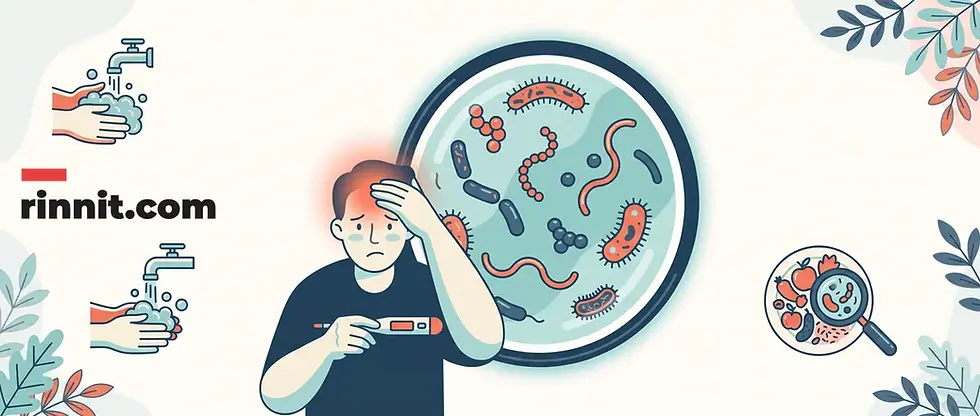
Bacterial infections are illnesses or skin conditions that you get from bacteria. Bacteria are single-celled organisms that can multiply quickly in your body and make you sick. Some also release harmful toxins. [1]
There are millions of bacteria that live all around us — in soil and water, and on surfaces where we live and work. There are even millions of bacteria that live on your skin and inside your body. Most bacteria aren't harmful, and many are even helpful. But even the helpful ones can hurt you if they grow in your body where they're not supposed to. [1]
Bacteria can enter your body through a break in your skin, bug bites, or contaminated food, water or surfaces. Almost any part of your body can get a bacterial infection. [1]
What Types of Bacterial Infections Are Common?
Bacteria can cause many types of infections, depending on how you're exposed and what part of your body it infects.
Infection type | Examples |
Campylobacter, Salmonella, E. coli | |
Skin infections | Cellulitis, boils, impetigo |
Ear and sinus infections | Pneumococcal disease |
Sexually transmitted infections (STIs) | Chlamydia, gonorrhea |
Lung infections | Bacterial pneumonia |
Most UTIs, commonly caused by E. coli | |
Throat infections | Strep throat |
Intestinal infections | C. diff |
Tick-borne disease | Lyme disease |
Reproductive-area infection | Bacterial vaginosis (an overgrowth of bacteria in your vagina) |
What Are the Symptoms of a Bacterial Infection?

Symptoms depend on where in your body the infection is. The four common symptoms of bacterial infections are fever, chills, fatigue (tiredness), and headache. [1] Beyond those, symptoms vary by the body area involved:
Body area | What symptoms look like |
General (most infections) | Fever, chills, fatigue, headache |
Skin | Redness, blisters, ulcers, swollen or painful skin |
GI tract | Diarrhea, stomach pain, nausea and vomiting |
Lungs | Cough, shortness of breath, chest pain, phlegm (sputum) |
Lining around the brain (meningitis) | Neck stiffness, nausea or vomiting, confusion, sensitivity to light |
Bloodstream (sepsis or bacteremia) | High fever, weakness, sweating, low blood pressure |
Heart (endocarditis) | High fever, chest pain, night sweats, shortness of breath, cough, muscle and joint pain |
Urinary tract or genitals | Burning or pain when you pee, discharge from your penis or vagina, increased need to pee, painful intercourse |
What Causes a Bacterial Infection?
You usually get an infection when bacteria enter your body through your mouth, nose or eyes, or through a cut in your skin. [1] Sometimes, bacteria that normally live on your skin or in your body get into places they're not supposed to (like through an injury) and reproduce. [1]
Bacteria can hurt your body in two ways: by reproducing, or by releasing poisons (toxins) that damage your cells. [1]
How do bacterial infections spread?
Different bacterial infections spread in different ways. Most have one specific way that they're most likely to spread, but they may spread other ways, too. [1]
Transmission mode | How it spreads | Common examples |
Airborne or droplet | Contaminated dust or water droplets; infected mucus (phlegm or snot) | Strep throat, pertussis (whooping cough) |
Contact | Infected skin, body fluids or mucous membranes (direct); contaminated objects and surfaces (indirect) | Skin infections, bacterial STIs (mainly direct contact) |
Vector | Bug bites from mosquitoes, ticks, fleas and other bugs | Lyme disease, shigellosis |
Vehicular | Contaminated water or food (the “vehicle” of transmission) | E. coli, Campylobacter, Salmonella |
Common ways you get a bacterial infection
Exposure route | Detail |
Contaminated food or water | Eating or drinking contaminated food or water |
Unpasteurized dairy | Eating or drinking unpasteurized dairy products |
Antibiotic use | Can kill the good bacteria that usually fight off bad bacteria |
Contaminated surfaces | Touching objects and surfaces carrying bacteria |
Other people | Through coughing or close contact |
Aspiration | Getting contaminated water into your lungs |
Sex | Through oral, anal or vaginal sex |
Contaminated dirt | Exposure to contaminated soil |
Bug bites | From an infected tick, mosquito or flea |
Medical procedures | From surgery or intubation (tube in your throat) |
Are Bacterial Infections Contagious?
Yes, many bacterial infections are contagious from person to person, including pertussis, tuberculosis, strep throat, meningococcal disease, STIs and MRSA. Infections you get from food, mosquitoes or ticks are usually not contagious. [1]
Who Is at Risk?
Anyone can get a bacterial disease, and most of us will at some point in our lives. You're at higher risk if you have diabetes, a weakened immune system, an open wound, or if you've had surgery recently. [1]
Risk factor | Why it raises risk |
Diabetes | Affects the body's ability to manage and fight infection |
Weakened immune system | Less ability to defend against invading bacteria |
Open wound | A break in the skin gives bacteria a direct entry point |
Recent surgery | Procedures can introduce bacteria or temporarily weaken defenses |
Can Bacterial Infections Lead to Complications?
Not all bacterial infections are serious. But some can lead to sepsis, a severe reaction to an infection. Sepsis causes organ damage and can be fatal. [1]
How Are Bacterial Infections Diagnosed?
A healthcare provider diagnoses a bacterial infection by listening to your symptoms, examining you and taking samples to test for bacteria. They'll send body fluid or tissue samples to a lab to look for signs of an infection. A lab technician might also try to grow bacteria from your samples. [1]
Sample type | What it tests |
Skin or affected tissue | Surface and wound infections |
Blood | Bloodstream infection (bacteremia) |
Phlegm (sputum) | Lung infections |
CNS fluid (around brain and spinal cord) | Infections near the brain |
Urine | Urinary tract infections |
Eye secretions | Eye infections |
Stool | Intestinal infections |
If your provider thinks that you have bacteria in your lungs, brain or another internal organ, they might get X-rays, ultrasound images, MRI scans or CT scans to look for signs of infection. [1]
How Are Bacterial Infections Treated?
Healthcare providers treat bacterial infections with antibiotics. Depending on where your infection is and how serious it is, antibiotics can be prescribed as oral medication (pills), IV medication given directly into a vein at a doctor's office or hospital, ointment or cream, or eye drops. [1]
Sometimes, certain antibiotics stop working and don't kill or slow down bacteria — known as antibiotic resistance. Because of this, healthcare providers are careful about when and how they prescribe antibiotics. They only prescribe them if they think they'll help you. It's important for you to take any medication as prescribed, even if you start to feel better. [1] Some infections don't need treatment — but it's always best to check with a provider. [1]

When Should I See My Healthcare Provider?
Contact a healthcare provider if you have symptoms of a bacterial infection, especially if you've had them for more than a couple of days. [1] Make sure to follow up with your provider if you've been treating an infection and your symptoms aren't getting better or are getting worse.
Go to the nearest ER or seek immediate medical attention if you have signs of a serious infection, including:
Emergency sign | Detail |
High fever | 103°F (39.4°C) or higher |
Confusion | Or other mental changes |
Neck stiffness | Along with other meningitis symptoms (headache, nausea, vomiting) |
Low blood pressure | A sign the infection may be affecting your whole system |
What Can I Expect With a Bacterial Infection?
What to expect depends on what kind of bacterial infection you have. You can treat less serious bacterial infections with medication at home. Others require a hospital stay and can cause lasting damage. Bacterial infections in your internal organs or blood can be life-threatening. [1]
Infections that only affect the surface of your skin or mucous membranes (like your throat or intestines) aren't usually serious. [1] But sometimes, bacteria can spread in your body and cause life-threatening illnesses. [1]
If you're prescribed antibiotics for a bacterial infection, you'll usually have to take them for a week or two. [1] But you'll probably feel better sooner. Take all your medication as prescribed — otherwise, you might not get rid of all the bacteria. [1]
Can Bacterial Infections Be Prevented?
Ways to reduce your risk of various types of bacterial infections include:
Prevention step | How to do it |
Get vaccinated | Vaccines exist for tetanus, whooping cough, diphtheria, and bacteria that cause certain forms of meningitis (Neisseria meningitidis), pneumonia (Streptococcus pneumoniae, Haemophilus influenzae type b) and bloodstream infections |
Practice good hygiene | Maintain good handwashing habits, wear clean and dry clothes, and don't share personal items with other people |
Keep wounds clean | Breaks in your skin allow bacteria to get in — clean and cover cuts or wounds |
Practice safe food habits | Store food properly, heat meat to a temperature that kills bacteria, and wash or peel fruits and vegetables before eating |
Practice safe sex | Use a condom or dental dam during any kind of sex |
Protect yourself from bug bites | Wear protective clothing, use bug spray, and check yourself and your pets for ticks after being outdoors |
Conclusion
Bacterial infections are a part of life — most of us will have at least one at some point. [1] That's partly because bacteria are everywhere: in soil, water, and on surfaces, and even living on our skin and inside our bodies. [1] Most are harmless or genuinely helpful, but when bacteria multiply where they don't belong or release toxins, they can cause anything from a sore throat to a life-threatening bloodstream infection. [1]
The four general symptoms to know are fever, chills, fatigue, and headache, but the fuller picture depends on the body area: redness and blisters on the skin, diarrhea and stomach pain in the gut, cough and chest pain in the lungs, or burning with urination for UTIs. [1] How they spread follows four main routes — airborne droplets, contact, bug bites, and contaminated food or water — which is why prevention is so practical: vaccines, handwashing, covered wounds, properly heated food, safe sex, and bug-spray habits all cut your risk. [1]
If you do get a bacterial infection, antibiotics usually do the job, delivered as pills, IV medication, creams, or eye drops depending on location and severity. [1] Finish the entire course even when you feel better, or the bacteria may not be fully cleared. [1] And keep the emergency signs in mind — a fever of 103°F (39.4°C), confusion, a stiff neck, or low blood pressure mean it's time for immediate care. [1] Bacterial infections can be a temporary nuisance, but they can also turn into a life-threatening situation, so when in doubt, check with a healthcare provider.
Take the next step in understanding your health. If you create health education materials, Rinnit's infographic templates can help you turn infection topics like this one into clear, visual guides for your audience.
Frequently Asked Questions
What is a bacterial infection?
A bacterial infection is an illness or skin condition caused by bacteria — single-celled organisms that can multiply quickly in your body and make you sick. Some bacteria also release harmful toxins that damage your cells. [1]
How do bacteria hurt your body?
Bacteria hurt your body in two ways: by reproducing, or by releasing poisons (toxins) that damage your cells. [1]
Where do bacteria come from?
Millions of bacteria live in soil and water, on surfaces where we live and work, and even on your skin and inside your body. Most aren't harmful, and many are helpful — but even helpful bacteria can cause an infection if they grow where they're not supposed to. [1]
What are the most common symptoms?
The four common symptoms are fever, chills, fatigue (tiredness) and headache. Additional symptoms depend on the infected body area — for example, redness and blisters on the skin, diarrhea and stomach pain in the GI tract, or cough and chest pain in the lungs. [1]
What types of bacterial infections are common?
Common types include food poisoning (gastroenteritis), some skin, ear or sinus infections, some sexually transmitted infections, bacterial pneumonia, and most urinary tract infections (UTIs). Examples include strep throat, cellulitis, boils, impetigo, chlamydia, gonorrhea, E. coli, C. diff, Lyme disease, Salmonella and Campylobacter. [1]
How do bacterial infections spread?
Most spread through four main routes: airborne or droplet (strep throat, whooping cough), contact (skin infections, STIs), vector via bug bites (Lyme disease, shigellosis), and vehicular through contaminated food or water (E. coli, Campylobacter, Salmonella). [1]
Are bacterial infections contagious?
Yes, many are contagious from person to person, including pertussis, tuberculosis, strep throat, meningococcal disease, STIs and MRSA. Infections you get from food, mosquitoes or ticks are usually not contagious. [1]
Who is at risk?
Anyone can get a bacterial infection, and most of us will at some point. You're at higher risk with diabetes, a weakened immune system, an open wound, or recent surgery. [1]
How are bacterial infections diagnosed?
A provider diagnoses them by listening to your symptoms, examining you, and testing samples such as skin or tissue, blood, phlegm, CNS fluid, urine, eye secretions, or stool. Lab technicians may grow the bacteria from your samples, and imaging like X-rays, ultrasound, MRI or CT scans may be used for internal infections. [1]
How are bacterial infections treated?
Most are treated with antibiotics, prescribed as pills, IV medication, ointments or creams, or eye drops depending on location and severity. It's important to take all medication as prescribed, even if you feel better, so you don't leave bacteria behind. [1] Some infections don't need treatment, but it's best to check with a provider. [1]
What is antibiotic resistance?
Sometimes certain antibiotics stop working and don't kill or slow down bacteria — that's antibiotic resistance. Because of it, healthcare providers only prescribe antibiotics when they think they'll help. [1]
How long does a bacterial infection last?
If prescribed antibiotics, you'll usually take them for a week or two — though you'll probably feel better sooner. [1] Finish the entire course. [1]
Can a bacterial infection become dangerous?
Yes. While not all bacterial infections are serious, some can lead to sepsis, a severe reaction to an infection that causes organ damage and can be fatal. [1] Infections in your internal organs or blood can be life-threatening. [1]
When should I go to the ER?
Seek immediate medical attention for a high fever (103°F or 39.4°C), confusion or other mental changes, neck stiffness with other meningitis symptoms (headache, nausea, vomiting), or low blood pressure. [1]
What's the difference between a bacterial infection and a viral infection?
Bacteria are living, single-celled organisms that can reproduce on their own. Viruses are non-living organisms made of genetic information wrapped in a shell — they always need to infect humans or other living things to copy themselves. Antibiotics can treat most bacterial infections, but only a few viral infections have medications that treat them. [1]
Can bacterial infections be prevented?
You can lower your risk by getting vaccinated (tetanus, whooping cough, diphtheria, and bacteria causing certain meningitis, pneumonia and bloodstream infections), washing hands regularly, keeping wounds clean and covered, practicing safe food habits, practicing safe sex, and protecting yourself from bug bites. [1]
Related Reading
References
Cleveland Clinic. Bacterial Infection. Cleveland Clinic Health Library. Last updated April 30, 2026. Accessed October 15, 2026. https://my.clevelandclinic.org/health/diseases/24189-bacterial-infection
Ikuta KS, Swetschinski LR, Robles Aguilar G, et al. Global mortality associated with 33 bacterial pathogens in 2019: a systematic analysis for the Global Burden of Disease Study 2019. Lancet. 2022;400(10369):2221-2248. PMID: 36423648. https://doi.org/10.1016/S0140-6736(22)02185-7
Rudd KE, Johnson SC, Agesa KM, et al. Global, regional, and national sepsis incidence and mortality, 1990-2017: analysis for the Global Burden of Disease Study. Lancet. 2020;395(10219):200-211. PMID: 31954465. https://doi.org/10.1016/S0140-6736(19)32989-7
Murray CJL, Ikuta KS, Sharara F, et al. Global burden of bacterial antimicrobial resistance in 2019: a systematic analysis. Lancet. 2022;399(10325):629-655. PMID: 35065702. https://doi.org/10.1016/S0140-6736(21)02724-0
Medical disclaimer
The information provided in this article is for educational purposes only and is not intended as medical advice. Always seek the advice of your physician or other qualified health provider with any questions you may have regarding a medical condition. If you or someone else has a fever of 103°F (39.4°C) or higher, confusion, a stiff neck, or low blood pressure, seek emergency medical care immediately.



Comments