Vestibular Neuritis: Causes, Symptoms, and Recovery

Updated: 3 days ago
Medically reviewed by Dr. Baraa Alnahhal, MD · Last reviewed: October 2026
TL;DR: Vestibular neuritis is a condition caused by the inflammation of the vestibulocochlear nerve in the inner ear, typically following a viral infection. It triggers sudden, severe vertigo, intense dizziness, and balance instability. While the most intense symptoms usually peak within a week, some individuals experience lingering unsteadiness for months. Treatment focuses on symptom relief through medication and, in some cases, specialized physical therapy to restore balance and coordination.
Quick Answer
Vestibular neuritis is a condition in which a viral infection makes the vestibular nerve in the inner ear swell, disrupting balance signals to the brain. It causes sudden, intense vertigo, nausea and difficulty walking. [1] It is treated with anti-nausea medications, steroids to reduce inflammation and vestibular rehabilitation therapy to support long-term recovery.
What the research says
Corticosteroids, not antivirals, improved recovery in the landmark trial. In 141 patients, the mean improvement in peripheral vestibular function at 12 months was 62.4 percentage points with methylprednisolone versus 39.6 with placebo (P<0.001 for the steroid effect), while valacyclovir had no significant effect (P=0.43) and the combination was no better than the steroid alone (Strupp et al., N Engl J Med, 2004) [2].
The evidence for steroids is still limited. An umbrella review (2 higher-quality systematic reviews, 12 studies, 660 patients) found, in a meta-analysis of 2 trials (50 patients), higher complete caloric recovery with corticosteroids than placebo (RR 2.81, 95% CI 1.32–6.00; low certainty), but it was very uncertain whether this meant clinical improvement (Oliveira J E Silva et al., Acad Emerg Med, 2023) [3].
Rehabilitation helps early, and long-term results look similar. A meta-analysis of 4 randomized trials (182 patients) found that corticosteroids gave earlier improvement in canal paresis, vestibular rehabilitation gave earlier improvement in dizziness handicap scores, and there were no significant differences between the groups at 12 months (Hidayati et al., Medicina (Kaunas), 2022) [4].
What is Vestibular Neuritis?
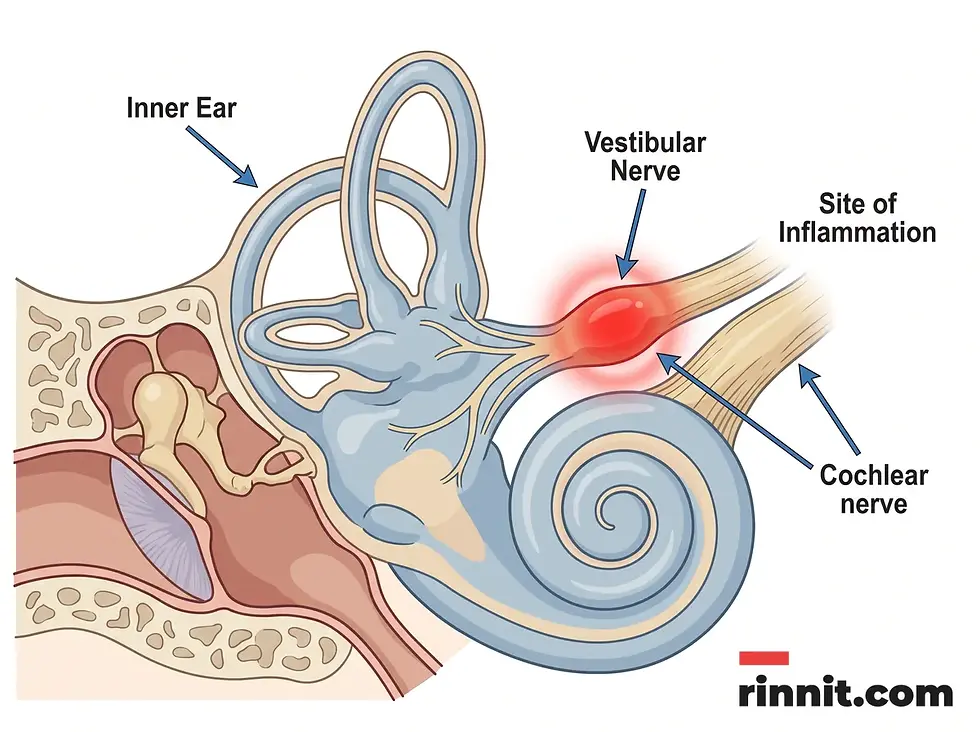
Vestibular neuritis is an inner ear disorder characterized by the inflammation or swelling of the vestibulocochlear nerve. This critical nerve is responsible for transmitting data from the inner ear to the brain regarding the position and movement of the head. [1] When this nerve becomes inflamed, the brain is unable to correctly interpret these signals, leading to a profound sense of imbalance and disorientation.
The condition is relatively rare, affecting roughly 4 out of every 100,000 individuals in the United States. [1] While it can occur at any age, it is significantly more common in adults than in children. [1] Unlike the related condition labyrinthitis, vestibular neuritis rarely involves hearing loss [1], as the inflammation is typically localized to the vestibular portion of the nerve rather than the hearing organs.
Symptoms and Phases of Recovery
The experience of vestibular neuritis is generally divided into two distinct stages: the acute phase and the chronic phase. The severity and nature of symptoms shift as the body begins to compensate for the nerve damage.
Recovery Phase | Typical Duration | Primary Symptoms |
|---|---|---|
Acute Phase | Up to 1 Week [1] | Sudden, severe vertigo (spinning), intense dizziness even when sitting still, nausea, vomiting, and uncontrollable eye movements (nystagmus). [1] |
Chronic Phase | Weeks to Months [1] | Lightheadedness, mild dizziness during head movement, ear fullness, difficulty walking in busy environments, and anxiety. |
During the acute phase, individuals often find it difficult to perform basic tasks due to the intensity of the spinning sensation and sensitivity to motion. As the condition transitions to the chronic phase, the symptoms become more manageable but may still interfere with daily activities like driving or working in crowded spaces.
Causes and Potential Triggers
While the exact cause remains unknown, medical experts believe that viral infections are the primary triggers for the inflammation seen in vestibular neuritis. The infection may originate in the inner ear or spread there from another part of the body. [1]
Common Viral Links
Several types of viruses have been associated with the onset of this condition, including:
It is important to note that while the condition itself is not contagious, the underlying viruses that trigger the nerve swelling can be passed from person to person. [1]

The Diagnostic Pathway
Diagnosing vestibular neuritis involves a process of elimination to rule out more serious neurological events, such as a stroke or brain tumor. [1] A healthcare provider will typically perform a physical examination and review the patient's medical history before recommending specialized testing.
Imaging: An MRI with contrast is often used to ensure the symptoms are not caused by a head injury, migraine, or tumor. [1]
Vestibular Test Battery: A series of tests conducted by an audiologist [1] to measure how well the inner ear communicates with the brain.
Hearing Tests: While hearing loss is rare, these tests help distinguish vestibular neuritis from other inner ear disorders like labyrinthitis.
Treatment and Management Strategies
The management of vestibular neuritis focuses on reducing inflammation and controlling the distressing symptoms of vertigo and nausea. Treatment plans are often customized based on the severity of the patient's symptoms and the underlying cause.

Medication
During the acute phase, providers may prescribe several types of medication:
Anti-nausea: Drugs like ondansetron or metoclopramide to control vomiting. [1]
Dizziness Relief: Medications such as meclizine, diazepam, or lorazepam to ease the spinning sensation. [1]
Corticosteroids: Used to reduce the swelling and inflammation of the nerve. [1]
Antivirals: Generally not used; in a major trial, the antiviral valacyclovir did not improve recovery.
Vestibular Rehabilitation Therapy (VRT)
For those with lingering symptoms, Vestibular Rehabilitation Therapy is often recommended. This specialized form of physical therapy uses targeted exercises to help the brain compensate for the loss of balance signals, effectively "retraining" the body to manage motion and coordination.
Conclusion
Vestibular neuritis can be a frightening experience due to the sudden onset of severe vertigo and loss of balance. However, with prompt medical intervention and a structured approach to rehabilitation, the vast majority of individuals can expect a significant recovery. By understanding the triggers and committing to the necessary therapies, patients can successfully navigate the challenges of inner ear inflammation and return to their normal lives.
Related reading: Dizziness and vertigo · Vestibular system · Vestibular rehabilitation therapy
Frequently Asked Questions
How long does it take to recover from vestibular neuritis?
Recovery times vary; some people feel better within a week, while others may have symptoms that last for months or even years.
Can vestibular neuritis cause permanent damage?
While most people recover fully, some may experience long-term unsteadiness or spatial disorientation if the nerve damage is significant.
Is vestibular neuritis the same as BPPV?
No. BPPV is caused by loose crystals in the ear, while vestibular neuritis is caused by nerve inflammation, usually following an infection.
Can I catch vestibular neuritis from someone else?
The condition itself is not contagious, but you can catch the viruses (like the flu or a cold) that might lead to the condition.
Will my hearing be affected?
Hearing loss is very rare with vestibular neuritis. If you experience hearing changes, you may have a related condition called labyrinthitis.
Can the condition come back?
Recurrence is rare, but it is possible for vestibular neuritis to happen more than once.
When should I see a doctor?
Seek medical attention immediately if you experience sudden, unexplained dizziness, spinning sensations, or severe balance issues. Call 911 if dizziness comes with double vision, slurred speech, facial droop, weakness, numbness, a severe headache, or inability to walk.
Are there specific exercises I can do at home?
Vestibular Rehabilitation Therapy (VRT) involves specific exercises, but these should be performed under the guidance of a professional to ensure they are effective and safe.
Can stress make my symptoms worse?
Yes, anxiety and stress are common in the chronic phase and can make the sensation of dizziness feel more intense.
Is this condition more common in children or adults?
Vestibular neuritis is significantly more common in adults, although it can occasionally affect children.
Related Reading
Videonystagmography (VNG) Test: What It Checks, Steps and Results explains how a VNG test checks the inner ear balance system.
Vestibular Testing (Vestibular Test Battery): Types, How to Prepare, What to Expect and Results explains the inner ear balance tests used for dizziness and vertigo, how to prepare and what results mean.
References
Cleveland Clinic. Vestibular Neuritis: Symptoms, Causes & Treatment. Cleveland Clinic. Last updated 07/08/2026. https://my.clevelandclinic.org/health/diseases/15227-vestibular-neuritis
Strupp M, Zingler VC, Arbusow V, et al. Methylprednisolone, valacyclovir, or the combination for vestibular neuritis. N Engl J Med. 2004;351(4):354-361. PMID 15269315. https://doi.org/10.1056/NEJMoa033280
Oliveira J E Silva L, Khoujah D, Naples JG, et al. Corticosteroids for patients with vestibular neuritis: an evidence synthesis for guidelines for reasonable and appropriate care in the emergency department. Acad Emerg Med. 2023;30(5):531-540. PMID 35975654. https://doi.org/10.1111/acem.14583
Hidayati HB, Imania HAN, Octaviana DS, et al. Vestibular rehabilitation therapy and corticosteroids for vestibular neuritis: a systematic review and meta-analysis of randomized controlled trials. Medicina (Kaunas). 2022;58(9):1221. PMID 36143898. https://doi.org/10.3390/medicina58091221
Medical disclaimer
This article is for educational purposes only and is not a substitute for professional medical advice, diagnosis, or treatment. Always seek the advice of your physician or other qualified health provider with any questions about a medical condition.



Comments