Vestibular Migraine: Symptoms, Causes, and Management

Updated: 3 days ago
Medically reviewed by Dr. Baraa Alnahhal, MD · Last reviewed: October 2026
Quick Answer: What is vestibular migraine (VM)?
Vestibular migraine (VM) is a neurological condition that causes episodes of vertigo, light-headedness and feeling off balance, often with light and sound sensitivity, though headache is not always present. [1] Attacks can last from five minutes to 72 hours and are often triggered by stress, fatigue or certain foods. [1] There is no cure, but lifestyle changes and medications can reduce attacks. [1]
What the research says
Vestibular migraine is more common than many people think, and it is often missed. An analysis of the 2008 US National Health Interview Survey (21,781 adults) found that 23.4% of people with dizziness or balance problems (584 of 2,490) met criteria for vestibular migraine, a prevalence of 2.7% of all adults. Only 10% of those who met the criteria had been told migraine was the cause. Age under 40, female sex, anxiety, depression, and prior head trauma were each linked to higher odds (Formeister et al., Otol Neurotol, 2018) [2].
Some preventive medicines reduce vertigo, but the evidence is limited. A network meta-analysis of 5 randomized trials (334 patients) found that valproate reduced monthly vertigo frequency more than placebo or abortive treatment alone (mean difference -4.12; 95% CI -8.09 to -0.15), and that flunarizine, valproate, and venlafaxine improved Dizziness Handicap Inventory scores. Valproate and flunarizine had unfavorable tolerability, metoprolol was best tolerated but ranked lowest for efficacy, and the authors rated the certainty of the evidence as low (Chu et al., Front Pharmacol, 2023) [3].
Non-drug prevention strategies need more research. A Cochrane review of non-pharmacological prevention found only three small trials (319 participants) testing a probiotic, cognitive behavioral therapy, and vestibular rehabilitation. The certainty of the evidence was low or very low, so it is unclear whether any of these approaches reduces vestibular migraine symptoms (Webster et al., Cochrane Database Syst Rev, 2023) [4].
Understanding Vestibular Migraine
Vestibular migraine, also called migraine-associated vertigo (MAV), migraine-related vestibulopathy, or migrainous vertigo [1], is a condition in which migraine pathways in the brain affect the body's balance system. Researchers continue to study whether it is a subtype of migraine or a separate but closely related condition. Either way, it is a recognized cause of balance problems, and in one national US survey analysis about 2.7% of adults met criteria for it. [2]
Distinguishing Vestibular Migraine
Unlike many other vestibular disorders that begin in the inner ear, vestibular migraine involves the central nervous system's processing of balance signals. It can be confused with Ménière's disease or benign paroxysmal positional vertigo (BPPV) because the symptoms of dizziness and spinning overlap, which is why providers rule out other causes before confirming the diagnosis.
Symptoms and Clinical Presentation
The hallmark of vestibular migraine is vertigo, the sensation that you or your surroundings are spinning. Episodes can start suddenly and vary widely in length, from five minutes up to 72 hours. [1]
Symptom category | Common signs |
Balance and vertigo | Vertigo (spinning), dizziness, light-headedness, and feeling off balance [1] |
Sensory sensitivity | Increased sensitivity to light (photophobia), sound (phonophobia), and odors |
Physical reactions | Nausea, vomiting, and throbbing headaches (though a headache is not always present) |
Visual disturbances | Migraine aura, which may include streaks of light or blind spots |

Causes and Common Triggers
The exact biological cause of vestibular migraine is still being studied, but it appears to involve unusual activity in the brain pathways that manage balance and pain. Several risk factors and triggers have been identified. A personal or family history of migraine, including childhood migraine, increases the risk.
Identified Risk Factors
Hormonal fluctuations: Changes during menopause or the menstrual cycle [1] are frequent contributors.
Serotonin imbalance: Changes in serotonin, a chemical messenger in the brain, may play a role. [1]
Environmental factors: Changes in the weather [1], including shifts in barometric pressure, can set off episodes in some people.
Environmental and Lifestyle Triggers
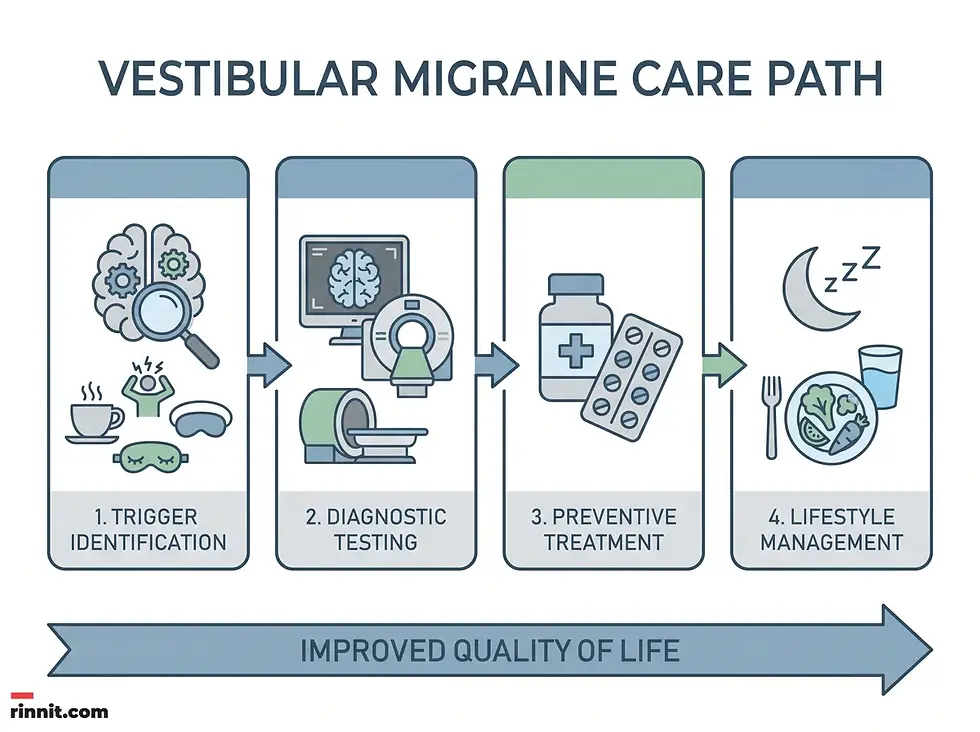
Triggers are factors that can start or worsen an episode. For people with vestibular migraine, they often include:
Dietary choices: Commonly reported food and drink triggers include aged cheeses, processed meats, chocolate, and red wine. Triggers differ from person to person, and your provider can help you find yours, sometimes with a supervised elimination diet.
Physical state: Fatigue, lack of sleep, and high levels of emotional or physical stress.

Diagnosis and Clinical Criteria
Diagnosing vestibular migraine is largely a process of elimination. Your provider will ask about your symptoms, how severe your vertigo is and how often it happens, and whether you or your biological family members have migraine. A diagnosis is typically considered when you have had at least five episodes of vertigo lasting five minutes to 72 hours, with at least half of those episodes involving migraine features such as headache or sensitivity to light, sound, or rapid movement. [1]
Diagnostic Testing
Neurological and hearing exams: To check nerve function and look for hearing loss. [1]
Imaging: Brain MRI or CT scans to rule out other neurological problems. [1]
Vestibular testing: Tests such as videonystagmography (VNG) or electronystagmography (ENG) that evaluate eye movements and inner ear function.
Management and Treatment Options
Treatment has two goals: preventing future attacks and relieving symptoms during an attack. There is no cure [1], but the condition can often be managed well with the right combination of approaches.
Treatment type | Specific approaches |
Preventive medication | Tricyclic antidepressants, calcium channel blockers, antiseizure medications, and beta-blockers [1], taken daily or weekly |
Symptom relief | Motion sickness medications, NSAIDs, and anti-nausea drugs; in some cases, antipsychotic medications |
Lifestyle changes | Regular sleep schedules, regular meals, stress reduction, avoiding known food triggers, and staying physically active |
Physical therapy | Vestibular rehabilitation therapy (VRT) to improve balance and stability [1] |
Some preventive medicines are not suitable for everyone (for example, certain ones are avoided during pregnancy) and can have side effects, so choosing one is a decision to make with your provider. Lifestyle changes are widely recommended, although trial evidence for specific non-drug strategies is still limited. [4] To learn more about the exercise-based option, see our guide to vestibular rehabilitation therapy.
Outlook and Living with Vestibular Migraine
The outlook depends largely on how well you can identify and manage your triggers. Some people need ongoing medication, while many find significant relief through dietary changes, more rest, stress management, and regular exercise. Early diagnosis and treatment help maintain daily function and keep the condition from limiting your quality of life.
Frequently Asked Questions
1. Can you have a vestibular migraine without a headache?
Yes. Many people have the vertigo and balance symptoms of a vestibular migraine without a throbbing headache.
2. How long do episodes last?
Vertigo can last anywhere from five minutes to 72 hours, and some people feel off balance for several days.
3. Is vestibular migraine the same as vertigo?
No. Vertigo is a symptom (the spinning sensation), while vestibular migraine is the underlying neurological condition that can cause it.
4. What foods should I avoid?
Triggers vary by person, but commonly reported ones include aged cheeses, processed meats, chocolate, and red wine. Ask your provider for a personalized plan.
5. Can stress cause a vestibular migraine?
Yes. Stress is one of the most common triggers of both traditional and vestibular migraines.
6. What is a migraine aura?
An aura is a sensory disturbance, such as flashing lights, streaks of light, or blind spots, that can occur around a migraine.
7. Is there a cure for vestibular migraine?
There is no cure, but the condition can be very manageable with the right combination of medication and lifestyle changes.
8. Can weather changes trigger my symptoms?
Yes. Weather changes, including shifts in barometric pressure, are a recognized trigger for many people who have migraine.
9. What is vestibular rehabilitation therapy?
Vestibular rehabilitation therapy is a specialized form of physical therapy that uses exercises to help your brain compensate for balance problems.
10. How common is this condition?
In one analysis of a US national health survey, about 2.7% of adults met criteria for vestibular migraine, and the study suggested it is often under-diagnosed.
11. Do I need an MRI for a diagnosis?
A provider may order an MRI or CT scan to rule out other conditions, but the diagnosis rests mainly on your symptoms and history.
12. Can hormonal changes affect my migraines?
Yes. Many women find that their symptoms are linked to their menstrual cycle or menopause.
13. Are vestibular migraines hereditary?
A personal or family history of migraine increases the risk of developing vestibular migraine.
14. What should I do during an attack?
Rest in a dark, quiet room, avoid sudden head movements, and take any symptom-relief medication your provider has prescribed.
15. When should I see a specialist?
See a healthcare provider if you have frequent dizzy spells or balance problems that interfere with daily life. Seek emergency care right away for sudden severe vertigo with weakness, numbness, trouble speaking, double vision, or a sudden severe headache, because these can signal a stroke.
Related Reading
Vestibular Testing (Vestibular Test Battery): Types, How to Prepare, What to Expect and Results explains the inner ear balance tests used for dizziness and vertigo, how to prepare and what results mean.
Trusted External Resources
References
Cleveland Clinic. Vestibular Migraine. Cleveland Clinic. Last updated August 10, 2026. https://my.clevelandclinic.org/health/diseases/25217-vestibular-migraine
Formeister EJ, Rizk HG, Kohn MA, et al. The epidemiology of vestibular migraine: a population-based survey study. Otol Neurotol. 2018;39(8):1037-1044. PMID 30020261. https://doi.org/10.1097/MAO.0000000000001900
Chu H, Wang Y, Ling X, et al. Prophylactic treatments for vestibular migraine: a systematic review and network meta-analysis of randomized clinical trials. Front Pharmacol. 2023;14:1332973. PMID 38186654. https://doi.org/10.3389/fphar.2023.1332973
Webster KE, Dor A, Galbraith K, et al. Non-pharmacological interventions for prophylaxis of vestibular migraine. Cochrane Database Syst Rev. 2023;4(4):CD015321. PMID 37042522. https://doi.org/10.1002/14651858.CD015321.pub2
Medical Disclaimer
This article is for informational purposes only and does not constitute medical advice. Always seek the advice of your physician or other qualified health provider with any questions you may have regarding a medical condition. Never disregard professional medical advice or delay in seeking it because of something you have read here.



Comments