Vestibular Disorders: Symptoms, Causes, and Management

Updated: 3 days ago
Medically reviewed by Dr. Baraa Alnahhal, MD · Last reviewed: October 2026
Quick Answer: What are vestibular disorders?
Vestibular disorders are conditions that disrupt the body's balance system, which relies on structures in the inner ear and brain. The most common signs are dizziness and vertigo, a spinning sensation. [1] Treatment manages symptoms and the cause through medication, lifestyle changes and physical therapy. [1] Early evaluation matters, because untreated problems can lead to falls, hearing loss and anxiety. [1]
What the research says
Vestibular problems are common in people who fall. A systematic review and meta-analysis of 10 studies (468 adults who had at least one fall in the previous year) found vestibular dysfunction in 61% of participants (48.0% to 72.3%). It was most often detected on tests of the vestibulo-ocular reflex (61%), followed by BPPV (22%) and central dysfunction (11%). Reported dizziness was not related to vestibular dysfunction in this group, so the authors advise adding a vestibular screen to falls assessments (Donovan et al., Clin Rehabil, 2023) [2].
Vertigo has many possible causes, so a full evaluation matters. A systematic review of five studies covering 2,148 people aged 60 to 90 with vertigo identified 3,404 causes. Audio-vestibular disorders were the most frequent (28.4%), followed by cardiovascular (20.4%) and neurological (15.1%) conditions. The authors recommend a multidisciplinary assessment to identify potentially life-threatening causes (Fancello et al., J Clin Med, 2023) [3].
Understanding the Vestibular System
The vestibular system is a network of structures in the inner ear and the brain that work together to maintain your sense of balance. [1] When something goes wrong in these structures, or in the central nervous system (CNS) pathways that process balance information, the result is vestibular dysfunction. It shows up as balance problems that can make simple tasks like standing or walking difficult.
Classifying Vestibular Disorders
Healthcare experts classify these conditions by where the breakdown happens within the system.
Peripheral vestibular disorders (PVD): These affect the inner ear itself or the vestibular nerve, which carries balance signals to the brain. Common examples include benign paroxysmal positional vertigo (BPPV), Ménière's disease, vestibular neuritis, and labyrinthitis. [1]
Central vestibular disorders (CVD): These occur when the parts of the brain that process balance signals are affected. Conditions such as vestibular migraine and stroke fall into this category.
Symptoms and Clinical Signs
Dizziness and vertigo are the hallmark symptoms of vestibular problems, but the condition can also cause a wide range of other physical and cognitive challenges. The severity and combination of symptoms depend on the specific underlying disorder.
Symptom category | Specific signs |
Primary balance issues | Dizziness (feeling woozy), vertigo (a spinning sensation), and trouble standing upright [1] |
Sensory impairments | Hearing loss, tinnitus (ringing in the ears), and blurred vision [1] |
Physical reactions | Nausea, vomiting, and uncontrollable eye movements (nystagmus) [1] |
Cognitive and motor | Difficulty concentrating and trouble walking in a steady pattern [1] |

Causes and Triggers
Vestibular dysfunction can arise from many biological and environmental factors. Identifying the root cause is essential for building an effective treatment plan.
Leading Causes of Dysfunction
Aging and head injury: The inner ear structures that send and receive balance signals can deteriorate with age, and trauma can damage the inner ear or the brain regions involved in balance. [1]
Ototoxicity: Exposure to certain medications, or to environmental toxins such as lead, can damage the inner ear. Cleveland Clinic describes ototoxicity as one of the most common causes of vestibular dysfunction. [1]
Inflammation and infection: Viral or bacterial infections can cause inflammation that damages the balance organs and nerves. [1]
Inner ear fluid problems, tumors, and autoimmune disease: Problems with the fluid in the inner ear, growths that press on balance nerves, and (rarely) an immune system attack on the inner ear can all disrupt balance. [1]
Neurological conditions: Stroke and demyelinating diseases can interrupt the central nervous system's ability to process balance signals. [1]
Identifying Triggers
For many people, symptoms come in episodes set off by specific triggers, followed by symptom-free periods. [1] Common triggers include sudden head movements, changes in position (such as lying back in bed), visually stimulating or busy environments, certain foods and drinks, stress, and lack of sleep. [1] Your healthcare provider can help you identify the factors that start or worsen your episodes.

Potential Complications
Leaving a vestibular disorder untreated can lead to serious secondary health problems. The most immediate risk is dangerous falls, which can cause hip fractures or head injuries; the risk is greatest in people over 60. [1] Some vestibular disorders are also linked to long-term hearing loss, and early diagnosis and treatment can often help prevent it. [1] Finally, worry about triggering dizziness can lead people to avoid driving, walking, or social activities, which can contribute to anxiety and depression. [1]
Diagnosis and Treatment
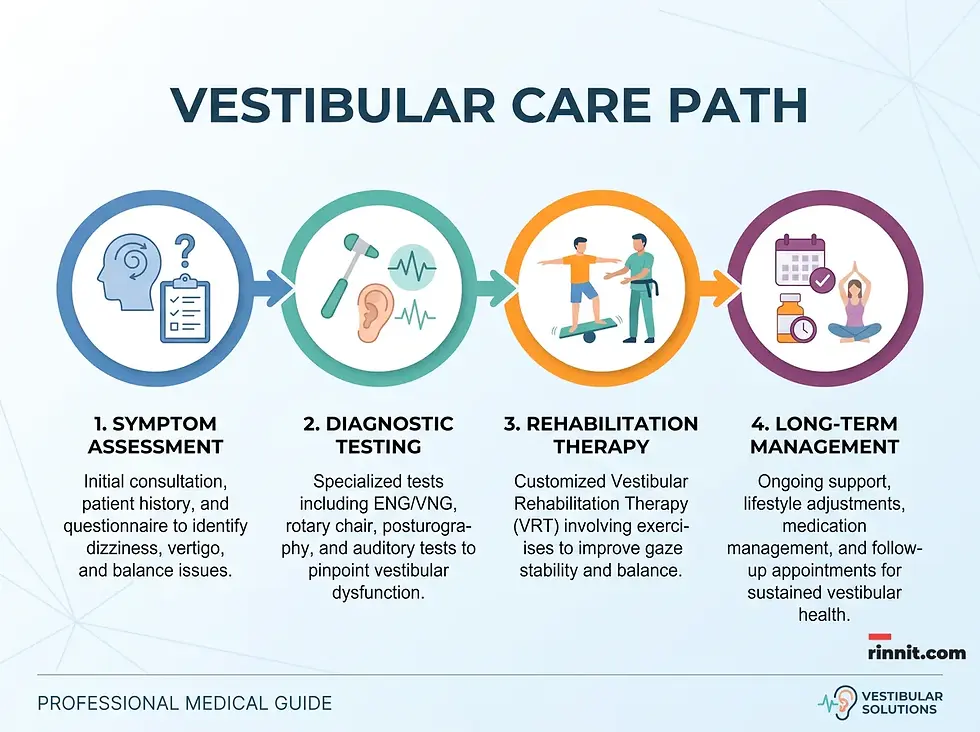
Diagnosing a vestibular disorder often involves several kinds of specialists, including otolaryngologists (ear, nose, and throat doctors), neurologists, vestibular audiologists, and physical therapists. [1] Your provider will do a physical and neurological exam and ask about your symptoms to work out whether the problem is in the inner ear or the central nervous system. Tests may include vestibular testing, hearing tests, imaging such as MRI or CT, and blood tests to check for infection. [1]
Management Options
Approach | Specific interventions |
Therapy | Vestibular rehabilitation therapy (VRT), a form of exercise-based physical therapy that helps retrain the brain and improve stability [1] |
Repositioning maneuvers | For BPPV, a physical therapist can help move misplaced inner ear crystals (canaliths) back to where they belong [1] |
Medication | Medicines to manage nausea and vertigo, and to treat underlying inflammation, infection, or fluid buildup |
Lifestyle adjustments | Identifying and avoiding triggers, improving sleep, managing stress, and reducing salt, caffeine, and alcohol when advised |
Surgery | Usually a last resort, for example for tumors or severe inner ear problems when other treatments have not helped |
To learn more about the exercise-based option, see our guide to vestibular rehabilitation therapy.
Outlook and Prognosis
The outlook depends on the specific disorder. Some vestibular problems, such as those caused by an infection, often improve once the infection clears, although prompt treatment helps prevent long-term inner ear damage. [1] Others are chronic and need lifelong management [1], with symptoms that may come and go or flare in response to triggers. Many people improve with rehabilitation and lifestyle changes, and the main goals of ongoing care are preventing complications such as falls and permanent hearing loss and protecting mental well-being. Most vestibular disorders cannot be prevented [1], but early treatment and fall-prevention steps can lower the risk of harm.
Frequently Asked Questions
1. What is the difference between dizziness and vertigo?
Dizziness is a general feeling of being disoriented or "woozy." Vertigo is a specific sensation that you or the room is spinning.
2. Are vestibular disorders common?
Yes. They are quite common, especially as people age, and they can be caused by many different factors.
3. What is BPPV?
Benign paroxysmal positional vertigo (BPPV) is one of the most common vestibular disorders. It causes brief spinning episodes that are triggered by specific head movements.
4. Can stress make my symptoms worse?
Yes. Stress is a known trigger that can intensify episodes of dizziness and vertigo.
5. What is ototoxicity?
Ototoxicity is damage to the inner ear caused by certain medications or toxic chemicals such as lead.
6. How is balance related to my ears?
The inner ear contains specialized structures that send balance signals to your brain. If they are damaged, your balance is disrupted.
7. What does a vestibular audiologist do?
A vestibular audiologist specializes in testing and diagnosing problems in the balance portions of the inner ear.
8. Can a stroke cause balance problems?
Yes. Stroke is a common cause of central vestibular dysfunction because it affects the brain's ability to process balance signals. Sudden dizziness together with weakness, numbness, trouble speaking, vision loss, or a severe headache needs emergency medical care.
9. Is vestibular rehabilitation therapy painful?
No. It is a form of physical therapy that uses specific exercises to help your brain adapt to balance changes. Exercises can briefly bring on dizziness as the brain adapts.
10. Can vestibular disorders cause hearing loss?
Yes. Some conditions, such as Ménière's disease, are associated with both balance problems and long-term hearing loss.
11. Why do I feel sick when I'm dizzy?
The vestibular system is closely linked to the parts of the brain that control nausea and vomiting.
12. What is nystagmus?
Nystagmus refers to uncontrollable, irregular eye movements that often occur during a vestibular episode.
13. Can children have vestibular disorders?
Yes. They are more common in adults, but children can develop them because of infections, injuries, or conditions present from birth.
14. How long does it take to recover?
Recovery time varies with the specific disorder and how you respond to treatment. Some problems resolve on their own, and others need ongoing management.
15. When should I see a doctor?
See a healthcare provider if you have persistent dizziness, unexplained falls, or sudden changes in your hearing.
Related Reading
Vestibular Testing (Vestibular Test Battery): Types, How to Prepare, What to Expect and Results explains the inner ear balance tests used for dizziness and vertigo, how to prepare and what results mean.
Trusted External Resources
References
Cleveland Clinic. Vestibular Disorders. Cleveland Clinic. Last updated June 19, 2024. https://my.clevelandclinic.org/health/diseases/vestibular-disorders
Donovan J, De Silva L, Cox H, et al. Vestibular dysfunction in people who fall: a systematic review and meta-analysis of prevalence and associated factors. Clin Rehabil. 2023;37(9):1229-1247. PMID 37036433. https://doi.org/10.1177/02692155231162423
Fancello V, Hatzopoulos S, Santopietro G, et al. Vertigo in the elderly: a systematic literature review. J Clin Med. 2023;12(6):2182. PMID 36983184. https://doi.org/10.3390/jcm12062182
Medical Disclaimer
This article is for informational purposes only and does not constitute medical advice. Always seek the advice of your physician or other qualified health provider with any questions you may have regarding a medical condition. Never disregard professional medical advice or delay in seeking it because of something you have read here.



Comments