Understanding the Urinary System

Updated: 2 days ago
Medically reviewed by Dr. Baraa Alnahhal, MD · Last reviewed: October 2026
The urinary system, or urinary tract, acts as the body's primary filtration system, removing toxins and excess waste from the blood to produce urine. [1] Comprised of the kidneys, ureters, bladder, and urethra, it is essential for maintaining fluid balance and eliminating metabolic waste. Common issues include infections, kidney stones, and chronic kidney disease. [1]
Quick Answer: What is the urinary system?
The urinary system is a network of organs and tubes that filters blood and removes liquid waste as urine. It consists of two kidneys that filter blood, two ureters that carry waste, a bladder for storage and a urethra for elimination. [1] By separating toxins from vital nutrients, it maintains the body's internal balance and protects overall health.
What the research says
More water can prevent repeat bladder infections in some women. In a 12-month randomized trial of 140 premenopausal women with recurrent cystitis who drank less than 1.5 L of fluid daily, adding 1.5 L of water a day cut the average number of cystitis episodes to 1.7, versus 3.2 in the control group (difference 1.5; 95% CI 1.2-1.8), and reduced antibiotic courses from 3.6 to 1.9 (Hooton et al., JAMA Internal Medicine, 2018) [2]; the trial was open-label.
Urinary incontinence is very common in older women. A meta-analysis of 29 studies (518,465 women aged 55-106) estimated a pooled prevalence of urinary incontinence of 37.1% (95% CI 29.6-45.4%) (Batmani et al., BMC Geriatrics, 2021) [3].
Pelvic floor exercises can improve quality of life for women with incontinence. A systematic review of 10 studies (8 pooled in the meta-analysis) found that pelvic floor muscle training improved quality of life, with a small overall effect across controlled studies and a moderate effect in single-group before-and-after studies, mainly for stress urinary incontinence (Curillo-Aguirre & Gea-Izquierdo, Medicina, 2023) [4].
Anatomy of the Urinary Tract
The urinary system is located within the abdominal and pelvic regions, working continuously to process liquid waste. Each component plays a specific role in the sequence of filtration, storage, and removal.
Organ | Primary Function | Key Feature |
Kidneys | Filter blood and produce urine. [1] | Fist-sized organs that filter about 200 quarts of fluid daily. |
Ureters | Transport urine to the bladder. [1] | Two thin tubes, each roughly 10 to 12 inches (25-30 cm) long. |
Bladder | Stores urine until elimination. [1] | A hollow, muscular organ that can hold up to 2 cups of liquid. [1] |
Urethra | Carries urine out of the body. | A tube controlled by sphincter muscles to prevent leakage. [1] |

The Filtration Process
The urinary system operates as a sophisticated biological filter. Blood enters the kidneys through small arteries, where it undergoes a thorough cleaning process. [1] The kidneys separate waste products, toxins, and excess water from essential nutrients like vitamins and proteins. While the cleaned blood returns to the circulatory system, the waste products are concentrated into urine.
This process involves several key steps:
Blood enters the kidneys for filtration. [1]
Toxins are separated from vital nutrients. [1]
Nutrients are returned to the bloodstream. [1]
Liquid waste (urine) moves through the ureters. [1]
The bladder stores urine until it is full. [1]
Sphincter muscles relax to allow urine to exit through the urethra. [1]

Common Urinary Conditions
Various factors can affect the health and function of the urinary tract, ranging from bacterial infections to structural abnormalities. Understanding these conditions is vital for early detection and treatment.
Infections: Urinary tract infections (UTIs) occur when bacteria enter the system through the urethra, potentially affecting the bladder or kidneys. [1]
Kidney Stones: These are hard masses formed from clumped waste products that can block urine flow and cause significant pain. [1]
Urination Problems: Issues such as incontinence (leakage), overactive bladder, and urinary retention (inability to empty the bladder) are common. [1]
Kidney Disease: Chronic kidney disease (CKD), often driven by high blood pressure or diabetes, can lead to kidney failure if not managed. [1]
Obstructions: Tumors, an enlarged prostate, or even pregnancy can physically block the passage of urine. [1]
Symptoms of these issues often include changes in urination frequency, pain during the process, or changes in the appearance of urine, such as cloudiness or the presence of blood. [1]
Maintaining Urinary Health
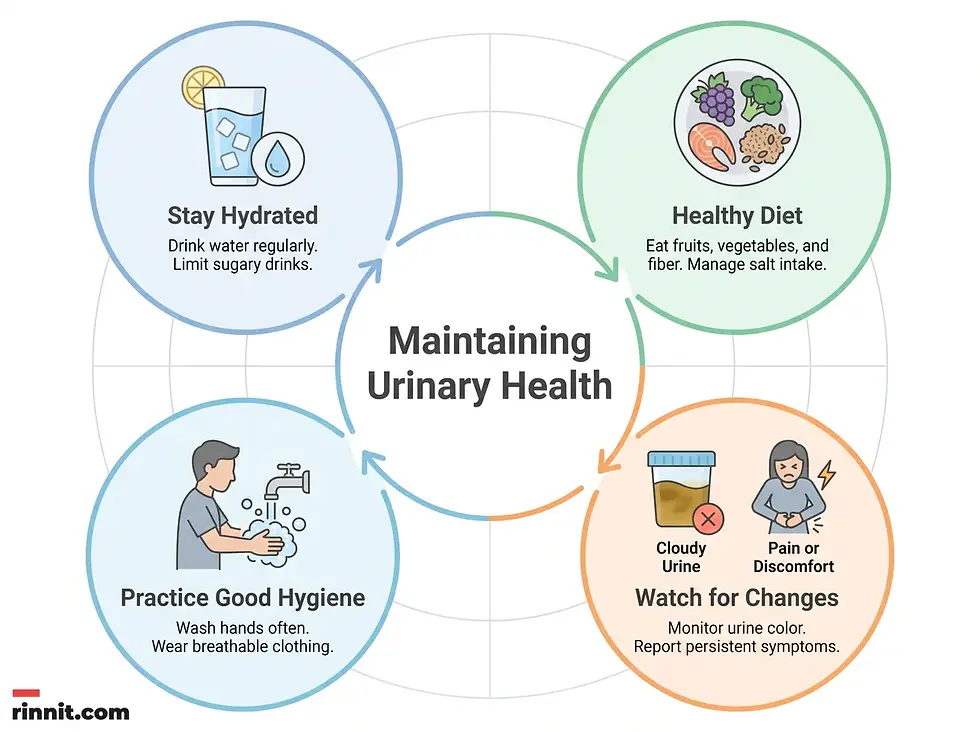
Protecting the urinary system requires a combination of healthy lifestyle choices and proactive care. Staying well-hydrated is the most fundamental step, as water helps flush toxins through the system efficiently. [1] Additionally, maintaining a balanced diet low in excess salt and sugar supports kidney function, while practicing good hygiene helps prevent infections.
Conclusion
The urinary system is an indispensable part of human health, performing the critical task of waste management every day. By filtering the blood and maintaining fluid balance, it ensures that the body remains free of harmful toxins. Through proper hydration, healthy habits, and attention to warning signs, individuals can support this vital system and maintain long-term wellness.
Frequently Asked Questions
What is the urinary system?
The urinary system, also known as the urinary tract, is the body's filtration system responsible for removing waste and excess water from the blood.
What are the main organs of the urinary system?
The system consists of two kidneys, two ureters, one bladder, and one urethra.
How much fluid do the kidneys filter daily?
The kidneys filter about 200 quarts of fluid each day, producing about 1 to 2 quarts of urine.
What is a urinary tract infection (UTI)?
A UTI is an infection caused by bacteria entering the urinary tract through the urethra, often resulting in pain and frequent urges to urinate.
What causes kidney stones?
Kidney stones form when waste products in the urine clump together into small, hard masses that can block the flow of pee.
How much urine can the bladder hold?
Most healthy adult bladders can hold up to approximately 2 cups (500 milliliters) of urine at a time.
What are the signs of a urinary system problem?
Common signs include pain during urination, frequent urges to pee, cloudy or bloody urine, and abdominal pain.
How can I prevent urinary tract infections?
Drinking plenty of water, practicing good hygiene, and emptying the bladder after sexual activity can help reduce the risk of UTIs.
What is chronic kidney disease (CKD)?
CKD is a long-term condition where the kidneys do not filter blood as well as they should, often caused by diabetes or high blood pressure.
Does pregnancy affect the urinary system?
Yes, pregnancy can put pressure on the bladder and ureters, potentially leading to more frequent urination or obstructions.
Related Reading
The Kidney: Anatomy, Function, and Vital Health Roles explains how the kidneys filter blood and make urine.
Understanding the Bladder: Anatomy, Function, and Care describes how the bladder stores and releases urine.
Urinary Tract Infection (UTI): Symptoms, Causes, Treatment, and Prevention covers UTI symptoms, treatment and prevention tips.
Kidney Stones: Symptoms, Causes, and Treatment Guide covers kidney stone pain, treatment and prevention.
References
Cleveland Clinic. Urinary System. Cleveland Clinic. Last updated June 13, 2023. https://my.clevelandclinic.org/health/body/21197-urinary-system
Hooton TM, Vecchio M, Iroz A, et al. Effect of increased daily water intake in premenopausal women with recurrent urinary tract infections: a randomized clinical trial. JAMA Internal Medicine. 2018;178(11):1509-1515. PMID 30285042. https://doi.org/10.1001/jamainternmed.2018.4204
Batmani S, Jalali R, Mohammadi M, Bokaee S. Prevalence and factors related to urinary incontinence in older adults women worldwide: a comprehensive systematic review and meta-analysis of observational studies. BMC Geriatrics. 2021;21(1):212. PMID 33781236. https://doi.org/10.1186/s12877-021-02135-8
Curillo-Aguirre CA, Gea-Izquierdo E. Effectiveness of pelvic floor muscle training on quality of life in women with urinary incontinence: a systematic review and meta-analysis. Medicina (Kaunas). 2023;59(6):1004. PMID 37374208. https://doi.org/10.3390/medicina59061004
Medical disclaimer
The information provided in this article is for educational purposes only and should not be used as a substitute for professional medical advice, diagnosis, or treatment. Always seek the advice of your physician or other qualified health provider with any questions you may have regarding a medical condition.



Comments