Understanding the Tympanic Membrane (Eardrum)

Updated: 3 days ago
Medically reviewed by Dr. Baraa Alnahhal, MD · Last reviewed: October 2026
The tympanic membrane, or eardrum, is a thin, circular tissue separating the outer and middle ear. [1] It is essential for hearing, as it vibrates in response to sound waves, and it protects the middle ear from debris and bacteria. [1] Common issues include ruptures, scarring, and fluid buildup. [1]
Quick Answer: What is the tympanic membrane?
The tympanic membrane, or eardrum, is a thin, semi-transparent layer of connective tissue that separates the outer ear from the middle ear, measuring approximately one centimeter across. [1] It vibrates when sound waves strike it and passes those vibrations to the middle ear's tiny bones. [1] It also protects the middle ear from bacteria and foreign debris. [1]
What the research says
Many large traumatic eardrum perforations heal on their own, but slowly. In a randomized trial of 75 large traumatic perforations (25 left to heal spontaneously), the closure rate in the spontaneous-healing group was 14.3% at 2 weeks and 85.7% at 3 months, with a mean closure time of 30.94 days (Ding et al., Am J Otolaryngol, 2023) [2].
Prescribed ofloxacin ear drops can speed closure of traumatic perforations. A meta-analysis of 6 randomized trials (502 participants) found a higher closure rate with ofloxacin than with no intervention (relative risk 1.18, 95% CI 1.08-1.28) and no evidence of more hearing loss or infection; treatment decisions belong with a clinician (Kutbi et al., Ear Nose Throat J, 2024) [3].
Anatomy of the Tympanic Membrane
Located at the end of the ear canal, the tympanic membrane is the boundary between the external environment and the middle ear. A healthy eardrum appears pearly white or gray and is translucent enough to see through, similar to a foggy window. [1] Despite its delicate appearance, it is composed of three distinct layers of tissue that provide both flexibility and protection.
Layer | Tissue Type | Description |
Outer Layer | Epithelial Tissue | Continuous with the skin of the external ear canal. |
Middle Layer | Fibrous Tissue | Flexible and strong; contains essential nerves and blood vessels. [1] |
Inner Layer | Mucosa | Similar to the tissue lining the digestive and respiratory tracts. |

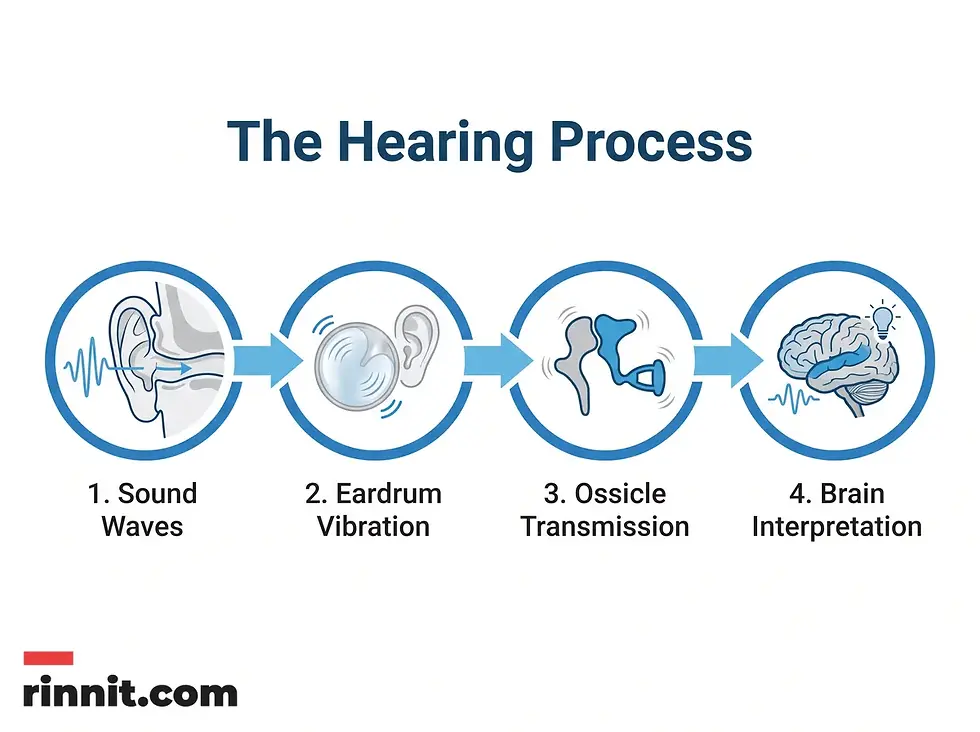
The Hearing Process
The primary function of the tympanic membrane is to facilitate the conversion of sound waves into signals the brain can interpret. This mechanical process involves several steps within the auditory system.
Vibration: Sound waves travel through the ear canal and hit the eardrum, causing it to vibrate. [1]
Transmission: These vibrations are passed to the ossicles, the three tiny bones in the middle ear known as the malleus, incus, and stapes.
Conversion: The vibrations move into the inner ear's cochlea, where hair cells convert the mechanical energy into electrical signals. [1]
Interpretation: The auditory nerve carries these electrical signals to the brain, which translates them into recognizable sounds. [1]
Common Conditions and Disorders
Several conditions can affect the health and functionality of the tympanic membrane. Because the eardrum is thin and sensitive, it is susceptible to injury from physical trauma, pressure changes, and ear infections.
Eardrum Rupture: A hole or tear in the membrane (tympanic membrane perforation), often caused by loud noises, sharp objects, or severe infections. Symptoms include pain, drainage, and tinnitus.
Tympanosclerosis: The development of scar tissue on the eardrum, often appearing as chalky white patches. This can occur after chronic infections or surgeries and may interfere with hearing. [1]
Otitis Media with Effusion: Also known as “glue ear,” this involves fluid buildup behind the eardrum, often due to blocked eustachian tubes or allergies. [1]
Infections: Bacterial or viral infections can cause inflammation and pain in the eardrum, sometimes leading to temporary hearing loss or vertigo. [1]
Caring for Your Eardrums
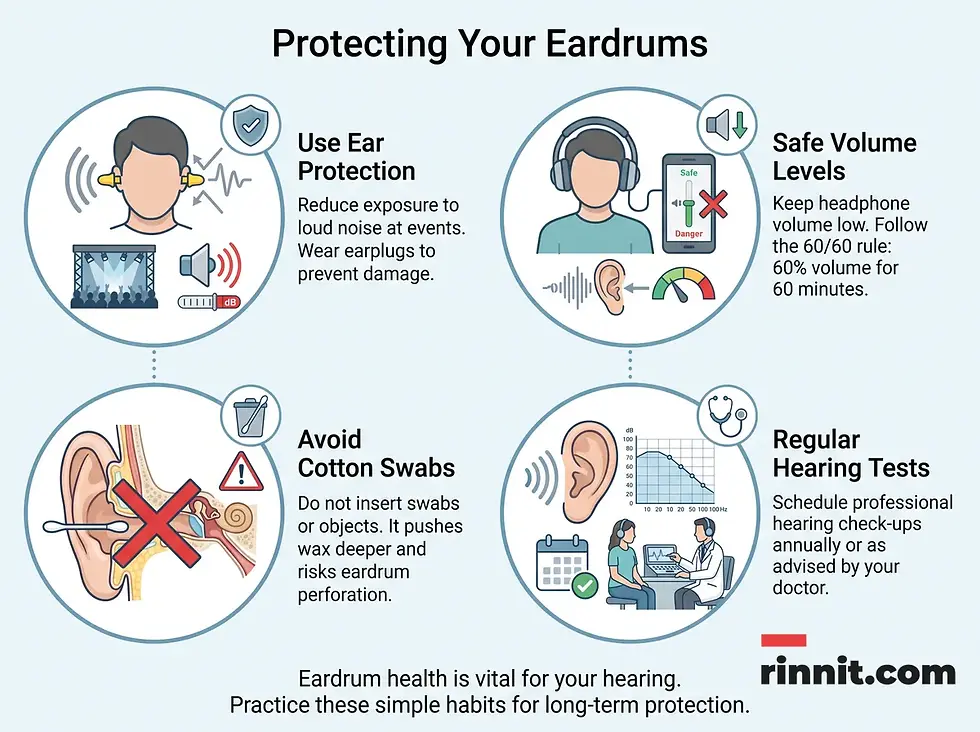
Maintaining the health of the tympanic membrane is essential for long-term hearing preservation. Most damage to the eardrum is preventable through proper ear care habits.
Healthcare providers recommend wearing ear protection during loud events and keeping the volume at safe levels when using headphones. [1] It is also critical to avoid inserting objects, such as cotton swabs, into the ear canal, as these can easily puncture the membrane. Regular hearing tests with an audiologist can help identify potential issues early. [1]
Conclusion
The tympanic membrane is a remarkable piece of biological engineering that serves as both a gateway for sound and a shield for the middle ear. While it has a natural ability to repair itself in many cases, persistent symptoms like pain, hearing loss, or ringing in the ears should be evaluated by a medical professional. If you suspect an injury to your eardrum, consult a healthcare provider to ensure proper healing and prevent long-term complications.
Frequently Asked Questions
What part of the human ear contains the eardrum?
The eardrum sits at the very end of the ear canal, forming the wall between the outer ear and the middle ear, just in front of the ossicles.
What happens to your eardrum when sound reaches it?
When sound waves reach the eardrum, they cause the membrane to vibrate, which then transmits the signals to the tiny bones of the middle ear.
Can you see a person's eardrum?
The eardrum cannot be seen with the naked eye, but a healthcare provider can view it using a lighted instrument called an otoscope.
What happens if you damage your tympanic membrane?
Damage, such as a rupture, can cause pain and hearing loss. In many cases, it heals on its own, but severe cases may require medical intervention.
Can the tympanic membrane repair itself?
Yes, in many instances, a torn or ruptured eardrum can repair itself within a few weeks without surgery.
What is tympanosclerosis?
Tympanosclerosis is the medical term for scarring on the eardrum, which can appear as chalky white patches after injuries or chronic infections.
What is “glue ear”?
“Glue ear” is a common term for fluid buildup behind the eardrum, often caused by blocked eustachian tubes or allergies.
How big is a typical eardrum?
A typical human eardrum is circular and measures about one centimeter in diameter, roughly one-third the size of a U.S. penny.
Can you hear without an eardrum?
Without a functioning eardrum, sound would be significantly muffled, and most individuals would experience noticeable hearing loss.
Why should I avoid cotton swabs?
Cotton swabs can easily push debris further into the ear or accidentally puncture the thin, delicate tissue of the eardrum.
Related Reading
Ruptured Eardrum (Eardrum Membrane Rupture): Symptoms, Causes, and Treatment explains eardrum perforation symptoms, healing and treatment.
Ear Infections: Symptoms, Causes, and Treatment covers ear infection symptoms in children and adults and treatment.
Ear Tubes (Tympanostomy): Why They're Placed, What Happens, and How Recovery Goes explains ear tube surgery for repeat infections and fluid buildup.
Tympanoplasty: Eardrum Repair Surgery, Recovery, and Results describes surgery to repair a damaged eardrum and recovery.
References
Cleveland Clinic. Tympanic Membrane (Eardrum). Cleveland Clinic. Last updated January 24, 2023. https://my.clevelandclinic.org/health/body/24642-tympanic-membrane-eardrum
Ding Y, Wei R, Li D, et al. Comparative study of fibroblast growth factor 2 and ofloxacin ear drops for repairing large traumatic perforations: A randomized controlled study. Am J Otolaryngol. 2023;44(5):103954. PMID 37348245. https://doi.org/10.1016/j.amjoto.2023.103954
Kutbi AH, Malas M, Al-Talhi AA, et al. The Effect of Using Ofloxacin Ear Drops in Traumatic Tympanic Membrane Healing: A Systematic Review and Meta-Analysis. Ear Nose Throat J. Published online June 22, 2024. PMID 38907707. https://doi.org/10.1177/01455613241264479
Medical disclaimer
The information provided in this article is for educational purposes only and should not be used as a substitute for professional medical advice, diagnosis, or treatment. Always seek the advice of your physician or other qualified health provider with any questions you may have regarding a medical condition.



Comments