Understanding the Pneumococcal Conjugate Vaccine (Prevnar 13)

Updated: 3 days ago
Medically reviewed by Dr. Baraa Alnahhal, MD | Last reviewed: October 7, 2026
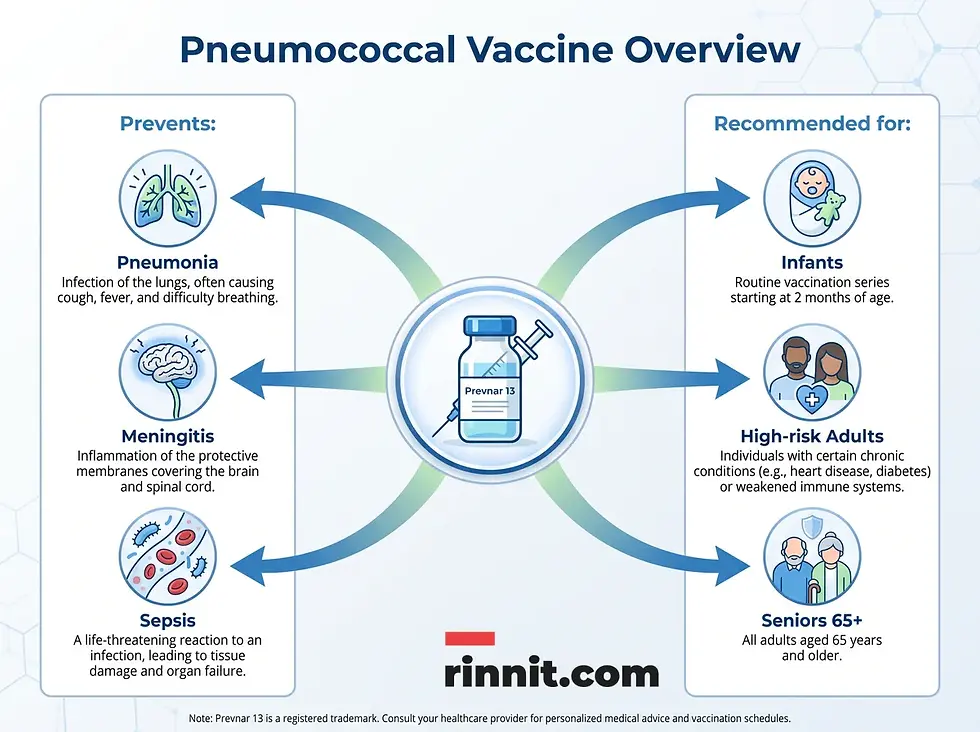
Quick Answer: What is the pneumococcal conjugate vaccine (Prevnar 13)?
The pneumococcal conjugate vaccine (Prevnar 13) is an immunization that prevents infections caused by pneumococcus bacteria, [1] such as pneumonia, meningitis and sepsis. It has been used in infants, children and adults, though in the U.S. newer conjugate vaccines (PCV15, PCV20 and PCV21) are now preferred [1]. It does not treat active infection but lowers the chance of illness. [1]
What the research says
PCV13 prevented vaccine-type pneumonia and invasive disease in older adults. In a randomized, placebo-controlled trial of 84,496 adults aged 65 or older (CAPiTA), vaccine-type community-acquired pneumonia occurred in 49 people who received PCV13 and 90 who received placebo (vaccine efficacy 45.6%, 95.2% CI 21.8–62.5), and invasive pneumococcal disease occurred in 7 versus 28 people (efficacy 75.0%, 95% CI 41.4–90.8). The vaccine did not prevent pneumonia from all causes (efficacy 5.1%, 95% CI −5.1 to 14.2), and local reactions were more common with PCV13 (Bonten et al., New England Journal of Medicine, 2015) [4].
Vaccinating children with PCV13 lowered invasive disease in all age groups. In U.S. surveillance data, invasive pneumococcal disease (IPD) in children younger than 5 years fell by 64% (95% interval 59–68) compared with what was expected without PCV13, and IPD caused by the extra PCV13 serotypes fell by 93% (91–94). Among adults, IPD from those serotypes declined by 58–72% depending on age, and the authors estimated that more than 30,000 cases and 3,000 deaths were averted in the first 3 years (Moore et al., Lancet Infectious Diseases, 2015) [5].
Overview of Pneumococcal Protection
Pneumococcal bacterial infections can lead to severe health complications, including inflammation of the lungs (pneumonia), the lining of the brain and spinal cord (meningitis), and the bloodstream. The pneumococcal conjugate vaccine serves as a proactive defense mechanism, lowering the probability of these infections. It is important to note that the vaccine is not a treatment for existing infections, [1] nor can it cause a pneumococcal infection itself. It will also not protect against every type of pneumococcal infection. [1]
Feature | Details |
Target Bacteria | Pneumococcus |
Prevented Conditions | Pneumonia, Meningitis, Sepsis |
Primary Goal | Lower infection risk |
Administration | Intramuscular injection by a professional |
Recommended Populations and Administration
Vaccination schedules are tailored to protect individuals at the highest risk of severe illness. Healthcare providers typically recommend this vaccine for:
Infants and Young Children: Immunization can begin as early as 6 weeks of age and usually involves 4 separate shots over several months. [1]
Older Children and Adults: Children 6 to 17 years of age and adults 18 years or older receive a single dose, [1] with people who have weakened immune systems or certain chronic health issues being of particular concern.
Seniors: Adults aged 65 years or older have long been a priority group, and current CDC guidance now extends routine pneumococcal conjugate vaccination to all adults 50 years or older. [2]
A note on current guidance: Prevnar 13 is one of several pneumococcal conjugate vaccines. The CDC's current recommendations call for vaccination of all children younger than 5 years and all adults 50 years or older, and list PCV15, PCV20, or PCV21 as options for adults. [2] Which product you or your child receives depends on age, health conditions, and past vaccination history, so ask your provider what is right for you.
Before administration, patients or guardians receive a Vaccine Information Statement (VIS), which explains the vaccine's benefits and risks. The injection is given by a nurse or other trained health professional, usually in the thigh or upper arm, [1] and is not intended for home use.

Safety and Potential Interactions
Patients must share their full medical history with their care team before receiving the injection. Conditions that require attention include bleeding disorders, a current fever, and known immune system issues, since the vaccine may not work as well when the immune system is weak. Any history of allergic reactions to vaccines, medicines, or preservatives must also be reported, [1] and caution is advised for premature babies who have had pauses in breathing (apnea). [1]
Interaction Type | Examples |
Chemotherapy and Radiation | Cancer treatments that weaken the immune system |
Immune Suppressants | Drugs that lower immune function |
Steroids | Prednisone, Hydrocortisone |
Monitoring Side Effects
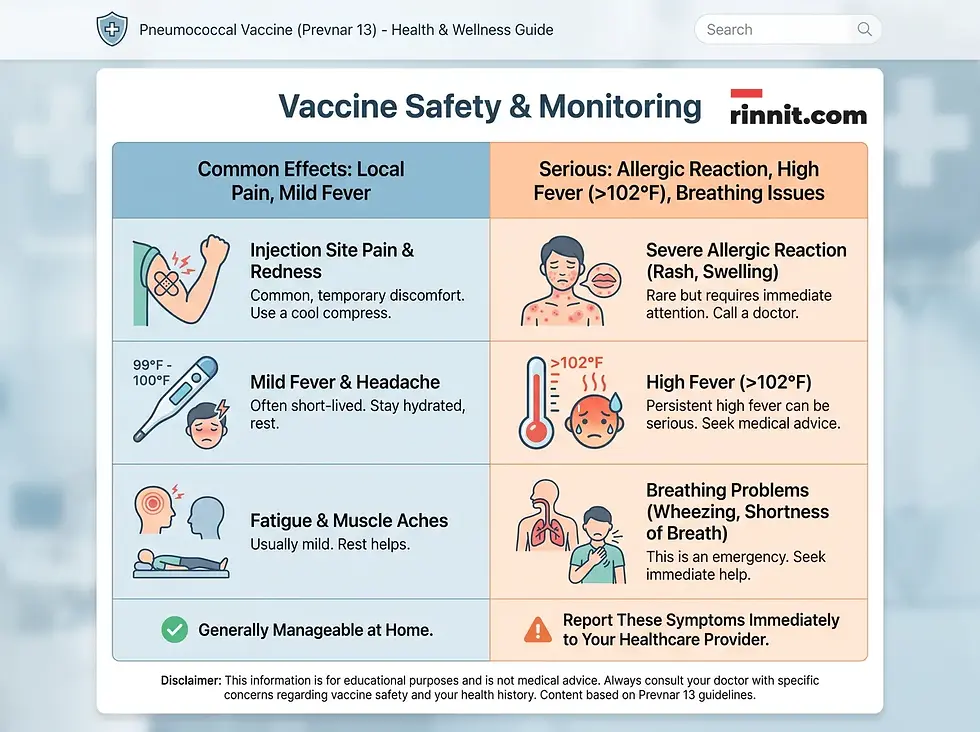
Most side effects are mild and typically resolve within about three days. Common reactions include tenderness, redness, or swelling at the injection site, a mild fever (about 102°F or lower), reduced appetite, and irritability. However, certain symptoms necessitate immediate medical reporting.
Serious Symptoms to Report
Contact your doctor or healthcare professional as soon as possible if any of the following occur after vaccination:
Signs of an allergic reaction, such as skin rash, itching, hives, or swelling of the face, lips, or tongue
Breathing problems or tightness in the chest [1]
A fast or irregular heartbeat [1]
Confusion or seizures [1]
A fever above about 102°F (39°C)
Unusual bleeding or bruising, or unusual muscle weakness
A serious allergic reaction (anaphylaxis) can be life-threatening and needs emergency medical care. [1]
Conclusion
The pneumococcal conjugate vaccine is a vital tool in preventing life-threatening bacterial infections across the lifespan. By understanding the recommendations and monitoring for side effects, patients and caregivers can effectively manage their preventative health.
Next Steps
Consult with your healthcare provider today to determine if the pneumococcal conjugate vaccine is appropriate for you or your family members.
Frequently Asked Questions
What infections does the pneumococcal vaccine prevent?
The pneumococcal vaccine prevents infections caused by pneumococcus bacteria, including pneumonia, meningitis, and blood infections.
Can the vaccine cause pneumonia?
No, the vaccine cannot cause a pneumococcal infection.
Who should get the Prevnar 13 vaccine?
Prevnar 13 is used in infants, young children, older children, and adults, as your provider advises. Current CDC guidance recommends pneumococcal conjugate vaccination for all children younger than 5 years, all adults 50 years or older, and people at increased risk. The specific vaccine product depends on age, health conditions, and vaccination history.
How is the vaccine administered?
The pneumococcal vaccine is given as an injection into a muscle, usually in the thigh or upper arm, by a nurse or other trained healthcare professional.
Can children receive this vaccine?
Yes. It can be given to infants as young as 6 weeks old, and to older children and adults, as your healthcare provider advises.
What should I tell my doctor before vaccination?
Inform them of any bleeding problems, fevers, immune system issues, or allergies to vaccines or medicines.
Are there drug interactions?
Treatments that weaken the immune system, such as chemotherapy, radiation, and steroid medicines like prednisone, can make the vaccine work less well, so tell your provider about them.
What are common side effects?
Common reactions include pain, redness, or swelling at the injection site, mild fever, reduced appetite, and irritability.
How long do mild side effects last?
Most mild symptoms go away on their own within about three days.
When should I report a fever?
Report a fever if it rises above about 102°F (39°C).
Can I store the vaccine at home?
No. The vaccine is given in a clinical setting by a trained healthcare professional, so patients do not store it.
What is a Vaccine Information Statement (VIS)?
A Vaccine Information Statement (VIS) is a document provided before vaccination that explains the benefits and risks of the vaccine.
Does the vaccine treat active pneumonia?
No, it is used for prevention and will not treat an existing infection.
What should I do if I miss a dose?
Contact your healthcare professional to reschedule as soon as possible.
What are the signs of an allergic reaction?
Signs include skin rash, itching, hives, swelling of the face, lips, or tongue, and trouble breathing. Seek emergency care right away if these occur.
Related Reading
Understanding the PCV21 Vaccine: Protection Against Pneumococcal Disease explains a newer conjugate vaccine covering more pneumococcal strains.
Understanding the PPSV23 Vaccine: Protection Against Pneumococcal Disease describes the polysaccharide vaccine and who still needs it.
Pneumococcal Disease: Types, Symptoms, Treatment, and Prevention explains the infections these vaccines prevent.
Pneumonia: Complete Guide to Symptoms, Causes, and Treatment covers pneumonia symptoms, causes and when to seek care.
Sources
Merative, Micromedex®. Pneumococcal 13-valent vaccine, diphtheria conjugate (intramuscular route). Mayo Clinic. Portions last updated February 1, 2026. https://www.mayoclinic.org/drugs-supplements/pneumococcal-13-valent-vaccine-diphtheria-conjugate-intramuscular-route/description/drg-20074043
Centers for Disease Control and Prevention. Pneumococcal Vaccine Recommendations. CDC. February 25, 2026. https://www.cdc.gov/pneumococcal/hcp/vaccine-recommendations/index.html
Immunize.org. PCV (Pneumococcal Conjugate). Immunize.org. Updated September 23, 2025. https://www.immunize.org/vaccines/vis/pcv/
Bonten MJM, Huijts SM, Bolkenbaas M, et al. Polysaccharide conjugate vaccine against pneumococcal pneumonia in adults. N Engl J Med. 2015;372(12):1114-1125. PMID: 25785969. DOI: 10.1056/NEJMoa1408544
Moore MR, Link-Gelles R, Schaffner W, et al. Effect of use of 13-valent pneumococcal conjugate vaccine in children on invasive pneumococcal disease in children and adults in the USA: analysis of multisite, population-based surveillance. Lancet Infect Dis. 2015;15(3):301-309. PMID: 25656600. DOI: 10.1016/S1473-3099(14)71081-3
Medical disclaimer
This content is for informational purposes only and does not constitute medical advice. Always seek the advice of your physician or other qualified health provider with any questions you may have regarding a medical condition or treatment.



Comments