Understanding the PCV21 Vaccine: Protection Against Pneumococcal Disease

Updated: 3 days ago
Medically reviewed by Dr. Baraa Alnahhal, MD · Last reviewed: October 30, 2026
The PCV21 vaccine is a conjugate injection designed to reduce the risk of pneumococcal diseases, including pneumonia. It works by training the immune system to recognize and fight specific bacteria [1]. While it does not treat existing infections, it significantly lowers the severity of symptoms for those who may still become infected after vaccination.
Quick Answer
The PCV21 vaccine is an immunization that helps the body build immunity against bacteria that cause pneumococcal disease. Given as a single intramuscular injection by a healthcare professional, it is mainly used to prevent serious complications like pneumonia. It does not treat active infections. Discuss your medical history, allergies and immune status with your care team beforehand.
What the research says
The 21-valent vaccine matched or beat PCV20 in a large trial. In the phase 3 STRIDE-3 trial of 2,656 vaccinated adults, the 21-valent vaccine V116 (PCV21) produced immune responses non-inferior to PCV20 for the 10 shared serotypes and superior for 10 of the 11 serotypes unique to it; among adults 50 and older, 58.2% given V116 and 66.2% given PCV20 reported an adverse event, with no vaccine-related serious adverse events (Platt et al., Lancet Infect Dis, 2024).
It also outperformed the older polysaccharide vaccine. In the phase 3 STRIDE-10 trial in adults 50 and older, V116 was non-inferior to PPSV23 for all 12 shared serotypes and superior for all 9 serotypes unique to V116, with a safety profile comparable to PPSV23 (Jotterand et al., Vaccines (Basel), 2025).
Research summaries are based on article abstracts retrieved from PubMed.
What Is the PCV21 Vaccine?
The PCV21 vaccine, technically known as a pneumococcal conjugate vaccine, is a preventive medication used to decrease the likelihood of contracting pneumococcal disease [1]. This category of illness includes serious conditions such as pneumonia, which can significantly impact respiratory health. Unlike antibiotics, this vaccine does not treat an active infection; instead, it serves as a proactive tool to prepare the immune system for future encounters with specific bacteria [1].
Feature | Description |
|---|---|
Vaccine type | Pneumococcal Conjugate Vaccine (PCV21) |
Common brand | Capvaxive |
Administration | Intramuscular injection |
Primary goal | Prevention of pneumococcal disease and pneumonia |
How Does the Vaccine Work?
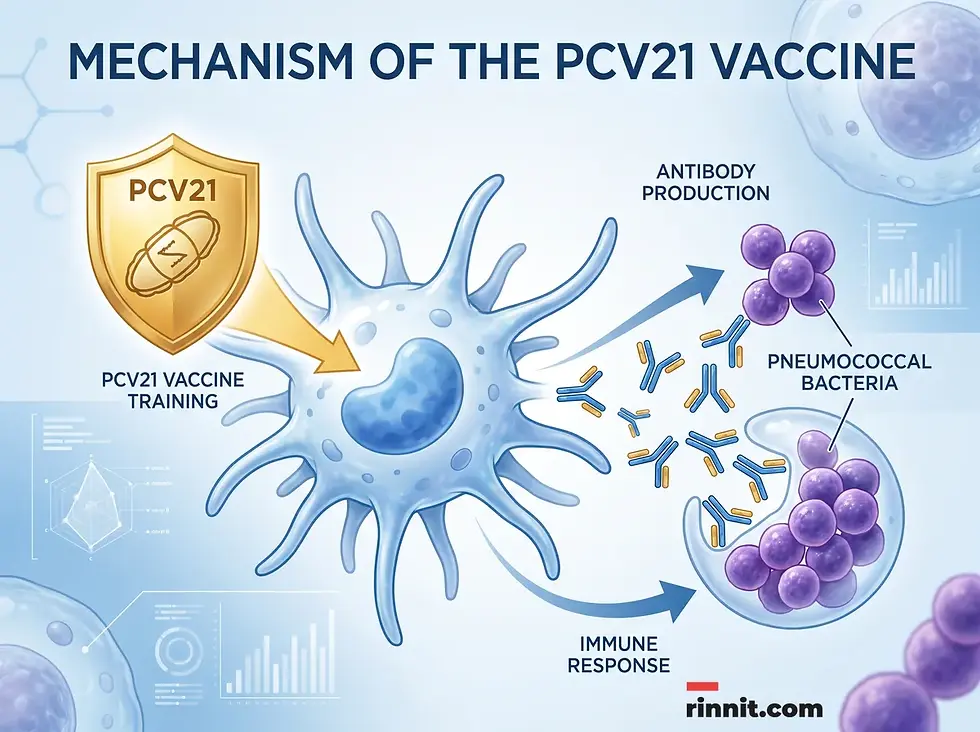
The primary function of the PCV21 injection is to educate the immune system. When the vaccine is introduced into the body, it helps the immune system identify and remember the characteristics of pneumococcal bacteria [1]. If a person is exposed to these bacteria later in life, their immune system can respond more rapidly and effectively. Even if an individual still contracts the disease after being vaccinated, the resulting symptoms are often less severe and do not last as long as they would in an unvaccinated person [1].
How Is It Administered?
This medication is strictly administered by healthcare professionals and is typically injected into a muscle [1]. Before each vaccination, patients are provided with a Vaccine Information Statement (VIS), which contains the most current safety and efficacy data. It is important to review this document carefully, as the information is updated frequently to reflect the latest clinical findings [1]. The specific timing and suitability of the vaccine depend on various factors, including age and overall health status.
What Should I Tell My Care Team Before the Injection?
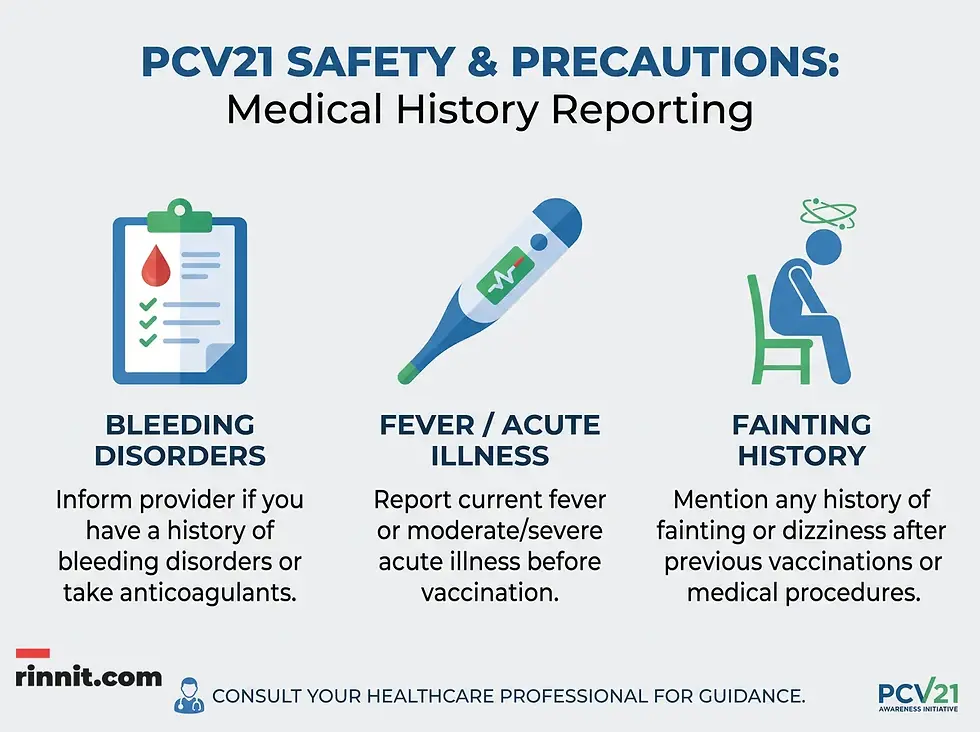
It is essential to provide a comprehensive medical history to your healthcare team before receiving the PCV21 vaccine. Certain conditions may require special consideration or a delay in administration. Specifically, your care team needs to know if you have a bleeding disorder, a current fever, or a history of fainting [1]. Additionally, individuals with weakened immune systems or those who are pregnant or breastfeeding should discuss the risks and benefits with their provider [1].
Condition category | What to report |
|---|---|
Allergies | History of reactions to vaccines, diphtheria toxoid, or foods |
Current health | Presence of fever, infection, or moderate-to-severe illness |
Immune status | Weakened immune system or use of immunosuppressants |
Physical history | Bleeding disorders or a tendency to faint |
What Are the Potential Side Effects?
Like all immunizations, the PCV21 vaccine may cause side effects as the body builds its immune response. Most of these reactions are mild and resolve on their own without medical intervention. Common experiences include pain, redness, or irritation at the injection site, as well as general fatigue, headache, and muscle pain [1]. Some patients may also experience a mild fever or general discomfort shortly after the injection [1].
In rare cases, more serious reactions can occur. You should contact your healthcare provider immediately if you notice signs of an allergic reaction, such as a skin rash, hives, or swelling of the face, lips, and throat [1]. Additionally, feeling faint or lightheaded after the injection should be reported to your care team as soon as possible to ensure proper monitoring and safety [1].
Reaction type | Examples | What to do |
|---|---|---|
Common and mild | Pain, redness, or irritation at the injection site; fatigue; headache; muscle pain; mild fever or general discomfort | Usually resolve on their own without medical intervention |
Rare and serious | Skin rash, hives, swelling of the face, lips, and throat | Contact your healthcare provider immediately |
Faintness | Feeling faint or lightheaded after the injection | Report to your care team as soon as possible |
Interactions and Monitoring
Certain medications can interact with the PCV21 vaccine, particularly those that lower the body's ability to fight infections [1]. It is vital to provide your care team with a full list of all medications, herbs, and supplements you are currently taking. For those experiencing a moderate to severe acute illness, healthcare providers may recommend waiting until the illness has passed before administering the vaccine, although mild colds or diarrhea are generally not a reason to delay [1].

Bottom Line
The PCV21 vaccine represents a critical advancement in the prevention of pneumococcal disease. By proactively training the immune system, it offers a robust layer of protection against serious respiratory infections like pneumonia. While minor side effects are possible, the long-term benefits of reduced disease severity and improved immune readiness make it a vital component of adult preventative care.
Take action today: Are you up to date on your immunizations? Speak with your healthcare provider today to determine if the PCV21 vaccine is the right choice for your preventative health plan.
Frequently Asked Questions
Does the PCV21 vaccine treat pneumonia?
No, the PCV21 vaccine is a preventative measure designed to reduce the risk of infection and is not used to treat active cases of pneumonia. [1]
Can I still get sick after the vaccine?
Yes, it is possible to contract pneumococcal disease after vaccination, but the symptoms are typically much less severe and of shorter duration. [1]
How is the vaccine administered?
The vaccine is given as an injection into a muscle, performed by a trained healthcare professional in a clinical setting. [1]
What are the most common side effects?
The most frequent side effects include pain or redness at the injection site, headache, muscle pain, and general fatigue. [1]
Should I wait if I have a cold?
A mild illness like a common cold is usually not a reason to delay, but you should discuss moderate or severe illnesses with your care team. [1]
What is a Vaccine Information Statement?
A Vaccine Information Statement is a document provided by your care team that outlines the risks, benefits, and latest clinical data regarding the vaccine. [1]
Are there any drug interactions?
Yes, medications that weaken the immune system can interfere with how well the vaccine works. [1]
Is this vaccine used for all ages?
Suitability varies by age group; your healthcare provider will determine if this specific conjugate vaccine is appropriate for you. [1]
Where is the vaccine stored?
The vaccine is stored and managed exclusively by healthcare facilities and is not available for home storage or use. [1]
What should I do if I feel faint?
You should report any feelings of lightheadedness or fainting to your care team immediately following the injection. [1]
Related Resources
Related reading on Rinnit:
External resources for deeper reading:
References
Elsevier Inc. Pneumococcal Conjugate Vaccine (PCV21) Injection. Cleveland Clinic Health Library. Accessed October 30, 2026. https://my.clevelandclinic.org/health/drugs/pneumococcal-conjugate-vaccine-pcv21-injection
Platt HL, Bruno C, Buntinx E, et al. Safety, tolerability, and immunogenicity of an adult pneumococcal conjugate vaccine, V116 (STRIDE-3): a randomised, double-blind, active comparator controlled, international phase 3 trial. Lancet Infect Dis. 2024;24(10):1141-1150. PMID: 38964361. https://doi.org/10.1016/S1473-3099(24)00344-X
Jotterand V, Jagannath V, Diaz AA, et al. A phase 3 randomized trial investigating the safety, tolerability, and immunogenicity of V116, an adult-specific pneumococcal vaccine, compared with PPSV23, in adults ≥50 years of age (STRIDE-10). Vaccines (Basel). 2025;13(4):341. PMID: 40333240. https://doi.org/10.3390/vaccines13040341
Medical disclaimer
This article is for informational purposes only and is not a substitute for professional medical advice, diagnosis, or treatment. Always seek the advice of your physician or other qualified health provider with any questions you may have about a medical condition.


Comments