
Protecting Damaged Nails: A Guide to Poly-Ureaurethane Solution

Updated: 3 days ago
Medically reviewed by Dr. Baraa Alnahhal, MD · Last reviewed: October 31, 2026
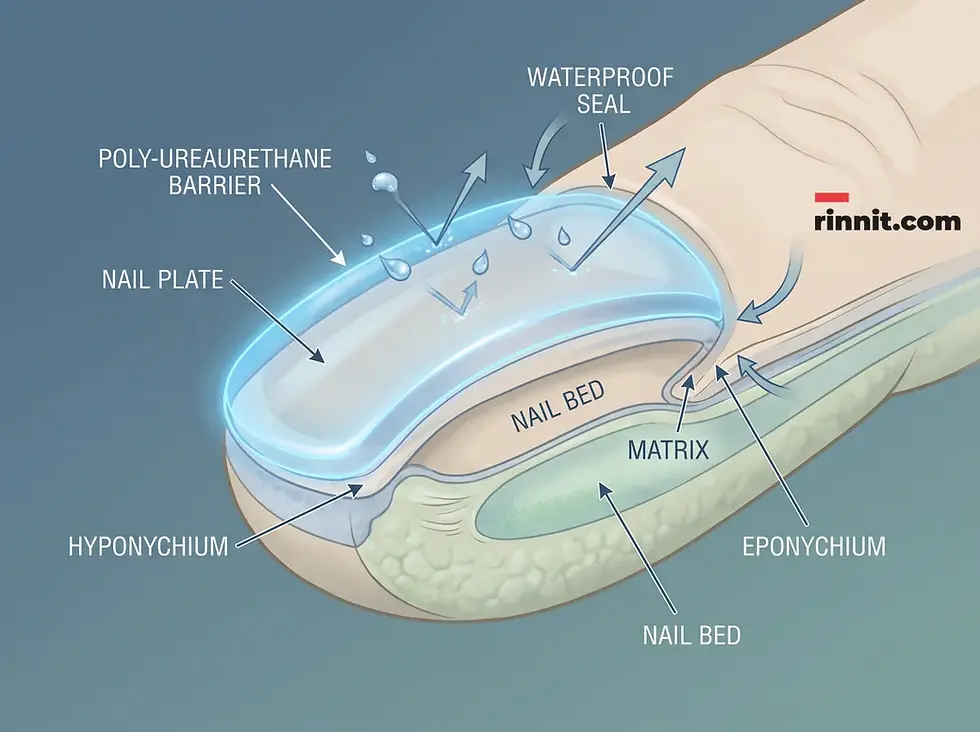
Function: Poly-ureaurethane is a topical solution that forms a waterproof barrier to protect weak or damaged nails.
Application: The solution is applied to affected nails before bedtime, at regular intervals.
Safety: It is a flammable liquid that must dry completely before contact with clothing or heat sources.
Maintenance: Treated nails should be cleaned once a week using a standard nail polish remover.
Quick Answer
Poly-ureaurethane nail topical solution is a treatment designed to shield and strengthen weak or damaged nails. By creating a durable, waterproof barrier over the nail surface, it prevents further environmental damage and supports the natural healing process. This medication is for external use only and requires a consistent application schedule, typically at regular intervals before bedtime, to be most effective. [1], [2]
What the research says
Laboratory data describe poly-ureaurethane 16% as a waterproof, breathable nail barrier. A dermatology paper on the polymer describes a barrier that protects the nail plate and regulates transonychial water loss. In a vertical diffusion cell test, the antifungals efinaconazole 10% and tavaborole 5% passed through a dried poly-ureaurethane 16% layer at rates far above their reported flux across the nail itself. This was an in vitro study, and the authors state that clinical studies are still needed (Adigun et al., J Drugs Dermatol, 2016).
Brittle nails are common, and topical lacquers are one option. A review of brittle nail syndrome reports that nail fragility affects up to 20% of the population, especially women over 50, and that fingernails are affected more often than toenails. Treating the underlying cause is recommended where possible, and topical moisturizers and lacquers can be considered to restructure the affected nail plate (Chessa et al., Dermatol Ther (Heidelb), 2020).
A different protective nail lacquer improved brittle nails in a randomized trial. In a randomized, assessor-blinded trial of 50 people with brittle nail syndrome, a hydroxypropyl chitosan-based lacquer (not poly-ureaurethane) reduced the Onychodystrophy Global Severity Score by 57% over 4 months, and by 62% when combined with oral biotin. Both treatments were well tolerated. This shows that barrier-type lacquers can help brittle nails, but it does not test poly-ureaurethane itself (Chiavetta et al., Dermatol Ther, 2019).
How does poly-ureaurethane protect damaged nails?
The primary mechanism of poly-ureaurethane is the creation of a physical, waterproof shield. This barrier is particularly effective for individuals with nails that are prone to splitting, peeling, or breaking due to underlying health conditions or environmental stressors. By sealing the nail, the solution prevents moisture and irritants from penetrating the nail plate, which helps maintain structural integrity over time. [1], [2]
It is essential to apply the medication to clean, dry nails. Users should avoid applying any other lotions, creams, or ointments to the area immediately before using the solution, as these can interfere with the barrier’s ability to bond to the nail surface. [1]
How do you apply and maintain poly-ureaurethane nail solution?
For optimal results, poly-ureaurethane should be used as part of a regular nighttime routine. Because the solution is flammable until it has completely dried, users must avoid open flames, heat sources, or smoking during and immediately after application. Once the solution is dry, it is safe to touch clothing and other surfaces. [1]
Step | Action | Frequency |
Preparation | Ensure nails are clean and free of other lotions or creams. | Daily |
Application | Apply an even layer to all affected nails before bedtime. | Daily |
Drying | Allow the solution to dry completely before touching fabric. | Daily |
Cleaning | Remove the barrier using a standard nail polish remover. | Weekly |
Regular maintenance is a key component of treatment. Cleaning the nails once a week ensures that the protective layer does not become too thick or uneven, allowing for a fresh, effective application. [1]

What are the safety considerations and side effects of poly-ureaurethane?
Poly-ureaurethane is generally well tolerated, with common side effects such as temporary burning or stinging usually mild and limited to the area where it is applied. The solution is for external use only, and you should tell your care team if you have deep, open, or bleeding wounds near the treated area. Contact with the eyes must be avoided; if accidental contact occurs, the eyes should be flushed immediately with cool tap water. [1]
Common side effects are typically mild and localized to the area of application. However, if symptoms persist or become severe, it is important to contact a healthcare provider. [1]
Mild Side Effects: Temporary burning or mild stinging where the solution is applied.
Serious Reactions: Skin rash, hives, itching, or swelling of the face, lips, or tongue.
Treated Skin Issues: Red, irritated skin near the treated nail.
Users should also be mindful that the solution can stain surfaces such as floors, countertops, and furniture. Care should be taken to apply the medication over a protected surface to prevent permanent damage to household items. [1]

Conclusion
Poly-ureaurethane nail topical solution offers a practical and effective way to manage weak or damaged nails by providing a robust, waterproof protective layer. By following a consistent application and cleaning schedule, individuals can support their nail health and prevent further damage. Always consult with a healthcare professional to ensure this treatment is appropriate for your specific needs.
Frequently Asked Questions
What is the main use of poly-ureaurethane nail solution?
Poly-ureaurethane nail solution is used to protect and strengthen weak or damaged nails by forming a waterproof barrier.
How often should I apply the solution?
The solution should be applied evenly to the affected nails before bedtime, at regular intervals as directed.
Can I use other nail products with this medication?
You should not use other ointments, creams, or lotions on the treated area without consulting your healthcare provider.
Is the nail solution flammable?
Yes, the solution is flammable until it has completely dried. Avoid heat, fire, or smoking during application.
How do I remove the solution from my nails?
The treated nails should be cleaned with a standard nail polish remover once every week.
What should I do if the solution gets in my eyes?
Immediately rinse your eyes with plenty of cool tap water and contact your care team if irritation persists.
Can I apply this to an open cut near my nail?
Tell your care team before using this medication if you have deep, open, or bleeding wounds near the treated area.
Does the solution stain furniture?
Yes, it can stain finished surfaces like floors and countertops. It is best to apply it over a protected area.
What are the signs of an allergic reaction?
Signs include skin rash, hives, itching, or swelling of the face, lips, tongue, or throat.
Is it safe to use during pregnancy?
You should inform your healthcare provider if you are pregnant or breastfeeding before using this medication.
References
Cleveland Clinic. Poly-Ureaurethane Nail Topical Solution. Cleveland Clinic Health Library. Accessed October 11, 2026. https://my.clevelandclinic.org/health/drugs/18663-poly-ureaurethane-nail-topical-solution
Adigun CG, Vlahovic TC, McClellan MB, et al. Efinaconazole 10% and tavaborole 5% penetrate across poly-ureaurethane 16%: results of in vitro release testing and clinical implications of onychodystrophy in onychomycosis. J Drugs Dermatol. 2016;15(9):1116-1120. PMID: 27602975. https://pubmed.ncbi.nlm.nih.gov/27602975/
Chessa MA, Iorizzo M, Richert B, et al. Pathogenesis, clinical signs and treatment recommendations in brittle nails: a review. Dermatol Ther (Heidelb). 2020;10(1):15-27. PMID: 31749091. DOI: https://doi.org/10.1007/s13555-019-00338-x
Chiavetta A, Mazzurco S, Secolo MP, Tomarchio G, Milani M. Treatment of brittle nail with a hydroxypropyl chitosan-based lacquer, alone or in combination with oral biotin: a randomized, assessor-blinded trial. Dermatol Ther. 2019;32(5):e13028. PMID: 31344296. DOI: https://doi.org/10.1111/dth.13028
Medical disclaimer
This article is for informational purposes only and is not a substitute for professional medical advice, diagnosis, or treatment. Always seek the advice of your physician or other qualified health provider with any questions you may have about a medical condition.


Comments