Understanding the Bronchi: The Airways of Your Lungs

Updated: 3 days ago
Medically reviewed by Dr. Baraa Alnahhal, MD · Last reviewed: October 2026
TL;DR: The bronchi are the large airways that carry air between the windpipe and the lungs. [1] You have a left and a right main bronchus, which branch into smaller lobar and segmental bronchi before becoming bronchioles. Their mucus lining warms and moistens air and traps germs and dust, while cilia sweep them out. Asthma, bronchitis, bronchiectasis, COPD, and cystic fibrosis can affect them. [1] Avoiding smoke and irritants is the best way to protect them.
Call your local emergency number right away if you have bluish, gray, or pale lips, skin, or nails, your chest sinks in with each breath, you breathe fast for no known reason, you have severe shortness of breath, or you are coughing up blood.
Quick Answer: What are the bronchi?
The bronchi are the large tubes that carry air from the windpipe to the lungs, with the left and right main bronchi each dividing into smaller bronchi inside the lungs. [1] A lining of mucus and tiny hairlike cilia moistens the air and traps viruses, bacteria and dust, while cartilage and smooth muscle keep the airways open and control airflow.
What the research says
Quitting smoking slows the loss of lung function. In a review of 47 studies with an average follow-up of 11 years, people who quit during follow-up lost lung function (FEV1) 8.5 mL per year more slowly than those who kept smoking, a rate close to that of never smokers (10.8 mL per year slower) (Lee and Fry, BMC Med, 2010) [2].
Flu shots may reduce flare-ups in COPD. A Cochrane review of 11 trials (6,750 participants) found that inactivated flu vaccine lowered the number of exacerbations per vaccinated person with COPD (mean difference -0.37, 95% CI -0.64 to -0.11), though the evidence was low quality and came from two trials with 180 participants (Kopsaftis et al., Cochrane Database Syst Rev, 2018) [3].
Pulmonary rehabilitation helps people with COPD move and feel better. Across 65 trials with 3,822 participants, rehabilitation improved six-minute walking distance by 43.9 meters (95% CI 32.6-55.2) compared with usual care, along with breathlessness and quality of life (McCarthy et al., Cochrane Database Syst Rev, 2015) [4].
Key takeaways
The bronchi connect the trachea to the lungs and branch into primary (main), secondary (lobar), and tertiary (segmental) bronchi. [1]
Their mucus lining moistens air and traps germs, and cilia move the trapped particles out when you cough. [1]
Cartilage rings support the main bronchi, while the smaller bronchi have patches of cartilage.
Asthma, bronchitis, bronchiectasis, COPD, and cystic fibrosis commonly affect the bronchi. [1]
Not smoking or vaping, clean indoor air, exercise, and recommended vaccines all help protect your airways.
The Anatomy and Structure of the Bronchi
The bronchi sit inside your chest, protected by the rib cage. [1] They start at the base of the trachea and divide into smaller and smaller segments that reach every part of the lungs, forming the branches of the tracheobronchial tree. The main bronchi are the widest, and the smaller bronchi branch into the lung lobes and segments before turning into bronchioles.
Bronchi segment | Location and characteristics | Structural support |
Primary (main) bronchi | The left and right tubes attached directly to the trachea. The widest part of the bronchi. [1] | Supported by rings of cartilage. [1] |
Secondary (lobar) bronchi | Tubes near the middle of the lungs that cross into the lung lobes. | Smaller patches of cartilage. |
Tertiary (segmental) bronchi | Smaller tubes that pass through a segment of each lobe just before the bronchioles. [1] | Patches of cartilage, with less than the larger airways. |
The walls are made of smooth muscle, which helps control airflow, surrounded by cartilage for support. They are lined with mucous membrane that contains cilia, tiny hairlike structures that constantly move to push trapped debris upward and out of the airways.

Vital Functions in Respiratory Health
The main job of the bronchi is to carry air to and from the lungs. As the lungs expand, the bronchi distribute air toward the alveoli (air sacs), where oxygen moves into the blood and carbon dioxide moves out. [1] They also protect and condition the air:
Air conditioning: the mucus lining moistens the air before it reaches the delicate air sacs. [1]
Filtration and defense: sticky mucus traps viruses, bacteria, and dust so they do not travel deeper into the lungs. [1]
Particle clearance: cilia push trapped germs and particles out of the body when you cough or sneeze. [1]
Gas exchange pathway: the bronchi provide the route for oxygen to enter and carbon dioxide to leave.
Common Conditions Affecting the Bronchi
Inflammatory and genetic conditions can narrow the airways, increase mucus, or damage the bronchial walls, making breathing difficult.
Condition | How it affects the bronchi | Common symptoms |
Asthma | Chronic inflammation that narrows the airways | Wheezing, chest tightness, shortness of breath |
Bronchitis | Inflammation of the bronchial lining, short-term (acute) or long-lasting (chronic) | Cough, mucus, fatigue |
Bronchiectasis | Widening and damage of the bronchi, creating mucus-filled pouches [1] | Chronic cough, frequent infections, coughing up blood |
COPD | A group of inflammatory lung diseases (including chronic bronchitis) that block airflow | Difficulty breathing, chronic cough, fatigue |
Cystic fibrosis | A genetic condition that causes thick, sticky mucus to build up in the airways [1] | Frequent lung infections, persistent cough |
Learn more in our guides to allergic asthma, cystic fibrosis, and chronic cough.

Diagnostic Testing and Care Strategies
Depending on your symptoms, a provider may use pulmonary function tests to check your bronchi and lungs. [1] Spirometry is the most common, measuring how much air you can breathe out and how forcefully. Other tests include a CT scan and bronchoscopy, which uses a small, flexible tube with a camera to look inside the bronchi. [1]
Treatment depends on the condition. Common options include inhaled medicines such as bronchodilators and steroids, oxygen therapy, oral medicines such as steroids or antibiotics for flare-ups, positive airway pressure, and pulmonary rehabilitation [1], an exercise and education program that helps strengthen the lungs.
Maintaining Bronchial Health
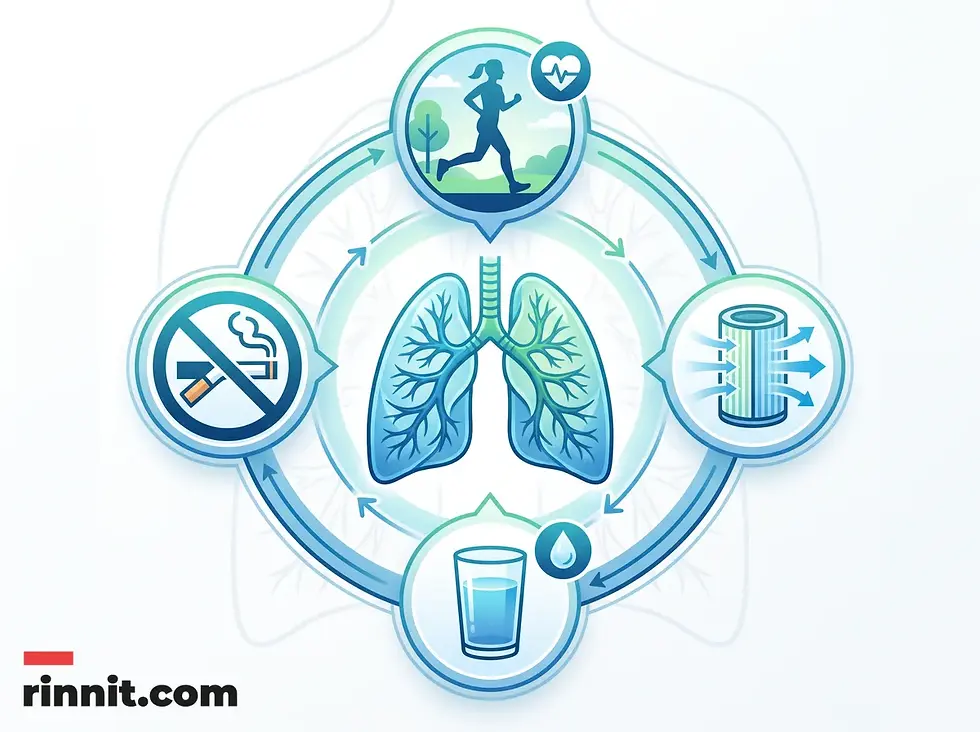
Avoid irritants: do not smoke or vape, and avoid secondhand smoke (see our guide to nicotine replacement therapy if you want to quit).
Keep indoor air clean: clean your home regularly and change air filters. [1]
Stay active: regular physical activity strengthens your heart and lungs.
Protect yourself: use a face mask around dust, allergens, or chemical fumes [1], and limit exposure to toxins in the air.
Prevent infections: wash your hands, avoid crowds during flu season, and get recommended vaccinations. [1]
When to See a Healthcare Provider
Contact a provider if you have a nagging cough or feel you are not breathing as well as you could. [1] Early diagnosis and treatment of bronchial conditions help preserve long-term lung function. Seek emergency care for any signs of respiratory distress, such as bluish or pale lips, fast breathing with no known cause, wheezing with severe shortness of breath, or coughing up blood.
Conclusion
The bronchi are the main conduits of the respiratory system. They bring oxygen to the lungs while protecting you from germs, dust, and other irritants. Understanding how they work and what can harm them lets you take practical steps, such as avoiding smoke and staying up to date on vaccines, to keep your airways clear.
Related reading
Allergic Asthma: The Breathing Condition Triggered by the Air Around You
Cystic Fibrosis: Symptoms, Causes, Diagnosis, and Treatment (2026 Guide)
Chronic Cough: Causes, Symptoms, Diagnosis, and Treatment (2026 Guide)
Pulmonary Rehabilitation: Managing Chronic Lung Disease Through Exercise and Education
Nicotine Replacement Therapy (NRT): A Guide to Quitting Smoking
Frequently Asked Questions
What is the difference between bronchi and bronchioles?
Bronchi are larger airways supported by cartilage. Bronchioles are much smaller, lead to the air sacs, and have no cartilage.
Can bronchitis be contagious?
Acute bronchitis caused by a virus or bacteria can be. Chronic bronchitis, usually from long-term irritation such as smoking, is not.
How does asthma affect the bronchi?
The muscles around the airways tighten and the lining swells, which narrows the airway.
What is a bronchoscopy?
A test in which a doctor passes a thin, flexible tube with a camera into the bronchi to look inside.
Why do I cough when my bronchi are irritated?
Coughing clears mucus, irritants, and trapped particles from the airways.
Can damaged bronchi be repaired?
Some inflammation improves with treatment. Lasting damage, such as in bronchiectasis, is managed rather than cured.
What does cartilage do in the bronchi?
Cartilage supports the airway walls and helps keep them open as pressure changes during breathing.
How does smoking damage the bronchi?
Smoking impairs the cilia and inflames the lining, leading to extra mucus, infections, and a higher risk of COPD.
What are tertiary bronchi?
The third level of branching. They pass through a segment of each lung lobe just before becoming bronchioles.
What is the tracheobronchial tree?
The trachea, bronchi, and bronchioles together. They look like an upside-down tree.
Are there vaccines that help protect the bronchi?
Flu, pneumonia, and COVID-19 vaccines help prevent infections that can inflame the airways.
What is spirometry?
A breathing test that measures how much air you can breathe out and how fast.
What does mucus do in the airways?
Mucus moistens inhaled air and traps dust, viruses, and bacteria.
Can exercise help my bronchi?
Regular activity supports lung function and strengthens the heart and lungs.
When should I see a doctor about my breathing?
For a nagging cough, wheezing, coughing up blood, chest tightness, or shortness of breath.
Sources
Cleveland Clinic. Bronchi. Cleveland Clinic. Last updated May 5, 2025. https://my.clevelandclinic.org/health/body/21607-bronchi
Lee PN, Fry JS. Systematic review of the evidence relating FEV1 decline to giving up smoking. BMC Med. 2010;8:84. PMID 21156048. https://doi.org/10.1186/1741-7015-8-84
Kopsaftis Z, Wood-Baker R, Poole P. Influenza vaccine for chronic obstructive pulmonary disease (COPD). Cochrane Database Syst Rev. 2018;6(6):CD002733. PMID 29943802. https://doi.org/10.1002/14651858.CD002733.pub3
McCarthy B, Casey D, Devane D, et al. Pulmonary rehabilitation for chronic obstructive pulmonary disease. Cochrane Database Syst Rev. 2015;2015(2):CD003793. PMID 25705944. https://doi.org/10.1002/14651858.CD003793.pub3
Medical disclaimer
The information in this article is for educational purposes only and is not a substitute for professional medical advice, diagnosis, or treatment. Always seek the advice of your physician or another qualified health provider with any questions you may have about a medical condition. Never disregard professional medical advice or delay seeking it because of something you have read here. If you think you may have a medical emergency, call your doctor or your local emergency number immediately.



Comments