Understanding Soft Tissue: Anatomy, Function, and Health

Updated: 3 days ago
Medically reviewed by Dr. Baraa Alnahhal, MD · Last reviewed: October 2026
Soft tissue is an umbrella term for the non-hardened structures in the body, including muscles, fat, skin, and connective tissues like ligaments and tendons [1]. Unlike bone, soft tissue provides flexibility, cushioning, and structural boundaries [1]. Maintaining soft tissue health through proper nutrition, exercise, and injury prevention is essential for overall mobility and organ protection. Understanding these tissues helps in identifying injuries like sprains or strains and chronic conditions such as fibromyalgia [1].
Quick Answer: What is soft tissue?
Soft tissue is the flexible, non-hardened structures that surround and support bones and internal organs, including muscles, skin, fascia, fat, tendons and ligaments [1]. These tissues are vital for movement, energy storage and sensory feedback [1]. Though not a formal anatomical category, the term helps providers distinguish flexible structures from bone when diagnosing injuries and inflammation [1].
What the research says
RICE is widely used, but trial evidence for it is limited. A review of 11 randomized or quasi-randomized trials involving 868 adults with acute ankle sprains found insufficient evidence to determine how effective rest, ice, compression and elevation (RICE) is, and concluded that treatment decisions should be made individually, based on expert opinion and guidelines (van den Bekerom et al., Journal of Athletic Training, 2012 [2]).
Soft tissue pain disorders are common, and early diagnosis helps. A clinical review of soft tissue musculoskeletal pain disorders in primary care (including tendinopathies, bursitis, epicondylitis, plantar fasciitis and myofascial pain) reports that early recognition and diagnosis minimizes pain and disability (Hubbard et al., Primary Care, 2018 [3]).
Strength training lowers sports injury risk; stretching alone does not. A meta-analysis of 25 randomized trials (26,610 participants, 3,464 injuries) found strength training reduced sports injuries to less than a third (risk ratio 0.315; 95% CI 0.207 to 0.480), proprioception training also helped (RR 0.550), but stretching showed no clear benefit (RR 0.963; 95% CI 0.846 to 1.095) (Lauersen et al., British Journal of Sports Medicine, 2014 [4]).
What does soft tissue do in the body?
Soft tissue serves as the body’s primary flexible support system, acting as the bridge between rigid skeletal structures and the internal environment. While the term is an informal catchall, it encompasses several vital components that enable daily functioning [1]. For instance, the skin acts as a protective barrier and temperature regulator, while muscles provide the force necessary for both internal processes, like cardiac function, and external movements, such as walking [1].
Connective elements within the soft tissue category, such as ligaments and tendons, are essential for joint stability. Ligaments connect bone to bone, while tendons anchor muscles to bones, facilitating coordinated movement. Additionally, fascia provides the structural boundaries needed to separate different tissue types, ensuring that muscles and fat layers function independently and efficiently within the body’s complex architecture [1].
What are the major types of soft tissue?
Soft tissue is not one of the four primary histological tissue types—epithelial, connective, muscle, and nervous—but rather a clinical grouping of non-ossified structures [1]. The following table outlines the primary types of soft tissue and their specific roles:
Tissue Type | Primary Function | Key Components |
Skin | Protection and Sensory Input | Epidermis, Dermis |
Muscles | Movement and Stability | Skeletal, Smooth, Cardiac |
Fascia | Structural Boundaries | Fibrous Connective Sheets |
Fat (Subcutaneous) | Energy Storage and Cushioning | Adipose Tissue |
Connective Tissue | Joint Support and Attachment | Ligaments, Tendons |
How is soft tissue different from hard tissue?
The primary distinction between soft and hard tissue lies in the presence of minerals like calcium. Hard tissue, such as bone, undergoes a process called ossification, where bone-forming cells (osteoblasts) and calcium create a rigid structure [1]. In contrast, soft tissue remains flexible unless affected by calcification, a condition where calcium deposits build up in tissues that should normally remain pliable [1].

What conditions and injuries affect soft tissue?
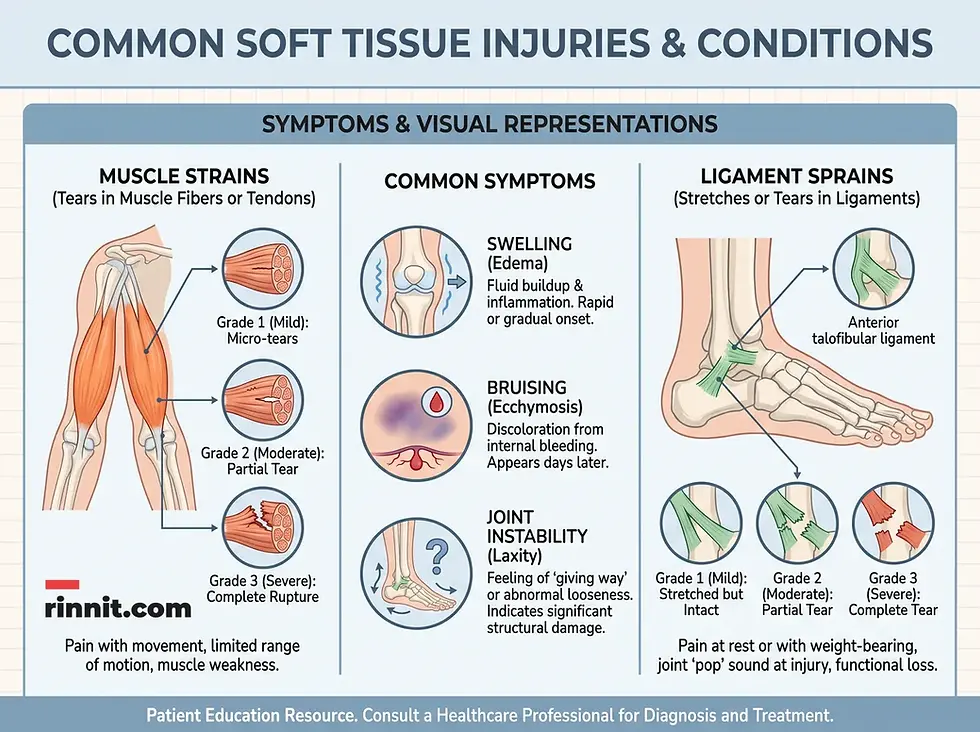
Soft tissue is susceptible to a wide range of injuries and chronic disorders. Healthcare providers often use the term “soft tissue injury” to differentiate these issues from bone fractures [1]. Common injuries include muscle strains, ligament sprains, and contusions resulting from blunt force [1]. More severe cases may involve penetrating injuries from sharp objects or chronic pressure injuries like bedsores [1]. Because the term is so general, it is worth asking your provider to clarify exactly which tissue and injury they mean [1].
Beyond acute injuries, chronic conditions can also impact soft tissue health. These include conditions like rheumatoid arthritis, an inflammatory disease, and fibromyalgia, a chronic pain disorder, as well as infections and nerve compression syndromes such as carpal tunnel [1]. In some instances, soft tissue may develop tumors, which can be either benign growths or malignant cancers [1].
How are soft tissue problems diagnosed and treated?
Diagnosing soft tissue issues typically begins with a physical examination and may involve advanced imaging [1]. While X-rays and CT scans are primarily used to rule out bone fractures, MRI scans are the preferred method for visualizing the details of soft tissue structures. These tests allow providers to identify tears, inflammation, or abnormal growths that are not visible on standard bone-focused imaging.
Treatment strategies for acute injuries often follow the RICE method:
For more severe injuries, such as complete tendon ruptures, surgical intervention may be required [1]. Chronic conditions often necessitate a combination of medications, such as NSAIDs, and physical or occupational therapy to restore strength and flexibility [1].
How can you care for and maintain healthy soft tissue?
Maintaining healthy soft tissue involves a combination of lifestyle choices and protective measures. Proper nutrition provides the building blocks for tissue repair, while regular physical activity ensures that muscles and ligaments remain strong and flexible [1]. Maintaining a healthy weight is also crucial, as excess weight can place undue strain on connective tissues and joints [1].
When engaging in sports or physical work, using appropriate safety equipment like helmets and pads can prevent acute trauma. Additionally, performing warm-ups and cool-downs during exercise helps prepare the tissue for stress and aids in recovery.

Conclusion
Soft tissue is a fundamental component of human anatomy, providing the flexibility and protection necessary for life. From the skin that shields us to the muscles that move us, these structures require consistent care to function at their best. By understanding the differences between soft and hard tissue and recognizing the signs of injury, individuals can take proactive steps to maintain their mobility and long-term health.
Next step: If you experience persistent pain, joint instability, or a sudden inability to move a limb, consult a healthcare provider for a professional evaluation.
Frequently Asked Questions
What is the most common soft tissue injury?
Sprains and strains are among the most frequently reported soft tissue injuries. A sprain involves the stretching or tearing of ligaments, while a strain affects muscles or tendons.
Is cartilage considered soft tissue?
Yes, cartilage is generally classified as soft tissue because it is non-ossified and flexible compared to bone, though it is firmer than muscle or fat.
How long does it take for a soft tissue injury to heal?
Healing times vary depending on the severity of the injury. Minor strains may improve in a few weeks, while severe ligament tears can take several months and may require surgery.
Can soft tissue turn into bone?
Normally, soft tissue does not turn into bone. However, rare medical conditions or abnormal calcification can cause calcium deposits to form in soft tissues, making them hard.
What are the signs of a soft tissue infection?
Common signs include redness, warmth, swelling, and pain at the site of the infection, sometimes accompanied by fever or drainage.
Does massage help soft tissue injuries?
Therapeutic massage can be beneficial for certain injuries, such as muscle strains, by improving blood flow and reducing tension, but it should be performed under professional guidance.
What is the difference between a tendon and a ligament?
Tendons connect muscles to bones, facilitating movement, while ligaments connect bones to other bones, providing joint stability.
Are tumors in soft tissue always cancerous?
No, many soft tissue tumors are benign (non-cancerous) growths, but any unusual lump should be evaluated by a healthcare professional.
Can poor nutrition affect soft tissue?
Yes, a lack of essential nutrients like protein, vitamins, and minerals can weaken soft tissues and slow down the body's natural repair processes.
When should I use ice vs. heat for a soft tissue injury?
Ice is typically used immediately after an injury to reduce swelling and pain. Heat is generally applied later in the recovery process to improve blood flow and relax stiff muscles.
Related Reading
Connective Tissue Diseases: Types, Symptoms, and Treatment Options explains diseases that affect the tissues supporting the body.
Sprained Ankle: Symptoms, Causes, Treatment & Complete Guide covers a common ligament injury and how to help it heal.
Body Tissue: The Fundamental Building Blocks of Human Anatomy describes the four main tissue types that make up the body.
Cartilage: Complete Guide to Types, Function, and Joint Health explains the types of cartilage and how they protect joints.
References
Cleveland Clinic. Soft Tissue of the Body. Cleveland Clinic. Last updated March 27, 2025. https://my.clevelandclinic.org/health/body/soft-tissue
van den Bekerom MP, Struijs PA, Blankevoort L, et al. What is the evidence for rest, ice, compression, and elevation therapy in the treatment of ankle sprains in adults? Journal of Athletic Training. 2012;47(4):435-443. PMID 22889660. https://doi.org/10.4085/1062-6050-47.4.14
Hubbard MJ, Hildebrand BA, Battafarano MM, et al. Common soft tissue musculoskeletal pain disorders. Primary Care. 2018;45(2):289-303. PMID 29759125. https://doi.org/10.1016/j.pop.2018.02.006
Lauersen JB, Bertelsen DM, Andersen LB. The effectiveness of exercise interventions to prevent sports injuries: a systematic review and meta-analysis of randomised controlled trials. British Journal of Sports Medicine. 2014;48(11):871-877. PMID 24100287. https://doi.org/10.1136/bjsports-2013-092538
Medical disclaimer
The information provided in this article is for educational purposes only and should not be used as a substitute for professional medical advice, diagnosis, or treatment. Always seek the advice of your physician or other qualified health provider with any questions you may have regarding a medical condition.



Comments