Understanding Renal Parenchymal Disease: Causes, Symptoms, and Care

Updated: 2 days ago
Medically reviewed by Dr. Baraa Alnahhal, MD · Last reviewed: October 2026
Renal parenchymal disease refers to a group of conditions that damage the functional parts of the kidneys, known as the parenchyma. [1] The most common drivers are chronic conditions like diabetes and high blood pressure [1], though acute causes such as infections or medication reactions can also play a role. While early stages often lack symptoms, advanced disease can lead to swelling, fatigue, and changes in urinary habits. [1] Management focuses on treating underlying causes, lifestyle adjustments, and, in severe cases, advanced interventions like dialysis or transplantation. [1]
Quick Answer
Renal parenchymal disease is a term for conditions that damage the functional tissues of the kidneys, specifically the renal cortex and medulla. [1] These areas are responsible for filtering blood, balancing nutrients, and producing hormones. Common causes include diabetes and hypertension. If left untreated, the condition can progress to kidney failure [1], necessitating management through medication, dietary changes, or advanced medical procedures.
What the research says
Chronic kidney disease is common worldwide. A systematic review and meta-analysis of 100 studies with 6,908,440 participants estimated the global prevalence of chronic kidney disease (all five stages) at 13.4% (95% CI 11.7% to 15.1%), and 10.6% (95% CI 9.2% to 12.2%) for stages 3 to 5, with stage 3 the most common (Hill et al., PLoS ONE, 2016) [2].
Long-term NSAID use is linked to a higher risk of chronic kidney disease. In a systematic review of 40 studies with 1,757,118 participants (39 included in the meta-analysis), chronic NSAID use was associated with higher odds of kidney disease occurrence or progression (pooled odds ratio 1.24, 95% CI 1.11 to 1.39) and a pooled hazard ratio of 1.50 (95% CI 1.31 to 1.70), rising to 1.67 (95% CI 1.38 to 2.02) in people who already had chronic kidney disease (Soliman et al., Romanian Journal of Internal Medicine, 2025) [3].
What is renal parenchymal disease?
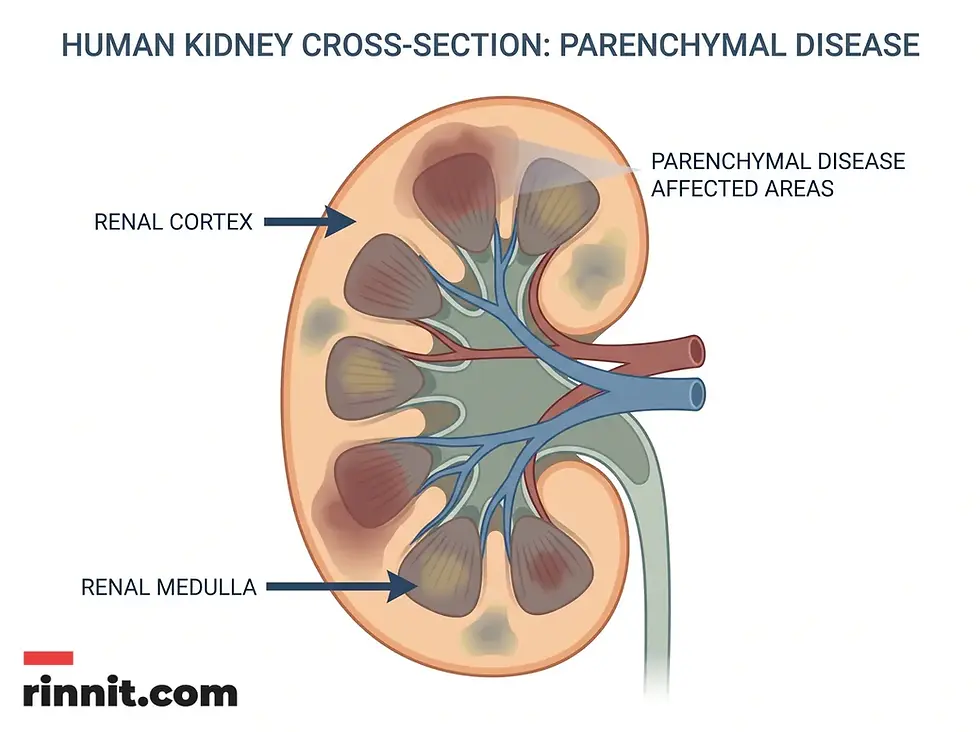
The renal parenchyma represents the core functional tissue of the kidneys, comprised of two primary sections: the renal cortex and the renal medulla. [1] The cortex is the outer layer where blood filtration begins via microscopic filters called nephrons. These nephrons consist of glomeruli (blood vessels) and renal tubules, which work together to reabsorb nutrients while removing waste. [1] Additionally, the cortex produces erythropoietin, a hormone vital for red blood cell production. [1] The medulla, or inner part of the kidney, holds the long loops and collecting ducts of the nephrons, which help concentrate urine. [1]
When a healthcare provider refers to renal parenchymal disease, they are describing any condition that impairs these specific tissues. The disease is categorized as either acute, occurring suddenly due to factors like severe dehydration or infection, or chronic, developing slowly over many years. [1] Chronic cases are often linked to long-term systemic health issues that gradually wear down the kidneys' ability to function effectively.
Kidney Part | Primary Function | Role in Parenchymal Disease |
Renal Cortex | Initial blood filtration; EPO production | Damage impairs waste removal and blood cell counts |
Renal Medulla | Holds nephron loops and collecting ducts that concentrate urine | Impairment disrupts fluid and nutrient balance |
Nephrons | Microscopic filtering units | Functional loss leads to systemic waste buildup |
What are the symptoms and warning signs of renal parenchymal disease?
One of the most challenging aspects of renal parenchymal disease is that its early stages are typically asymptomatic. [1] The kidneys are highly resilient and can continue to function even when partially damaged. However, as the impairment progresses, systemic symptoms begin to emerge. These often include visible changes such as edema (swelling) in the hands, feet, or ankles, and puffiness around the eyes. [1] Patients may also notice changes in their urinary patterns, such as peeing more frequently than usual. [1]
As kidney function declines further, individuals may experience persistent fatigue, dry or itchy skin, and a significant loss of appetite. [1] Clinical signs such as hematuria (blood in the urine) or anemia (low red blood cell levels) may also be detected [1] during medical examinations. Because these symptoms often appear only after significant damage has occurred, regular screening for at-risk individuals is crucial for early detection.
What causes renal parenchymal disease and who is at risk?
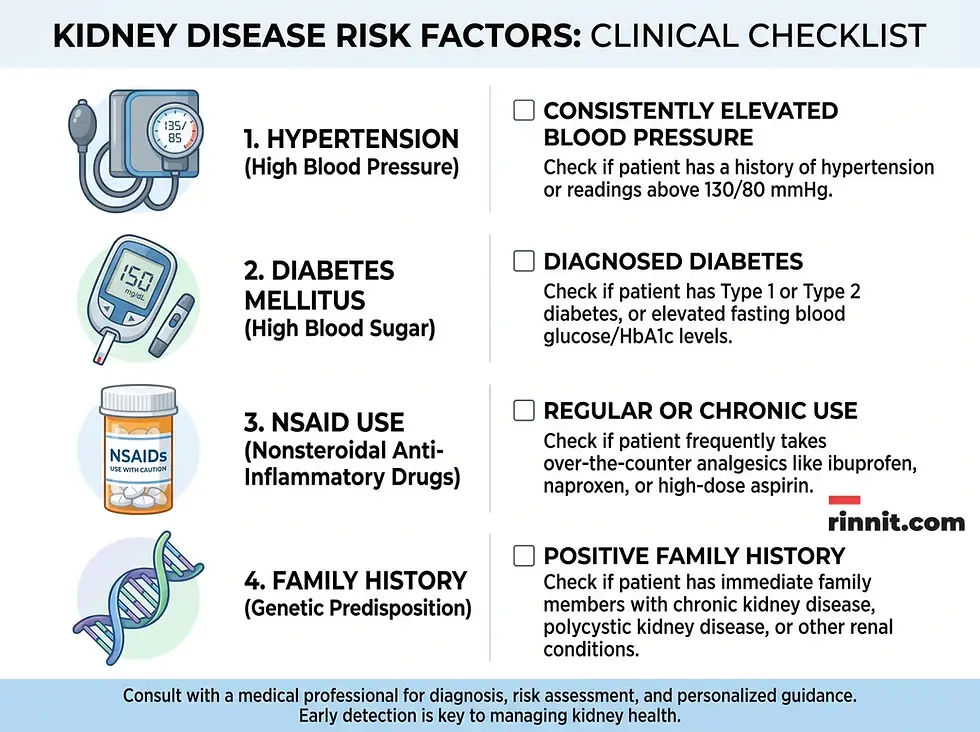
The development of chronic renal parenchymal disease is most frequently driven by two major health conditions: diabetes and high blood pressure. [1] These systemic issues put constant stress on the kidneys' delicate filtering units, leading to gradual scarring and functional loss. Other chronic contributors include autoimmune diseases like lupus nephritis, genetic conditions such as polycystic kidney disease, and even certain types of kidney cancer. [1]
Acute cases, on the other hand, can be triggered by sudden events such as severe infections, kidney stones, or anaphylaxis. [1] Certain medications, particularly nonsteroidal anti-inflammatory drugs (NSAIDs) like ibuprofen, can also cause acute damage if used excessively, especially in individuals over the age of 60. Understanding these risks is vital, as a family history of kidney disease or existing heart conditions can further elevate an individual's susceptibility. [1]
How is renal parenchymal disease diagnosed and managed?
To diagnose renal parenchymal disease, healthcare providers utilize a combination of blood and urine tests to measure kidney function. Key metrics include the estimated glomerular filtration rate (eGFR) and serum creatinine levels. [1] Imaging techniques such as ultrasound, MRI, or CT scans allow doctors to visualize the kidneys' structure and size [1], while a biopsy may be performed to provide a detailed look at the tissue at a microscopic level.
Management is highly personalized and focuses on slowing disease progression. This often involves lifestyle changes such as maintaining a healthy weight, avoiding tobacco, and working with a renal dietitian to limit salt, potassium, and protein intake. [1] Medications are used to control blood pressure and blood sugar. [1] In severe or end-stage cases where the kidneys can no longer support life, advanced treatments like dialysis or a kidney transplant become necessary. [1]

Conclusion
Renal parenchymal disease is a serious condition that impacts the very core of kidney function. While the diagnosis can be daunting, understanding the underlying causes—such as diabetes and hypertension—allows for proactive management. By combining early diagnostic testing with dedicated lifestyle changes and medical oversight, many individuals can protect their kidney health and prevent the progression to more severe complications.
Frequently Asked Questions
Is renal parenchymal disease the same as kidney failure?
Not necessarily. Renal parenchymal disease is the condition that causes damage to the kidney tissue. If the damage becomes severe and the kidneys can no longer function, it leads to kidney failure.
Can renal parenchymal disease be cured?
It depends on the cause. Acute cases triggered by infection or dehydration may improve with treatment. Chronic cases are usually managed to slow progression rather than fully cured.
Why does high blood pressure affect the renal parenchyma?
High blood pressure damages the small blood vessels (glomeruli) in the renal cortex, making it harder for the kidneys to filter blood effectively.
What is the role of a renal dietitian in treatment?
A renal dietitian helps create eating patterns that reduce the workload on the kidneys by limiting salt, potassium, and protein.
Are NSAIDs dangerous for the kidneys?
Regular use of NSAIDs like ibuprofen can cause acute damage to the renal parenchyma, especially in people over 60 or those with existing kidney issues.
What does a kidney biopsy reveal?
A biopsy provides a tissue sample that can show specific types of damage or disease that imaging and blood tests might miss.
How does diabetes damage the kidneys?
High blood sugar levels can damage the nephrons over time, leading to chronic renal parenchymal disease.
What is erythropoietin (EPO)?
EPO is a hormone produced in the renal cortex that signals the bone marrow to produce red blood cells. Damage to the cortex can lead to anemia.
Can children get renal parenchymal disease?
Yes, anyone can be affected, though risk factors like age and chronic systemic diseases make it more common in older adults.
What are the early symptoms of renal parenchymal disease?
Early stages often cause no symptoms at all. As damage grows, people may notice swelling in the feet, ankles, or around the eyes, changes in urination, tiredness, or itchy skin.
Related Reading
Chronic Kidney Disease: What It Is, Its 5 Stages, Causes, and How It's Treated explains the stages of chronic kidney disease and treatment.
eGFR (Estimated Glomerular Filtration Rate): Normal Values, CKD Stages and What Results Mean explains the eGFR blood test that measures kidney function.
Kidney Biopsy: Purpose, Types, Procedure, Risks and Recovery describes how a kidney biopsy is done and what it shows.
Diabetic Nephropathy (Diabetic Kidney Disease): Symptoms, Causes, Diagnosis & Treatment — Complete Guide explains how diabetes damages the kidneys and how to protect them.
References
Cleveland Clinic. Renal Parenchymal Disease. Cleveland Clinic. November 13, 2024. https://my.clevelandclinic.org/health/diseases/renal-parenchymal-disease
Hill NR, Fatoba ST, Oke JL, et al. Global prevalence of chronic kidney disease: a systematic review and meta-analysis. PLoS ONE. 2016;11(7):e0158765. PMID 27383068. https://doi.org/10.1371/journal.pone.0158765
Soliman S, Ahmed RM, Ahmed MM, et al. Non-steroidal anti-inflammatory drugs: what is the actual risk of chronic kidney disease? A systematic review and meta-analysis. Romanian Journal of Internal Medicine. 2025;63(1):3-27. PMID 39412516. https://doi.org/10.2478/rjim-2024-0029
Medical disclaimer
The information provided in this article is for educational purposes only and should not be used as a substitute for professional medical advice, diagnosis, or treatment. Always seek the advice of your physician or other qualified health provider with any questions you may have regarding a medical condition.



Comments