Understanding Recurrent Respiratory Papillomatosis (RRP): Causes and Care

Updated: 2 days ago
Medically reviewed by Dr. Baraa Alnahhal, MD · Last reviewed: October 2026
Recurrent respiratory papillomatosis (RRP) is an uncommon condition caused by the human papillomavirus (HPV) that leads to wart-like tumors in the respiratory tract. [1] Most commonly affecting the vocal cords, these tumors can grow quickly and frequently return after treatment. [1] RRP is categorized into juvenile-onset and adult-onset types, with the former often being more aggressive. [1] While there is no cure, surgical removal and antiviral medications are effective in managing the condition and maintaining clear airways.
Quick Answer
Recurrent respiratory papillomatosis (RRP) is a disease where wart-like tumors, called papillomas, grow in the respiratory system, most often on the vocal cords. [1] Caused by HPV, most commonly strains 6 and 11, these tumors can cause hoarseness, noisy breathing, and in severe cases, life-threatening airway blockages. [1] While surgery is the primary treatment, the tumors frequently recur, requiring ongoing care. [1]
What the research says
Nearly all childhood cases involve vaccine-preventable HPV types. In 215 US children with juvenile-onset RRP, 88.8% were delivered vaginally; among 162 papilloma samples tested, 157 (96.9%) had detectable HPV and all 157 carried a vaccine-preventable type, yet only 14.0% of age-eligible mothers had been vaccinated (Amiling et al., Journal of the Pediatric Infectious Diseases Society, 2021 [2]).
HPV vaccination may help as an add-on treatment, but the evidence is still developing. A meta-analysis of 13 studies (243 patients) found that surgeries per year fell by 4.43 (95% CI -7.48 to -1.37) and the time between surgeries rose by 15.73 months (95% CI 1.46 to 29.99) after vaccination (Ponduri et al., The Laryngoscope, 2023 [3]), while a systematic review of 12 studies in children found potential benefit in 8 of them but called the overall picture uncertain and called for a larger trial (Park et al., International Journal of Pediatric Otorhinolaryngology, 2022 [4]).
Injected antiviral treatments help, with no clear winner. A meta-analysis of 35 articles (836 patients) found overall remission ratios of 0.90 (95% CI 0.83 to 0.98) for intralesional cidofovir and 0.92 (95% CI 0.79 to 1.07) for bevacizumab, with no significant difference between them except for partial remission; neither drug is FDA-approved for RRP (Zagzoog et al., European Archives of Oto-Rhino-Laryngology, 2024 [5]).
What is recurrent respiratory papillomatosis (RRP)?
Recurrent respiratory papillomatosis (RRP) is characterized by the growth of non-cancerous, wart-like tumors known as papillomas within the respiratory system. The voice box, or larynx, is the most common site of infection, leading many healthcare providers to refer to the condition as laryngeal papillomatosis. [1] However, the disease can progress further down the respiratory tract, affecting the trachea (windpipe), bronchi, and occasionally the lungs. [1]
The condition is relatively rare, affecting a little over 4 out of every 100,000 children and about 2 out of every 100,000 adults. [1] Despite being non-cancerous, these tumors are serious because they can grow rapidly and recur even after successful treatment. In rare instances, RRP can progress to laryngeal or lung cancer, particularly when the tumors have spread to the lower respiratory system. [1]
Feature | Juvenile-Onset (JORRP) | Adult-Onset (AORRP) |
Typical Diagnosis Age | Before age 5 | After age 14 |
Aggressiveness | Usually more aggressive | Generally less aggressive |
Recurrence | More likely to come back after treatment | Less likely than juvenile-onset |
Prevalence | A little over 4 per 100,000 children | About 2 per 100,000 adults |
What are the symptoms of recurrent respiratory papillomatosis?
The symptoms of RRP depend largely on the location and size of the tumors within the respiratory tract. [1] Because the vocal cords are the most frequent site of growth, voice changes are often the first sign of the condition. As tumors increase in size, they can begin to obstruct the flow of air, leading to more severe respiratory distress. [1]
Commonly observed symptoms include:
Voice Changes: A persistent raspy voice or hoarseness. [1]
Respiratory Issues: Noisy or high-pitched breathing (stridor), rapid breathing (tachypnea), difficulty breathing, and a long-term cough. [1]
Swallowing Difficulties: Difficulty swallowing (dysphagia) and frequent choking episodes. [1]
Pediatric Concerns: In children, RRP may cause snoring or lead to slower-than-expected physical growth. [1]

What causes recurrent respiratory papillomatosis and how is it transmitted?
Recurrent respiratory papillomatosis is caused by the human papillomavirus (HPV), the most common sexually transmitted infection in the United States. [1] While there are over 100 strains of HPV, types 6 and 11 are believed to be responsible for most RRP cases. [1] HPV 11, in particular, may cause more aggressive tumors that are more likely to affect breathing and spread to the lungs. [1]
Transmission pathways differ between the juvenile and adult forms of the disease. In some cases, children get the virus from their mother during birth, whether through vaginal delivery or, less often, a C-section. [1] In adults, it is suspected that the virus may remain latent in healthy cells for decades following birth exposure, only becoming active later in life. While the underlying virus can be spread, research does not indicate that RRP itself is contagious. [1]

How is recurrent respiratory papillomatosis managed and treated?
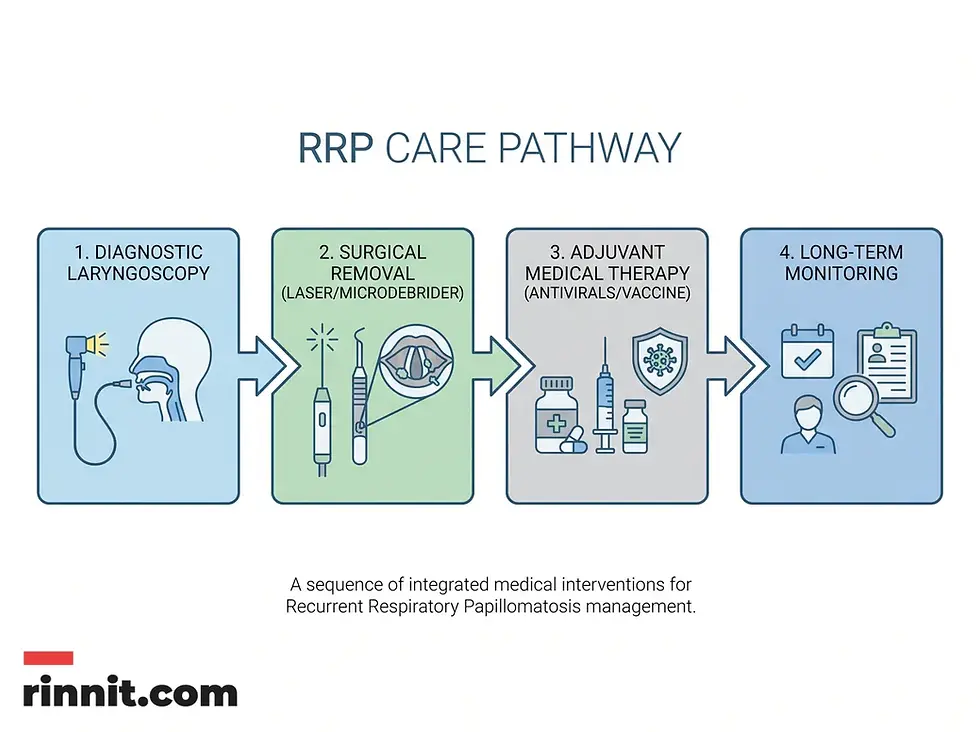
Recurrent respiratory papillomatosis has no permanent cure, so treatment aims to remove tumors and prevent airway blockages. [1] Because the tumors frequently return, many patients require repeated procedures throughout their lives. The frequency of these treatments varies significantly, with some individuals needing surgery every few weeks and others only once a year or even less often. [1]
Surgical and Medical Interventions
Laser Surgery: Uses focused beams of light to shrink or destroy tumor tissue. [1]
Microdebrider: A specialized tool that pulls tumors toward a blade that quickly removes them. [1]
Cryoablation: The application of extreme cold to destroy the papillomas. [1]
Adjuvant Medications: If tumors come back fast or cause other symptoms, antiviral drugs like cidofovir and immunotherapy agents like pembrolizumab may be used to help prevent tumor growth. In 2025, the FDA approved zopapogene imadenovec (Papzimeos), the first medicine approved to treat RRP in adults. [1]
HPV Vaccination: The HPV vaccine may slow tumor growth and reduce the need for frequent surgical interventions. [1] [3]
Conclusion and Next Steps
While recurrent respiratory papillomatosis is a chronic and potentially life-threatening condition, the outlook for most patients is positive with consistent medical care. Early diagnosis and a proactive treatment plan are essential for managing symptoms and preventing complications. If you or your child experience persistent hoarseness or noisy breathing, consult an otolaryngologist for a comprehensive evaluation. If you have RRP and are having trouble breathing, call emergency services.
Frequently Asked Questions
Can the HPV vaccine prevent RRP?
Yes. The HPV vaccine is effective at preventing RRP in people who are sexually active, and it may also slow tumor growth and reduce the need for frequent procedures in those already diagnosed. [1]
Is RRP a form of cancer?
No, the tumors in RRP are generally non-cancerous (benign). However, in rare cases, they can progress to laryngeal or lung cancer, especially if they spread to the lower respiratory system. [1] Regular monitoring by a specialist is required.
How do children get RRP?
What is the most common symptom of RRP?
The most common symptom is a raspy voice or persistent hoarseness, as the tumors most frequently grow on the vocal cords. As they grow, they may also cause noisy or difficult breathing. [1]
How often is surgery required for RRP?
The frequency of surgery varies. Some patients may only need treatment once a year or even less often, while others, particularly children with aggressive cases, may require procedures every few weeks to keep their airways clear.
Is RRP contagious?
While the HPV virus that causes RRP can be spread, research does not indicate that RRP itself is contagious. [1]
Does RRP affect swallowing?
Yes. If the tumors grow large enough or are located in specific areas of the throat, they can cause difficulty swallowing (dysphagia) and frequent choking. [1]
Related Reading
Understanding HPV: Causes, Symptoms, and Prevention explains the virus that causes RRP and how it spreads.
HPV Vaccine: Who Should Get It, the Shot Schedule, and How Well It Protects covers who should get the HPV vaccine and when.
Hoarseness (Dysphonia): Causes, Symptoms, and Voice Recovery explains common causes of a raspy voice and when to get checked.
Microlaryngoscopy: Vocal Fold Surgery, Recovery and Voice Rest describes the magnified throat surgery used to remove vocal cord growths.
References
Cleveland Clinic. Recurrent Respiratory Papillomatosis. Cleveland Clinic. June 2, 2022. https://my.clevelandclinic.org/health/diseases/23101-recurrent-respiratory-papillomatosis
Amiling R, et al. Juvenile-onset recurrent respiratory papillomatosis in the United States, epidemiology and HPV types, 2015-2020. Journal of the Pediatric Infectious Diseases Society. 2021;10(7):774-781. PMID 34145881. https://doi.org/10.1093/jpids/piab016
Ponduri A, et al. The efficacy of human papillomavirus vaccination as an adjuvant therapy in recurrent respiratory papillomatosis. The Laryngoscope. 2023;133(9):2046-2054. PMID 36651338. https://doi.org/10.1002/lary.30560
Park I, et al. Systematic review of the use of human papillomavirus vaccine as adjuvant therapy for juvenile-onset recurrent respiratory papillomatosis. International Journal of Pediatric Otorhinolaryngology. 2022;162:111314. PMID 36116179. https://doi.org/10.1016/j.ijporl.2022.111314
Zagzoog FH, et al. Intralesional cidofovir vs. bevacizumab for recurrent respiratory papillomatosis: a systematic review and indirect meta-analysis. European Archives of Oto-Rhino-Laryngology. 2024;281(2):601-627. PMID 37831132. https://doi.org/10.1007/s00405-023-08279-0
Medical disclaimer
The information provided in this article is for educational purposes only and should not be used as a substitute for professional medical advice, diagnosis, or treatment. Always seek the advice of your physician or other qualified health provider with any questions you may have regarding a medical condition.



Comments