Understanding Rebound Headaches: Causes, Symptoms, and Recovery

Updated: 2 days ago
Medically reviewed by Dr. Baraa Alnahhal, MD · Last reviewed: November 2026
Definition: Rebound headaches, formally known as medication overuse headaches, occur when pain relief medications are used too frequently to treat an existing headache disorder.
The cycle: The pain "rebounds" and often worsens as the medication wears off.
Who is affected: About 1% of the population, most commonly females and people with pre-existing migraines.
Recovery: Total cessation of the offending medication, often supported by "bridge" treatments and lifestyle adjustments.
Quick Answer
Rebound headaches are a secondary headache disorder caused by frequent use of pain medications. When the drugs wear off, the pain returns, often more intensely, creating a cycle of overuse. They are most common in people who already have migraines or tension headaches. Treatment requires stopping the overused medication, letting the nervous system reset and reducing pain sensitivity over time. [1]
What the research says
Medication overuse headache potentially involves 1% to 2% of people, and it is preventable. A narrative review defines it as headache on 15 or more days a month together with overuse of acute attack medication, and concludes that because the condition is preventable, early intervention and patient education are key (Gosalia et al., J Headache Pain, 2024).
Effective treatment combines cutting back the overused medication with preventive therapy. A Nature Reviews Disease Primers review notes that medication overuse headache is common among people with 15 or more headache days per month, is both preventable and treatable, and that treatment pairs headache preventive therapies with reducing how often acute medication is used, and perhaps withdrawing it altogether; appropriate treatment is usually highly effective in reducing headache burden and acute medication consumption (Ashina et al., Nat Rev Dis Primers, 2023).
What are rebound headaches?
Rebound headaches represent a paradoxical condition where the very treatments intended to provide relief actually perpetuate the pain. Formally categorized as "medication overuse headaches," they are always a secondary condition, evolving from primary disorders like migraines or tension-type headaches. The term "rebound" refers to the pattern in which pain returns, often more intensely, as soon as the therapeutic effects of a medication diminish.
This condition is relatively uncommon but widespread, estimated to affect between 0.5% and 2.6% of the global population. It is notably more prevalent in females, particularly those between the ages of 30 and 50. Experts believe the condition arises from "pain centralization," a process where frequent medication use alters how the nervous system processes pain signals, potentially lowering the threshold for pain sensations. [1]
Category | Frequency Threshold for Diagnosis | Common Medications |
High Risk | ≥10 Days Per Month | Opioids, Triptans, Ergotamines, Butalbital combinations |
Moderate Risk | ≥15 Days Per Month | Acetaminophen, Aspirin, NSAIDs (Ibuprofen, Naproxen) |
What are the symptoms of rebound headaches?
Rebound headaches often inherit features from the primary headache disorder they evolved from, but they also possess distinct characteristics. One of the most common indicators is the timing of the pain; sufferers frequently experience headaches upon waking or very shortly thereafter.
Beyond physical pain, individuals may experience cognitive and emotional symptoms, including:
Cognitive Impact: Difficulty concentrating and memory problems.
Physical Distress: Nausea, persistent fatigue, and increased sensitivity to pain.
Emotional Shifts: Feelings of depression, anxiety, or panic.
Decreased Efficacy: A noticeable trend where previously effective medications become less potent or stop working entirely. [1]

What causes rebound headaches and who is at risk?
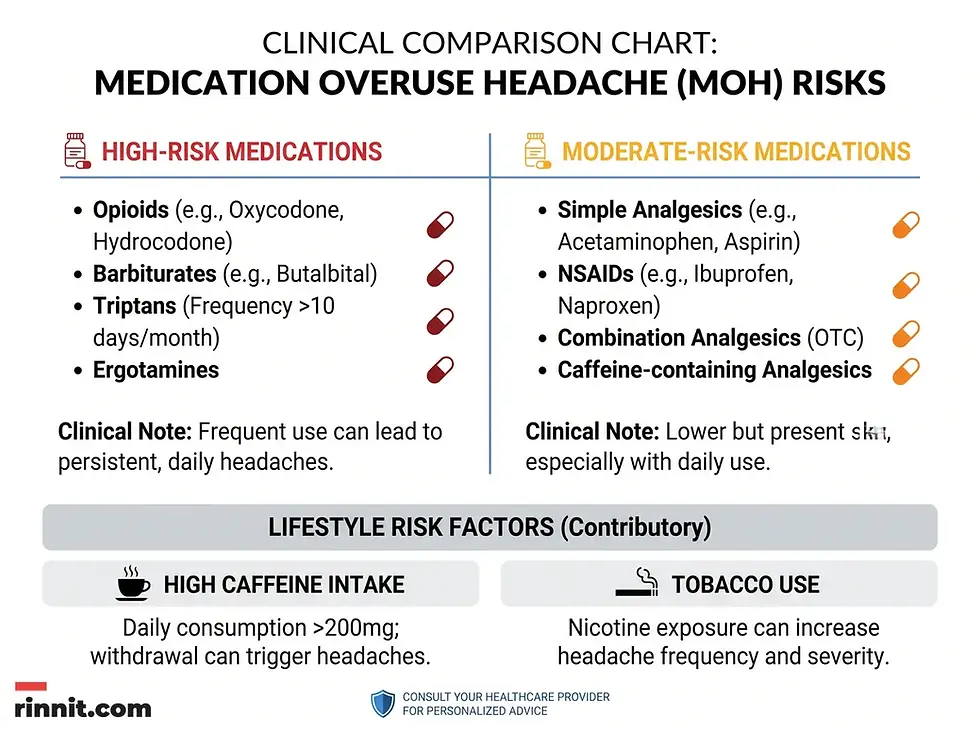
The primary cause of rebound headaches is the regular use of acute headache medications for more than three months. While any pain reliever can contribute to the condition, certain classes are more likely to trigger the rebound effect. Opioids and barbiturate-containing combinations are among the most high-risk medications, while common over-the-counter options like acetaminophen and NSAIDs require more frequent use to reach the diagnostic threshold.
Several factors can increase an individual's susceptibility to developing this condition. High caffeine intake (exceeding 200 milligrams per day) and the use of tobacco are significant environmental risk factors. Additionally, individuals with metabolic syndrome or those managing mental health conditions such as PTSD or anxiety are at a higher statistical risk. A family history of substance use disorders may also play a role in how the body processes these medications. [1]
How are rebound headaches managed and treated?
The most critical component of recovery is the total cessation of the medication(s) causing the rebound effect. While this can lead to a temporary increase in headache frequency and intensity, it is necessary for the nervous system to reset. For high-risk medications like opioids, healthcare providers often implement a guided taper to prevent withdrawal symptoms.
Bridge Treatments and Support
To help patients navigate the initial recovery period, providers may prescribe "bridge medications." These are alternate treatments that function differently from the overused drugs. Examples include:
Long-acting NSAIDs: Such as naproxen, to provide baseline relief.
Preventative Injections: Onabotulinumtoxin A (Botox) injections.
Antiseizure Medications: Such as topiramate, which can help stabilize pain signaling.
Non-medication therapies are also vital. Psychotherapy, biofeedback, and relaxation training can help individuals manage the emotional stress of chronic pain. Most patients see significant improvement within two months of stopping the offending medication. [1]

Conclusion
Rebound headaches are a challenging but highly treatable condition. By recognizing the cycle of medication overuse and working with a healthcare provider to safely transition to alternate therapies, most individuals can break the cycle and find lasting relief. Maintaining a headache diary and strictly adhering to frequency limits for acute medications are the best ways to prevent a recurrence.
Frequently Asked Questions
How do I know if I have a rebound headache?
You may have rebound headaches if you use pain medication more than 10 to 15 days a month and your headaches return or worsen as the medication wears off. Common signs include waking up with a headache and finding that your usual medications are becoming less effective.
Which medications are most likely to cause rebound headaches?
Opioids, triptans, and medications containing barbiturates are high-risk and can cause rebound headaches with just 10 days of use per month. Common over-the-counter drugs like acetaminophen and NSAIDs typically require 15 or more days of use per month to trigger the condition.
Can I just stop taking my headache medication?
While stopping the medication is the primary treatment, you should consult a healthcare provider first—especially if you are taking opioids or barbiturates. These drugs require a professional taper to avoid potentially serious withdrawal symptoms.
How long does it take to recover from rebound headaches?
Most people begin to see a significant improvement in their headache frequency and intensity within two months after completely stopping the overused medication.
Are rebound headaches permanent?
No, rebound headaches are not permanent. They are a treatable condition. Once the cycle of medication overuse is broken, the frequency of headaches typically decreases, and the primary headache disorder becomes easier to manage.
Does caffeine affect rebound headaches?
Yes. High caffeine intake—specifically more than 200 milligrams per day—is a known risk factor for developing rebound headaches and can complicate the recovery process.
What are bridge medications?
Bridge medications are temporary treatments used to manage pain while a patient stops the overused medication. These often include long-acting NSAIDs, antiseizure medications, or specialized injections that work differently than the offending drug.
Can children get rebound headaches?
While more common in adults ages 30 to 50, rebound headaches can affect anyone who overuses headache medications. However, they are statistically more frequent in females.
Is a rebound headache different from a migraine?
Yes. A migraine is a primary headache disorder, whereas a rebound headache is a secondary condition caused by the treatment of that migraine. Rebound headaches often feel like a more intense version of the original pain.
Is a rebound headache the same as a medication overuse headache?
Yes. Medication overuse headache is the medical name for rebound headaches. Both describe headaches that get more frequent when pain medicine is taken too often.
Related Reading
Migraine Headaches: What Causes Them and How to Treat Them explains migraine causes, triggers and treatment options.
New Daily Persistent Headache (NDPH): A Complete Guide to Constant Headaches covers a daily headache that starts suddenly and does not go away.
CGRP Inhibitors: How These Migraine Medicines Work, the Types, and What to Expect explains newer migraine medicines that help prevent headache attacks.
Caffeine Sensitivity: Why a Small Coffee Can Wreck Your Day and What to Do About It explains how caffeine affects the body and why some people react strongly.
References
Cleveland Clinic. Rebound Headaches (Medication Overuse Headaches). Cleveland Clinic Health Library. Accessed October 11, 2026. https://my.clevelandclinic.org/health/diseases/6170-rebound-headaches
Gosalia H, Moreno-Ajona D, Goadsby PJ. Medication-overuse headache: a narrative review. J Headache Pain. 2024;25(1):89. PMID: 38816828. DOI: https://doi.org/10.1186/s10194-024-01755-w
Ashina S, Terwindt GM, Steiner TJ, et al. Medication overuse headache. Nat Rev Dis Primers. 2023;9(1):5. PMID: 36732518. DOI: https://doi.org/10.1038/s41572-022-00415-0
Medical disclaimer
This article is for informational purposes only and is not a substitute for professional medical advice, diagnosis, or treatment. Always seek the advice of your physician or other qualified health provider with any questions you may have about a medical condition.



Comments