Understanding PVOD: A Rare and Serious Lung Condition

Updated: 3 days ago
Medically reviewed by Dr. Baraa Alnahhal, MD · Last reviewed: October 2026
Definition: A rare lung disease where scarring in small veins blocks blood flow.
Impact: Leads to high blood pressure in the lungs and potential heart failure.
Rarity: Affects only 1 to 2 people per million worldwide.
Management: A double lung transplant is the only definitive treatment.
Quick Answer
Pulmonary veno-occlusive disease (PVOD) is an extremely rare, life-threatening lung condition in which small pulmonary veins become scarred and narrowed. This raises pressure in the pulmonary arteries and often leads to right-sided heart failure. It is often linked to genetic variants or environmental exposures. Oxygen and vasodilators can manage symptoms, but lung transplant is the only cure.
What the research says
Lung transplantation offers the best long-term outcomes, with an estimated 73% of transplanted patients alive at 5 years. In a population-based French registry study of 94 patients with PVOD or pulmonary capillary hemangiomatosis, 33 underwent lung transplantation, with estimated post-transplant survival of 84% at 1 year, 81% at 2 years and 73% at 5 years. Across the whole group, event-free survival (death or transplantation) in carriers of biallelic EIF2AK4 mutations was 63% at 1 year and 32% at 3 years (Montani et al., Lancet Respir Med, 2017).
Drugs approved for pulmonary arterial hypertension are not clearly safe in PVOD, because pulmonary edema is a recognized risk. A systematic review of 20 reports, with no randomized or prospective controlled studies, found that pulmonary edema after vasodilator treatment was reported in 15 articles, and some cases were lethal. The authors noted that firm conclusions were difficult without randomized trials (Ogawa et al., Respir Investig, 2019).
Biallelic EIF2AK4 variants are linked to poorer survival. In a cohort of 232 Chinese patients with pulmonary arterial hypertension who had genetic testing, 11 carried biallelic EIF2AK4 variants. Their symptoms began at a mean age of 31.6 years (SD 9.38), and their survival was worse than that of BMPR2 variant carriers (p < 0.0001) (Zeng et al., BMC Pulm Med, 2020).
What is Pulmonary Veno-Occlusive Disease?
Pulmonary Veno-Occlusive Disease (PVOD) is a rare form of pulmonary hypertension that specifically targets the small veins in the lungs. Unlike other forms of high blood pressure in the lungs that primarily affect the arteries, PVOD begins with scarring and blockages in the veins. This obstruction makes it difficult for blood to move through the lungs, ultimately raising the pressure in the pulmonary arteries. Because of this physiological link, healthcare providers often categorize PVOD as a subtype of pulmonary arterial hypertension (PAH). [1]
The condition is exceptionally rare, affecting approximately one or two individuals out of every million. While it is most commonly diagnosed in children and young adults—often due to genetic variations—it can also appear in adults as late as their 60s. In cases where no genetic link is identified, the disease is more frequently observed in males.
Feature | Pulmonary Veno-Occlusive Disease (PVOD) |
Primary Site | Small pulmonary veins (scarring and blockages). |
Prevalence | 1 to 2 people per million. |
Typical Age | Children, young adults, or adults up to age 60s. |
Major Complication | Right-sided heart failure. |
Curative Treatment | Double lung transplant. |

What are the symptoms and possible causes of PVOD?
The symptoms of PVOD often begin subtly but worsen progressively over time. Shortness of breath is the most common indicator, occurring initially during physical exertion and eventually even while resting or lying down. Other systemic signs include chronic fatigue, dizziness, and a decreased ability to tolerate exercise. In more advanced stages, patients may experience swelling in the legs or abdomen and a blue tint to the lips and skin (cyanosis) due to low oxygen levels. [1]
Research has identified several potential causes and triggers for the development of PVOD, ranging from genetics to environmental exposures:
Genetic Variants: Variations in the EIF2AK4 or BMPR2 genes are significant risk factors, particularly in younger patients.
Medical History: Prior treatments such as radiation therapy, chemotherapy, or bone marrow transplants have been linked to the condition.
Environmental Toxins: Exposure to tobacco smoke and certain organic solvents can increase the risk of developing PVOD.
Underlying Health Conditions: Autoimmune disorders, connective tissue diseases, and certain viral or bacterial infections may also play a role.
How is pulmonary veno-occlusive disease (PVOD) diagnosed and treated?
Diagnosing PVOD is notoriously difficult because its symptoms mimic more common respiratory and cardiac issues. While a lung biopsy is technically the most accurate diagnostic tool, it is often considered too risky due to the high chance of dangerous bleeding. Instead, healthcare providers rely on a combination of imaging and functional tests to identify blockages and assess heart health. [1]
Common diagnostic tests include:
Imaging: Chest X-rays and CT scans can reveal scarring and fluid buildup in the lungs.
Echocardiogram: Used to monitor the heart's function and check for signs of right-sided heart failure.
Right Heart Catheterization: A procedure to directly measure the blood pressure in the pulmonary arteries.
Genetic Testing: Recommended for individuals with a known family history of the disease.
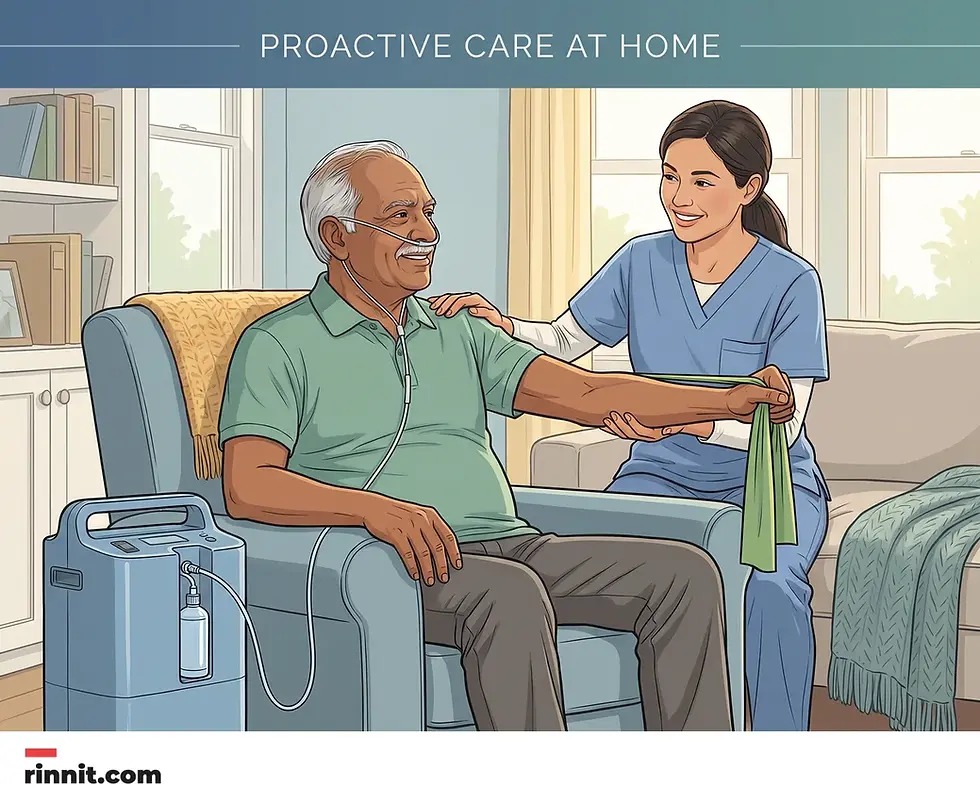
Currently, a double lung transplant is the only treatment with a proven track record of curing PVOD. While waiting for a transplant, medical teams provide supportive care to manage symptoms and improve quality of life. This may include supplemental oxygen, diuretics to reduce swelling, and pulmonary vasodilators to help ease blood flow. Vasodilators must be started with great caution by a specialist team, because in PVOD they can cause dangerous fluid buildup in the lungs (pulmonary edema).

What is the prognosis and long-term outlook for PVOD?
The outlook for individuals with PVOD is generally poor without surgical intervention. Because the disease is often advanced by the time it is diagnosed, many patients live for two years or less after the onset of symptoms if a transplant is not performed. However, for those who successfully undergo a double lung transplant, the recurrence of PVOD is extremely rare, offering a significant chance at long-term recovery. [1]
Conclusion and Next Steps
Pulmonary Veno-Occlusive Disease is a challenging diagnosis that requires specialized care and a proactive approach to management. Early evaluation for a lung transplant is critical for improving long-term outcomes. If you or a loved one experiences worsening shortness of breath, chest pain, or fainting, it is essential to consult with a healthcare provider who has experience in treating rare pulmonary vascular diseases.
Frequently Asked Questions
Is PVOD the same as pulmonary hypertension?
PVOD is considered a rare form of pulmonary arterial hypertension because it causes high blood pressure in the lung's arteries, though it starts in the veins. [1]
How rare is PVOD?
PVOD is extremely rare, affecting only about 1 to 2 people per million worldwide. [1]
Can PVOD be cured?
A double lung transplant is currently the only known cure for PVOD. [1]
What are the main symptoms of PVOD?
The primary symptoms include worsening shortness of breath, fatigue, dizziness, and swelling in the legs or abdomen. [1]
Is PVOD genetic?
In many cases, especially in children, it is linked to genetic variants in the EIF2AK4 or BMPR2 genes. [1]
Why is a lung biopsy risky for PVOD patients?
A biopsy carries a high risk of dangerous bleeding in people with PVOD, so doctors often prefer imaging tests. [1]
How long can someone live with PVOD without a transplant?
Without a transplant, most people live two years or less after their symptoms begin. [1]
Can environmental factors cause PVOD?
Yes, exposure to tobacco smoke and certain organic solvents has been linked to the development of the disease. [1]
Does PVOD come back after a transplant?
It is very rare for PVOD to recur after a successful lung transplant. [1]
What should I do if I experience chest pain or fainting?
Seek medical attention immediately, as these can be signs of severe complications like heart failure. [1]
Related Reading
Pulmonary Hypertension: Complete Guide to Symptoms, Causes, Diagnosis, and Treatment explains high blood pressure in the lungs, which PVOD causes.
What Is Chronic Thromboembolic Pulmonary Hypertension (CTEPH)? Symptoms, Causes, Diagnosis, and Treatment Options covers another cause of pulmonary hypertension linked to old clots.
Right Heart Catheterization: Why It's Done, Procedure, Risks and Recovery explains the test that measures pressure in the lung arteries.
Lung Transplant: Purpose, Types, Surgery, Risks and Recovery describes lung transplant, the main long-term treatment for PVOD.
References
Cleveland Clinic. Pulmonary Veno-Occlusive Disease (PVOD). Cleveland Clinic Health Library. Accessed October 11, 2026. https://my.clevelandclinic.org/health/diseases/pvod-pulmonary-veno-occlusive-disease
Montani D, Girerd B, Jaïs X, et al. Clinical phenotypes and outcomes of heritable and sporadic pulmonary veno-occlusive disease: a population-based study. Lancet Respir Med. 2017;5(2):125-134. PMID: 28087362. DOI: https://doi.org/10.1016/S2213-2600(16)30438-6
Ogawa A, Sakao S, Tanabe N, et al. Use of vasodilators for the treatment of pulmonary veno-occlusive disease and pulmonary capillary hemangiomatosis: a systematic review. Respir Investig. 2019;57(2):183-190. PMID: 30473253. DOI: https://doi.org/10.1016/j.resinv.2018.10.004
Zeng Q, Yang H, Liu B, et al. Clinical characteristics and survival of Chinese patients diagnosed with pulmonary arterial hypertension who carry BMPR2 or EIF2KAK4 variants. BMC Pulm Med. 2020;20(1):150. PMID: 32471403. DOI: https://doi.org/10.1186/s12890-020-01179-7
Medical disclaimer
This article is for informational purposes only and is not a substitute for professional medical advice, diagnosis, or treatment. Always seek the advice of your physician or other qualified health provider with any questions you may have about a medical condition.



Comments