Understanding Implant-Supported Dentures: A Complete Guide

Updated: 2 days ago
Medically reviewed by Dr. Baraa Alnahhal, MD · Last reviewed: September 2026
TL;DR
Implant-supported dentures are advanced oral appliances that anchor directly to the jawbone using dental implants. Unlike traditional dentures that rest on the gums, these devices provide superior stability for eating and speaking. Patients can choose between fixed and removable options depending on their bone health and personal lifestyle preferences.
Quick Answer
An implant-supported denture is a specialized dental prosthetic designed to replace multiple missing teeth by anchoring to threaded metal posts called implants. These implants act as artificial tooth roots, integrating with the jawbone to prevent the slipping or wobbling common with traditional dentures. This solution is ideal for individuals with sufficient jawbone density who seek a long-lasting, stable, and natural-looking restoration of their oral health and function.
Overview of Implant-Supported Dentures
Implant-supported dentures represent a significant advancement in restorative dentistry. While traditional dentures rely on suction or adhesives to stay in place, implant-supported versions are physically connected to the jaw. This connection is achieved through dental implants—tiny, threaded posts typically made of biocompatible material—that are surgically placed into the bone.
These devices are particularly beneficial for those who have lost most or all of their teeth in an arch. By mimicking the function of natural tooth roots, the implants not only secure the denture but also stimulate the jawbone, which helps prevent the bone loss often associated with missing teeth.

Types of Implant-Supported Dentures
Patients typically choose between two primary configurations of implant-supported dentures. The choice depends on factors such as jawbone health, ease of maintenance, and personal comfort.
Removable Implant-Supported Dentures
Attachment: Snaps onto the implants and can be removed by the patient.
Cleaning: Removed daily for soaking and cleaning.
Stability: High stability, but may have slight movement.
Maintenance: Easier to clean the underlying gums.
Fixed (Hybrid) Implant-Supported Dentures
Attachment: Permanently attached to the implants and removed only by a dentist.
Cleaning: Cleaned like natural teeth using specialized tools.
Stability: Maximum stability; feels most like natural teeth.
Maintenance: Requires meticulous flossing under the prosthetic.
The Treatment Process
Receiving implant-supported dentures is a multi-step journey that requires patience as the body heals and integrates the new hardware.
Initial preparation: Comprehensive exams and the extraction of any remaining damaged teeth. If the jawbone is too thin, a bone graft may be performed to provide a solid foundation for the implants.
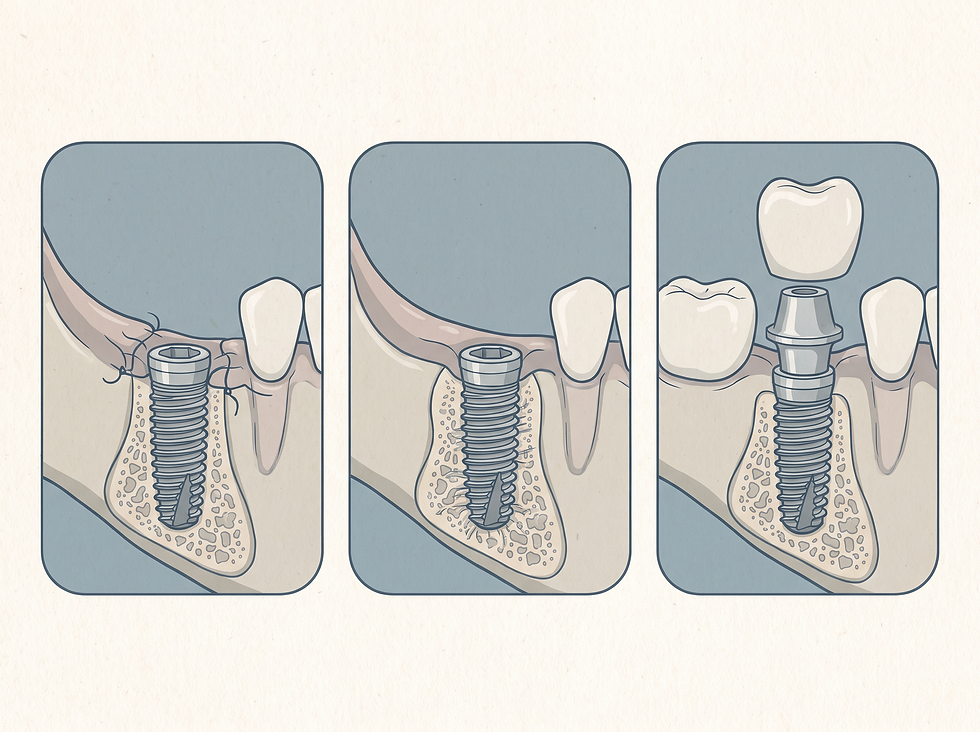
Implant surgery: A specialist surgically places the implants into the jawbone. A healing period of three to six months follows, allowing osseointegration, where the bone fuses with the implants.
Impressions and fabrication: Once healing is complete, the dentist takes precise impressions of the mouth. These are sent to a laboratory where the custom denture is crafted to match the patient's facial structure and desired aesthetics.
Final fitting: The completed denture is attached to the implants, and final adjustments are made to ensure a comfortable bite and natural appearance.
Benefits and Considerations
Choosing implant-supported dentures offers numerous advantages over conventional methods, though it is important to understand the associated risks.
Stability: Eliminates slipping, clicking, and the need for messy adhesives.
Bone health: Stimulates the jawbone to prevent the "sunken" facial appearance caused by bone loss.
Functionality: Restores the ability to eat a wide variety of foods and speak clearly.
Longevity: Implants can last a lifetime, while the denture itself lasts 15 to 20 years.
While the procedure is highly successful, potential risks include minor infections at the surgery site, temporary nerve damage, or injury to the surrounding oral tissues. Most patients find that the long-term benefits far outweigh these manageable risks.
Recovery and Long-Term Care
Most patients feel relatively normal within a week of the implant surgery. However, the full integration process takes several months. During this time, a temporary "healing denture" is often worn.
To ensure the longevity of the restoration, a dedicated oral hygiene routine is essential. Removable dentures should be cleaned twice daily and soaked overnight. Fixed dentures require thorough brushing and the use of floss threaders or interproximal brushes to clean beneath the appliance. Regular dental checkups are mandatory to monitor the health of the implants and the surrounding gum tissue.

Conclusion
Implant-supported dentures offer a transformative solution for individuals facing significant tooth loss. By combining the stability of dental implants with the comprehensive coverage of a denture, this treatment restores not just a smile, but the essential functions of eating and speaking with confidence. With proper care, this investment in oral health can provide a durable and lifelike result for decades.
What you can do now: If you are considering implant-supported dentures, the first step is to consult with a dental professional to evaluate your jawbone density and overall health. During this consultation, you can discuss whether a fixed or removable option is best for your lifestyle and begin planning the stages of your restorative journey.
Frequently Asked Questions (FAQ)
1. What exactly is an implant-supported denture?
It is a dental appliance that replaces missing teeth by anchoring to metal posts (implants) surgically placed in the jawbone.
2. How do they differ from traditional dentures?
Traditional dentures rest on the gums and rely on suction, whereas implant-supported versions are securely anchored to the bone.
3. Am I a good candidate for this procedure?
Most people missing many teeth are candidates, provided they have enough jawbone density or are willing to undergo bone grafting.
4. Is the surgery painful?
The procedure is performed under anesthesia. Most patients report only minor discomfort and swelling for a few days afterward.
5. How long does the entire process take?
The total time typically ranges from four to nine months, depending on healing time and whether bone grafting is required.
6. Can I eat normally with these dentures?
Yes, once fully healed and the final denture is attached, you can eat almost any food without fear of the denture slipping.
7. How many implants are needed?
The number varies, but common configurations include two to four implants for a removable denture or four or more for a fixed arch.
8. What is All-on-4®?
It is a specific technique for a fixed denture that replaces an entire arch of teeth using exactly four strategically placed implants.
9. How do I clean a removable implant-supported denture?
You should snap it off daily, clean it with a soft brush and denture cleaner, and soak it in a solution overnight.
10. How do I clean a fixed implant-supported denture?
You brush it like natural teeth and use specialized tools like floss threaders to clean the space between the denture and the gums.
11. How long do the implants last?
With excellent oral hygiene and regular dental visits, the dental implants themselves can last a lifetime.
12. How often does the denture part need replacement?
The prosthetic denture that attaches to the implants typically needs to be replaced or refurbished every 15 to 20 years.
13. Will these dentures look natural?
Yes, they are custom-crafted to match the shape, size, and color of natural teeth and to complement your facial features.
14. Can implant-supported dentures prevent bone loss?
Yes, the implants act like tooth roots to stimulate the jawbone, which helps maintain bone volume and facial structure.
15. What should I do if my denture feels loose?
Contact your dentist immediately. They can check the attachment points and ensure the implants and prosthetic are functioning correctly.
Medical disclaimer: The information provided is for educational purposes only and should not be used as a substitute for professional medical or dental advice, diagnosis, or treatment. Always seek the advice of your physician or other qualified health provider with any questions you may have regarding a medical condition. Based on information dated October 18, 2022.
Comments