Understanding Hydrosalpinx: Causes, Symptoms, and Fertility Impact

Updated: 2 days ago
Medically reviewed by Dr. Baraa Alnahhal, MD · Last reviewed: October 2026
Quick Answer: What Is Hydrosalpinx?
Hydrosalpinx is a type of tubal blockage in which the end of a fallopian tube becomes sealed, so the tube swells and fills with watery fluid. [1] [2] It is most commonly caused by earlier pelvic infections such as chlamydia or gonorrhea. [1] The fluid may flow into the uterus and lower IVF success unless the affected tube is treated or removed. [1] [2]

What the research says
Removing the damaged tube before IVF improves the chance of pregnancy. A Cochrane review of 11 randomized trials (1,386 women) found that salpingectomy probably increases the clinical pregnancy rate compared with no tubal surgery (RR 2.02, 95% CI 1.44–2.82; 4 trials, 455 women; moderate-quality evidence). In practical terms, a pregnancy rate of about 19% without surgery rose to between 27% and 52%. Blocking the tube near the uterus (proximal tubal occlusion) may also help (RR 3.21, 95% CI 1.72–5.99; low-quality evidence). No trial reported long-term fertility outcomes (Melo et al., Cochrane Database of Systematic Reviews, 2020). [2]
Live birth rates were higher after salpingectomy, and egg numbers were not reduced. A systematic review comparing salpingectomy with other pre-IVF options found that, in randomized studies, live birth (RR 1.59, 95% CI 1.17–2.16), clinical pregnancy (RR 1.27, 95% CI 1.02–1.57) and implantation (RR 1.55, 95% CI 1.16–2.08) rates were higher in the salpingectomy group. The number of eggs retrieved was similar, so salpingectomy did not impair the ovarian response (Volodarsky-Perel et al., Reproductive BioMedicine Online, 2019). [3]
Draining the tube and sclerotherapy is an option, but fluid can return. A meta-analysis of 10 studies found no difference in clinical pregnancy or miscarriage rates between hydrosalpinx sclerotherapy and salpingectomy. Fluid came back in roughly 22% to 33% of cases after aspiration, and aspiration alone gave lower pregnancy rates and higher miscarriage rates than salpingectomy (Cohen et al., Journal of Minimally Invasive Gynecology, 2018). [4]
Key Takeaways
Feature | Details |
Definition | Fluid accumulation and blockage in one or both fallopian tubes. [1] |
Primary Cause | Untreated pelvic infections (STIs) and pelvic inflammatory disease (PID). [1] |
Fertility Impact | Higher risk of infertility, ectopic pregnancy and miscarriage. [1] |
Common Symptoms | Often none; sometimes pelvic pain or unusual discharge. [1] |
Diagnosis | Hysterosalpingogram (HSG), ultrasound or laparoscopy. [1] |
Treatment | Antibiotics for infection; surgery (salpingectomy or salpingostomy); IVF to bypass the tubes. [1] |
What is hydrosalpinx, and how does it affect the fallopian tubes?
Healthy fallopian tubes are essential for natural conception, because fertilization normally happens inside them. In hydrosalpinx, the tube is not only closed but filled with fluid that can flow back toward the uterus. [1]
How It Affects Pregnancy
Natural conception: the blockage can keep sperm and egg from meeting. [1]
Ectopic pregnancy risk: a fertilized egg that cannot reach the uterus may implant in the tube, causing a dangerous tubal pregnancy. [1]
IVF interference: fluid from the tube can leak into the uterus and create an unhealthy environment for an embryo transferred during IVF. [1]
What causes hydrosalpinx, and what are the risk factors?
Most cases of hydrosalpinx follow inflammation or injury in the pelvis.
Sexually transmitted infections (STIs): untreated chlamydia and gonorrhea are the most common causes of tubal damage. [1]
Pelvic inflammatory disease (PID): an infection of the reproductive organs that often leaves scar tissue behind. [1]
Endometriosis: uterine-like tissue growing outside the uterus can cause adhesions that block the tubes. [1]
Previous surgery: scar tissue from pelvic or abdominal surgery, especially surgery on the tubes, can interfere with tube function. [1]
What are the symptoms of hydrosalpinx?
Hydrosalpinx often causes no symptoms and is found only when someone has trouble getting pregnant, but it may cause pelvic pain, period-related pain or abnormal discharge. [1] When symptoms do occur, they may include:

How is hydrosalpinx diagnosed?
Because symptoms are uncommon, imaging is usually needed to confirm a diagnosis.
Hysterosalpingogram (HSG): an X-ray test that uses dye to show whether the fallopian tubes are open or blocked. It is the most common test used to diagnose hydrosalpinx. [1]
Transvaginal ultrasound: normal tubes are hard to see, but swollen, fluid-filled tubes can appear as sausage-shaped structures. [1]
Laparoscopy: a minimally invasive surgery in which a small camera is used to look directly at the tubes and surrounding tissue. [1]
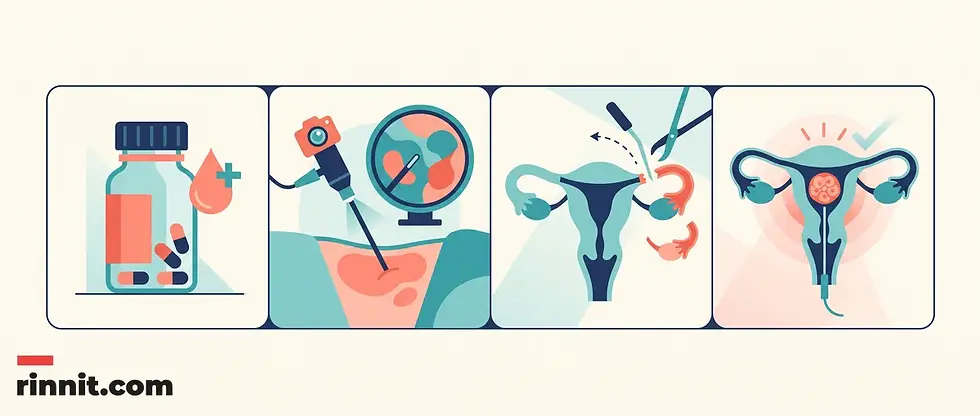
How is hydrosalpinx treated, and how does it affect fertility?
The goals of treatment are to clear any active infection and to give the best chance of a healthy pregnancy.
Treatment | Description |
Antibiotics | Used to clear an active bacterial infection, such as an STI. [1] |
Salpingectomy | |
Salpingostomy | A procedure to reopen and drain the tube. The tube can seal again, and pregnancy complications may be more likely afterward. [1] |
Sclerotherapy | The fluid is drained with a needle and a solution is injected to help keep the tube from refilling. It is used less often. |
IVF |
What is the outlook and prognosis for hydrosalpinx?
With modern reproductive medicine, a diagnosis of hydrosalpinx does not mean the end of fertility. Natural conception may be difficult or impossible depending on the severity, but treating the tube and then using IVF gives many people a good chance of pregnancy. Treating the hydrosalpinx before IVF improves pregnancy rates compared with leaving it untreated. [2]
Conclusion
Hydrosalpinx is a significant hurdle for people trying to conceive, but it is manageable. By dealing with the blocked tube and the fluid it holds, many people can improve their reproductive health and their chances of a successful pregnancy. Early diagnosis through a fertility evaluation is key to effective management.
Frequently Asked Questions
Can I get pregnant naturally with hydrosalpinx?
If only one tube is affected, natural pregnancy is possible but less likely. If both tubes are blocked, natural conception is usually not possible.
Why is the fluid in the tube described as “toxic”?
Research suggests that fluid from a hydrosalpinx can flow back into the uterus, where it may harm a developing embryo and make implantation harder. [1] It is often described as “toxic” because it contains inflammatory substances.
Does hydrosalpinx cause pain?
Most people have no symptoms, but some have pelvic pain that may get worse during or right after a period. [1]
Is hydrosalpinx a type of cancer?
No. It is a benign (non-cancerous) condition caused by fluid buildup, although some tumors can occasionally block the tubes.
How is hydrosalpinx different from a regular blocked tube?
A blocked tube may be caused by scar tissue alone. Hydrosalpinx specifically means the end of the tube is sealed shut and the tube has filled with fluid. [1] [2]
Can hydrosalpinx be cured with antibiotics?
Antibiotics can treat an active infection, but they cannot reopen a tube that has already been sealed by scarring.
What is a salpingectomy?
It is the surgical removal of one or both fallopian tubes. [1] It is a commonly recommended way to keep hydrosalpinx fluid from interfering with IVF. [3]
Will removing my tubes cause early menopause?
No. The ovaries, which produce your hormones, are not removed in a salpingectomy, so your menstrual cycle continues. A systematic review also found that salpingectomy did not reduce the number of eggs retrieved during later IVF. [3]
What is an HSG test?
A hysterosalpingogram is an X-ray test in which dye is injected into the uterus to check whether the fallopian tubes are open. [1]
Can endometriosis cause hydrosalpinx?
Yes. Endometriosis can cause inflammation and adhesions that lead to sealed fallopian tubes. [1]
Is hydrosalpinx permanent?
Without treatment, the blockage and fluid buildup usually stay.
Can hydrosalpinx go away on its own?
It is uncommon for a sealed, fluid-filled tube to reopen and stay drained without medical treatment.
How successful is IVF after treating hydrosalpinx?
Treating or removing the affected tube improves IVF outcomes. [1] [2] In a Cochrane review of randomized trials, clinical pregnancy rates were about twice as high after salpingectomy as with no tubal surgery. [2]
Can hydrosalpinx cause a miscarriage?
Yes. An untreated hydrosalpinx can raise the risk of miscarriage and other pregnancy complications. [1]
What does a “sausage-shaped” tube mean?
Radiologists use this phrase to describe how a swollen, fluid-filled fallopian tube can look on an ultrasound. [1]
Can an STI cause hydrosalpinx years later?
Yes. An untreated infection from years ago can leave scarring that eventually seals the tube.
How common is hydrosalpinx?
Tubal problems are involved in 20% to 30% of infertility cases, and hydrosalpinx is present in about 10% to 20% of those cases. [1]
What is a salpingostomy?
It is a procedure that makes a new opening in the fallopian tube to drain the fluid. [1] The tube can seal again later, and IVF generally has better pregnancy rates than this surgery.
Can a regular pelvic exam diagnose hydrosalpinx?
No. Diagnosis usually needs imaging such as an HSG or ultrasound, because swollen tubes are not typically felt on a manual exam.
Does hydrosalpinx affect egg quality?
The condition affects the tubes and the uterine environment. It is not known to directly damage the eggs in the ovaries.
What are the fimbriae?
These are the finger-like ends of the fallopian tube that sweep the egg from the ovary into the tube.
Can I still have periods with hydrosalpinx?
Yes. Your menstrual cycle is controlled by hormones from your brain and ovaries, so your periods usually continue normally.
Is surgery for hydrosalpinx major surgery?
Most procedures, including salpingectomy, are done laparoscopically (with small incisions and a camera), which generally means a shorter recovery.
Can a ruptured appendix cause hydrosalpinx?
It can contribute. Any major pelvic infection or inflammation, including a ruptured appendix, can cause scar tissue that affects the tubes.
What is tubal factor infertility?
It is a general term for infertility caused by damaged, blocked or missing fallopian tubes.
Can a CT scan show hydrosalpinx?
Sometimes, but an HSG or a specialized ultrasound is generally more useful for diagnosis.
How long is recovery after a salpingectomy?
Many people return to normal activities within about one to two weeks after laparoscopic surgery, though recovery varies from person to person.
Does hydrosalpinx affect both tubes?
It can affect one tube (unilateral) or both tubes (bilateral). [1]
What is the fluid made of?
It is mostly watery fluid containing proteins and inflammatory substances produced by the damaged lining of the tube.
Can I do IVF if I keep my hydrosalpinx?
You can, but pregnancy rates are lower than after the affected tube is treated. In the Cochrane review, clinical pregnancy rates roughly doubled with salpingectomy compared with no tubal surgery. [2]
What is pelvic inflammatory disease (PID)?
It is an infection of the female reproductive organs that often starts in the vagina and spreads to the uterus and tubes.
Can chlamydia be cured?
Yes. Chlamydia is treated with antibiotics, but damage to the tubes before treatment can be permanent.
Is there a natural way to drain the tubes?
There are no natural or herbal remedies that can reopen a sealed fallopian tube. [1]
What is sclerotherapy for hydrosalpinx?
A needle drains the fluid, and a solution is then injected to reduce the chance that it refills. A meta-analysis found it improved fertility outcomes and could be an alternative to salpingectomy. [4]
Does hydrosalpinx cause heavy periods?
It is not typically a cause of heavy bleeding, although related conditions such as endometriosis may be.
Is the fluid in the tube infected?
The fluid itself is usually not actively infected. It is the result of earlier infection or inflammation.
Can a hydrosalpinx burst?
It does not typically burst, but the fluid can leak out through the uterine end of the tube.
Does hydrosalpinx cause weight gain?
No. It is a local condition of the fallopian tubes and does not affect metabolism or weight.
Can I use donor eggs if I have hydrosalpinx?
Yes, but treating or removing the affected tube first is usually recommended so the uterus is a healthier environment for the embryo.
What is a “dye test”?
This is another name for a hysterosalpingogram (HSG), in which dye is used to check for tubal blockages.
Can hydrosalpinx cause back pain?
Lower back pain can sometimes accompany chronic pelvic inflammation, but it is not a main symptom.
How do I prepare for an HSG?
Your doctor will usually schedule it during the first half of your cycle and may suggest taking an over-the-counter pain reliever beforehand.
Is salpingectomy covered by insurance?
In many cases it is covered when it is medically necessary, but coverage varies, so check with your insurer.
Can a copper IUD cause hydrosalpinx?
There is no strong evidence that IUDs cause hydrosalpinx, although an IUD can rarely be linked to PID if an infection is introduced.
What is the “fimbrial end” of the tube?
It is the end of the fallopian tube closest to the ovary, which is where the blockage in hydrosalpinx usually occurs.
Can hydrosalpinx be found during pregnancy?
It is usually diagnosed before pregnancy. If it is found during pregnancy, it is typically monitored unless it causes complications.
Does hydrosalpinx cause nausea?
Not typically, unless there is an acute, active pelvic infection.
Can a hydrosalpinx be large?
Yes. Some can grow to several centimeters across and are easy to see on imaging.
What is unilateral hydrosalpinx?
It means the condition is present in only one of the two fallopian tubes.
Where can I find a fertility specialist?
Your OB/GYN can refer you to a reproductive endocrinology and infertility (REI) specialist.
Related Reading
Hysterosalpingogram (HSG): Timing, What to Expect and What It Finds explains how an HSG checks the fallopian tubes and uterus.
References
Cleveland Clinic. Hydrosalpinx: Causes, Symptoms, Diagnosis & Treatment. Cleveland Clinic. Last updated November 11, 2022. https://my.clevelandclinic.org/health/diseases/24437-hydrosalpinx
Melo P, Georgiou EX, Johnson N, et al. Surgical treatment for tubal disease in women due to undergo in vitro fertilisation. Cochrane Database Syst Rev. 2020;10(10):CD002125. PMID 33091963. https://doi.org/10.1002/14651858.CD002125.pub4
Volodarsky-Perel A, Buckett W, Tulandi T. Treatment of hydrosalpinx in relation to IVF outcome: a systematic review and meta-analysis. Reprod Biomed Online. 2019;39(3):413-432. PMID 31324437. https://doi.org/10.1016/j.rbmo.2019.04.012
Cohen A, Almog B, Tulandi T. Hydrosalpinx sclerotherapy before in vitro fertilization: systematic review and meta-analysis. J Minim Invasive Gynecol. 2018;25(4):600-607. PMID 29248666. https://doi.org/10.1016/j.jmig.2017.12.004
Disclaimer
This article is for informational purposes only and does not constitute medical advice. Always seek the advice of your physician or other qualified health provider with any questions you may have regarding a medical condition.



Comments