Total Artificial Heart: Function, Procedure, and Recovery

Updated: 2 days ago
Medically reviewed by Dr. Baraa Alnahhal, MD · Last reviewed: October 2026
A total artificial heart (TAH) is a mechanical pump that replaces the heart's lower chambers (ventricles) to restore healthy blood circulation [1]. Primarily used as a temporary "bridge to transplant," the device is powered by an external driver and connected via tubes through the abdomen [1]. While the nine-hour surgery carries significant risks like infection and blood clots, it allows patients with end-stage heart failure to regain strength while awaiting a donor heart [1] [3].
Quick Answer
A total artificial heart is a mechanical device that replaces both damaged ventricles to restore blood flow throughout the body [1]. It is typically a temporary solution for people with end-stage heart failure awaiting a heart transplant [1] [3]. It connects to the heart's upper chambers and major arteries and is powered by an external air compressor, helping patients stay healthy until transplant [1].
What the research says
Survival on the device is substantial but falls over the first year. In the INTERMACS registry of 450 patients who received a temporary total artificial heart between 2006 and 2017, 266 went on to transplantation and 162 died; actuarial survival was 73% at 3 months, 62% at 6 months and 53% at 12 months (Arabía et al., J Heart Lung Transplant, 2018) [2].
Experienced centers get better results. In the same registry analysis, 71% of patients at high-volume centers were alive on the device or had been transplanted 12 months after implantation, compared with 57% at low-volume centers (≤10 implants; p = 0.003) (Arabía et al., J Heart Lung Transplant, 2018) [2].
The device offers full heart replacement without immunosuppression. A 2026 device-profile review of the SynCardia temporary total artificial heart for end-stage biventricular failure notes that, unlike transplantation, total artificial hearts avoid immunosuppression, while power supply, long-term durability and biocompatibility remain challenges that newer designs aim to address (Rubin et al., Expert Rev Med Devices, 2026) [3].
What is a total artificial heart?
The total artificial heart represents a significant advancement in mechanical circulatory support. Unlike a left ventricular assist device (LVAD), which helps a failing heart pump, the TAH completely replaces the heart's two lower chambers, known as ventricles [1]. This mechanical replacement is essential when both sides of the heart are no longer capable of maintaining life-sustaining circulation. The device restores blood flow to the lungs and the rest of the body, effectively taking over the heart's primary mechanical function.
Why the Procedure is Performed
Healthcare providers recommend a total artificial heart for patients facing severe heart conditions that have not responded to other treatments. It is most commonly used as a "bridge to transplant," keeping a patient alive and stable until a suitable donor heart becomes available [1].
How do you prepare for total artificial heart surgery, and what happens?
Receiving a total artificial heart is a major surgical undertaking that requires extensive preparation and a highly specialized medical team.
Pre-Operative Preparation
Patients typically spend at least one week in the hospital before the surgery [1]. During this time, the medical team conducts a battery of tests to ensure the patient is strong enough for the procedure and to confirm the device will fit within the chest cavity [1]. These tests include blood work, CT scans, echocardiograms, and pulmonary function testing to assess the health of other vital organs [1].
During the Surgery
The operation can take up to nine hours and is performed under general anesthesia [1]. Surgeons perform a sternotomy to open the chest, and the patient is placed on a heart-lung bypass machine to maintain circulation while the natural ventricles are removed [1]. The mechanical heart is then attached to the upper chambers (atria) and connected to the aorta and pulmonary artery [1]. Once the device is turned on and functioning correctly, the bypass machine is removed.

Figure 1: Anatomical connection of a total artificial heart to the atria and major blood vessels.
What is life like with a total artificial heart?
Once the device is implanted, it is powered by an external air compressor called a driver [1]. This driver is connected to the internal pump via two drivelines—tubes that exit the body through the abdomen [1].
Device Management and Lifestyle
Patients must carry the portable driver at all times to ensure the heart continues to pump. The driver operates on batteries that can be recharged at home or in a vehicle [1]. While the device allows for increased mobility compared to end-stage heart failure, it requires strict adherence to care protocols. Patients must keep the driveline exit sites clean to prevent infection and avoid activities like swimming or taking baths that could submerge the tubes.
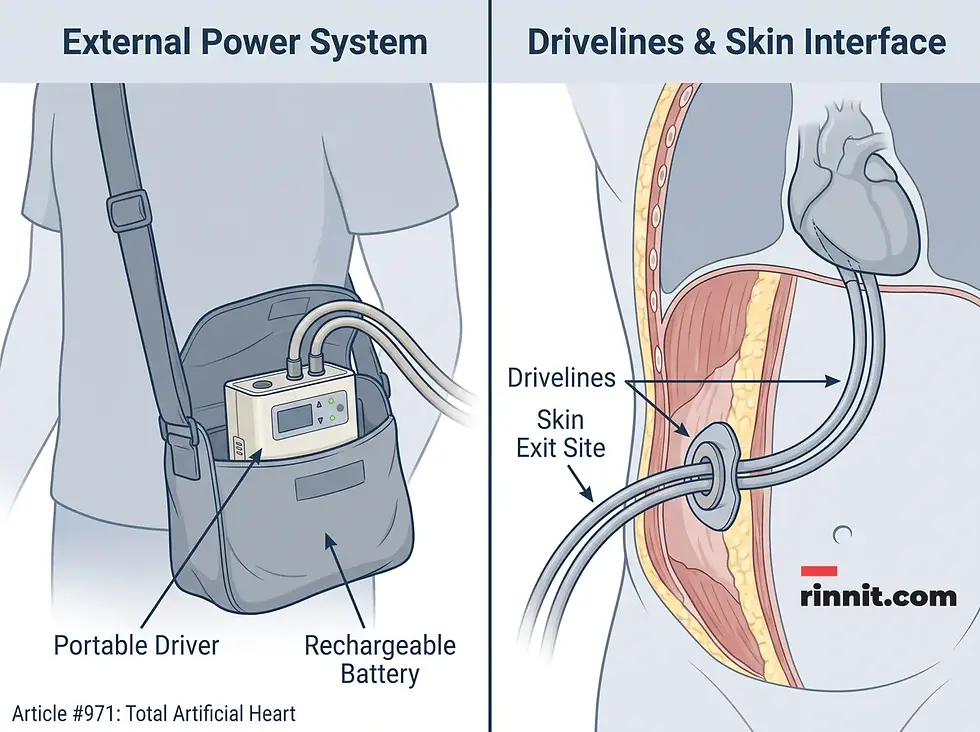
Figure 2: The external driver and driveline system that powers the mechanical heart.
What are the benefits and risks of a total artificial heart?
The primary benefit of a total artificial heart is the restoration of healthy circulation, which allows other organs to recover and the patient to regain physical strength.
Clinical Risks
Despite its life-saving potential, the TAH carries significant risks due to the invasive nature of the surgery and the presence of a foreign mechanical device in the body.
Regular monitoring and blood-thinning medications are typically required to manage these risks and prevent complications like strokes or clots.

Figure 3: Essential recovery steps and long-term care for patients with a mechanical heart.
Conclusion
The total artificial heart is a sophisticated mechanical solution for patients with life-threatening heart failure. By replacing the ventricles and restoring circulation, it serves as a vital bridge to a permanent heart transplant. While the procedure involves a complex surgery and requires significant lifestyle adjustments, it provides a critical window of time for patients to await a donor heart. Anyone facing end-stage heart disease should discuss mechanical support options with a specialized cardiovascular team to understand the best path forward.
Frequently Asked Questions
How long can a person live with an artificial heart?
A total artificial heart is intended as a temporary bridge to transplant. Most patients use the device for several months until a donor heart becomes available, though some have lived with it for longer periods depending on their clinical needs.
Is the external driver heavy?
Modern portable drivers are designed to be carried in a backpack or shoulder bag. While they have some weight due to the batteries and compressor, they are portable enough to allow patients to walk and perform daily activities.
Can I shower with a total artificial heart?
Patients can usually take sponge baths, but they must avoid submerging the driveline exit sites in water. Specialized waterproof covers may be available for showering, but swimming and baths are generally prohibited.
What happens if the driver loses power?
The driver has internal alarms and backup batteries to alert the patient if power is low. Patients are trained to always have a backup power source or spare batteries available to ensure continuous operation.
Does the artificial heart beat like a real heart?
The artificial heart is set to pump at a steady rhythm by the external driver. While it does not respond to emotions or exercise in the same way a natural heart does, the driver can be adjusted by medical professionals to meet the patient's needs.
Can the device be used as a permanent solution?
Currently, the total artificial heart is primarily approved and used as a bridge to transplant. Research is ongoing into using such devices as "destination therapy" (a permanent solution), but this is not the standard application.
Will I be able to exercise with the device?
Once recovered from surgery, many patients can perform light exercise like walking. Physical therapy is a key part of the recovery process to help patients regain the strength they lost during heart failure.
What are the signs of a driveline infection?
Signs of infection at the driveline exit site include redness, swelling, warmth, pain, or drainage. Patients are taught to monitor these sites daily and report any changes to their medical team immediately.
Do I need to take special medications?
Yes, most patients must take anticoagulants (blood thinners) to prevent blood clots from forming on the mechanical surfaces of the device, which could lead to a stroke or device malfunction.
Can children receive a total artificial heart?
While most devices are sized for adults, there are smaller versions or alternative mechanical support options available for adolescents and children with severe heart failure.
How do I prepare for a total artificial heart implant?
You usually stay in the hospital for at least a week before surgery while the team teaches you and your family about the device. [1] Tests may include blood tests (including blood type), a CT scan, chest X-ray, ECG, echocardiogram, pulmonary function testing, heart catheterization and a metabolic exercise stress test. [1]
When should I call my doctor after a total artificial heart implant?
Contact your provider if you have a fever or signs of infection. Call 911 right away for stroke symptoms (face drooping, arm weakness, trouble speaking) or sudden shortness of breath or chest pain, which can be signs of a pulmonary embolism. [1]
Related Reading
References
Cleveland Clinic. Artificial Heart. Cleveland Clinic. Last updated December 23, 2024. https://my.clevelandclinic.org/health/procedures/22173-total-artificial-heart
Arabía FA, Cantor RS, Koehl DA, et al. Interagency registry for mechanically assisted circulatory support report on the total artificial heart. J Heart Lung Transplant. 2018;37(11):1304-1312. PMID 29802083. https://doi.org/10.1016/j.healun.2018.04.004
Rubin G, Colón MJ, Mahar J, et al. A device profile of the SynCardia temporary total artificial heart as a bridge-to-transplantation in patients with biventricular failure. Expert Rev Med Devices. 2026;23(1):5-13. PMID 41431108. https://doi.org/10.1080/17434440.2025.2606884
Medical disclaimer
The information provided in this article is for educational purposes only and should not be used as a substitute for professional medical advice, diagnosis, or treatment. Always seek the advice of your physician or other qualified health provider with any questions you may have regarding a medical condition.



Comments