Telogen Effluvium: Symptoms, Causes, Treatment and Regrowth

Updated: 2 days ago
Medically reviewed by Dr. Baraa Alnahhal, MD · Last reviewed: October 2026
Quick Answer: What is telogen effluvium?
Telogen effluvium is a temporary form of hair loss in which hairs move from the growth stage into the resting and shedding stage too early, often after a stressor or change to the body. It causes rapid, heavy shedding rather than the slow thinning typical of pattern hair loss. [1]
What the research says
Hair loss is a commonly reported effect months after a severe infection such as COVID-19. A systematic review and meta-analysis of 72 studies, covering 88,769 previously hospitalized COVID-19 patients, found a pooled prevalence of alopecia of 11.2% (95% CI 6.9–17.6%) over 3 to 13.2 months of follow-up. Severe infections are among the recognized triggers of telogen effluvium, which typically causes shedding months after the event (Yang et al., Infection, 2022). [2]
Estimates of hair loss after infection vary by study. Another systematic review and meta-analysis of 15 studies with 47,910 patients estimated that hair loss was reported by 25% of people among the long-term effects of COVID-19, alongside fatigue (58%), headache (44%) and attention disorder (27%). The differences between this figure and the one above reflect differences in the populations and follow-up times studied (Lopez-Leon et al., Sci Rep, 2021). [3]

Telogen effluvium is a common type of temporary hair loss caused by a stressor or change to your body. It most often thins hair around the top of the head, although the back and sides of the scalp can also be affected.
The shedding often appears two to three months after the trigger rather than immediately. In many cases, hair grows back after the shedding period. A healthcare provider should evaluate new or distressing hair loss rather than assuming the cause.
How does the hair-growth cycle work?
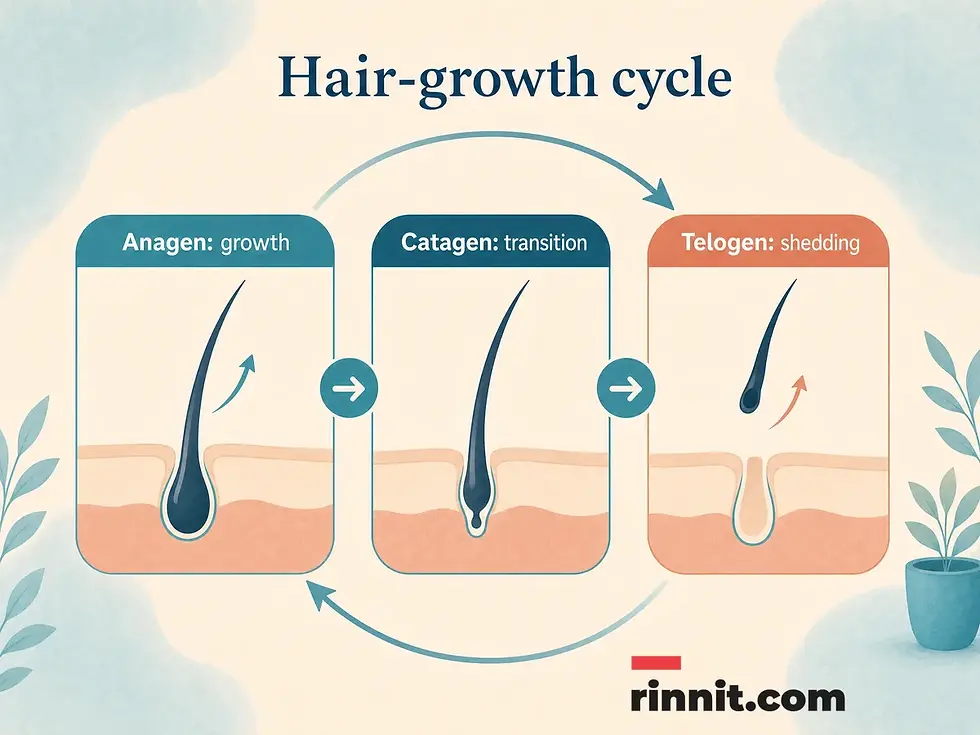
Hair follicles move through three stages: anagen, the active growth stage; catagen, a transitional resting stage; and telogen, the resting and shedding stage. [1]
During anagen, cells in the lower hair follicle rapidly divide. Once a new hair forms, it pushes the hair out of the follicle and lengthens the hair shaft. A follicle can remain in anagen for up to four years, and around 80% to 90% of follicles are in this stage at a given time. [1]
Catagen is a transition in which the lower part of the follicle regresses and hair stops growing. Around 5% of hairs are in catagen at a given time. [1]
During telogen, the follicle is inactive. A white bulb of keratin at the root holds the hair in the follicle until it sheds, restarting the growth cycle. Around 5% of hairs are in telogen at a given time. [1]
Hair-cycle stage | What happens | Approximate share |
Anagen | Active growth; follicles can grow hair for up to four years | 80%–90% |
Catagen | Transition; the lower follicle regresses and growth stops | About 5% |
Telogen | Resting and shedding; the follicle is inactive | About 5% |
After a stressor or body change, up to 70% of hairs in anagen may prematurely enter telogen. This shift causes increased shedding. [1]
What is the difference between acute and chronic telogen effluvium?
Acute telogen effluvium lasts fewer than six months. Shedding usually begins two to three months after a stressor or body change, and 95% of acute cases resolve. [1]
Chronic telogen effluvium lasts longer than six months. It affects the entire scalp and may not have a clear cause. Early in chronic telogen effluvium, hair may come out in handfuls, but the condition does not cause total baldness. [1]
Type | Duration and pattern |
Acute telogen effluvium | Fewer than six months; shedding often begins two to three months after a trigger; 95% of cases resolve |
Chronic telogen effluvium | More than six months; affects the entire scalp; may not have a clear cause; does not cause total baldness |
Who can develop telogen effluvium?
Anyone can develop telogen effluvium. Chronic telogen effluvium without a detectable cause is more likely in women between 30 and 60 years of age. [1]
Telogen effluvium is one of the most common causes of rapid hair loss and one of the most common causes of hair loss in women. [1]
What does telogen effluvium look like?
Telogen effluvium may cause increased hair loss in a brush, shower drain or on a pillow. Hair on the scalp may look thinner, and dry hairs may fall out easily. [1]
The scalp should look healthy. A rash, itching, burning, pain or flaking is not expected with telogen effluvium and should be discussed with a healthcare provider. [1]
Pattern | What to notice |
Increased shedding | More hair in a brush, shower drain or on a pillow |
Scalp thinning | Thinning, usually most noticeable on top of the head |
Hair texture | Dry hairs that fall out easily |
Scalp appearance | The scalp should generally look healthy without rash, itching, burning, pain or flaking |
How much hair loss is normal with telogen effluvium?
Most healthy people lose up to 100 strands of hair per day. With telogen effluvium, shedding may reach up to 300 strands per day. [1]
Telogen effluvium may affect hair throughout the scalp, but it most commonly appears on top rather than the back or sides. It usually does not affect the hairline or cause total baldness. In severe cases, it may affect eyebrows and body hair. [1]
Telogen effluvium causes heavy and rapid shedding. Pattern hair loss tends to cause slower thinning. [1]
What triggers telogen effluvium?
A stressor or change to the body can trigger telogen effluvium. The shedding may not appear until about two to three months later, which can make the connection difficult to recognize. [1]
Possible trigger | Examples |
Illness or body stress | High fever, severe infections or major surgery |
Hormonal or reproductive change | Childbirth or stopping birth-control pills |
Psychological stress | A period of severe emotional stress |
Thyroid changes | Hyperthyroidism or hypothyroidism |
Nutrition and weight change | Fad diets without enough protein, extreme diets or rapid weight loss |
Medicines | Retinoids, beta-blockers, calcium-channel blockers, depression medicines and NSAIDs |
Does telogen effluvium affect physical health?
Telogen effluvium does not affect physical health, but it can affect psychological and psychosocial well-being. Some people experience emotional stress, anxiety or depression related to the hair loss. [1]
Hair loss can feel alarming, especially when shedding is rapid. Discussing the change with a healthcare provider can help identify a cause and determine whether additional evaluation is needed.
Is telogen effluvium contagious?
No. Telogen effluvium is not contagious.
How is telogen effluvium diagnosed?
A healthcare provider can often recognize telogen effluvium during a physical examination of the scalp. The provider may ask about diet, recent medical history and events that occurred about three months before the hair loss began. [1]
Many people have recovered from the stressor or illness by the time shedding starts, so they may not connect the earlier event with their hair loss. [1]
The pull test
During a pull test, a provider gently pulls a small clump of 40 to 60 hairs between the fingers. Under typical conditions, only two to three hairs may come out. With telogen effluvium, at least four to six hairs with white bulbs at the roots may come out. [1]
Most cases can be diagnosed without testing. Blood tests or a scalp biopsy may be recommended if the provider suspects another condition or illness caused the hair loss. [1]
Diagnostic step | What it may show |
Scalp examination | The overall pattern and health of the scalp |
Diet and medical history | A possible nutritional cause, stressor or illness about three months earlier |
Pull test | Whether more hairs than usual, including white-bulbed hairs, come out |
Blood tests | An underlying condition or illness when suspected |
Scalp biopsy | Another scalp or hair condition when suspected |
How is telogen effluvium treated?
The first step is identifying and addressing the stressor or body change. Once the cause is addressed, most cases resolve without treatment within six to eight months. [1]
Because telogen effluvium usually resolves on its own, additional treatment may not be necessary. A provider can determine whether treatment or further evaluation is appropriate. [1]
Topical medication
Over-the-counter topical minoxidil promotes hair growth. Possible side effects include headache, scalp irritation and unusual hair growth. Do not use minoxidil during pregnancy or breastfeeding. Ask a healthcare provider before using it. [1]
Vitamins and supplements
Multivitamins containing iron or an iron supplement may help promote hair growth, and biotin may help promote strong, healthy hair. Ask a healthcare provider before adding any new supplement to your diet. [1]
Styling options
Certain hairstyles, wigs or hair weaves may help obscure or hide hair loss. [1]

Care option | Role |
Address the trigger | Identify and manage the stressor or body change when possible |
Topical medication | May promote hair growth; clinician guidance is important |
Vitamins or supplements | Iron-containing multivitamins, iron or biotin may support hair growth; ask a provider first |
Styling techniques | Hairstyles, wigs or hair weaves may obscure shedding |
How long does telogen effluvium last?
Telogen effluvium usually lasts between three and six months. New hair growth is often noticed after the three- to six-month shedding period. [1]
Once the underlying cause is addressed, most cases resolve without treatment within six to eight months. These timelines describe different milestones: the shedding period is usually three to six months, while overall resolution after addressing the cause may take longer. [1]
Will hair grow back after telogen effluvium?
Yes. Hair grows back after telogen effluvium. New growth is usually noticed after the shedding period, and the overall outlook is good. [1]
A healthcare provider can help identify the trigger and suggest steps to support new growth. Contact a provider as soon as you notice hair loss, especially if it causes additional stress.
Telogen effluvium vs. pattern hair loss
Telogen effluvium involves heavy and rapid shedding, usually a few months after a physical or emotional stressor or a sudden hormonal change. It is usually temporary, and hair often grows back once the stress has resolved. [1]
Androgenic alopecia, also called male-pattern or female-pattern hair loss, causes more gradual thinning. Without medication or treatment, hair loss from androgenic alopecia is permanent. [1]
Feature | Telogen effluvium | Androgenic alopecia |
Speed | Heavy, rapid shedding | More gradual thinning |
Timing | Often begins a few months after a stressor, illness or hormonal change | Gradual onset |
Usual course | Usually temporary; hair often grows back | Permanent without medication or treatment |
Common pattern | Often top-of-scalp thinning; usually not the hairline | Pattern-related thinning |
A provider should evaluate hair loss rather than relying on pattern alone, especially when shedding is sudden, distressing or accompanied by scalp changes.
How can you support healthy hair and reduce risk?
There is no single guaranteed way to prevent telogen effluvium, but several steps may support healthy hair and reduce risk.
Eating extra protein may be helpful, especially for people who are vegetarian or vegan. You need 40 to 60 grams of protein a day. A Mediterranean-style diet includes fruits, vegetables and protein that may help minimize hair loss. [1]
Certain vitamins and minerals help maintain healthy hair, skin and muscle tissue, including vitamins A, B, C, D and E, zinc, biotin and iron. Ask a healthcare provider before adding supplements. [1]
Stress management, adequate sleep and avoiding extreme or restrictive diets may also help. Most adults need between seven and nine hours of sleep per night. [1]
Supportive habit | Guidance |
Eat adequate protein | Extra protein may help, especially for vegetarian or vegan diets; 40–60 grams daily |
Ask before supplements | Discuss vitamins, minerals, iron or biotin with a healthcare provider before adding them |
Cope with stress | Stress is a leading cause of telogen effluvium |
Get enough sleep | Most adults need 7–9 hours per night |
Avoid extreme diets | Restrictive diets and rapid weight loss can trigger telogen effluvium |
Choose balanced foods | A Mediterranean-style pattern emphasizes fruit, vegetables, whole grains, lean protein and healthy fats |
When should you contact a healthcare provider?
Contact a healthcare provider as soon as you notice hair loss, especially when it causes additional stress. A provider can evaluate the scalp, review diet and medical history, and decide whether blood tests or a scalp biopsy are needed.
Contact a provider promptly if the scalp has a rash, itching, burning, pain or flaking, because those findings are not expected with telogen effluvium.
Conclusion: Rapid shedding is worth evaluating
Telogen effluvium is a common, usually temporary form of hair loss that can follow a stressor or body change. Shedding often begins two to three months later and may be most noticeable on top of the head. [1]
A scalp examination, history and sometimes a pull test can help identify telogen effluvium. Most cases improve after the underlying cause is addressed, and new hair growth is usually noticed after the three- to six-month shedding period. [1]
If you notice sudden or distressing hair loss, contact a qualified healthcare provider rather than trying to diagnose the cause yourself. Rinnit.com is here to make complex health information easier to understand. [1]
Frequently Asked Questions
What is telogen effluvium?
Telogen effluvium is temporary hair loss caused by a stressor or change to the body. It happens when too many hairs move from the growth stage into the resting and shedding stage prematurely.
What are the symptoms of telogen effluvium?
Symptoms include increased shedding, thinning hair on the scalp and dry hairs that fall out easily. The scalp should look healthy without rash, itching, burning, pain or flaking.
How soon after stress does telogen effluvium start?
Hair loss usually occurs two to three months after a stressor or change to the body.
How much hair can telogen effluvium cause you to lose?
Healthy people may lose up to 100 strands per day. Telogen effluvium may cause up to 300 strands of hair to fall out per day.
Can telogen effluvium cause baldness?
Telogen effluvium usually does not cause total baldness or affect the hairline. Severe cases may affect the eyebrows and body hair. Chronic telogen effluvium may involve handfuls of shedding early but does not cause total baldness.
Is telogen effluvium contagious?
No. Telogen effluvium is not contagious.
How is telogen effluvium diagnosed?
A provider examines the scalp and asks about diet, medical history and events about three months earlier. A pull test may be used. Blood tests or a scalp biopsy may be recommended if another condition is suspected.
Does telogen effluvium go away on its own?
Many cases resolve without treatment after the cause is addressed, usually within six to eight months. The usual shedding period is three to six months.
Will hair grow back after telogen effluvium?
Yes. New growth is usually noticed after the three- to six-month shedding period, and the overall outlook is good.
What can trigger telogen effluvium?
Triggers may include high fever, childbirth, severe infections, psychological stress, major surgery, thyroid conditions, stopping birth-control pills, low-protein fad diets, rapid weight loss and some medicines.
How is telogen effluvium treated?
Treatment focuses on identifying and addressing the cause. A provider may discuss topical minoxidil, iron-containing multivitamins or supplements, styling options and other care. Ask a provider before using minoxidil or adding supplements.
How is telogen effluvium different from pattern hair loss?
Telogen effluvium causes rapid, heavy shedding and is usually temporary. Pattern hair loss causes slower thinning and is permanent without medication or treatment.
When should I seek medical advice?
Contact a healthcare provider as soon as you notice hair loss, especially if it causes additional stress or if the scalp has rash, itching, burning, pain or flaking.
Related guides
References
Cleveland Clinic. Telogen Effluvium: Symptoms, Causes, Treatment & Regrowth. Cleveland Clinic. Updated December 1, 2022. https://my.clevelandclinic.org/health/diseases/24486-telogen-effluvium
Yang T, Yan MZ, Li X, et al. Sequelae of COVID-19 among previously hospitalized patients up to 1 year after discharge: a systematic review and meta-analysis. Infection. 2022;50(5):1067-1109. PMID 35750943. https://doi.org/10.1007/s15010-022-01862-3
Lopez-Leon S, Wegman-Ostrosky T, Perelman C, et al. More than 50 long-term effects of COVID-19: a systematic review and meta-analysis. Sci Rep. 2021;11(1):16144. PMID 34373540. https://doi.org/10.1038/s41598-021-95565-8
Medical disclaimer
This article is for general educational purposes and is not a substitute for professional medical advice, diagnosis or treatment. Always seek the advice of a qualified healthcare professional with any questions about a medical condition or treatment.



Comments