Tarsal Tunnel Syndrome: Symptoms, Causes and Treatment

Updated: 3 days ago
Medically reviewed by Dr. Baraa Alnahhal, MD · Last reviewed: October 2026
Quick Answer: What is tarsal tunnel syndrome?
Tarsal tunnel syndrome is compression or damage of the tibial nerve as it passes through a bone-and-ligament passage in the ankle. It can cause burning, tingling, numbness, pain or weakness in the foot. Treatment often begins with nonsurgical measures, while surgery may be considered when severe symptoms persist. [1]
What the research says
Most people have a good or excellent result with treatment, but poor results are not rare. A scoping review of 32 observational studies found excellent or good results in 75.3% of cases, with 24.7% achieving fair or poor outcomes. Patient age, symptom duration, cause, other conditions, symptom severity before treatment and nerve fibrosis may influence the outcome, although firm conclusions could not be drawn from low-quality studies (Haq et al., J Clin Orthop Trauma, 2024). [2]
Conservative care is a reasonable first step, and surgery is reserved for selected people. A systematic review identified three articles reporting acceptable results with conservative first-line treatment, two on minimally invasive treatment and 14 on surgical outcomes. The authors concluded that surgical outcomes in the literature are good and that surgery is currently pursued only in a select group with symptoms that do not respond to medical or minimally invasive options (Vij et al., Orthop Rev, 2022). [3]
Endoscopic decompression has a low reported recurrence rate in small studies. A systematic review of three studies covering 37 feet, with a weighted mean follow-up of 27 months, found no permanent complications. Two patients (5.6%) had a recurrence more than 2 years after surgery and one (2.7%) did not improve; patients began walking within a week (Gkotsoulias et al., Foot Ankle Spec, 2014). [4]

What is the tarsal tunnel?
The tarsal tunnel is a passage in the ankle made of bones and ligaments. The tibial nerve runs through it. When the nerve is damaged or compressed, symptoms can develop in the ankle, foot or toes. [1]
People may develop TTS after overuse of the foot and ankle. The condition is more likely with strenuous or frequent exercise, particularly when a person has a very flat foot. TTS can affect people of all ages, although the exact number of people who have it is not known and many people do not receive a formal diagnosis. [1]

Term | Plain-language meaning |
Tarsal tunnel | A passage in the ankle made of bones and ligaments. |
Tibial nerve | The ankle nerve that runs through the tarsal tunnel. |
Compression | Pressure on the nerve. |
Overuse | Repeated use that may contribute to injury. |
What are the symptoms of tarsal tunnel syndrome?
TTS usually causes nerve-related pain on the inside of the ankle or on the bottom of the feet. Symptoms may include burning, numbness, tingling or "pins and needles," and weakness in the foot muscles. [1]
Symptoms often become worse during or after physical activity. When TTS is severe or lasts a long time, symptoms may be present all the time. [1]
Symptom | How it may feel or appear |
Pain | Discomfort inside the ankle or on the bottom of the foot. |
Burning | A hot or burning sensation in the foot. |
Tingling | Pins-and-needles sensations in the foot or toes. |
Numbness | Reduced feeling in the affected area. |
Weakness | Less strength in the foot muscles. |
Activity-related symptoms | Symptoms that worsen during or after exercise. |
Persistent symptoms | Symptoms present continuously in severe or long-lasting cases. |
What causes tarsal tunnel syndrome?
TTS occurs when something damages or compresses the tibial nerve. Possible causes include foot structure, injury, growths or masses near the nerve, and body-wide conditions. [1]
Possible cause or contributor | Explanation |
Flat feet | A very flat foot may increase the chance of TTS, especially with frequent or strenuous exercise. |
High arches | A high arch can be associated with tibial-nerve damage. |
Injury | An ankle sprain or fracture can damage the nerve area. |
Ganglion cysts or bone spurs | Irregular growths may affect the nerve passage. |
Varicose veins | Veins in the area may contribute to pressure or nerve damage. |
Lipomas or tumors | A mass near the tibial nerve may place pressure on it. |
Hypothyroidism, diabetes or arthritis | Systemic conditions may be associated with TTS. |
Overuse | Repeated or strenuous use of the foot and ankle can contribute to injury. |
For many people, TTS is part of an overuse injury. More than two in five people with TTS have a history of injuries such as ankle sprains. [1]
Who is more likely to develop TTS?
People who exercise strenuously or frequently may be more likely to develop TTS, especially when they have a very flat foot. A previous ankle injury, such as a sprain, is also common. TTS can affect people of all ages. [1]
How is tarsal tunnel syndrome diagnosed?
A healthcare provider asks you to describe your symptoms and examines your ankle, including checking for injuries. The provider may use several tests to assess the tibial nerve, nerve function and possible causes of pressure. [1]
Tinel's test
During Tinel's test, a provider gently taps the tibial nerve. Pain or tingling that reproduces your usual symptoms may point to TTS. [1]
Electromyogram
An electromyogram, or EMG, is a two-part test that uses an electrical impulse to measure nerve and muscle function. [1]
MRI
Magnetic resonance imaging, or MRI, uses magnets and radio waves to produce detailed images of soft tissue and bones. A provider may order an MRI to evaluate an injury, nerve damage or a mass putting pressure on the tibial nerve. [1]
Diagnostic step | What it evaluates |
Symptom history | The location, quality and timing of symptoms. |
Ankle examination | The ankle, foot and possible injuries. |
Tinel's test | Whether tapping the tibial nerve reproduces pain or tingling. |
EMG | Nerve and muscle function. |
MRI | Soft tissue, bone, injury, nerve damage or a mass near the nerve. |
How is tarsal tunnel syndrome treated?
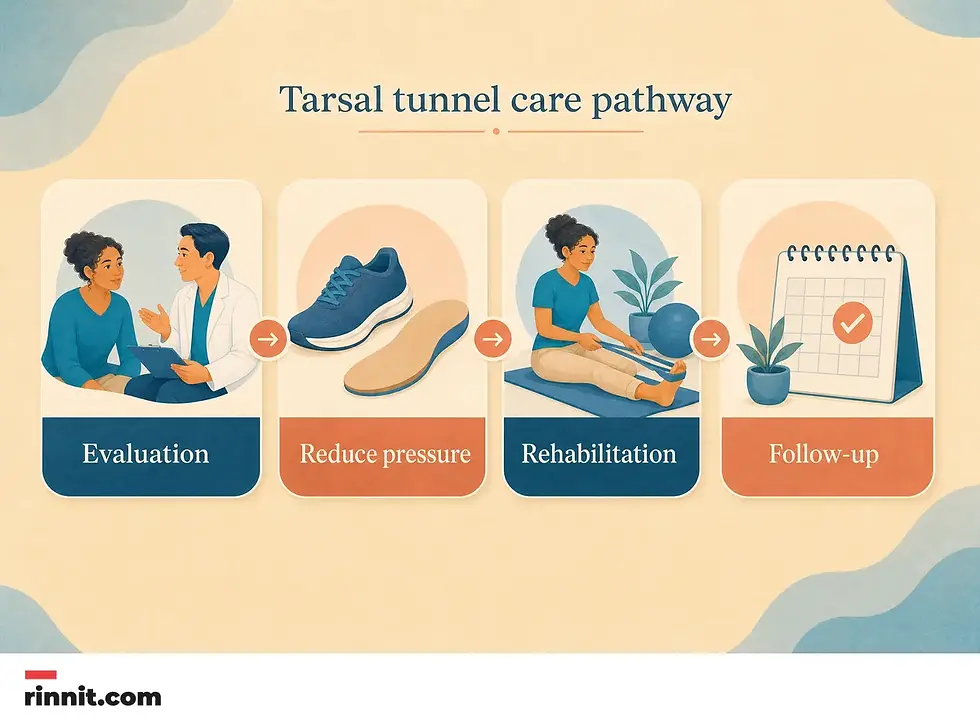
Many people manage TTS symptoms with at-home, over-the-counter or clinician-guided treatment. The right approach depends on the cause and severity of symptoms. [1]
Rest
Staying off the foot for a few days or weeks may promote healing and help prevent further injury. [1]
Ice
Ice packs may be used for up to 20 minutes a few times a day. Ice can reduce swelling and pain. [1]
Compression and elevation
A supportive elastic bandage or ankle brace may provide compression. Elevating the foot above the heart whenever possible may reduce inflammation. [1]
Nonsteroidal anti-inflammatory medications
Over-the-counter NSAIDs, such as ibuprofen, may decrease pain and inflammation. Ask a qualified provider whether these medicines are appropriate for you. [1]
Braces, casts and splints
A brace, cast or splint can keep the foot in place and encourage nerve healing. A provider may recommend a brace when a person has flat feet or severe symptoms to reduce pressure on the feet. [1]
Orthotics and supportive footwear
Custom-made shoe inserts, or orthotics, can help the foot maintain a proper arch. This position may reduce movements that cause nerve compression. A stability or motion-controlled shoe can help keep the foot from rolling inward, called pronation, and reduce tension on the nerve. [1]
Physical therapy
A physical therapist may prescribe exercises and stretches to improve strength and range of motion. To learn more about what rehabilitation involves, see our guide to physical therapy. [1]
Steroid treatment
A provider may prescribe oral steroids or steroid injections to reduce pain and inflammation. [1]
Do you need surgery for TTS?
If symptoms remain severe after nonsurgical treatments, a healthcare provider may recommend surgery. Operations can release the tibial nerve or widen the tarsal tunnel. If a mass is pressing on the nerve, a surgeon may remove it. [1]
A qualified provider determines whether surgery is appropriate based on symptoms, examination findings, the suspected cause and response to nonsurgical care.
How long does tarsal tunnel syndrome last?
Sometimes symptoms go away after the underlying cause is treated. For example, symptoms may disappear after treatment of a bone spur or lipoma. [1]
Many people manage TTS symptoms over the long term. The condition is less likely to go away completely when it is associated with a chronic condition such as arthritis. [1]
What are the long-term effects?
Without treatment, TTS can lead to nerve damage. If nerve damage develops, it may be permanent and irreversible. This can make walking, exercising or everyday activities difficult. [1]
Treatment can help manage symptoms and, depending on the cause, may cure the condition. Getting treatment when symptoms begin is important for the best results. [1]
How can you prevent tarsal tunnel syndrome?
Tarsal tunnel syndrome (TTS) cannot be prevented with certainty, but rest, stretching, warming up and supportive footwear may lower the risk of overuse injuries. You may lower the risk of overuse injuries by resting between workouts, stretching your feet and ankles regularly, warming up before exercise and wearing supportive footwear that fits properly. [1]
Prevention habit | Purpose |
Rest between workouts | Helps avoid overuse injuries. |
Stretch feet and ankles | Supports regular flexibility work. |
Warm up before exercise | Prepares the feet and ankles for activity. |
Wear supportive footwear | Helps provide proper fit and support. |
What should you ask a healthcare provider?
Consider asking: What is the most likely cause of my symptoms? Can at-home exercises reduce foot pain? What treatment options are available? When should surgery be considered? How can I lower the chances that symptoms will return after treatment?
What conditions can resemble TTS?
Conditions that can resemble tarsal tunnel syndrome (TTS) include bursitis, compartment syndrome, plantar fasciitis and tendinitis. They include bursitis, compartment syndrome, plantar fasciitis and tendinitis. A qualified healthcare provider can provide an accurate diagnosis and treatment plan. [1]
Conclusion: Persistent burning or tingling deserves an evaluation
Tarsal tunnel syndrome occurs when the tibial nerve is damaged or compressed as it passes through a bone-and-ligament passage in the ankle. Symptoms may include pain, burning, tingling, numbness and weakness in the feet, often worsening during or after activity. [1]
Causes can include foot structure, ankle injuries, overuse, growths or masses near the nerve, and systemic conditions such as hypothyroidism, diabetes or arthritis. Many people manage TTS with nonsurgical care such as rest, ice, compression, elevation, orthotics, supportive footwear, physical therapy or steroid treatment, and surgery may be considered when severe symptoms persist. [1]
If burning, tingling, numbness or weakness continues or affects your daily activities, arrange a qualified medical evaluation. [1]
Frequently Asked Questions
What is tarsal tunnel syndrome?
Tarsal tunnel syndrome is damage or compression of the tibial nerve as it passes through a passage of bones and ligaments in the ankle.
What does tarsal tunnel syndrome feel like?
Tarsal tunnel syndrome may feel like pain, burning, tingling, pins and needles, numbness or weakness in the foot. Pain often occurs inside the ankle or on the bottom of the foot.
Can exercise cause tarsal tunnel syndrome?
Overuse of the foot and ankle may contribute. People who exercise strenuously or frequently may be more likely to develop it, especially with a very flat foot.
Can an ankle sprain cause tarsal tunnel syndrome?
An ankle sprain or fracture can damage the tibial nerve area and may contribute to the condition.
How is tarsal tunnel syndrome diagnosed?
A provider reviews symptoms and examines the ankle. Testing may include Tinel's test, EMG or MRI.
What is the first treatment for tarsal tunnel syndrome?
Treatment depends on the cause and severity. Nonsurgical options include rest, ice, compression, elevation, NSAIDs, braces, orthotics, supportive shoes, physical therapy and steroid treatment.
Do I need surgery for tarsal tunnel syndrome?
Surgery may be recommended when symptoms remain severe after nonsurgical treatment. Procedures may release the tibial nerve, widen the tarsal tunnel or remove a mass pressing on the nerve.
Can tarsal tunnel syndrome go away on its own?
Symptoms may go away after the underlying cause is treated, such as a bone spur or lipoma. It is less likely to fully resolve with a chronic condition such as arthritis.
Can untreated tarsal tunnel syndrome cause permanent damage?
Without treatment, it can lead to nerve damage that may be permanent and irreversible, affecting walking, exercise or daily activities.
What conditions can look like tarsal tunnel syndrome?
Bursitis, compartment syndrome, plantar fasciitis and tendinitis can cause similar symptoms. A provider can distinguish among them.
Related guides
Tinel's Sign: What It Is, How the Test Works and What a Positive Result Means explains the quick tapping test providers use to check for nerve compression.
References
Cleveland Clinic. Tarsal Tunnel Syndrome: Symptoms, Causes & Treatment. Cleveland Clinic. Updated September 20, 2021. https://my.clevelandclinic.org/health/diseases/22200-tarsal-tunnel-syndrome
Haq II, Banerjee AA, Arshad Z, et al. The management of tarsal tunnel syndrome: A scoping review. J Clin Orthop Trauma. 2024;54:102489. PMID 39101044. https://doi.org/10.1016/j.jcot.2024.102489
Vij N, Kaley HN, Robinson CL, et al. Clinical Results Following Conservative Management of Tarsal Tunnel Syndrome Compared With Surgical Treatment: A Systematic Review. Orthop Rev (Pavia). 2022;14(3):37539. PMID 36072502. https://doi.org/10.52965/001c.37539
Gkotsoulias EN, Simonson DC, Roukis TS. Outcomes and safety of endoscopic tarsal tunnel decompression: a systematic review. Foot Ankle Spec. 2014;7(1):57-60. PMID 24334368. https://doi.org/10.1177/1938640013514267
Medical disclaimer
This article is for general educational purposes and is not a substitute for professional medical advice, diagnosis or treatment. Always seek the advice of a qualified healthcare professional with any questions about a medical condition or treatment.



Comments