Symphysis Pubis Dysfunction: Managing Pelvic Girdle Pain During Pregnancy

Updated: 3 days ago
Medically reviewed by Dr. Baraa Alnahhal, MD · Last reviewed: October 2026
TL;DR: Symphysis Pubis Dysfunction (SPD), also known as pelvic girdle pain, is a common condition during pregnancy where the ligaments that stabilize the pelvic joint become too relaxed. This leads to pain in the groin, lower back, and hips, making daily movements like walking or climbing stairs difficult. While uncomfortable, the condition typically resolves on its own a few months after childbirth as hormone levels stabilize.
Quick Answer: What is symphysis pubis dysfunction?
Symphysis pubis dysfunction (SPD) is a condition causing pain and discomfort in the pubic symphysis joint, where the two halves of the pelvis meet. It affects roughly 1 in 4 pregnant people and is mainly caused by the hormone relaxin loosening pelvic ligaments. [1] Symptoms include shooting pains and difficulty walking. Support belts, good posture and physical therapy help.
What the research says
Pelvic pain in pregnancy is common and can be serious. A systematic review found that about 45% of pregnant women have pelvic girdle pain and/or low back pain; during pregnancy, serious pain occurs in about 25% and severe disability in about 8%, and about 7% still have serious problems after pregnancy (Wu et al., Eur Spine J, 2004) [2].
Exercise helps. A Cochrane review of 34 trials (5,121 pregnant women) found that an eight- to 12-week exercise program reduced the number of women reporting low back and pelvic pain (risk ratio 0.66, 95% CI 0.45–0.97; 1,176 women) and reduced related sick leave (risk ratio 0.76, 95% CI 0.62–0.94). The evidence quality was moderate to low (Liddle & Pennick, Cochrane Database Syst Rev, 2015) [3].
Diagnosis is clinical, and reassurance plus tailored exercise is the core of care. European guidelines put the point prevalence of pelvic girdle pain in pregnancy at about 20%, recommend pain provocation tests and the active straight leg raise for diagnosis, advise against routine X-rays or CT for diagnosis, and recommend information, reassurance, and individualized exercises for pregnant women (Vleeming et al., Eur Spine J, 2008) [4].
What is Symphysis Pubis Dysfunction?
Symphysis Pubis Dysfunction (SPD) occurs when the joint at the front of the pelvis—the pubic symphysis—becomes unstable or moves unevenly. This joint is held together by a dense network of ligaments designed to stabilize the pelvis and absorb shock during movement. During pregnancy, the body produces a hormone called relaxin, which naturally softens these ligaments to allow the pelvis to expand for childbirth. [1]
While this loosening is essential for a vaginal delivery, it can sometimes cause the joint to become overly mobile. When combined with the increasing weight of a developing fetus and the shifting center of gravity, the resulting strain leads to the characteristic pain of SPD. This condition is also frequently referred to as pelvic girdle pain, a term that reflects how the discomfort often radiates across the entire pelvic region.

What are the symptoms of symphysis pubis dysfunction (SPD)?
The symptoms of SPD can vary significantly from person to person, ranging from mild discomfort to debilitating pain that interferes with daily life. The pain is often most intense during the third trimester when the fetus is at its heaviest and putting maximum pressure on the pelvic floor.
Symptom Type | Common Experiences |
|---|---|
Pain Quality | Shooting, stabbing, throbbing, or a burning sensation in the pelvic area. [1] |
Radiating Pain | Discomfort that spreads to the groin, perineum, inner thighs, or lower back. [1] |
Physical Sensations | A feeling that the pelvis is "loose," "wobbly," or clicking/grinding sounds when moving. [1] |
Functional Impact | Extreme difficulty climbing stairs, walking, or standing on one leg. [1] |
Many individuals also report increased fatigue and difficulty with basic tasks like adjusting their position in bed or getting in and out of a vehicle. Because the pain can limit physical activity, it may also have an impact on mental well-being, contributing to feelings of sadness or frustration.
What triggers symphysis pubis dysfunction pain, and how does it affect daily life?
Certain movements that are typically effortless can become significant triggers for SPD pain. These movements usually involve spreading the legs apart or putting uneven weight on the hips.
Walking and Stairs: The shifting weight of walking or the lifting motion of climbing stairs can cause the pelvic bones to shift painfully.
Positional Changes: Getting out of bed, rising from a chair, or adjusting oneself while lying down often triggers sharp, sudden pain.
Daily Activities: Simple actions like bending forward, sitting up straight, or getting in and out of a car can be challenging. [1]

What causes symphysis pubis dysfunction outside of pregnancy?
Symphysis pubis dysfunction (SPD) can also occur outside pregnancy, usually because of direct trauma or chronic wear and tear of the joint. These cases are usually linked to direct trauma or chronic wear and tear of the joint.
Injuries: Sports-related accidents or falls that result in a jammed or dislocated pelvic joint. [1]
Osteoarthritis: The gradual wearing down of the cartilage in the pubic symphysis over time. [1]
Inflammatory Conditions: Conditions such as osteitis pubis, which involves non-infectious inflammation of the joint.
Pre-existing Factors: A history of back problems or previous pelvic injuries can increase the risk of developing SPD. [1]
How is symphysis pubis dysfunction diagnosed?
Healthcare providers diagnose SPD by reviewing a patient's medical history and performing a physical examination. During the exam, the provider will check for tenderness over the pubic bone and assess the patient's range of motion in the hips and back.
In some cases, imaging tests may be used to confirm the diagnosis or rule out other issues. For pregnant individuals, providers will select safe imaging options, such as a pelvic ultrasound. For those who are not pregnant, X-rays or CT scans may be utilized to get a clearer view of the joint's alignment and the health of the surrounding bone. [1]
How can symphysis pubis dysfunction pain be managed and relieved?
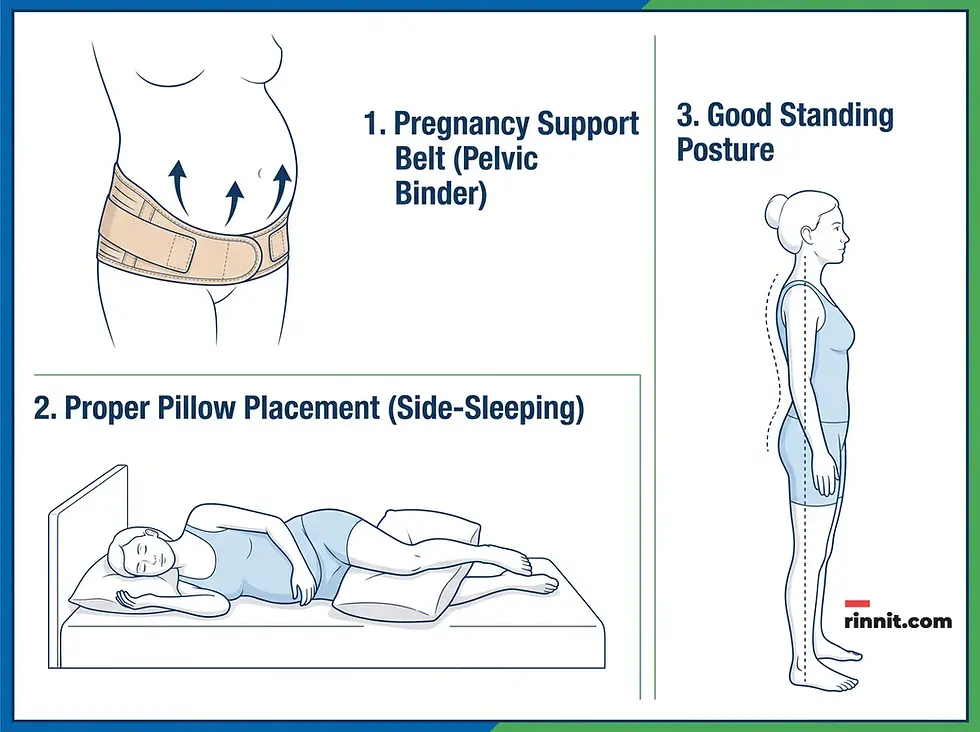
The good news for most pregnant people is that SPD pain usually resolves within a few months after delivery [1] as relaxin levels drop and ligaments regain their stability. In the meantime, several strategies can help manage the discomfort.
Strategy | Implementation |
|---|---|
Supportive Gear | Wearing a pregnancy support belt (pelvic binder) to stabilize the joint. [1] |
Sleeping Habits | Placing a pillow between the knees while sleeping on the side to align the hips. [1] |
Movement Adjustments | Keeping the knees together when getting out of a car or rolling over in bed. [1] |
Physical Therapy |
Other helpful tips include wearing cushioned, supportive shoes, avoiding sitting for long periods, and applying ice packs to the pelvic area to reduce inflammation. [1] Complementary therapies such as acupuncture, massage, and chiropractic care may also provide relief for some individuals. [1] [3]
What is the long-term outlook and recovery for symphysis pubis dysfunction?
For the vast majority of people, the prognosis for SPD is excellent. Once the physical stresses of pregnancy are removed and the body's hormones return to their baseline, the pelvic joint typically stabilizes on its own. However, if pain persists long after delivery, it is important to consult a healthcare provider to check for underlying issues like arthritis or chronic instability. Maintaining pelvic floor health through guided exercise is often the best way to ensure a full and lasting recovery.
Conclusion
Symphysis pubis dysfunction is a common, treatable part of pregnancy for many people. Understanding that relaxin loosens the pelvic joint, recognizing the movements that trigger pain, and using supports, posture changes, and guided exercise can keep you mobile and comfortable until your hormones settle after delivery.
What are the next steps for symphysis pubis dysfunction?
Pelvic pain should not be an accepted part of your pregnancy journey. If you are experiencing discomfort that limits your daily activities, speak with your healthcare provider today. Early intervention and the right support strategies can help you stay mobile and comfortable.
Related reading on Rinnit: Understanding Lochia: Your Guide to Postpartum Recovery · Chronic Pelvic Pain: Symptoms, Causes & Treatment — A Clear Guide · Understanding Lower Back Pain: Causes, Symptoms, and Solutions · Pelvic Congestion Syndrome: Symptoms, Causes, and Management
Frequently Asked Questions
Is SPD dangerous for my baby?
No, SPD does not directly affect the health or development of the fetus.
Will I need a C-section if I have SPD?
Not necessarily. Most people with SPD can have a safe vaginal delivery, though certain positions may be more comfortable than others.
Does the pain go away immediately after birth?
While it can take a few months for ligaments to fully tighten, many people notice a significant improvement shortly after delivery.
Can I exercise with SPD?
Yes, but you should focus on low-impact exercises like swimming or specific pelvic floor movements recommended by a therapist.
Why does walking make the pain worse?
Walking involves shifting weight from one leg to the other, which causes the unstable pelvic joint to move and grind.
What is relaxin?
Relaxin is a hormone produced during pregnancy that loosens the body's ligaments to prepare for childbirth.
Can men get SPD?
Yes, though it is rare and usually caused by sports injuries or osteoarthritis rather than hormonal changes.
Is a support belt helpful?
Yes, many people find that a pelvic support belt helps "hold" the pelvis together and reduces pain during movement.
How common is this condition?
Symphysis pubis dysfunction is estimated to affect about 1 in 4 pregnant people, although published estimates vary.
Can I take pain medication for SPD?
You should consult your pregnancy care provider before taking any medication to ensure it is safe for you and the baby.
What is the difference between SPD and pelvic girdle pain?
SPD and pelvic girdle pain are often used interchangeably, though pelvic girdle pain is a broader term covering the entire pelvis.
Does sleeping with a pillow really help?
Yes, it helps keep the hips and pelvis in a neutral alignment, reducing strain on the joint.
Can SPD cause depression?
The limitations on movement and chronic pain can impact mental health; it is important to seek support if you feel overwhelmed.
What is osteitis pubis?
Osteitis pubis is a non-infectious inflammation of the pubic symphysis joint that can cause symptoms similar to SPD.
Will SPD happen in every pregnancy?
Having SPD in one pregnancy does increase the risk of it occurring in subsequent pregnancies, but it is not guaranteed.
References
Cleveland Clinic. Symphysis Pubis Dysfunction. Cleveland Clinic. August 22, 2024. https://my.clevelandclinic.org/health/diseases/22122-symphysis-pubis-dysfunction
Wu WH, Meijer OG, Uegaki K, et al. Pregnancy-related pelvic girdle pain (PPP), I: terminology, clinical presentation, and prevalence. Eur Spine J. 2004;13(7):575-589. PMID 15338362. https://doi.org/10.1007/s00586-003-0615-y
Liddle SD, Pennick V. Interventions for preventing and treating low-back and pelvic pain during pregnancy. Cochrane Database Syst Rev. 2015;2015(9):CD001139. PMID 26422811. https://doi.org/10.1002/14651858.CD001139.pub4
Vleeming A, Albert HB, Ostgaard HC, et al. European guidelines for the diagnosis and treatment of pelvic girdle pain. Eur Spine J. 2008;17(6):794-819. PMID 18259783. https://doi.org/10.1007/s00586-008-0602-4
Medical Disclaimer
This article is for informational purposes only and does not constitute medical advice. Always seek the advice of your physician or other qualified health provider with any questions you may have regarding a medical condition.



Comments