Superior Mesenteric Vein: Anatomy, Essential Functions, and Care

Updated: 3 days ago
Medically reviewed by Dr. Baraa Alnahhal, MD · Last reviewed: October 2026
The superior mesenteric vein (SMV) is a blood vessel in the portal venous system that carries blood from your intestines to your liver. It collects blood from the small intestine, large intestine, stomach, pancreas and appendix and supplies it to the portal vein, which empties into the liver for processing [1]. A clot in the SMV (SMV thrombosis) or portal hypertension can cause serious complications [1].
Quick Answer: What is the superior mesenteric vein?
The superior mesenteric vein is a blood vessel in the portal venous system that carries blood from the intestines toward the liver. It collects blood from many tributaries in the belly and feeds the portal vein, which delivers blood to the liver for processing before it returns to the heart. A clot in this vein can cause serious complications.
What the research says
SMV thrombosis is rare but serious, and early diagnosis matters. A review of idiopathic portal and mesenteric venous thrombosis notes that thrombosis of the mesenteric vein accounts for about 10% of cases of intestinal ischemia, that acute superior mesenteric vein thrombosis is rare but still carries a high mortality rate, and that prompt, accurate diagnosis followed by timely treatment helps save lives and conserve bowel (Stancu et al., Diagnostics, 2024 [2]).
Adding endovascular treatment to anticoagulation worked for many patients. In a retrospective Mayo Clinic series of 24 patients with superior mesenteric venous thrombosis treated with endovascular therapy plus anticoagulation, technical success was 75%, primary patency was 88.9% at 14 days and 83.3% at 30 days, adverse events occurred in 2 patients (8.3%), and 5-year overall survival was 82% (Alnahhal et al., World Journal of Clinical Cases, 2022 [3]).
Anatomy and Location
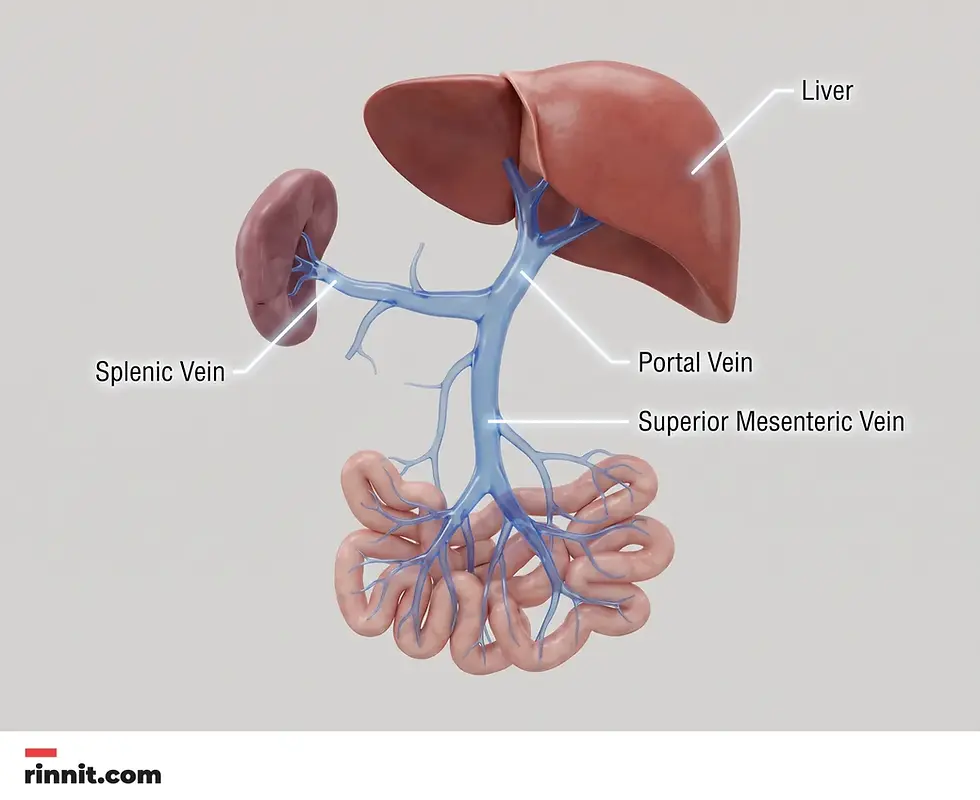
Your superior mesenteric vein is in your abdominal cavity, the large space under your chest and above your pelvis that holds important organs. It begins near your belly button, within the part of your mesentery (a double layer of tissue that holds the organs in your belly in place) that connects with your small intestine. It extends up to your L1 vertebra, the top bone in your lumbar spine, where it connects with your splenic vein to form your portal vein [1].
The SMV travels along the right side of your superior mesenteric artery. The artery delivers oxygen-rich blood to your intestines, while the vein carries blood that is lower in oxygen but rich in nutrients away from your intestines and toward your liver. Imagine a two-lane highway with traffic moving in opposite directions on either side. Occasionally the SMV travels along the left side of the artery, which can happen in babies born with malrotation or when a tumor presses on nearby structures [1].
Like other veins, the SMV has walls made of three layers: an outer layer (tunica adventitia) that provides its shape, a middle layer (tunica media) of smooth muscle cells that let the vein widen or narrow as blood flows, and an inner layer (tunica intima) lined with endothelial cells that keep blood flowing smoothly [1].
Function and the Portal Venous System
Your SMV supports your hepatic portal system (portal venous system), a network of veins that drains blood from organs in your belly and sends it to your liver. It is one of the most important veins in this network because it collects blood from many other veins. Think of it as a tree branch with many twigs, the smaller veins called tributaries. Together with its tributaries, it drains the small intestine, large intestine, stomach, pancreas and appendix [1].
Tributary of the SMV | What it drains |
Jejunal vein | Small intestine |
Ileal vein | Small intestine |
Ileocolic vein | Appendix |
Right colic vein | Large intestine |
Middle colic vein | Large intestine |
Right gastroepiploic vein | Stomach |
Inferior pancreaticoduodenal vein | Pancreas |
The path from the digestive organs to the liver works like this:
The SMV collects blood from the digestive organs through its tributaries.
At the L1 vertebra, the SMV joins the splenic vein.
This merger forms the portal vein, the "trunk" of the tree, which is planted in the liver through an opening called the liver hilum [1].
The portal vein empties blood into the liver, which filters and processes it.
The liver sends the processed blood into veins that lead to the heart.
Common Conditions of the Superior Mesenteric Vein
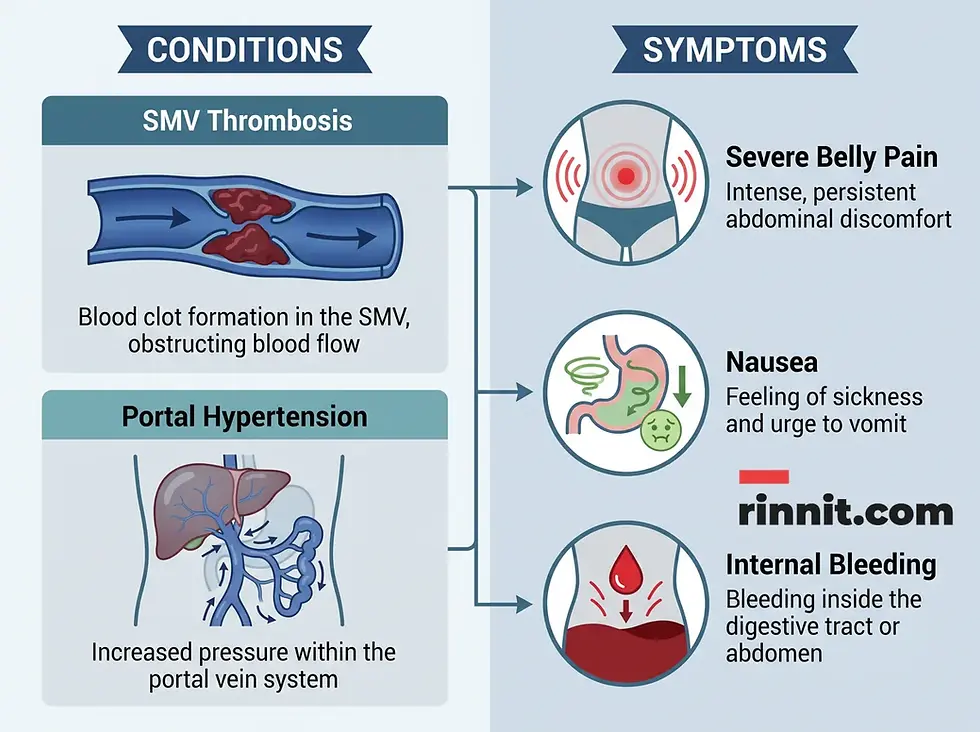
SMV thrombosis: A blood clot forms in the SMV. Sudden, severe pain in the belly is the most common symptom of acute thrombosis [1]. Some people with subacute or chronic forms have pain that comes and goes over days or weeks, or no symptoms at all [1]. The sooner you receive care, the better your chances of a good outcome.
Portal hypertension: Elevated blood pressure in the portal venous system. Causes include cirrhosis of the liver and blood clots [1]. It can cause life-threatening complications such as internal bleeding [1]. Treatment manages complications and, in some cases, redirects blood flow to ease pressure in your blood vessels [1].
What You Can Do
Get sudden, severe belly pain checked right away: It is the most common symptom of acute SMV thrombosis, and earlier care improves the chance of a good outcome.
Protect your liver: Cirrhosis is a cause of portal hypertension, so limiting alcohol and following your provider's plan for any liver condition helps lower that risk.
Tell your provider about vein or clotting history: A history of blood clots or liver disease is worth discussing so they can watch for early signs.
Ask questions: If you are learning about your SMV because of a diagnosis, ask your provider to explain anything you do not understand and write down the key points.

Conclusion
The superior mesenteric vein links your digestive organs to your liver, collecting nutrient-rich blood from the intestines, stomach, pancreas and appendix and delivering it for processing. Its health depends on healthy blood flow and a healthy liver.
Next step: If you have sudden, severe belly pain, or a history of blood clots or liver disease with new abdominal symptoms, seek medical care promptly and tell your provider about your history.
Frequently Asked Questions
What is the primary function of the superior mesenteric vein?
The superior mesenteric vein carries blood from your intestines and other organs in your belly to your liver, by supplying it to the portal vein.
Where is the superior mesenteric vein located?
The superior mesenteric vein is in your abdominal cavity. It begins near your belly button, within the part of the mesentery that connects with your small intestine, and extends up to the L1 vertebra, the top bone in your lumbar spine.
What organs does the SMV drain?
Together with its tributaries, it drains the small intestine, large intestine, stomach, pancreas and appendix.
How does the SMV connect to the liver?
At the L1 vertebra it joins the splenic vein to form the portal vein. The portal vein enters the liver through an opening called the liver hilum, and the liver filters and processes the blood before sending it into veins that lead to the heart.
What is SMV thrombosis?
SMV thrombosis is a blood clot in the superior mesenteric vein. Sudden, severe belly pain is the most common symptom of the acute form, while subacute or chronic forms can cause pain that comes and goes over days or weeks, or no symptoms at all. The sooner you receive care, the better your chances of a good outcome.
What is portal hypertension?
Portal hypertension is elevated blood pressure in the portal venous system. Causes include cirrhosis of the liver and blood clots, and it can cause life-threatening complications such as internal bleeding.
Is the SMV an artery or a vein?
The SMV is a vein. It travels along the right side of the superior mesenteric artery, which delivers oxygen-rich blood to the intestines, while the SMV carries blood that is lower in oxygen but rich in nutrients away from the intestines toward the liver.
Can the SMV be in an unusual position?
Occasionally the SMV travels along the left side of the superior mesenteric artery. This can happen in babies born with malrotation, or when a tumor presses on nearby structures, including blood vessels.
How are SMV problems treated?
SMV thrombosis is typically treated first with anticoagulation (blood-thinning) therapy, and endovascular procedures may be used if that fails. Treatment of portal hypertension manages complications and, in some cases, redirects blood flow to ease pressure in the blood vessels.
What are the layers of the SMV?
Like other veins, it has three layers: an outer layer (tunica adventitia) that gives the vein its shape, a middle layer (tunica media) of smooth muscle cells that let it widen or narrow, and an inner layer (tunica intima) lined with endothelial cells that keep blood flowing smoothly.
Related Reading
SMV Thrombosis: Symptoms, Causes, and Treatment Options explains blood clots in the superior mesenteric vein and their treatment.
Understanding Mesenteric Ischemia: Causes, Symptoms, and Emergency Care covers reduced blood flow to the intestines and why it is urgent.
The Portal Vein: A Vital Passageway for Abdominal Health describes the vein the superior mesenteric vein joins to reach the liver.
Superior Mesenteric Artery: Anatomy, Function, and Clinical Significance explains the artery that runs beside this vein and feeds the intestines.
References
Cleveland Clinic. Superior Mesenteric Vein. Cleveland Clinic. Last updated August 3, 2023. https://my.clevelandclinic.org/health/body/25169-superior-mesenteric-vein
Stancu B, Chira A, Coman HF, et al. Intestinal obstruction as initial presentation of idiopathic portal and mesenteric venous thrombosis: diagnosis, management, and literature review. Diagnostics. 2024;14(3):304. PMID 38337820. https://doi.org/10.3390/diagnostics14030304
Alnahhal K, Toskich BB, Nussbaum S, et al. Superior mesenteric venous thrombosis: endovascular management and outcomes. World Journal of Clinical Cases. 2022;10(1):217-226. PMID 35071520. https://doi.org/10.12998/wjcc.v10.i1.217
Medical disclaimer
The information provided in this article is for educational purposes only and should not be used as a substitute for professional medical advice, diagnosis, or treatment. Always seek the advice of your physician or other qualified health provider with any questions you may have regarding a medical condition.



Comments