Stimulants: What They Are, What They Treat, and Their Side Effects

Updated: 6 days ago
Written and medically reviewed by Dr. Baraa Alnahhal, MD · Last reviewed: October 2026 · How we review
Quick Answer: What are stimulants?
Stimulants are drugs that speed up your central nervous system, making you more alert, focused and energetic while raising your heart rate and blood pressure. Prescription stimulants treat ADHD, narcolepsy and obesity; nonmedical ones include caffeine, nicotine, cocaine and methamphetamine. Most can cause dependence or addiction, so take prescribed stimulants exactly as directed. [1]
What the research says
Stimulants clearly improve ADHD symptoms. A network meta-analysis of 133 double-blind trials (about 10,000 children and teens and 8,100 adults) found every medicine studied beat placebo on clinician ratings in children and teens. It supported methylphenidate as a first choice for children and amphetamines for adults. (Cortese et al., Lancet Psychiatry, 2018) [2]
Side effects are more likely than with placebo. Pooling 93 placebo-controlled trials of up to 52 weeks, people taking stimulants had a 34% higher risk of any side effect than those taking placebo (risk ratio 1.34). The finding held for methylphenidate, lisdexamfetamine, and other amphetamines. (Oliva et al., JAMA Network Open, 2025) [3]
No clear link to heart disease was found overall. In 19 studies covering about 3.9 million people, ADHD medicines were not significantly linked to cardiovascular disease in any age group (stimulants: risk ratio 1.24, 95% CI 0.84–1.83). The authors note a modest risk increase, especially for abnormal heart rhythms, can't be ruled out. (Zhang et al., JAMA Network Open, 2022) [4]
Key takeaways
Stimulants boost brain chemicals called dopamine and norepinephrine.
They fall into two groups: medical (therapeutic) and nonmedical ("uppers").
Most prescription stimulants are tightly controlled because of misuse and addiction risk.
Common side effects include trouble sleeping, poor appetite, and a fast heartbeat.
Misuse can lead to psychosis, heart attack, stroke, overdose, and death.
What are stimulants?
Stimulants are a class of drugs that speed up your central nervous system (your brain and spinal cord). They lead to effects like: [1]
More alertness and focus
A faster heart rate
Less appetite
Some stimulants come from nature. Others are made in a lab. Caffeine is the most-used stimulant in the world.
Because of the way stimulants make you feel, many carry a risk of misuse, dependence, or addiction. If you take a prescription stimulant, you'll see your healthcare provider regularly.
What do stimulants treat?
Stimulants treat conditions such as ADHD, narcolepsy, shift work sleep disorder, obesity and binge eating disorder, with each medicine approved for specific uses. Depending on the specific medicine, stimulants are approved to treat:
Condition | What it is |
Ongoing trouble with attention, impulsivity, or hyperactivity | |
A sleep disorder causing extreme daytime sleepiness | |
Shift work sleep disorder | Sleep problems from working nights or rotating shifts |
Excess body fat that raises health risks | |
Repeated loss of control over eating | |
Apnea in preterm infants | Pauses in breathing in babies born early |
Nasal and sinus congestion | A stuffy, blocked nose |
Apathy in neurological disorders | Loss of motivation linked to some brain conditions |
[1]
What are the types of stimulants?
Stimulants are either medical or nonmedical, though some overlap depending on the formulation and dose. [1]
Caffeine is a good example. Most people use it in coffee or tea. But it also has medical uses, such as treating breathing pauses in preterm infants. It's also added to some headache medicines.

Which stimulants are prescription medications?
Generic name | Common brand names |
Amphetamine | Evekeo®, Adzenys® |
Dextroamphetamine | Dexedrine®, Xelstrym® |
Amphetamine combinations | Adderall®, Dyanavel®, Mydayis® |
Dexmethylphenidate | Focalin® |
Methylphenidate | Concerta®, Daytrana®, Methylin™, Ritalin® |
Modafinil | Provigil® |
[1]
In the U.S., the Drug Enforcement Administration (DEA) classifies most prescription stimulants as Schedule II drugs. This means they carry serious risks, including misuse, addiction, and overdose. [1] [6]
Take them exactly as prescribed. When you do, the risk of addiction is lower.
What are behind-the-counter stimulants?
Ephedrine and pseudoephedrine are nasal and sinus decongestants. They narrow blood vessels and reduce swelling in your nose so air flows more easily. [1]
"Behind the counter" means:
You don't need a prescription.
You must ask a pharmacy employee to buy them, as required by law.
You may need to be a certain age to buy them.
What are nonmedical stimulants?
Nonmedical stimulants are used mainly for nonmedical reasons, though some have approved or experimental medical uses.
Stimulant | Also known as | Medical use, if any |
Cocaine | Coke, crack | Very rare; mainly numbing and reducing bleeding |
Tobacco, vapes | Nicotine replacement therapy to quit smoking | |
Khat | — | Illegal in the U.S.; considered therapeutic in some countries |
MDMA | Ecstasy, molly | Being studied for post-traumatic stress disorder (PTSD) |
Methamphetamine | Meth, crystal meth | — |
[1]
All of these drugs have a high potential for addiction.
How do stimulants work?
Stimulants work by triggering your brain to release more chemical messengers (neurotransmitters), mainly dopamine and norepinephrine, which speeds up the messages traveling between your brain and body. [1]
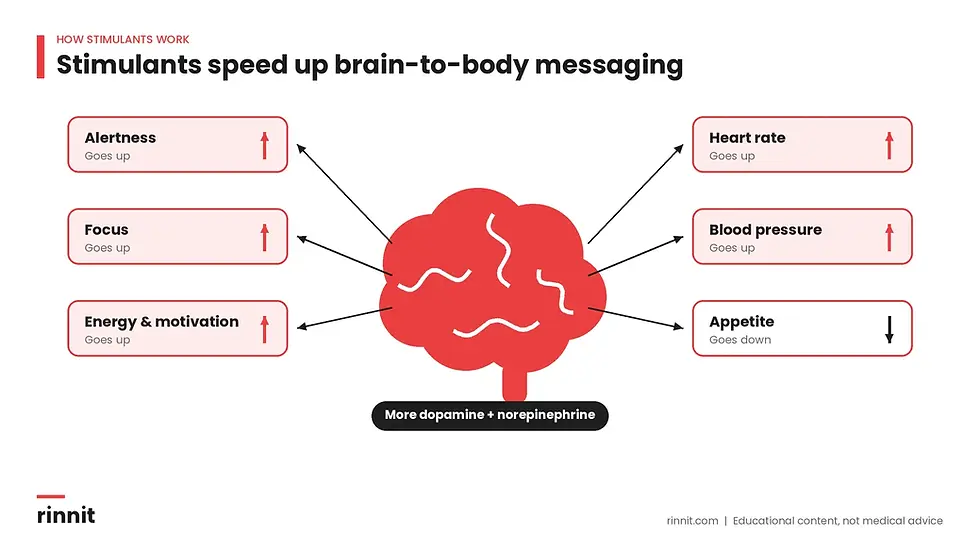
Dopamine helps control behavior, attention, and wakefulness. It's also a key part of your brain's reward system. That's why stimulants can cause a "high" or euphoric feeling, and why they can be addictive.
Stimulants can make you feel:
Alert or awake
Attentive or focused
Energetic or motivated
Less hungry
Upbeat or positive
Dopamine and norepinephrine are also part of your "fight-or-flight" stress response. That's why stimulants raise your heart rate, blood pressure, and breathing rate. [1]
What are the side effects of stimulants?
The side effects of stimulants include trouble sleeping, loss of appetite, a fast heart rate, high blood pressure and headache, and less commonly heart problems and seizures. Your chance of getting them depends on: [1]
The type of stimulant
The dose
Your body weight
Your tolerance

Common side effects
Dizziness
Feeling anxious, restless, or irritable
Headache
High body temperature
Loss of appetite, which may cause unintended weight loss
Reduced blood flow to your hands and feet
Shakiness (tremor)
Stomachache
Trouble sleeping (insomnia)
Serious side effects
These are less common but serious:
Heart problems
Seizures
Everyone responds differently. Your healthcare provider or pharmacist can tell you which side effects need care right away and which can wait for an appointment. [1]
Can stimulants cause dependence or addiction?
Yes, most stimulants can cause dependence, addiction, or both, and the two aren't the same thing. [1]
Dependence | Addiction | |
What happens | Your body adapts to the stimulant | You compulsively seek and use it despite harm |
Key sign | Withdrawal symptoms when you stop | Continued use even when it causes problems |
Severity | Less severe | More severe |
[1]
Addiction involves misuse. That means taking more than your prescribed dose of a medical stimulant, or using nonmedical stimulants.
What are the complications of stimulant misuse?
Chronic insomnia
Compulsive skin-picking (dermatillomania)
Tooth-grinding (bruxism)
Psychosis (paranoia or hallucinations)
Confusion
Heart palpitations and abnormal heart rhythms
Heart attack
Stroke
Overdose and death
Misuse can lead to substance use disorder. [1] [5]
How can you use prescription stimulants safely?
You can use prescription stimulants safely by taking them exactly as prescribed, keeping your follow-up visits, and asking your provider about side effects and risks. [1]
Take your medicine exactly as prescribed. Don't raise the dose on your own.
Keep your follow-up visits. Your provider checks that the medicine is still safe and helpful.
Ask about side effects. Your provider or pharmacist can tell you what to watch for.
Talk openly about the risks and benefits before you start.
When should you see a healthcare provider about stimulants?
See a healthcare provider right away if you think you have stimulant dependence. The sooner you get help, the more likely you can prevent serious health risks. [1]
In the U.S., you can call the SAMHSA National Helpline for 24/7 treatment referral and information at 1-800-662-HELP (4357) when you're ready. Outside the U.S., ask your doctor or local health service about addiction support. [7]
Conclusion
Stimulants are powerful drugs. As medicines, they help people manage ADHD, narcolepsy, and other conditions. If you take one, regular checkups help keep it safe and effective.
Misuse, though, can lead to serious complications, including addiction, heart problems, and overdose. If you have questions about stimulants, or you're worried about your own use, reach out to your provider. Their job is to help you, not judge you. You don't have to face it alone.
Want clear, trusted answers about the medicines you take? Explore more plain-language guides in the Rinnit Health Library, and bring this page to your next appointment to start the conversation with your doctor.
FAQ
What are stimulants used for?
Prescription stimulants treat ADHD, narcolepsy, shift work sleep disorder, obesity, binge eating disorder, and some other conditions. Behind-the-counter stimulants like pseudoephedrine relieve nasal congestion.
What are examples of stimulant drugs?
Medical examples include amphetamine, dextroamphetamine, methylphenidate, dexmethylphenidate, and modafinil. Nonmedical examples include caffeine, nicotine, cocaine, methamphetamine, MDMA, and khat.
Are stimulants addictive?
Most stimulants can cause dependence or addiction. The risk is lower when you take prescription stimulants exactly as prescribed. Nonmedical stimulants have a high potential for addiction.
How do stimulants affect the brain?
They make your brain release more dopamine and norepinephrine. This boosts alertness and focus but also triggers your fight-or-flight response, raising heart rate and blood pressure.
Is caffeine a stimulant?
Yes. Caffeine is the most-used stimulant in the world. Besides its everyday use in coffee and tea, it treats breathing pauses in preterm infants and is added to some headache medicines. Learn about the risks of too much in our guide to caffeine overdose.
What are the most common side effects of stimulants?
Trouble sleeping, loss of appetite, fast heart rate, high blood pressure, headache, stomachache, anxiety or restlessness, and shakiness are among the most common.
What does Schedule II mean for stimulants?
In the U.S., Schedule II drugs have accepted medical uses but carry serious risks of misuse, addiction, and overdose. Most prescription stimulants fall into this group.
What's the difference between stimulant dependence and addiction?
Dependence means your body has adapted and you get withdrawal symptoms when you stop. Addiction is more severe: you keep seeking and using the drug despite harmful consequences.
Is it safe to take someone else's ADHD stimulant?
No. Taking a stimulant that was not prescribed for you is misuse and can cause heart problems, anxiety and addiction. Only take stimulants exactly as your own provider prescribes.
Can stimulants make it hard to sleep?
Yes, trouble sleeping is a common side effect. Taking doses earlier in the day may help, so talk to your provider before changing when or how you take your medicine.
Related Reading
ADHD Medication: Types, Benefits, and Management compares stimulant and nonstimulant ADHD medicines and their side effects.
Narcolepsy: Symptoms, Types, Causes, Diagnosis & Treatment — Complete Guide explains narcolepsy symptoms, diagnosis and treatment options.
Drug Addiction (Substance Use Disorder): Symptoms, Causes & Treatment — Complete Guide covers the signs of substance use disorder and how it is treated.
What Is a Caffeine Overdose? Symptoms, Safe Limits, and Treatment describes the symptoms of too much caffeine and when to get help.
References
Cleveland Clinic. Stimulants: What They Are, What They Do & Side Effects. Cleveland Clinic. Last updated July 10, 2026. https://my.clevelandclinic.org/health/treatments/stimulants
Cortese S, Adamo N, Del Giovane C, et al. Comparative efficacy and tolerability of medications for attention-deficit hyperactivity disorder in children, adolescents, and adults: a systematic review and network meta-analysis. Lancet Psychiatry. 2018;5(9):727-738. PMID 30097390. https://doi.org/10.1016/S2215-0366(18)30269-4
Oliva HNP, Prudente TP, Mayerson TF, et al. Safety of Stimulants Across Patient Populations: A Meta-Analysis. JAMA Netw Open. 2025;8(5):e259492. PMID 40343695. https://doi.org/10.1001/jamanetworkopen.2025.9492
Zhang L, Yao H, Li L, et al. Risk of Cardiovascular Diseases Associated With Medications Used in Attention-Deficit/Hyperactivity Disorder: A Systematic Review and Meta-analysis. JAMA Netw Open. 2022;5(11):e2243597. PMID 36416824. https://doi.org/10.1001/jamanetworkopen.2022.43597
Ciccarone D, Shoptaw S. Understanding Stimulant Use and Use Disorders in a New Era. Med Clin North Am. 2022;106(1):81-97. PMID 34823736. https://doi.org/10.1016/j.mcna.2021.08.010
U.S. Food and Drug Administration. Prescription Stimulant Medications. FDA.gov. Last updated July 29, 2024. https://www.fda.gov/drugs/postmarket-drug-safety-information-patients-and-providers/prescription-stimulant-medications
Substance Abuse and Mental Health Services Administration (SAMHSA). National Helpline for Mental Health, Drug, Alcohol Issues. SAMHSA. Accessed October 31, 2026. https://www.samhsa.gov/find-help/helplines/national-helpline
Medical disclaimer
This article is for general education only and is not a substitute for professional medical advice, diagnosis or treatment. Always talk with your doctor or a qualified healthcare provider before starting, stopping or changing any medicine.



Comments