Soft Palate Cancer: Symptoms, Causes, Diagnosis, and Treatment Explained

Updated: 2 days ago
Medically reviewed by Dr. Baraa Alnahhal, MD · Last reviewed: October 2026
Quick Answer: What is soft palate cancer?
Soft palate cancer is cancer that starts on the soft palate, the upper back part of the mouth, usually in squamous cells, making it a type of throat cancer. [1] Symptoms include non-healing mouth sores, bleeding, pain and difficulty swallowing. [1] Risk factors include tobacco, heavy drinking and HPV. [1] Treatment often combines surgery with radiation, chemotherapy, targeted therapy or immunotherapy.
When to see a doctor
Make an appointment with a doctor or other healthcare professional if you have any symptoms that worry you [1], especially a mouth sore that does not heal or persistent ear or neck pain.
What the research says
HPV status strongly affects survival in oropharyngeal cancer. In 323 patients with stage III or IV oropharyngeal squamous cell carcinoma, 63.8% (206) had HPV-positive tumors. Their 3-year overall survival was 82.4%, versus 57.1% for HPV-negative tumors, a 58% reduction in the risk of death after adjustment (HR 0.42, 95% CI 0.27 to 0.66). Risk of death also rose with each additional pack-year of smoking (Ang et al., New England Journal of Medicine, 2010) [3].
Even light smoking raises head and neck cancer risk. A pooled analysis of 23 case-control studies (19,660 cancer cases and 25,566 controls overall) found that smoking up to 3 cigarettes a day was linked to a 50% higher risk of head and neck cancer (OR 1.52, 95% CI 1.21 to 1.90). Smoking duration appeared to matter at least as much as frequency (Berthiller et al., International Journal of Epidemiology, 2016) [4].
The HPV vaccine sharply reduced oral HPV 16/18 infection. In a randomized trial of 7,466 young women in Costa Rica, 4 years after vaccination there were 15 prevalent oral HPV 16/18 infections in the control group and 1 in the vaccine group, an estimated vaccine efficacy of 93.3% (95% CI 63% to 100%) (Herrero et al., PLoS ONE, 2013) [5].
What Is Soft Palate Cancer?
The soft palate is the upper part of the back of the mouth, located behind the teeth. [1] Soft palate cancer starts as a growth of cells on this tissue. [1] It most often begins in the squamous cells that line the inside of the mouth and throat, and cancer that starts in these cells is called squamous cell carcinoma. [1]
Soft palate cancer is considered a type of throat cancer and is treated much like other throat cancers [1], usually with a combination of surgery, radiation therapy, and chemotherapy. It can change the look and feel of the soft palate, often as a lump or a sore that does not heal.
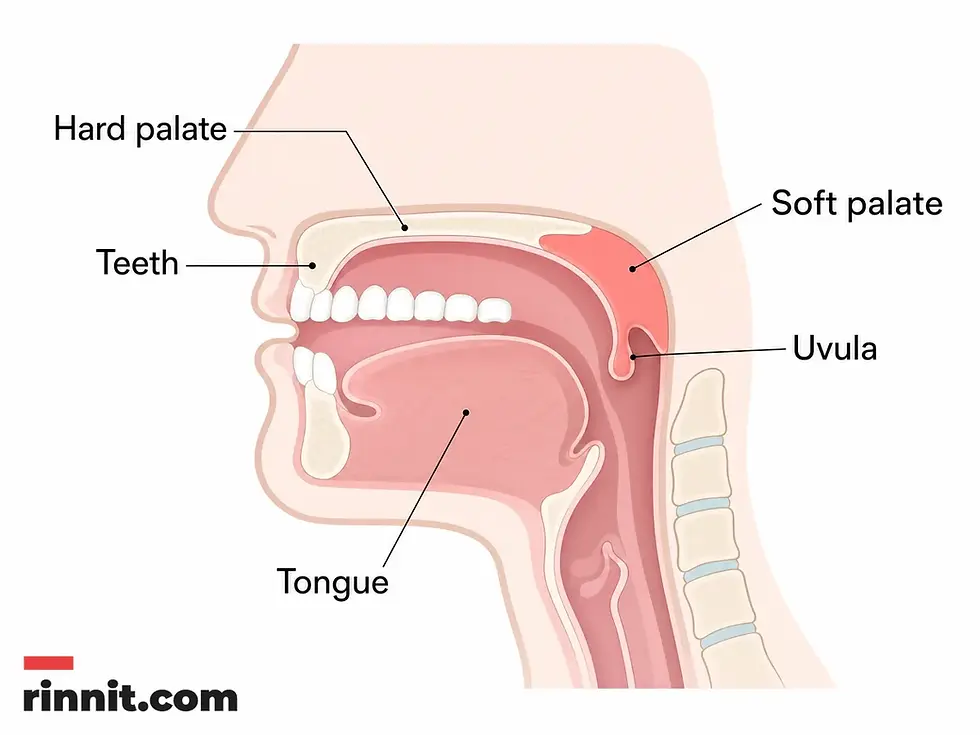
What Are the Symptoms of Soft Palate Cancer?
Soft palate cancer can cause a range of mouth, throat and neck symptoms, many of which also have other, non-cancer causes.
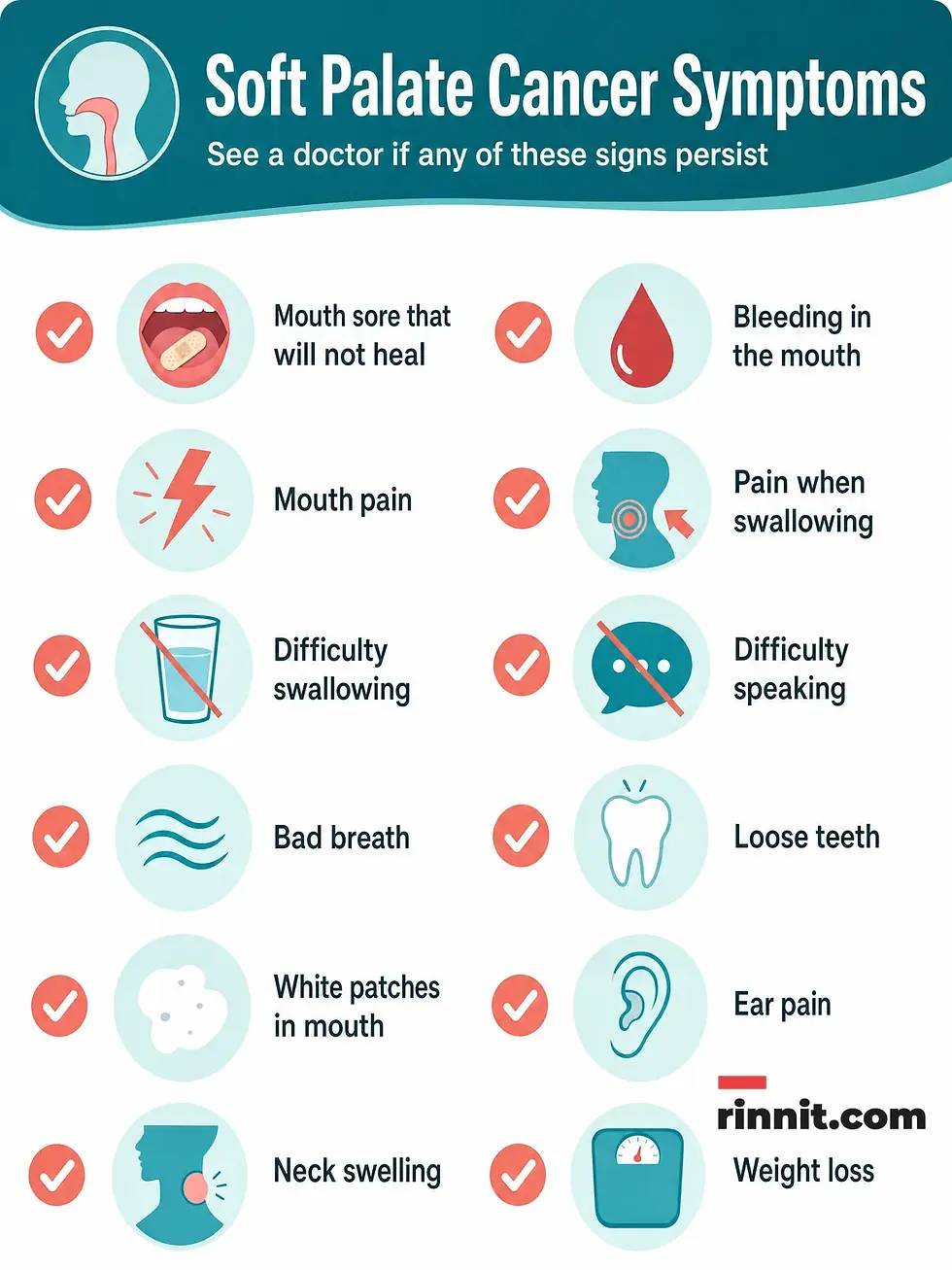
Category | Symptoms |
Mouth and tissue changes | Sores that will not heal, white patches that will not go away, loose teeth |
Pain and bleeding | Mouth pain, pain when swallowing, bleeding in the mouth, ear pain |
Functional changes | Difficulty swallowing, difficulty speaking, bad breath |
Signs of possible spread | Swelling in the neck that may hurt, weight loss |
Many of these symptoms have other, non-cancer causes. Only a medical evaluation can determine the true cause.
What Causes Soft Palate Cancer?
Soft palate cancer happens when cells on the soft palate develop changes in their DNA. [1] DNA holds the instructions that tell a cell what to do. [1] In healthy cells, DNA tells the cell to grow and multiply at a set rate and to die at a set time. [1] In cancer cells, the changes tell the cells to multiply quickly and to keep living when healthy cells would die, producing too many cells. [1]
The extra cells may form a mass called a tumor, which can grow to invade and destroy healthy tissue. [1] Over time, cancer cells can break away and spread to other parts of the body, which is called metastatic cancer. [1]
It is not always clear what causes these DNA changes. [1] For some soft palate cancers, human papillomavirus (HPV) is thought to play a part. [1] HPV is a common virus passed through sexual contact. [1] For most people it causes no problems and goes away on its own, but for others it causes cell changes that may one day lead to cancer. [1] Learn more in our guide to oral HPV and cancer prevention.
What Are the Risk Factors?
Tobacco use, heavy drinking, HPV exposure and a weakened immune system are risk factors for soft palate cancer, and using alcohol and tobacco together raises the risk even more. [1]
Using tobacco. All forms of tobacco raise the risk, including cigarettes, cigars, pipes, chewing tobacco, and snuff. [1]
Drinking alcohol. Frequent, heavy drinking raises the risk, and using alcohol and tobacco together raises it even more. [1]
HPV exposure. The virus can cause cell changes that may lead to soft palate cancer. [1]
A weakened immune system. Medicines that suppress the immune system (for example, after an organ transplant) and conditions such as HIV infection may raise the risk. [1]
How Can Soft Palate Cancer Risk Be Reduced?
Soft palate cancer risk can be reduced by avoiding tobacco, limiting alcohol, asking about the HPV vaccine and having regular health and dental exams. [1]
Do not use tobacco. If you do not use it, do not start. If you do, talk with a healthcare professional about ways to quit. [1]
Limit alcohol. If you drink, do so in moderation: up to one drink a day for women and up to two for men. [1]
Ask about the HPV vaccine. Vaccination against HPV may reduce your risk of HPV-related cancers, including soft palate cancer. [1] Ask your healthcare professional whether it is appropriate for you. [1]
Have regular health and dental exams. Your dentist or doctor can check your mouth for signs of cancer and precancerous changes. [1]
How Is Soft Palate Cancer Diagnosed?
Soft palate cancer is diagnosed with an exam of the mouth and neck, a biopsy of suspicious tissue and imaging tests that show the cancer's size and location. [2]
Examining your mouth and neck
A healthcare professional uses a mirror or a tiny camera to look closely at the soft palate for lumps, sores, or other signs of cancer. [2] They also feel the neck for swollen lymph nodes, because soft palate cancer often spreads to the lymph nodes first. [2]
Removing a tissue sample (biopsy)
A biopsy takes a sample of cells from the mouth. [2] A piece of suspicious tissue or the whole area may be cut out, or a thin needle may collect cells. [2] The samples go to a lab, where tests show whether the cells are cancerous and give more information, such as whether they show signs of HPV. [2]
Imaging tests
Imaging shows the size and location of the cancer. [2] Tests may include X-ray, CT (computerized tomography), MRI (magnetic resonance imaging), and PET (positron emission tomography). [2]
Step | What happens | What it tells the team |
Mouth and neck exam | Mirror or tiny camera exam of the soft palate; neck checked for swollen lymph nodes | Visible lumps or sores, and possible spread to lymph nodes |
Biopsy | Tissue sample removed by cutting or thin needle and tested in a lab | Whether cells are cancerous and whether HPV is present |
Imaging (X-ray, CT, MRI, PET) | Pictures of the body | The size and location of the cancer |
How Is Soft Palate Cancer Treated?
Treatment often includes surgery followed by radiation, chemotherapy, or both. [2] The care team builds a plan around the cancer’s location, how fast it is growing, whether it has spread, biopsy results, your age, and your overall health. [2]
Surgery to remove the cancer
The surgeon removes the cancer and some healthy tissue around it [2] to make sure all cancer cells are gone. Surgery can sometimes cause trouble with speaking and swallowing. [2] Physical therapy and other rehabilitation services can help you cope with these changes. [2]
Surgery to remove lymph nodes in the neck
If there are signs the cancer has spread, you may need a neck dissection, a surgery that removes some lymph nodes. [2] Even without signs of spread, some nodes may be removed as a precaution. [2] In certain situations, only a few nodes are removed for testing. [2] This is called a sentinel node biopsy, and it is not an option for everyone. [2]
Reconstructive surgery
Reconstructive surgery may help people who had parts of the face, jaw, or neck removed. [2] Healthy bone or tissue from elsewhere in the body fills gaps and can replace part of the lip, tongue, palate, jaw, face, throat, or skin. [2] It is sometimes done at the same time as the cancer removal. [2]
Radiation therapy
Radiation therapy uses powerful energy beams, from X-rays, protons, or other sources, to kill cancer cells. [2] It may be used after surgery to kill remaining cells, sometimes together with chemotherapy, or instead of surgery if surgery is not possible or not wanted. [2]
Chemotherapy
Chemotherapy uses strong medicines to kill cancer cells. [2] It may be used after surgery, and it is sometimes given at the same time as radiation because it makes the radiation work better. [2]
Targeted therapy
Targeted therapy uses medicines that attack specific chemicals in cancer cells. [2] Blocking these chemicals can cause cancer cells to die. [2] It is used for soft palate cancer that spreads to other parts of the body or comes back after treatment. [2]
Immunotherapy
Immunotherapy uses medicine that helps the body’s own immune system find and kill cancer cells. [2] It might be used when the cancer has spread and other treatments have not helped. [2]

Treatment | How it works | When it is typically used |
Surgery (tumor removal) | Removes the cancer plus surrounding healthy tissue | Often the first step |
Neck dissection / sentinel node biopsy | Removes and tests lymph nodes | When spread to lymph nodes is suspected, or as a precaution |
Reconstructive surgery | Replaces removed tissue with bone or tissue from elsewhere | After larger surgery to the face, jaw, or neck |
Radiation therapy | Energy beams kill cancer cells | After surgery, with chemotherapy, or instead of surgery |
Chemotherapy | Strong medicines kill cancer cells | After surgery, or alongside radiation to boost its effect |
Targeted therapy | Medicines block specific chemicals in cancer cells | For cancer that spreads or returns after treatment |
Immunotherapy | Medicine helps the immune system kill cancer cells | For spread cancer when other treatments have not helped |
Therapy to help with recovery
Treatment for advanced soft palate cancer can affect your ability to speak and eat. [2] Working with a skilled rehabilitation team can help you cope with these changes. [2]
How can you cope with soft palate cancer and prepare for appointments?
People facing soft palate cancer often worry about the future, but practical coping strategies and good appointment preparation can help. These strategies can help:
Ask questions. Write down questions and bring them to your appointment, and ask your team for reliable sources of information. [2]
Stay connected. Keep friends and family involved. They will likely offer help with specific tasks or simply listen. [2]
Find someone to talk with. Ask your team to suggest a counselor or medical social worker. Support groups with other cancer survivors can also help. [2]
You may be referred to an oral and maxillofacial surgeon (a specialist in diseases of the face, mouth, teeth, jaws, salivary glands, and neck) or an ENT specialist (otolaryngologist). [2] To prepare for the visit:
Ask about any pre-appointment restrictions, such as diet limits. [2]
Write down all your symptoms, including any that seem unrelated. [2]
Write down key personal information, including major stresses or recent life changes. [2]
List all medicines, vitamins, and supplements with doses. [2]
Take a family member or friend along to help you remember information. [2]
Write down your questions, from most to least important. [2]
Questions to ask: What is the stage of my cancer? What other tests do I need? What are my treatment options, and is one best for my type and stage? What are the possible side effects? Should I get a second opinion? Am I eligible for clinical trials? What determines whether I need a follow-up visit? [2]
Conclusion
Soft palate cancer is a form of throat cancer that begins at the upper back of the mouth, most commonly as squamous cell carcinoma. Its early signs, such as a sore that will not heal, mouth pain, bleeding, trouble swallowing, or ear pain, are easy to mistake for everyday problems. The best-known risk factors are tobacco use, heavy alcohol use, and HPV infection, and prevention and vaccination can address all of them.
Diagnosis follows a clear path: a mouth and neck exam, a biopsy, and imaging. Treatment usually combines surgery with radiation, chemotherapy, targeted therapy, or immunotherapy, tailored to the cancer’s size, location, and spread, with rehabilitation support for changes to speaking and eating.
What are the next steps after a soft palate cancer diagnosis?
If you have any symptoms that worry you, especially a mouth sore that does not heal or persistent ear or neck pain, make an appointment with a doctor or other healthcare professional. Early evaluation is the most important step, and your dentist or doctor can check your mouth for early signs at routine visits.
Trusted resources: Mayo Clinic: Soft palate cancer, symptoms and causes, Mayo Clinic: Soft palate cancer, diagnosis and treatment.
Frequently Asked Questions
What is soft palate cancer?
Soft palate cancer is cancer that starts as a growth of cells on the soft palate, the upper back part of the mouth behind the teeth. It most often begins in squamous cells and is considered a type of throat cancer.
Is soft palate cancer the same as squamous cell carcinoma?
Most soft palate cancers begin in the thin, flat squamous cells that line the mouth and throat. When cancer starts in these cells it is called squamous cell carcinoma.
What are the first symptoms of soft palate cancer?
Signs include mouth sores that will not heal, bleeding in the mouth, mouth pain, pain when swallowing, trouble swallowing or speaking, bad breath, loose teeth, weight loss, ear pain, neck swelling that may hurt, and white patches that will not go away.
What causes soft palate cancer?
It happens when soft palate cells develop DNA changes that make them multiply quickly and survive when healthy cells would die. These changes can form a tumor that invades healthy tissue and may spread. For some cases, HPV is thought to play a part, though the cause is not always clear.
Does HPV cause soft palate cancer?
HPV is a common virus passed through sexual contact. It has been linked to cancers of the soft palate, tonsils, back of the tongue, and the side and back wall of the throat. For most people HPV causes no problems, but in some it causes cell changes that may one day lead to cancer.
Who is most at risk for soft palate cancer?
People who use tobacco in any form, drink heavily (especially together with tobacco), have HPV exposure, or have a weakened immune system face a higher risk.
How is soft palate cancer diagnosed?
Diagnosis includes a mouth and neck exam, a biopsy in which a tissue sample is tested in a lab, and imaging tests such as X-ray, CT, MRI, or PET to show the cancer’s size and location.
What treatments are used for soft palate cancer?
Treatment often includes surgery followed by radiation, chemotherapy, or both. Targeted therapy and immunotherapy are other options. Reconstructive surgery may restore removed tissue, and rehabilitation therapy helps with speaking and eating.
Can soft palate cancer come back after treatment?
Soft palate cancer that spreads or returns after treatment may be treated with targeted therapy. Immunotherapy might be used when the cancer has spread and other treatments have not helped.
How can I lower my risk of soft palate cancer?
Do not start tobacco and quit if you use it, limit alcohol to up to one drink a day for women and two for men, ask your healthcare professional about the HPV vaccine, and keep regular dental and health checkups.
Is soft palate cancer curable?
Outcomes depend on the cancer’s stage, location, and spread, and your care team makes an individual treatment plan. Early evaluation gives the best opportunity for successful treatment, so talk to a qualified healthcare professional about your situation.
What questions should I ask my doctor about soft palate cancer?
Ask about the stage of the cancer, tests you need, treatment options and side effects, whether to get a second opinion, clinical trial eligibility, and whether you should see an oral and maxillofacial surgeon or an ENT specialist.
Related Reading
Oropharyngeal Cancer: Symptoms, Causes, Diagnosis, Treatment, and Outlook — What You Need to Know covers cancers of the middle throat, the group that includes soft palate cancer.
Throat Cancer: Symptoms, the HPV Connection, and How Treatment Is Decided — A Complete Patient Guide explains how HPV is linked to throat cancers and their treatment.
Hard Palate Cancer: Symptoms, Causes, and Treatment Options describes cancer of the bony front part of the roof of the mouth.
Leukoplakia Symptoms, Causes, and Treatment: What White Mouth Patches Mean explains white mouth patches that can sometimes turn into cancer.
References
Mayo Clinic Staff. Soft palate cancer: symptoms and causes. Mayo Clinic. December 23, 2025. https://www.mayoclinic.org/diseases-conditions/soft-palate-cancer/symptoms-causes/syc-20354183
Mayo Clinic Staff. Soft palate cancer: diagnosis and treatment. Mayo Clinic. December 23, 2025. https://www.mayoclinic.org/diseases-conditions/soft-palate-cancer/diagnosis-treatment/drc-20445530
Ang KK, Harris J, Wheeler R, et al. Human papillomavirus and survival of patients with oropharyngeal cancer. N Engl J Med. 2010;363(1):24-35. PMID 20530316. https://doi.org/10.1056/NEJMoa0912217
Berthiller J, Straif K, Agudo A, et al. Low frequency of cigarette smoking and the risk of head and neck cancer in the INHANCE consortium pooled analysis. Int J Epidemiol. 2016;45(3):835-845. PMID 26228584. https://doi.org/10.1093/ije/dyv146
Herrero R, Quint W, Hildesheim A, et al. Reduced prevalence of oral human papillomavirus (HPV) 4 years after bivalent HPV vaccination in a randomized clinical trial in Costa Rica. PLoS One. 2013;8(7):e68329. PMID 23873171. https://doi.org/10.1371/journal.pone.0068329
Medical Disclaimer
This article is for informational purposes only and does not constitute medical advice. Always consult a qualified healthcare professional for diagnosis and treatment decisions.



Comments