Understanding Oral HPV: Risks, Symptoms, and Cancer Prevention

Updated: 2 days ago
Medically reviewed by Dr. Baraa Alnahhal, MD · Last reviewed: September 2026
TL;DR: Oral HPV is a subtype of the human papillomavirus (HPV), the most common sexually transmitted infection in the United States. While over 200 strains exist, approximately 40 can affect the mouth and throat. Most infections are asymptomatic and are cleared by the immune system within two years. However, high-risk strains, particularly HPV-16, are linked to 80% of oropharyngeal (throat) cancers. Transmission primarily occurs through oral sex or deep kissing. Prevention through the HPV vaccine is highly effective and now recommended by the FDA for preventing oropharyngeal cancer. Regular dental exams and monitoring for persistent symptoms like neck lumps or hoarseness are vital for early detection.
Medical Emergency Warning
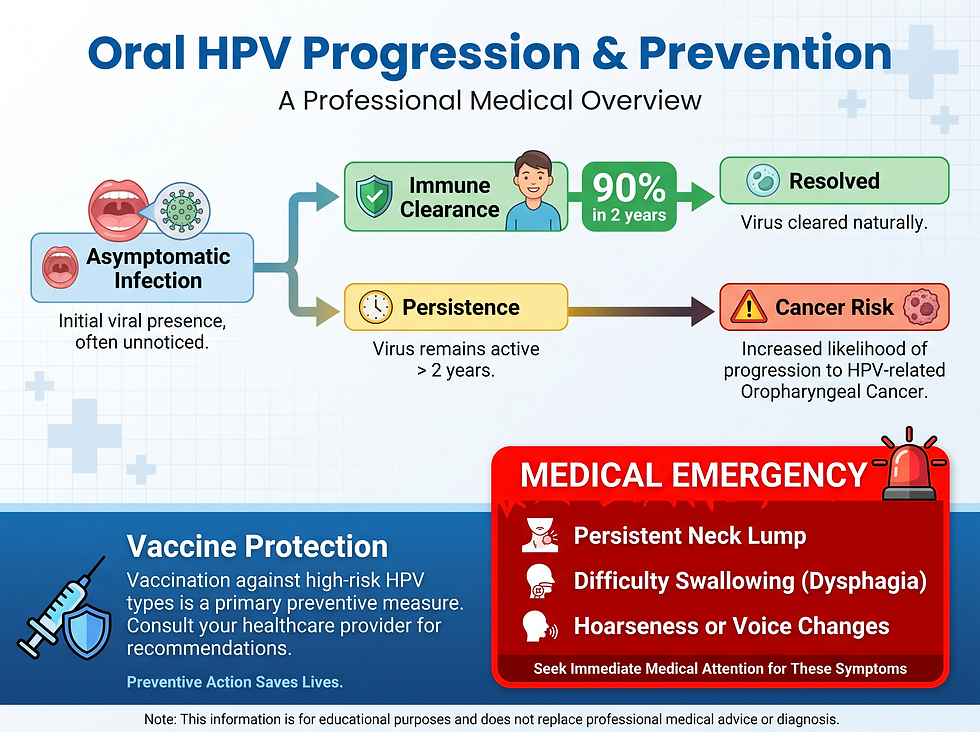
While most oral HPV infections are harmless, persistent symptoms can indicate the progression to oropharyngeal cancer. Consult a healthcare provider immediately if any of the following signs last longer than two weeks:
A persistent lump in the neck, cheek, or throat
Difficulty or pain when swallowing
Coughing up blood
Unexplained weight loss
Persistent hoarseness or voice changes
Non-healing red or white patches on the tonsils
Quick answer: Oral HPV is a contagious virus that infects the mouth and throat, mostly spreading through oral sex or deep kissing. It is a common infection, affecting approximately 7% of U.S. adults aged 18 to 60. Most people with oral HPV have no symptoms and never realize they are infected, which facilitates the silent spread of the virus. While the immune system typically eliminates the virus within two years, persistent infections with high-risk strains (like HPV-16) can lead to throat cancer. The HPV vaccine is the most effective way to prevent infection and significantly reduces the risk of related cancers.
The Spectrum of HPV Strains
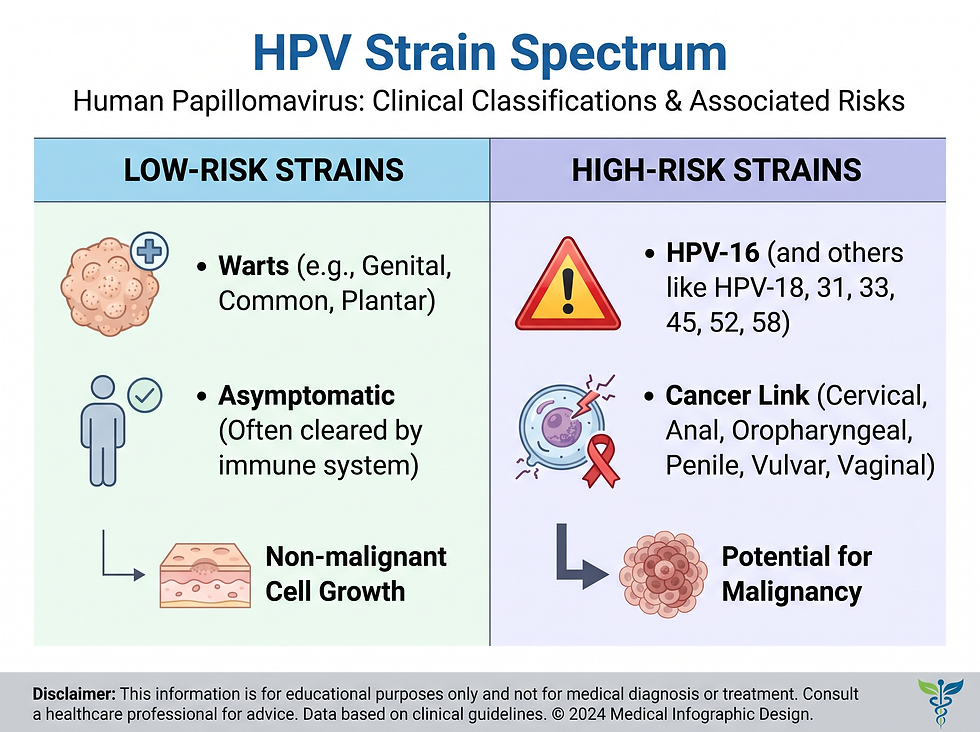
Not all HPV strains carry the same level of risk. Understanding the distinction between low-risk and high-risk types is essential for long-term health monitoring.
General HPV: Number of Strains: 200+; Primary Health Impact: Warts, skin lesions, asymptomatic infection; Cancer Risk: Varies by strain
Oral/Genital HPV: Number of Strains: ~40; Primary Health Impact: Mouth, throat, and genital infections; Cancer Risk: 12 strains are high-risk
High-Risk (HPV-16): Number of Strains: 1 (Primary); Primary Health Impact: Linked to 8 out of 10 throat cancers; Cancer Risk: High
Symptoms and Transmission
Oral HPV is often referred to as a "silent" infection because symptoms are rare in the early stages.
Common Signs
Asymptomatic: The vast majority of cases show no outward signs.
Lesions: Small sores or warts may appear on the lips, tongue, or throat.
Delayed Appearance: Warts typically take three to six months to appear after initial exposure.
How it Spreads
Oral HPV is highly contagious and spreads through direct contact with infected saliva or mucus.
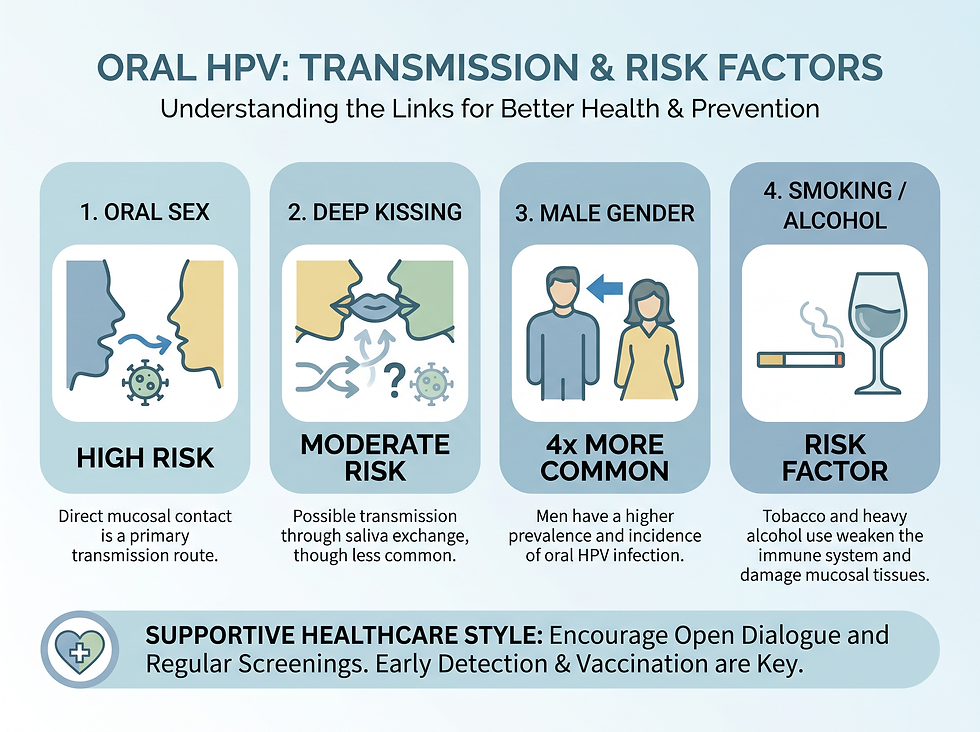
Oral Sex: Risk Level: Highest; Details: Primary route of transmission for oropharyngeal strains.
Deep Kissing: Risk Level: Moderate; Details: Virus can spread if saliva enters a cut or sore in the mouth.
Casual Contact: Risk Level: Negligible; Details: Not known to spread through sharing drinks or utensils.
Risk Factors for Oral HPV
Certain behaviors and demographic factors increase the likelihood of contracting and maintaining an oral HPV infection.
Gender: Oral HPV is four times more common in men than in women.
Sexual History: A high number of lifetime oral sex partners significantly increases risk.
Co-infections: Being HIV-positive or having an existing genital HPV infection.
Lifestyle Factors: Heavy alcohol use and smoking are linked to higher infection rates.
Immune Status: A weakened immune system may struggle to clear the virus within the typical two-year window.
Progression to Oropharyngeal Cancer
While rare, the progression from an HPV infection to throat cancer is a serious concern. HPV-positive cancers often start in the tonsils or the base of the tongue, making them difficult to detect without a professional exam.
Neck/Cheek Lump: A painless or painful mass that does not go away.
Chronic Sore Throat: Persistent pain or a feeling that something is stuck in the throat.
Voice Changes: Unexplained hoarseness or muffled speech.
Earaches: Pain in one ear without an obvious ear infection.
Prevention and Management
Preventing the spread of HPV is the most effective strategy for reducing the incidence of throat cancer.
The HPV Vaccine
The FDA updated its guidelines in 2021 to explicitly recommend the HPV vaccine for the prevention of oropharyngeal cancer. Research confirms that vaccination provides robust protection against the high-risk strains most likely to cause malignancy.
Treatment Options
If an infection is active and causing lesions, healthcare providers may use:
Surgery: Physical removal of warts or sores.
Cryotherapy: Freezing the lesions with liquid nitrogen.
Interferon alfa-2B: An injection to help the immune system target the virus.
Note: These treatments remove the lesions but do not necessarily clear the virus from the body.
Outlook and Prognosis
For most individuals, the outlook is excellent. The immune system typically destroys the virus within two years without any medical intervention. However, for the small percentage of people where the virus persists for decades, the risk of cancer increases. Regular dental checkups and awareness of persistent throat symptoms are the best ways to ensure long-term safety.
Frequently Asked Questions (FAQ)
Can you get HPV from kissing?
Yes. Deep kissing can transmit oral HPV if the virus in one person's saliva comes into contact with an open sore or cut in their partner's mouth.
Is oral HPV common?
Yes. Approximately 7% of people aged 18 to 60 in the U.S. have an oral HPV infection.
Why are men at higher risk for oral HPV?
Men are four times more likely to have oral HPV. Theories include higher numbers of partners or a stronger immune response in women exposed to genital HPV.
How long does oral HPV last?
Most oral HPV infections are cleared by the immune system within two years without treatment.
Does the HPV vaccine prevent throat cancer?
Yes. The FDA recommends the HPV vaccine specifically to help prevent oropharyngeal (throat) cancer.
What are the signs of throat cancer from HPV?
Persistent signs include a lump in the neck, earaches, hoarseness, and trouble swallowing that last longer than two weeks.
Can oral HPV be cured?
There is no medical "cure" for the virus itself, but the immune system usually clears it naturally. Treatments can remove the warts or sores it causes.
How do I know if I have oral HPV?
Most people have no symptoms. Healthcare providers may find lesions during a routine exam, but there is no standard screening test for asymptomatic oral HPV.
Does oral HPV always cause cancer?
No. Most people who contract oral HPV will never develop cancer. It is only persistent infections with high-risk strains that carry this risk.
What strain of HPV causes throat cancer?
HPV-16 is the high-risk strain most commonly linked to oropharyngeal cancer.
Can I spread HPV if I don't have warts?
Yes. Most oral HPV infections are asymptomatic, meaning you can transmit the virus to a partner without knowing you are infected.
What should I do if I find a lump in my neck?
If a lump in your neck or throat lasts longer than two weeks, you should see a healthcare provider for an evaluation.
Can alcohol and smoking affect HPV?
Yes. Heavy alcohol use and smoking are risk factors that can increase the likelihood of contracting and maintaining an HPV infection.
How long does it take for HPV warts to appear?
On average, it takes about three to six months for oral HPV warts to appear after exposure, if they appear at all.
Can HPV be found in saliva?
Yes. Someone with oral HPV carries the virus in their saliva and mucus.
References
Medical disclaimer: The information provided in this article is for educational purposes only and should not be considered medical advice. Always seek the advice of a qualified healthcare provider with any questions you may have regarding a medical condition. If you are experiencing a medical emergency, call 911 or your local emergency services immediately.
Source date: November 24, 2025. This article is current based on the most recent available data from the primary source.
Comments